
Make sense of your child’s school support.
A structured written review to help you understand your child’s needs, identify possible gaps and know what to ask school for next.
Reports, school plans and emails can leave you with plenty of information but little clarity. We bring the agreed evidence together and turn it into practical next steps.
SEND Review & Action Plan — £195
Written review and recommendations · Continued meeting support available separately.

You have concerns. You want a clearer plan.
You do not need to know the solution before contacting us. The review helps you understand which questions and actions matter most.
Support feels unclear
School says provision is in place, but you are unsure what happens, how often or whether it is enough.
Progress is limited
Targets repeat, interventions continue without clear improvement, or meetings do not produce agreed actions.
You have new information
An assessment or professional report contains recommendations, but you are unsure how they relate to school support.
A meeting is approaching
You want focused questions, clear priorities and relevant evidence before speaking to the SENCo.
Your child is struggling more
Anxiety, exhaustion, sensory difficulties or attendance concerns are increasing, or home and school see different things.
You are considering next steps
You want to explore adjustments, further assessment or whether current SEN Support remains sufficient.
What you receive.
A structured document setting out the findings and practical recommendations. Its content reflects your child’s circumstances and the agreed evidence reviewed.
Current concerns
A clear overview of the main difficulties affecting your child’s education.
Areas of need
Identified or possible needs that appear important in the information provided.
Current support
A review of the interventions, adjustments and provision described.
Possible gaps
Questions, discrepancies and areas requiring clarification with school.
Adjustment suggestions
Potential changes linked to the barriers identified.
Evidence priorities
Additional records or professional information that may help.
Questions for school
Focused questions for your next SENCo or school meeting.
Recommended actions
Practical next steps you can use to take matters forward.
What information can we review?
We agree which documents are relevant before starting. You do not need every type of document listed here.
School information
- SEN Support plans and APDR records
- Pupil passports and learning plans
- Reports, progress and intervention records
- Provision maps and current adjustments
- Behaviour or pastoral plans
- Attendance, correspondence and meeting notes
Professional evidence
- ADHD or autism assessment reports
- Educational psychology reports
- Speech and language or occupational therapy reports
- Learning-support and specialist teacher advice
- Dyslexia or dyscalculia assessments
- Relevant CAMHS or professional correspondence
Parent observations
- Exhaustion, masking or distress after school
- Homework and organisation difficulties
- Anxiety, sensory overload or school avoidance
- School-related sleep disruption
- Difficulty getting ready or attending
- Differences between home and school
Agree the evidence first. We confirm the documents and scope of the review before work begins. Relevant assessment reports help us understand educational needs; this service does not reassess or diagnose your child.
Seven questions behind the review.
Select a question to see what we look for.
1. Have your child’s needs been clearly identified?
We consider whether the evidence reflects the barriers you and school are seeing. These may involve learning, attention, executive functioning, communication, sensory processing, emotional regulation, independence, literacy, numeracy, working memory, organisation, transitions or attendance.
2. Does the support match the identified needs?
We look for a clear connection between a difficulty, the support provided and the intended outcome.
For example, difficulties retaining verbal instructions may call for visual reinforcement; sensory overload may require environmental changes; planning difficulties may need organisational scaffolding.
3. Is the provision clear enough?
Descriptions such as “adult support when required” or “regular check-ins” can leave important questions unanswered.
We identify where you may need to clarify when support happens, how often, who delivers it, what it should achieve and how its impact is checked.
4. Are outcomes specific and measurable?
We consider whether outcomes are relevant, realistic, linked to needs and capable of being reviewed.
A target such as “improve concentration” needs more detail about successful engagement, the circumstances, support provided and how progress will be measured.
5. Is Assess, Plan, Do, Review making a difference?
We examine how needs were assessed, what was planned, what was delivered and what the review showed.
Where the same concerns and interventions recur, we identify questions about baselines, progress, delivery and what needs to change.
Explore SEN Support Plans and APDR →6. Are relevant adjustments being considered?
We consider barriers in the school environment and everyday learning arrangements.
Possible discussion points include smaller instruction steps, processing time, visual timetables, advance warning of changes, seating, sensory load, movement breaks, recording work, organisation, transitions, homework and trusted-adult support.
Explore reasonable adjustments →7. Would further professional information help?
If the existing evidence does not explain a difficulty adequately, we may suggest discussing further advice or assessment with school or another professional.
The question is what information is missing and how it would help determine appropriate provision. Not every child needs multiple assessments.
A plan you can use in your next conversation.
Depending on the findings, recommendations may help you:
- Clarify current provision, frequency and responsibility
- Request changes to needs, provision or outcomes in the SEN Support plan
- Discuss adjustments linked to identified barriers
- Ask about further assessment or specialist advice
- Strengthen baselines and review arrangements
- Prepare a focused SENCo meeting agenda
- Gather additional evidence
- Consider whether current support remains sufficient
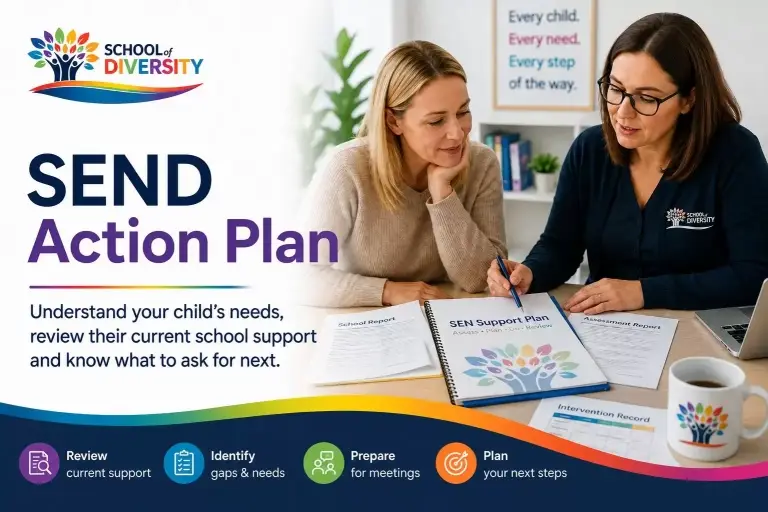
Clear steps from enquiry to action plan.
Tell us what is happening
Explain your child’s circumstances, current concerns and any approaching meeting or deadline.
Agree the evidence
We identify the relevant documents and confirm the review scope before starting.
Review the information
We consider the agreed school records, professional reports and parent observations.
Identify key issues
We examine needs, provision, adjustments, outcomes and evidence gaps.
Receive your written plan
Your SEND Review & Action Plan sets out the findings and recommended actions.
Choose your next step
Take the recommendations forward yourself or discuss continued support.
Choose the level of help that suits you.
A written review and continued casework are different levels of support. We agree the work included before you proceed.
SEND Review & Action Plan
£195
For parents who want a structured review and recommendations to take forward themselves.
- Review of the agreed evidence
- Written findings and action plan
- Questions and priorities for school
- Practical next-step recommendations
Meeting attendance and continued follow-up are not part of this standalone written-review option.
Request a SEND reviewSupported SEND Casework
From £425
For parents who want the review plus practical support through the next agreed school stage.
- Review and meeting preparation
- Priorities and questions for school
- Online attendance at one agreed school meeting
- Support presenting key concerns
- Review of agreed actions
- An agreed follow-up communication
Scope, availability and the final fee are confirmed before work begins.
Discuss supported caseworkWhat if current SEN Support is not enough?
The review may suggest strengthening provision, obtaining specialist evidence, changing adjustments or exploring attendance and placement difficulties.
Where the information indicates that an EHC needs assessment should be considered, we explain why and identify relevant evidence. A SEND Review does not automatically lead to an EHCP, and an outcome cannot be guaranteed.
Your questions answered.
Do I need a SEN Support plan already?
No. The review can also help where support is informal or you are trying to establish what support your child may need. We agree what evidence is available and relevant before starting.
Can you review an existing school support plan?
Yes. We consider how clearly it describes needs, outcomes, provision, adjustments and review arrangements.
Can you consider an ADHD or autism assessment?
Yes, where it is relevant to the agreed review. We consider its implications for education and school support. This service does not reassess or diagnose your child.
Can you tell school exactly what it must provide?
We identify relevant needs, evidence, potential adjustments and questions about provision. The review is advisory: it does not direct the school or replace its responsibilities.
Can you attend the SENCo meeting?
Meeting attendance can be agreed through Supported SEND Casework, subject to availability. It is not included in the £195 standalone written review.
What if the review suggests an EHCP should be explored?
We explain the concern and the relevant evidence within the recommendations. You can then discuss dedicated EHCP support if you would like further help.
Is this suitable without a diagnosis?
Yes. The review focuses on educational needs, barriers and support, using the information available rather than requiring a particular diagnostic label.
From a pile of paperwork to a practical plan.
Understand the key concerns, what needs clarifying and what to raise with school.
SEND Review & Action Plan — £195
Tell us where you are now.
Let us know your child’s main difficulties, the support currently in place and whether a school meeting is approaching.
office@schoolofdiversity.com
0333 577 1179