

Clear SEN Support, Neurodiversity Guidance & Practical Help for Parents

Supporting parents of children with ADHD, autism, dyslexia and dyscalculia to understand needs, navigate SEN support, and put effective strategies in place — at home, in education and beyond.

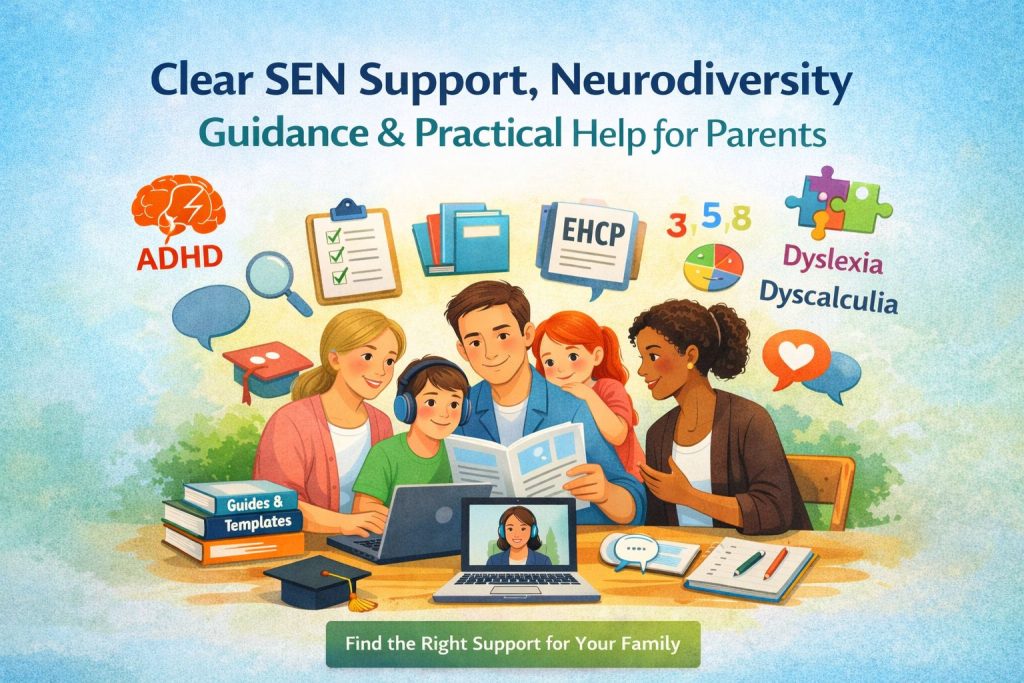
“Illustration of parents and children accessing SEN support together, with icons representing ADHD, autism, dyslexia, dyscalculia, EHCP guidance, learning resources, templates and parent support.

Not Sure Where to Start?

You don’t need to have everything figured out. Many parents arrive here feeling unsure, overwhelmed, or stuck.

Choose the option that best fits where you are right now:

Understanding SEN Support

SEN support is not about labels or blame. It’s about understanding what a child needs to access learning, feel safe, and thrive.

We help parents understand:

  • how SEN support works in schools and colleges

  • what reasonable adjustments should look like

  • how to communicate effectively with education settings

  • when additional support or assessment may be helpful

Support Options for Different Needs and Situations

Every family’s journey is different. That’s why support is offered in several ways — so you can choose what feels most helpful right now.

Parent Power Pack

Structured Guidance You Can Return To

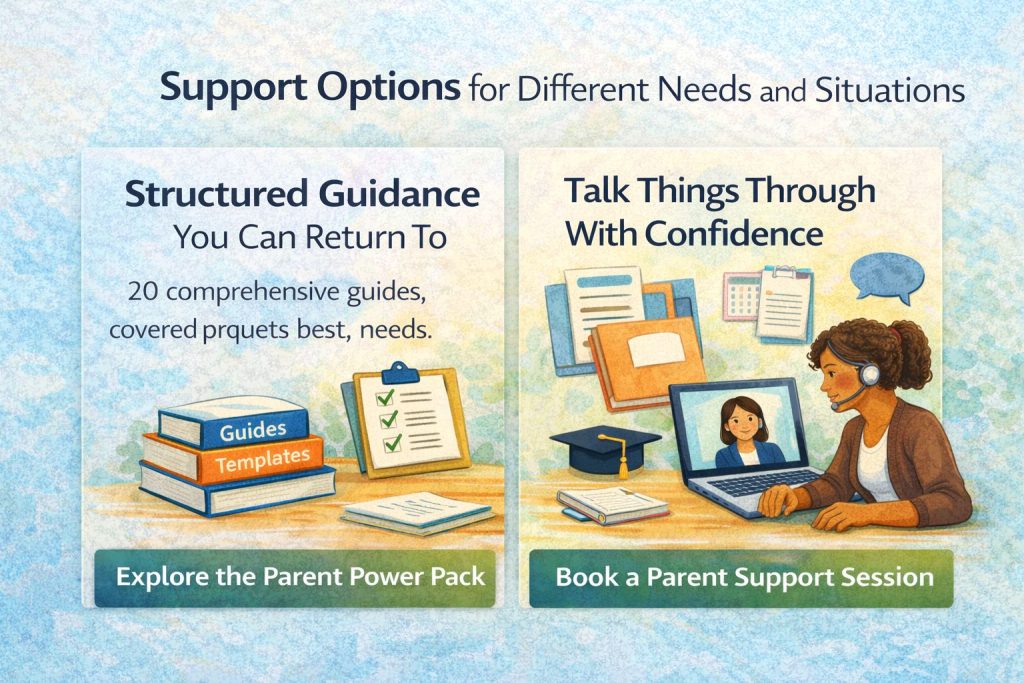
20 comprehensive guides covering SEN processes, communication with schools, evidence gathering, meetings, escalation and advocacy.

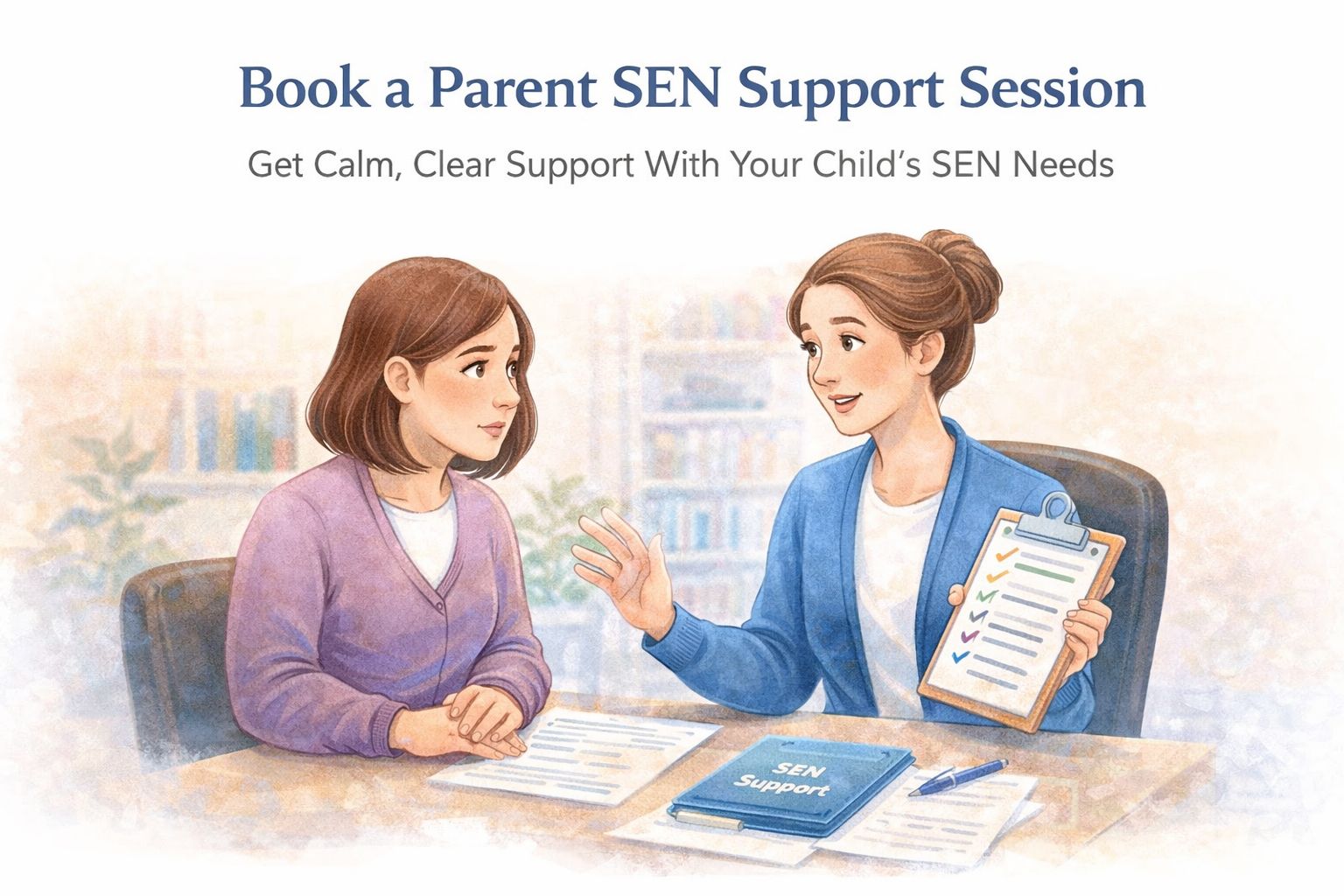
“Illustration of a parent meeting with a supportive SEN advisor at a desk, reviewing documents and a checklist labeled SEN Support, with the heading ‘Book a Parent SEN Support Session’ above.

Talk Things Through With Confidence

One-to-one sessions to help you understand what’s happening, plan next steps, and feel less alone.

Targeted Support by Area of Need

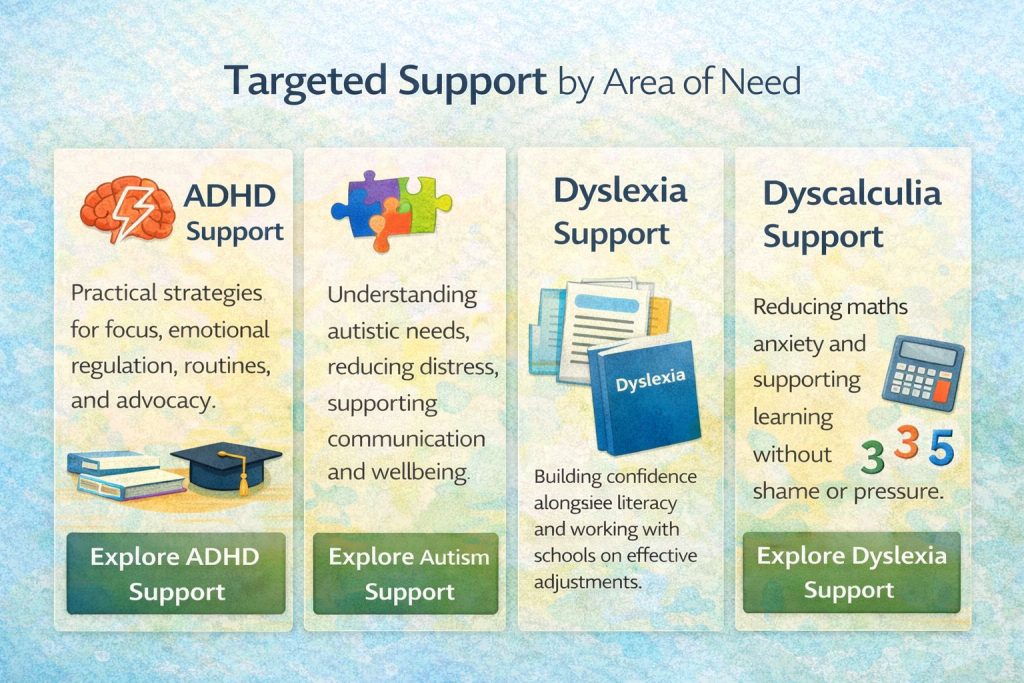
Landscape illustration showing targeted SEN support options for ADHD, autism, dyslexia and dyscalculia, represented with icons and resources that highlight practical strategies and learning support.

Each programme focuses on real-world strategies that work across home, education, public spaces and online environments.

ADHD Support Programme (1)

ADHD Support Programme

Our ADHD Support Programme is designed to empower individuals and families with practical tools, compassionate guidance, and expert-led strategies for managing life with ADHD. !

Autism Support Programme

AUTISM Support Programme

Our Autism Support Programme offers a nurturing, strengths-based approach for individuals and families seeking guidance, understanding, and practical support.

Dyslexia Support Programme

DYSLEXIA Support Programme

Our Dyslexia Support Programme is built to empower individuals of all ages with the tools, strategies, and confidence to succeed.
Dyscalculia Support Programme

DYSCALCULIA Support Programme

Our Dyscalculia Support Programme is designed to make numbers less intimidating and learning more accessible for individuals who struggle with maths.
Considering an ADHD or ASD Assessment?

Assessments are not required to access support — but they can provide clarity and evidence in some situations.

We provide information to help parents understand:

  • what private assessments involve

  • when they may be helpful

  • how results can support education discussions

ADHD and Autism Assessments

Are you looking for an ADHD or Autism Assessment?

We offer comprehensive ADHD and Autism assessments carried out by experienced, neurodiversity-affirming professionals who understand the unique ways each brain works. Our assessments are tailored for children, teens, and adults, combining clinical expertise with a compassionate, person-centred approach. From initial consultations to detailed reports and post-assessment guidance, we ensure a clear, respectful process that supports you or your loved one every step of the way. Whether you're seeking answers, clarity, or access to appropriate support, we're here to help you move forward with confidence.


Illustration of a family sitting together reviewing guidance on a laptop and printed resources, representing parents who are unsure where to start with SEN support.”

Find the Right Next Step for Your Family

Whether you need information, practical tools, targeted strategies or one-to-one support, there is a place to start.
Chartered Psychologist
HCPC Logo
ICO. Logo
Neurodiversity Support

Creating Sensory-Friendly Spaces: A Guide for Supporting Neurodivergent Minds

Neurodiversity Support

Embracing the Unique: The Power of Personalised Support Plans for Neurodiverse Individuals

Neurodiversity Routines

Empower Your Child: Practical Tools and Routines for Emotional Regulation at Home and School

Neurodivergent

Why Every Neurodivergent Voice Deserves to be Heard

Neurodiversity Support

Spotting the Early Signs of Overwhelm: A Guide to Support and Empowerment

Neurodiversity Routines

Easy Sensory Hacks to Boost Calm and Focus Today

Neurodiversity Support

Empower Your Voice: Simple Steps to Advocate Confidently for Your Child or Student

Neurodiversity Routines

Empowering Your Neurodivergent Child with Personalised Daily Routines

SEN Support

How to Keep Records for SEN Support — Parent Guide (UK)

Neurodiversity Routines

Daily Habits to Boost Confidence in Neurodivergent Individuals

SEN Support

Signs Your Child May Need More SEN Support at School (UK Guide)

SEN Support

Questions to Ask in a SEN Support Meeting (Parents’ Guide – UK)

Neurodiversity Support

Turning Advocacy into Action: Empower Your Neurodivergent Community Today

SEN Support

SEN Support vs EHCP — What’s the Difference between them

Neurodiversity Support

Creating Safe Spaces: Easy Adjustments for Sensory-Friendly Homes

SEN Support

What Is SEN Support? A Simple Guide for Parents (UK)

Neurodiversity Routines

Creating Effective Routines: Supporting Emotional Regulation in Neurodivergent Children

Neurodiversity Assessments

Empowering Families Through Compassionate Assessments: A Path to Understanding

Neurodivergent

Empowering Neurodivergent Learners: Strategies That Make a Difference

Neurodiversity Routines

Personalised Strategies for Neurodivergent Individuals