
Autism • Understanding everyday experiences
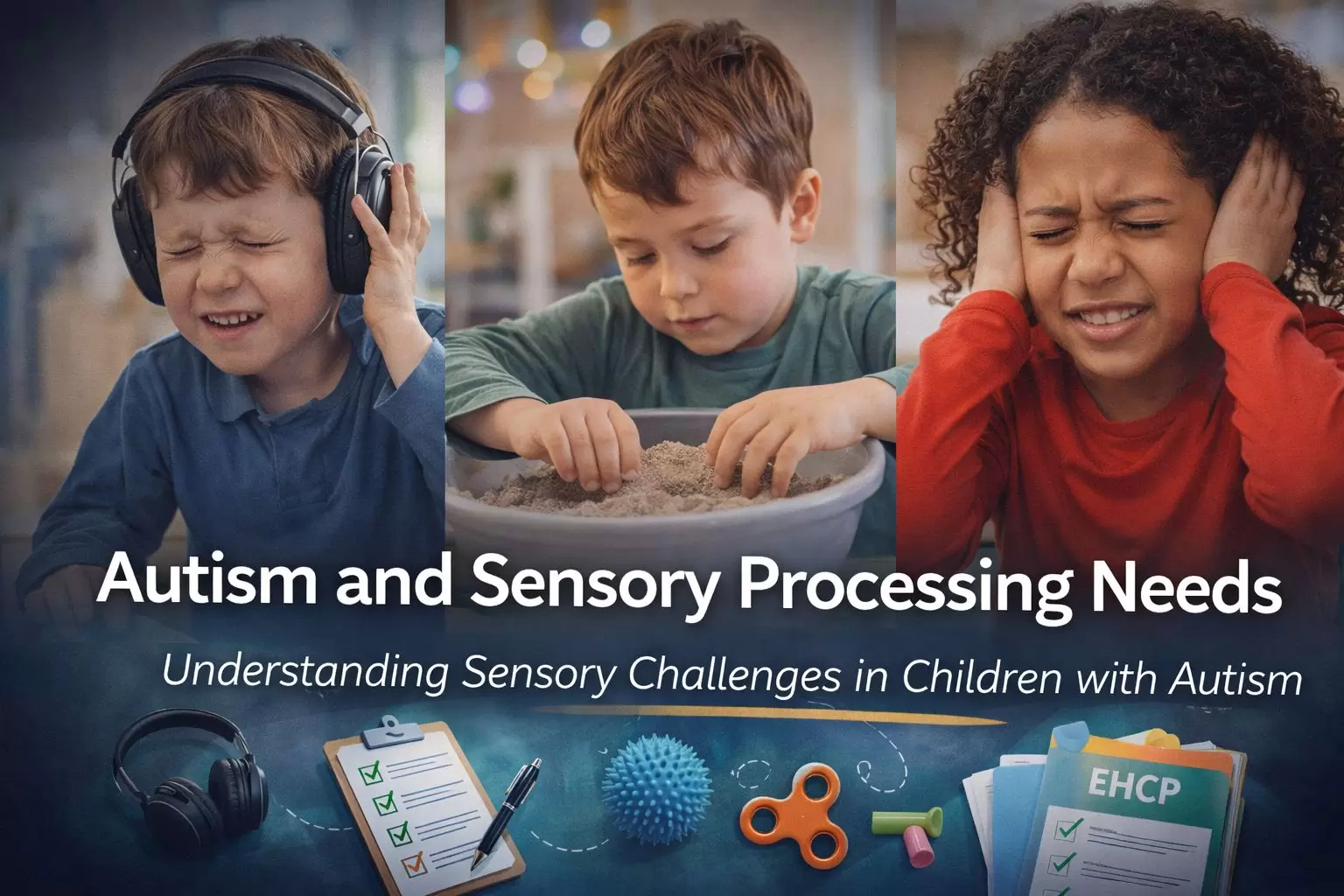
Autism and sensory processing needs
Understand how sensory differences may affect your child and explore practical changes at home and school.
Start with what feels comfortable, what is overwhelming and what helps your child take part in everyday life.
Every child is different
What are sensory processing needs?
Sensory processing describes how we receive and respond to information from our senses.
Sounds, light, touch, taste, smell, movement and balance can affect how comfortable a child feels. Many autistic children experience sensory differences, but these are not exclusive to autism.
Greater sensitivity
Some sensations may feel unusually intense or uncomfortable. A child might find noise, lighting, clothing textures or certain smells difficult.
Less sensitivity or seeking input
A child may notice some sensations less or seek particular movement, textures or sounds. Explore what they enjoy and whether an activity is safe and helpful.
Look at the context
How can sensory demands affect everyday life?
Learning and attention
Background noise, glare or uncomfortable seating may make it harder to concentrate or stay with an activity.
Daily routines
Dressing, washing or eating may involve sensations your child finds difficult. Notice the specific part of the routine that causes discomfort.
Participation and wellbeing
Busy spaces or unexpected sensations may lead a child to avoid an activity, withdraw or become distressed.
Keep a short record
Note where difficulties occur, the sensations present, your child’s response and what helps. Include their own explanation where possible and share useful patterns with school or relevant professionals.
Do not assume pain, distress or a new change is sensory-related without considering other explanations.
Practical changes
Adapt the environment to the child
Try a small, relevant adjustment and review whether it improves comfort and participation.
At school
- Review noise, lighting and seating.
- Consider corridors, assemblies and lunch as well as lessons.
- Agree access to a lower-stimulation space and appropriate breaks.
- Prepare for changes and transitions.
- Identify an adult your child can approach for help.
At home
- Notice comfortable clothing, textures and spaces.
- Make routines predictable where helpful.
- Offer choices about manageable changes.
- Allow time to recover after demanding situations.
- Ask what feels helpful rather than relying on adult assumptions.
Comfort and emotional support
Responding when a child feels overwhelmed
Children may show distress, withdraw or find communication harder when demands become too much. Their response is a reason to understand what is happening and offer support.
In the moment
Prioritise safety. Keep language brief and calm, reduce unnecessary stimulation where possible and offer a familiar way to ask for help or a break.
Avoid forcing a child to remain with an uncomfortable sensation as a way to make them get used to it.
After recovery
When your child is ready, explore what felt difficult and what helped. Review the setting and support before repeating the same demand.
Calm or enjoyable repetitive movement can support regulation. Harmless stimming does not need to be stopped because it looks different.
When more help is needed
Seek advice when difficulties affect daily life
Discuss persistent or worsening difficulties with your child’s GP, SENCO or relevant clinician. Ask whether occupational therapy or other specialist advice would be appropriate.
Raise pain, changes in eating or drinking, or other health concerns with a healthcare professional rather than assuming they are simply part of a sensory profile.
Sensory needs and EHCP support
In England, an EHCP may specify provision to meet identified sensory-related educational needs. A diagnosis or sensory difference alone does not determine entitlement to a plan.
Evidence should explain the impact, the provision required and how it should be delivered. Education systems differ elsewhere in the UK.
Explore EHCP guidance for autism →Common questions
Understanding your child’s sensory experience
Do all autistic children experience sensory differences in the same way?
No. Preferences and sensitivities vary. Ask about your child’s experience and notice how it changes across situations.
Can sensory needs affect learning?
Yes. An uncomfortable or distracting environment can make participation difficult. Explore relevant adjustments with school and review their impact.
Does sensory seeking always mean under-sensitivity?
No. An activity may be enjoyable, calming or meet another need. Look at its purpose and context rather than assuming a cause.
Does my child need a diagnosis before school can help?
No. Discuss current needs with the teacher or SENCO and agree practical support and review arrangements.
Will the same sensory tool work for every child?
No. Check suitability, safety and whether it helps your child. Seek professional advice where specialist equipment or an individual programme is being considered.
Further information: NHS information about autism. This guide provides general information and does not replace individual clinical advice.
Related guidance
Explore the wider picture
School of Diversity
Need help explaining your child’s needs?
Tell us what is happening and the support you are looking for. We can discuss relevant service options.