
DLA Mandatory Reconsideration for children
Explain why the decision should change, with clear reasons and relevant evidence.
If your child’s DLA claim was refused or the award does not reflect their needs, you can usually ask DWP to look again. This is called Mandatory Reconsideration.
Start with the decision letter, identify the disputed findings and keep the deadline in view.
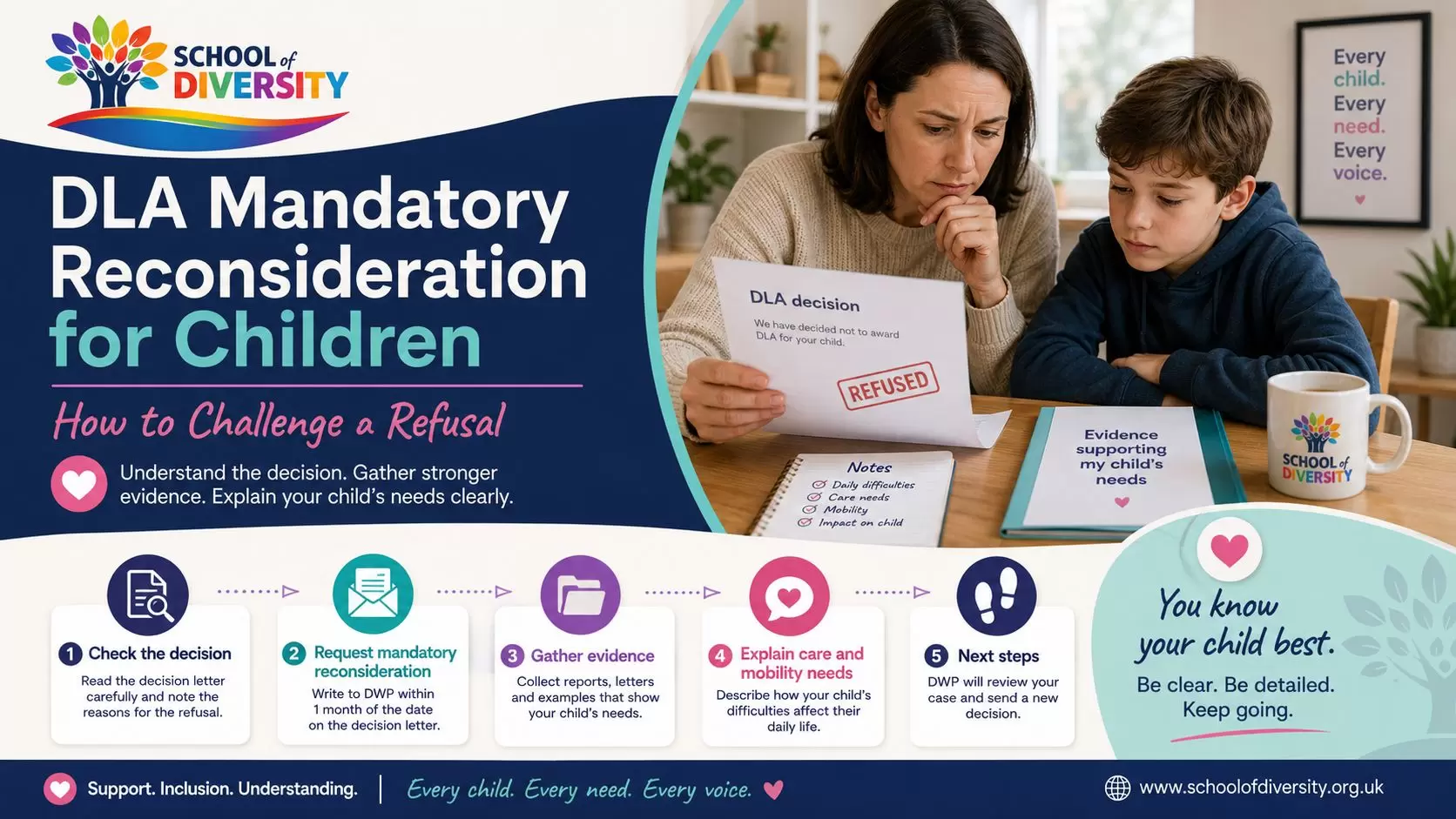
Usually request it within one month
The deadline normally runs from the date on the decision letter. If you write, the letter or form must arrive by the deadline—not merely be posted then.
If late, seek advice promptly and explain the reason for delay. Late requests may be possible but acceptance is not automatic. Do not wait for every report before asking how to protect the deadline.
What does reconsideration do?
DWP reviews the decision and relevant information. It is normally the stage required before an independent tribunal appeal; check the decision letter for any exception.
Care findings
Explain the attention, prompting, assistance or supervision required, the same-age comparison and relevant daytime or night-time needs.
Mobility findings
Address the particular walking or outdoor guidance and supervision criteria disputed. A diagnosis or difficulty outdoors does not automatically establish a rate.
Consider an existing award carefully. The review can leave it unchanged, increase it, reduce it or end it. Seek benefits advice about the evidence and implications before challenging.
How to request Mandatory Reconsideration
Contact the benefits office using the details in the decision letter. You can request it by phone, by letter or using the official reconsideration form.
- Identify the claim and decision. Include the child’s details, decision date, your contact details and claim reference as requested.
- State that you request Mandatory Reconsideration. Make the purpose clear.
- Identify what is wrong. Address specific care or mobility findings and the outcome sought.
- Explain the evidence. Reference relevant information already supplied and add useful new evidence where needed.
- Retain a record. Keep copies, posting information and dated notes of calls.
A written follow-up can provide a clear record of a telephone request. Confirm how to identify attachments and where to send them using DWP’s instructions.
Structure each disputed point
The decision says
Identify the finding you believe is incorrect, rather than only stating that you disagree.
The needs are
Explain what an adult must do, frequency, duration and what happens without help.
The evidence shows
Give relevant examples and report or record references, then connect them to the criteria.
Useful structure: Need → help → frequency → duration → consequence. Describe the representative pattern, including easier and harder periods, without exaggerating or minimising.
Choose evidence that answers the disagreement
Useful new information may include a child-specific professional letter, therapy report, school statement, care diary or sleep record. Explain what it establishes.
Reference evidence already sent rather than resending everything without purpose. Follow DWP instructions for new attachments and keep original reports unchanged.
Clarify the relevant date
The challenge concerns the decision made. A later report may describe needs that already existed, but deterioration only occurring afterwards may require different advice.
Explain differences in context
Reports may concern different settings, dates or support arrangements. Explain these differences accurately rather than hiding them.
After you submit the request
DWP will issue a Mandatory Reconsideration Notice explaining whether the decision changed and why. Keep it safely: it is normally needed if you proceed to appeal.
If the award changes
Check the components, rates, award period and effective date. Any arrears depend on the revised decision and period of entitlement; payment from the original claim date is not guaranteed in every case.
If you still disagree
An independent tribunal appeal may be available. Normally appeal within one month of receiving the reconsideration decision. Follow the notice and current HMCTS instructions.
Explore appeal supportProcessing times vary. Keep copies and follow up using the contact details in your correspondence. If there is a significant delay, seek advice about the appropriate next step.
Where to find help
You do not need a solicitor to request reconsideration. Free welfare-rights advice may be available through Citizens Advice, Contact and local advice services.
School of Diversity support
We can discuss reviewing the refusal, identifying relevant evidence and preparing a structured account. Work and fees are agreed before starting. Submission, correspondence and appeal work are included only where expressly agreed. An outcome cannot be guaranteed.
Frequently asked questions
Can I request reconsideration by phone?
Yes. Use the details in the decision letter and keep a dated record. A written follow-up can help document what you requested and the reasons.
What if the one-month deadline has passed?
Seek advice promptly. Explain the circumstances, such as serious illness or bereavement, and ask about late-request rules. Acceptance is not automatic. If a late request is rejected, obtain advice about further options.
Do I need to pay for new reports?
Not necessarily. First identify the disputed fact and whether existing records or a targeted statement can explain it. DWP does not reimburse evidence you pay for.
Can a reconsideration reduce the award?
Yes. A review can change an award in either direction. Seek advice about the strength of the case and implications for any existing entitlement.
Could other benefits be affected?
A changed DLA award may affect linked entitlement, such as a carer benefit or additional disability amounts. DLA is not generally treated as income for means-tested benefits. Get a welfare-rights check and report relevant changes as required.
Is reconsideration free?
Yes. DWP does not charge for the review. Optional independent preparation support is separate.
Does this guide apply across the UK?
It mainly concerns DWP child DLA decisions in England and Wales. Northern Ireland has separate arrangements. Scotland uses Child Disability Payment and its own challenge process.
Official information: reconsideration rules and benefit appeals. Check current instructions and case-specific deadlines.
Related parent guides
Need help reviewing the decision?
Share the decision letter, its date and the findings you disagree with. We can discuss the support needed for your next step.
One Response