
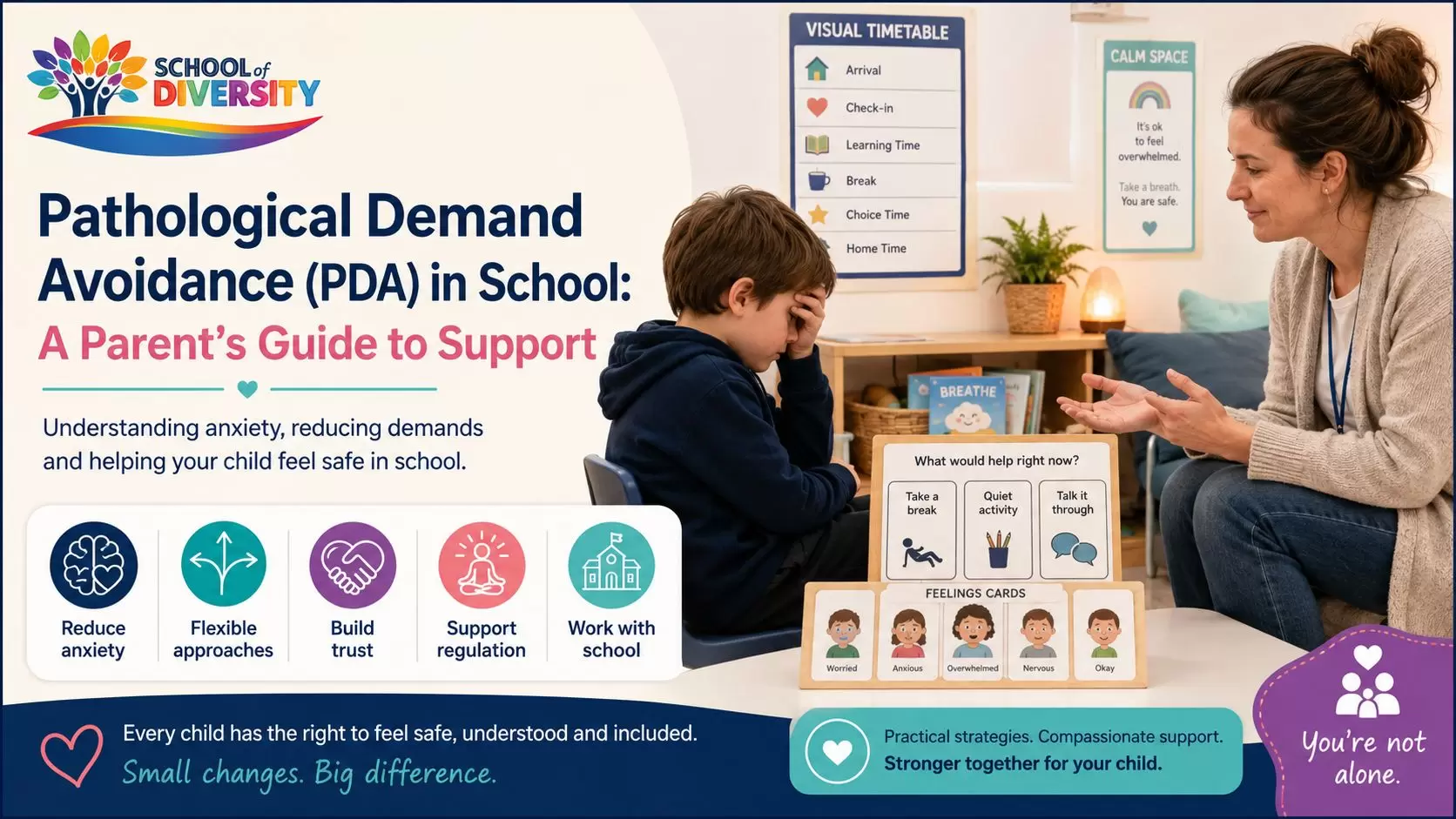
Pathological Demand Avoidance (PDA) in School: A Parent's Guide to Support
When your child experiences Pathological Demand Avoidance (PDA), the school day can feel like a battlefield. Everyday requests – from putting on a coat to starting a worksheet – can trigger intense anxiety, leading to distress, avoidance, or what is often called school refusal. For parents in England trying to navigate the special educational needs system, understanding PDA and knowing how to push for effective support is a critical first step. This guide brings together evidence-based strategies and parent-tested approaches to help your child feel safe and able to learn at school.
Understanding PDA and School Distress
Pathological Demand Avoidance is understood as a profile on the autism spectrum. Children with a demand avoidant profile tend to under-perform in terms of their potential, not because they lack ability, but because their anxiety and need for control make ordinary demands feel overwhelming. This anxiety can drive what professionals call Emotionally Based School Avoidance (EBSA). School distress can result from not receiving the right support, struggling with mental health, having unmet sensory processing needs, or experiencing isolation and social exclusion. The term ‘school distress’ better captures the extreme emotional turmoil some children face in the classroom than the word ‘avoidance’ alone.
PDAers can struggle to ask for help, which makes it even harder for them to get the assistance they need. Getting the right support can be a slow process. Schools and local authorities often take a gradual approach, but parents can speed things up by learning how to present their child’s needs clearly and by knowing what legal levers are available, such as an Education, Health and Care Plan (EHCP).
Recognising the Signs in the Classroom
Before you can advocate for change, it helps to know what PDA looks like in a school setting. The key is to recognise and reduce the child’s anxiety level so they can manage everyday demands. Common signs include:
- Strong resistance to direct instructions, even for preferred activities
- Use of social strategies to avoid demands, such as distraction, negotiation, or withdrawal
- Extreme mood swings that seem out of proportion to the trigger
- A need for control over routines, tasks, and interactions
- Physical symptoms of anxiety before or during school, including stomach aches or headaches
These behaviours are not defiance. They are expressions of an overwhelmed nervous system. Understanding this distinction is essential for both parents and school staff when designing a supportive environment.
Effective Strategies for School Support
A range of practical classroom strategies can help students with PDA feel safer and more regulated. The advice from organisations such as the PDA Society, Sheffield Children’s NHS Foundation Trust, and Devon County Council all points in the same direction: reduce demands, build trust, and adapt the environment.
Reduce the Demand Load
Every request your child receives at school is a demand: a look, a gesture, a written instruction, even a timetable change. Teachers can help by reducing the sheer number of demands and by phrasing them in a less direct way. Instead of ‘Put your book away now’, they might say ‘I wonder if those books might go back on the shelf soon?’. Offering choices, using humour, and giving the child control over small decisions can all lower anxiety. A training module on strategies to help with demand avoidance at home and school (produced by Sheffield Children’s NHS Foundation Trust) recommends using indirect language and offering ‘negotiable’ demands wherever possible.
Provide Calming Tools and Sensory Support
Providing calming tools like stress balls or fidget toys offers students a tangible way to channel their energy and self-soothe during moments of distress. Many children with PDA also have sensory sensitivities. Ensuring the classroom has quiet corners, reduced noise, and the option to wear ear defenders or sunglasses can prevent overload before it starts. Teachers and parents can work together to create a ‘sensory passport’ that tells the school exactly what helps and what hinders.
Build a Predictable but Flexible Routine
A child with PDA needs to know what is coming, but they also need room to say ‘no’ without consequence. Visual timetables are useful, but they must be flexible enough to allow adaptations. If a child knows they can choose to do the task later or in a different order, the demand feels less threatening. Time-out cards or ‘brain break’ passes give them an exit strategy without having to ask for help (something PDAers can find extremely difficult).
Focus on Connection Before Compliance
The single most important thing a school can do is build a trusting relationship with the child. When a child feels that a teacher understands their anxiety and is on their side, the demand feels less like an attack. This takes time, but it is the foundation on which all other strategies rest. Parents can encourage this by sharing what works at home and by asking the school to designate one consistent member of staff as a trusted contact.
How to Work with the School and Local Authority
Parents of children with PDA often face a battle to get the right support in place. Schools may label the child as defiant or ‘naughty’ rather than recognising the underlying anxiety. It is important to speak to your GP or the Special Educational Needs Co-ordinator (SENCo) at your child’s school as a first step. Spend some time thinking about the demands on your child and which ones cause the most distress. Write them down, along with what happens before and after the behaviour. This evidence will be crucial when requesting an assessment for an Education, Health and Care Plan (EHCP).
The School of Diversity provides guidance on the EHCP application process, including how to strengthen your evidence and how to appeal refusals. If your child’s school offers only SEN support but it still feels insufficient, you have the right to ask the local authority to carry out an EHC needs assessment. This is the legal route to securing enforceable, legally binding support. Remember, getting the right help can be a slow process, but the law is on your side if you can show that the child’s needs are not being met.
Frequently Asked Questions
What is the difference between PDA and ODD?
Pathological Demand Avoidance is widely considered part of the autism spectrum, whereas Oppositional Defiant Disorder (ODD) is a separate behavioural diagnosis. The key difference is anxiety: children with PDA avoid demands because they feel extremely anxious and need to be in control. Children with ODD may refuse demands for reasons related to anger or opposition, not necessarily anxiety.
Can a child with PDA have an Education, Health and Care Plan (EHCP)?
Yes, many children with PDA are eligible for an EHCP if their needs are significant enough to require special educational provision that goes beyond what the school can typically provide. The EHCP can specify the exact strategies, staff training, and environmental adjustments needed. Parents should request an EHC needs assessment if the school’s SEN support is not working.
What should I do if the school says my child is just ‘attention seeking’?
It can be frustrating when school staff do not understand PDA. Provide them with information from reputable sources such as the PDA Society, or ask for a referral to an educational psychologist. You can also request that the school’s SENCo access training modules on demand avoidance, such as those from Sheffield Children’s NHS Foundation Trust. If the misunderstanding persists, consider making a formal complaint or seeking legal advice.
How can I help my child return to school after a period of school avoidance?
A gradual, low-demand approach works best. Start with very short visits to school for a preferred activity, with a trusted adult. Use indirect language and offer control over the timing. It often helps to reduce home demands during this period so the child’s anxiety does not build up from all sides. Work closely with the school to build a plan that includes flexible attendance targets and regular check-ins on the child’s emotional state.
Supporting a child with PDA at school requires patience, creativity, and a clear understanding of the legal rights available to families. By focusing on reducing anxiety, building trusting relationships, and using the SEND system effectively, you can help your child move from distress to genuine engagement with learning. If you need guidance on securing an EHCP or challenging a refusal, the School of Diversity offers dedicated support to help you navigate every step of the process.
Final Thoughts
Pathological Demand Avoidance in school should be understood through the lens of anxiety, safety and regulation, not simply behaviour or refusal. Children with a PDA profile often need flexible approaches, reduced pressure, trusted relationships and careful support with transitions, expectations and communication. You may find it helpful to read our wider guide on EHCPs for autism, as PDA is commonly discussed within the autism profile. If your child needs support with communication, routines or visual structure, our guides on autism and communication in school and social stories and visual supports may also help. Where school-based support is not enough, our guide on SEN Support vs EHCPs can help parents understand when an EHCP may need to be considered.
One Response