
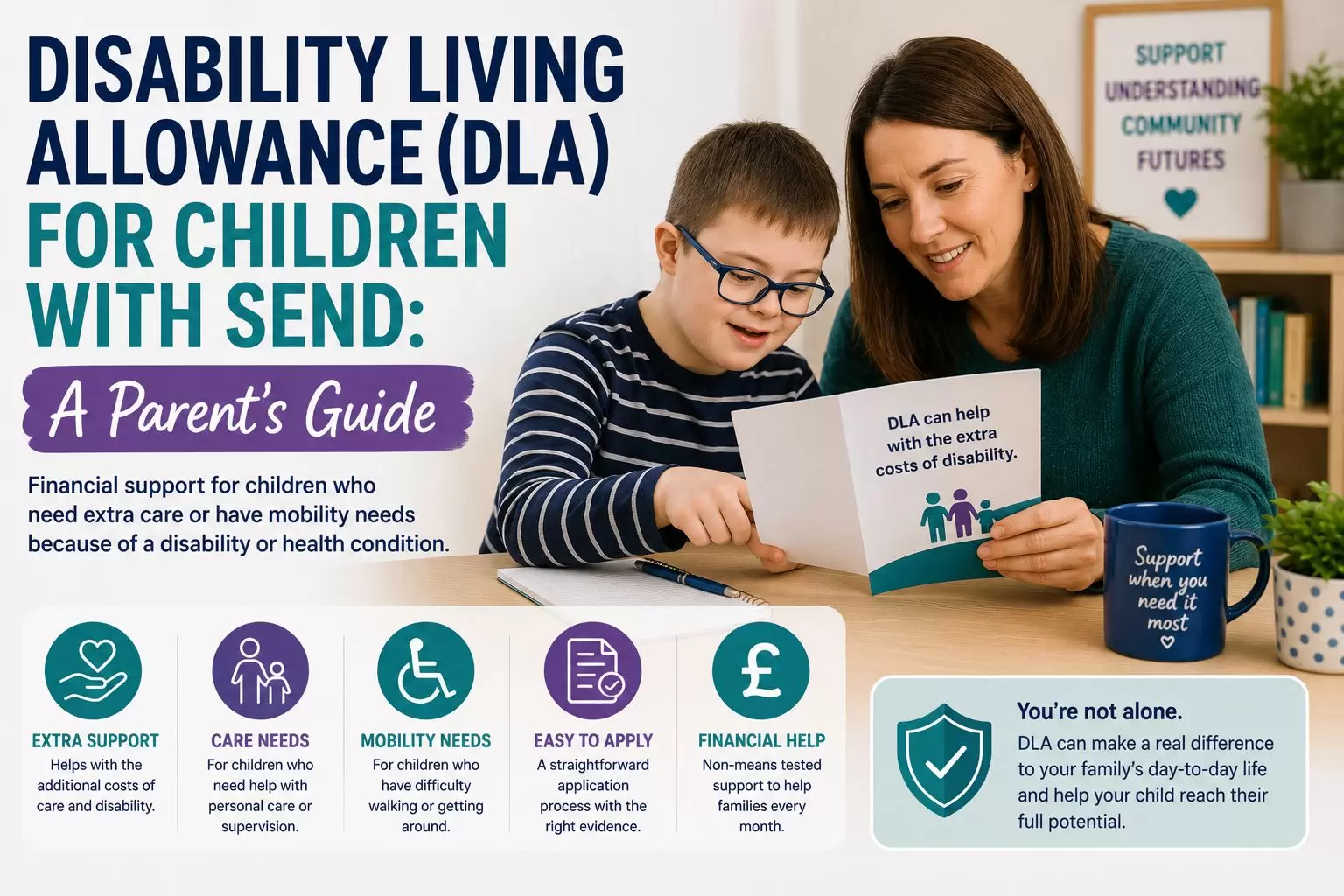
Disability Living Allowance (DLA) for Children with SEND: A Parent's Guide
If you are the parent of a child under 16 with special educational needs or a disability, you may be entitled to extra financial support through Disability Living Allowance (DLA). This benefit is designed to help with the extra costs of caring for a child who has care or mobility needs, or both. It is not means-tested, so your income or savings do not affect eligibility. Understanding what DLA offers, how the rates work, and how to apply can make a real difference to your family’s budget and your child’s quality of life.
What is Disability Living Allowance for Children?
Disability Living Allowance for children is a tax-free benefit paid to families in England, Wales, and Northern Ireland. It is administered by the Disability and Carers Service, part of the Department for Work and Pensions (DWP). The benefit is intended for children under 16 who need substantially more care, supervision, or help with mobility than other children of the same age. The money can be spent however you choose, whether on specialist equipment, extra therapies, transport, or simply to offset the additional demands of caring.
One of the most helpful aspects is that DLA is not based on a diagnosis. It is based on the level of help your child actually needs. This means children with conditions such as autism, ADHD, or learning disabilities can qualify even without a formal diagnosis, as long as their care or mobility needs are significant enough. It is also important to note that DLA is available for children from the age of three months, or from birth if the child has a terminal illness and is expected to live less than 12 months.
DLA Components and Weekly Rates
Disability Living Allowance for children has two parts: the care component and the mobility component. A child may be eligible for one or both, depending on their individual needs. Each component is paid at different rates, reflecting the level of help required.
Care Component
The care component is for children who need more care or supervision than other children their age. The weekly rates from April 2026 are:
| Rate | Weekly amount |
|---|---|
| Lowest rate | £30.30 |
| Middle rate | £76.70 |
| Highest rate | £114.60 |
These rates apply to children who meet the qualifying conditions at each level. For example, a child who needs frequent help with personal care throughout the day and night may qualify for the highest rate, while a child who needs a significant amount of help during the day may be entitled to the middle rate. The lowest rate is for children who need a substantial amount of care at certain times but not constantly.
Mobility Component
The mobility component helps with the extra costs of getting around. There are two rates: a lower rate and a higher rate. The lower rate is available from age five, and the higher rate from age three. The exact weekly amounts for the mobility component are not provided in the research pack, so you should check the current rates on GOV.UK or Contact’s website. A child who cannot walk or needs supervision outdoors may qualify for the higher rate, while those who need guidance or prompting may be eligible for the lower rate.
Overall, weekly DLA payments for children range from £30.30 to £194.60, depending on the combination of care and mobility rates awarded.
Age Rules and When to Claim
You can claim Disability Living Allowance for a child from the age of three months. If your child has a terminal illness and is expected to live less than 12 months, you can claim from birth. Special rules apply in these cases, which can speed up the process and provide immediate access to the highest rate of the care component. The claim form (DLA1 Child) includes a section for terminal illness, and you will need to provide an SR1 medical report from your doctor.
When your child turns 16, their DLA award will normally end and they will be invited to claim Personal Independence Payment (PIP) instead. This change is not automatic; your child must make a new claim for PIP. It is a good idea to start preparing for this transition well before the 16th birthday, as the assessment criteria for PIP differ from those for DLA.
How to Claim DLA for Your Child
The claim form for Disability Living Allowance for children is called DLA1 Child (ALT). You can obtain it by calling 0800 121 4600. The same number can help you if you have any questions or need the form in an alternative format. The form is long, and it is essential to answer every question fully, describing your child’s care and mobility needs in everyday terms. Focus on how much help your child actually needs, not on their diagnosis or what professionals say. Use specific examples of what happens during a typical day and night.
Because DLA is not means-tested, it does not matter if you are working, on benefits, or have savings. The decision is based purely on the child’s needs. However, the process can take up to 12 weeks or longer, so it is worth starting early. Keep copies of everything you send and note the date you posted the form. If the decision is negative, you can ask for a mandatory reconsideration and, if needed, appeal to a tribunal.
Remember that children in Scotland cannot claim DLA. They must apply for Child Disability Payment instead. If you move to Scotland from England or Wales, your child’s DLA will continue for up to 13 weeks before you need to switch to the Scottish benefit. Similarly, if you move to England, Wales, or Northern Ireland, you will need to claim DLA for your child.
Special Rules for Children Nearing the End of Life
If your child has a terminal illness and is expected to live less than 12 months, special rules apply to the DLA claim. These rules are designed to make the process faster and less stressful for families. You can claim from birth, and the care component will be paid at the highest rate without needing to show that your child has had care needs for three months (the usual qualifying period). You will need to provide an SR1 form from your doctor or a consultant.
These special rules also apply to the mobility component, but only if your child is aged three or over. The claim form includes a specific section for terminal illness, so make sure you tick the relevant box and explain the situation. The DWP aims to process these claims as quickly as possible.
DLA vs Other Benefits
Disability Living Allowance for children is separate from other benefits you might receive, such as Carer’s Allowance or Child Benefit. It can be paid alongside most other benefits, and because it is not income-based, it will not reduce your other entitlements. However, if your child turns 16, DLA stops and they must claim Personal Independence Payment (PIP) instead. PIP is also not means-tested but has its own assessment criteria based on daily living and mobility needs.
For families in Scotland, as mentioned, the equivalent benefit is Child Disability Payment. This is administered by Social Security Scotland and follows similar principles, though the application process is different. If you are unsure where your child stands, it is always worth checking with a benefits adviser or using a free online benefits calculator from an independent organisation.
Frequently Asked Questions
Does my child need a formal diagnosis to get DLA?
No. DLA is based on the care and mobility needs your child actually has, not on a medical label. Many children with conditions such as autism, ADHD, or global developmental delay qualify even without a formal diagnosis, as long as you can show they need substantially more help than other children of the same age.
How long does a DLA claim take to process?
Standard claims can take up to 12 weeks, though it sometimes takes longer. If your child has a terminal illness, the special rules should speed things up. You can call 0800 121 4600 to check the progress of your claim, but avoid phoning too often as it can delay the process.
Can DLA affect my other benefits or my work?
No. DLA is not means-tested and is tax-free. It will not affect your income-related benefits, such as Universal Credit, Working Tax Credit, or Housing Benefit. It also has no impact on your earnings or savings, so you can work and still receive it.
What happens when my child turns 16?
Your child will normally be asked to claim Personal Independence Payment (PIP) instead of DLA. This is a separate benefit that covers care and mobility needs for people aged 16 and over. The change is not automatic, so you will need to submit a new claim. It is wise to begin preparing the evidence early.
Can I claim DLA if I live in Scotland?
No. Children in Scotland must claim Child Disability Payment instead. If you move to Scotland from elsewhere, your child’s DLA will continue for up to 13 weeks, after which you need to switch to the Scottish benefit. For families moving to England, Wales, or Northern Ireland, you should claim DLA for your child.
Disability Living Allowance for children can provide essential financial support for families raising a child with SEND. While the application form may seem daunting, taking the time to describe your child’s daily needs honestly and in detail is the best way to secure the right rate. If you are unsure about any part of the process, contact the DWP helpline or speak to a benefits adviser. Every family with a child who has extra care or mobility needs should check whether they are eligible, because the extra income can make a significant difference to your child’s wellbeing and your family’s quality of life.
Final Thoughts
Applying for Disability Living Allowance can feel daunting, particularly when parents are trying to explain needs that may not always be visible to others. The strongest applications clearly describe the extra care, supervision, prompting and mobility support a child needs compared with another child of the same age. For a fuller explanation of eligibility, care and mobility components and what evidence may help, read our DLA for Children guide. If you would like practical help preparing a stronger application, our DLA Application Support for Children service can guide you through the form, identify missing evidence and help present your child’s needs clearly and accurately.