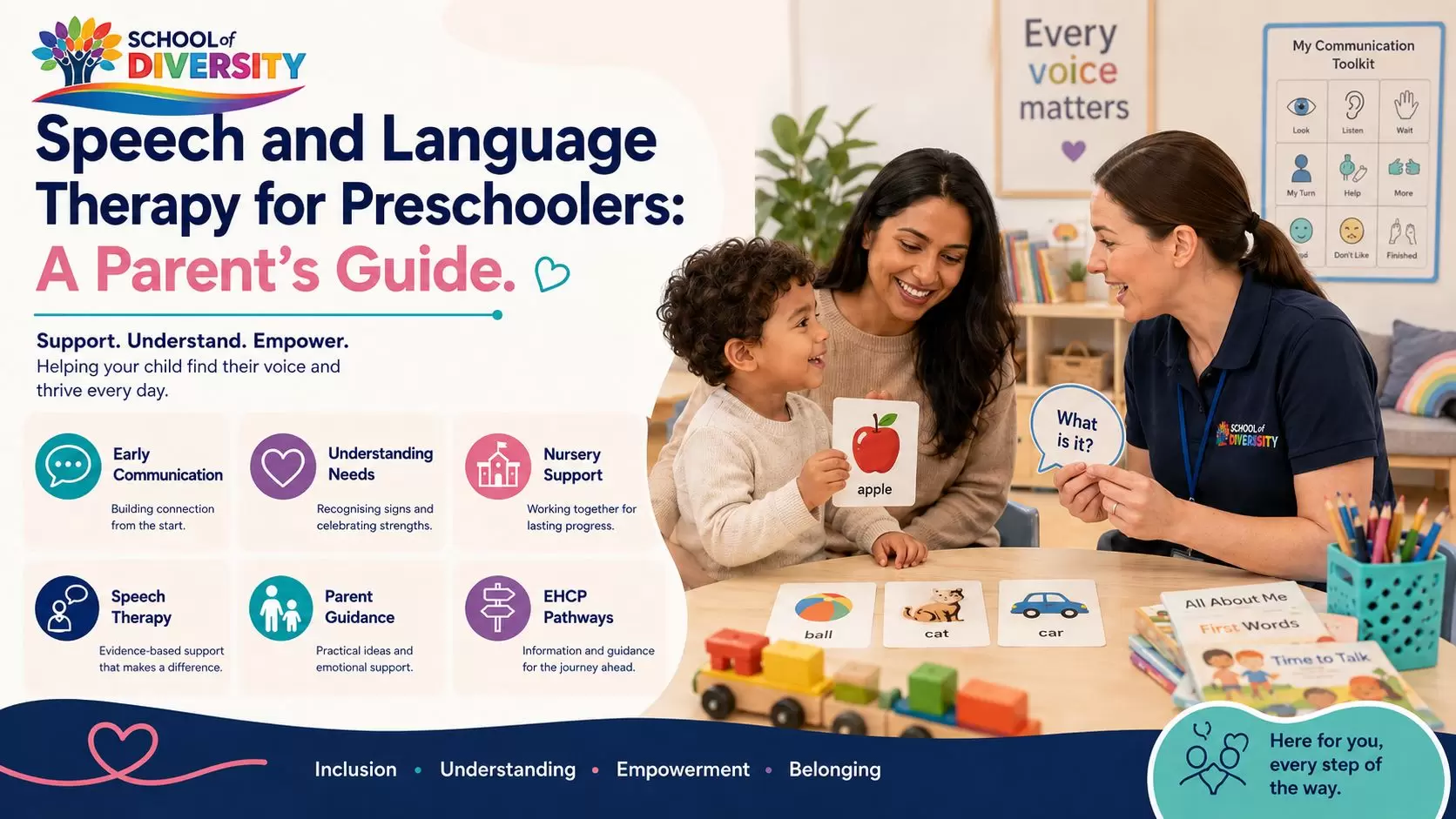
Speech and Language Therapy for Preschoolers: A Parent's Guide
Early Speech and Language Milestones
Every child develops at their own pace, but typical expectations exist that can help parents understand if their preschooler is on track. By around six months, babies usually turn toward sounds, are startled by loud noises, watch faces closely, smile and laugh, and begin to coo and babble. By 18 months, children typically say up to 20 single words, understand simple questions, enjoy looking at picture books, and copy actions they see. Knowing these milestones allows you to notice if your child might need extra support.
When to Seek Help
If your child does not respond to noises by nine months or does not point by age one, it is sensible to consult your GP or health visitor. Early identification is key for children with special educational needs and disabilities (SEND). Professionals can assess whether speech and language therapy is needed and guide you toward appropriate services in your area.
Simple Strategies to Try at Home
While waiting for professional input, there are everyday activities that support communication. Copy the sounds your child makes, talk about what you are doing during daily routines, sing action songs together, and set aside a few minutes of special playtime each day. These strategies help build the foundations for talking and understanding words without requiring any special equipment or training.
Understanding Speech and Language Therapy for SEND
Speech and language therapy (SLT) helps children who struggle with talking, understanding language, social communication, or feeding and swallowing. For preschoolers with SEND, therapy may involve direct work with the child, training for parents and early years staff, or both. The type and availability of SLT vary significantly depending on where you live in England.
Who Provides Speech Therapy?
Most speech and language therapy for young children is delivered through NHS trusts, often commissioned by local authorities. Some areas also offer services through independent providers or charities. For example, Speech and Language UK (formerly I CAN) is a national charity that aims to help children struggling with talking and understanding words. They provide information, advice, and a free online progress checker tool to assess your child’s development.
The Role of the Education, Health and Care Plan (EHCP)
In some areas of England, such as Essex (excluding Southend-on-Sea and Thurrock), children can only receive speech and language therapy from the local NHS provider, Provide Health SEND service, if they have an Education, Health and Care Plan (EHCP). Referrals to this service come only from Essex County Council’s central SEND team; parents cannot request it directly. This means that without an EHCP, families in that area may need to look elsewhere for support. In contrast, other areas like Tower Hamlets offer speech and language therapy for all children under five up to the end of Reception class, without requiring an EHCP. This variation underscores the importance of checking your local offer.
How Different Areas Handle Speech Therapy for Preschoolers
The information below shows just a few examples of how provision differs across England. Always check your own local authority’s local offer for the most accurate details.
| Area | Eligibility | Referral Route | Examples of Interventions |
|---|---|---|---|
| Essex (excluding Southend & Thurrock) | Children with an EHCP only | Via Essex County Council central SEND team (no direct access) | Training in PECS, Makaton, Attention Autism; assessments; direct therapy |
| Tower Hamlets | Under 5s up to end of Reception (no EHCP requirement stated) | Information not specified on extracted page – check local offer | Not specified on extracted page |
| Northumberland | Birth to age 19 (EHCP criteria not specified on extracted page) | Not specified on extracted page | Not specified on extracted page |
| Cambridgeshire | Specialist support available (exact eligibility not specified) | Not specified on extracted page | Not specified on extracted page |
This table highlights how local offers can differ. Some areas make speech therapy widely available, while others link it tightly to an EHCP. Parents should read their local authority’s SEND local offer pages carefully.
National Support and Recent Developments
On a national level, help is available. Speech and Language UK provides a free progress checker that parents can use online to see if their child’s communication skills are typical for their age. The charity notes that approximately two million children in the UK have difficulty learning to talk and understand words. In May 2025, the UK government announced that up to 20,000 more young children, including those with SEND, will receive earlier speech and language support. This initiative aims to reduce waiting times and improve access before children start school.
Other local services, such as the Northumberland SEND speech, language and communications service (for children from birth to age 19), the Cambridgeshire Speech and Language Therapy Service, and the Brighter Futures for Children Speech, Language & Communication Hub in Reading, show that many areas are investing in early years support. Each service has its own referral criteria, so it is essential to contact your local NHS trust or council for the correct pathway.
Frequently Asked Questions
What should I do if I think my preschooler needs speech therapy?
Start by talking to your health visitor or GP. They can check your child’s development and refer you to the local speech and language therapy service if needed. You can also use the free progress checker from Speech and Language UK to get a better idea of where your child is compared to typical milestones.
Does my child need an EHCP to get speech therapy?
Not always. In some areas, such as Tower Hamlets, speech therapy is available for all children under five without an EHCP. However, in places like Essex (excluding Southend and Thurrock), an EHCP is required. Check your local authority’s SEND local offer or contact your council’s SEND team to find out the rules in your area.
How can I support my child’s speech development at home?
Simple daily strategies can make a difference. Copy your child’s sounds, talk about what you are doing while cooking or bathing, sing action songs, and have short special playtime sessions. These activities encourage communication in a natural, low-pressure way. If your child has SEND, strategies like PECS or Makaton may be introduced by a therapist, but you can start with these everyday interactions.
What is the free progress checker from Speech and Language UK?
It is an online tool that helps parents see if their child’s talking and understanding of words are developing as expected. You answer a few questions about your child’s age and communication skills, and the checker gives you personalised guidance. If it highlights potential concerns, it advises you on the next steps, such as speaking to a health professional.
Final Thoughts
Speech and language therapy for preschoolers can make a meaningful difference when a child is struggling with early communication, understanding, expressive language, social interaction or confidence. The earlier needs are recognised and supported, the stronger the foundation for nursery, school and future learning. You may find it helpful to read our wider guide on SEND support for preschool children and our page on how to request an EHC needs assessment for a child under 5. If your child’s needs continue into school, our guide on how to request a speech and language therapy assessment at school may also help. Where communication needs are significant or long-term, our guide to EHCPs for speech and language needs explains how support can be included in a formal plan.