
Last reviewed: March 2026
Written by: School of Diversity SEND Support Team
Topic: Education, Health and Care Plans (EHCP)
This guide is designed to help parents understand the EHCP process in England and is regularly updated to reflect SEND guidance and procedures.
EHCP for Speech and Language Needs: A Guide for Parents
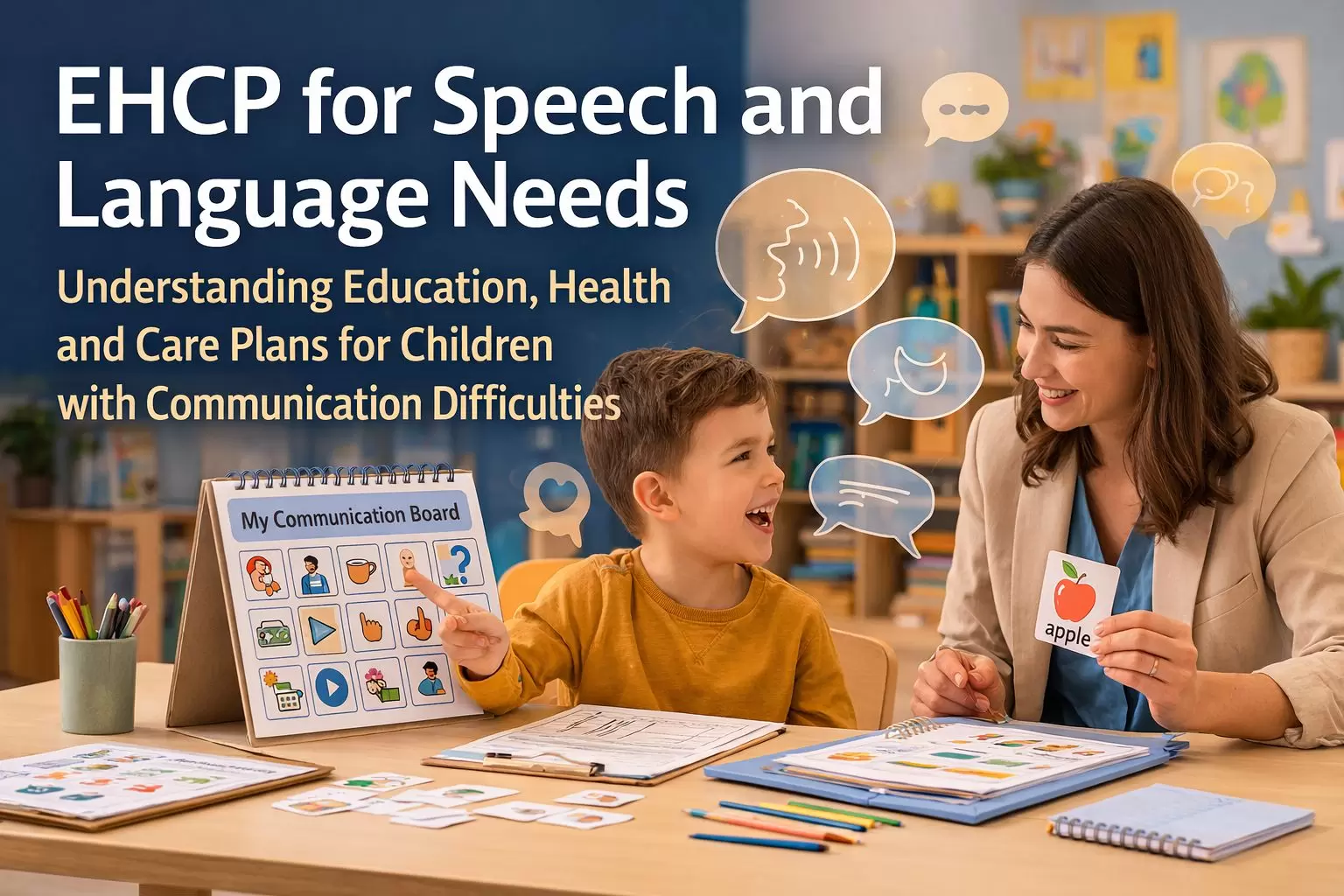
An EHCP for speech and language needs provides additional support for children whose communication difficulties significantly affect their ability to access education. The plan describes the child’s needs, the support required, and the educational setting responsible for delivering that support. This may include speech and language therapy, communication strategies, specialist teaching approaches, or structured support in the classroom.
Key Takeaways
Children with speech and language needs may qualify for an Education, Health and Care Plan (EHCP) if their communication difficulties affect learning.
EHCPs describe the child’s needs, outcomes, and the support required to meet those needs.
Support may include speech and language therapy, communication strategies, and specialist teaching approaches.
Evidence from professionals such as speech and language therapists or educational psychologists can support an EHCP request.
The support written in Section F of the EHCP is legally enforceable.
Speech and language difficulties can affect a child’s ability to communicate, understand instructions, and participate in classroom learning. While many schools provide support through SEN support, some children require more specialist provision to access education effectively.
An Education, Health and Care Plan (EHCP) can ensure that the right support is provided when a child’s communication needs cannot be met through school support alone. Understanding how EHCPs work for children with speech and language needs can help parents decide whether requesting an assessment may be appropriate.
Can Children With Speech and Language Needs Get an EHCP?
Direct answer:
Yes. Children with speech and language needs may receive an EHCP if their communication difficulties require more support than a school can provide through SEN support.
An EHCP is not issued solely because a child has a speech or language diagnosis. Instead, the local authority considers how the child’s communication difficulties affect their ability to access learning.
Some children receive effective support through SEN support, while others require the structured support provided through an EHCP.
What Support Can an EHCP Provide for Speech and Language Needs?
Direct answer:
An EHCP for speech and language needs may include therapy support, communication strategies, and specialist teaching approaches.
Support included in the plan may involve:
speech and language therapy
communication strategies such as visual supports
structured language programmes
individual support during learning activities
staff training on communication support
assistive communication technology
The specific provision depends on the child’s individual needs.
What Evidence Is Needed for a Speech and Language EHCP?
Direct answer:
Evidence for a speech and language EHCP usually includes professional assessments, school reports, and parent observations.
Useful evidence may include:
speech and language therapy assessments
school SEN support records
reports from educational psychologists
teacher observations
examples of communication difficulties in school
Clear evidence showing how communication difficulties affect learning can support an EHCP request.
What Should Section F Include for Speech and Language Needs?
Definition:
Section F of an EHCP describes the special educational provision required to meet the child’s needs.
For children with speech and language needs, Section F may include:
regular speech and language therapy sessions
communication support strategies
language development programmes
staff training to support communication needs
structured classroom support
Provision should be clear, specific, and measurable so the support is delivered consistently.
Can Children With Speech and Language Needs Attend Specialist Schools?
Some children attend mainstream schools with additional support, while others benefit from specialist settings designed for communication needs.
If a specialist placement is required, the school will be named in Section I of the EHCP.
The aim is always to ensure the child receives the support needed to access education and develop communication skills.
FAQ
Does speech delay automatically qualify a child for an EHCP?
No. An EHCP is issued when communication difficulties significantly affect a child’s ability to access education and require additional provision.
Can speech therapy be included in an EHCP?
Yes. Speech and language therapy may be included when it supports the child’s educational needs.
Who assesses speech and language needs for an EHCP?
Speech and language therapists, educational psychologists, and school SEN staff may contribute to assessments.
What if an EHCP request for speech and language needs is refused?
Parents can request mediation or appeal the decision to the SEND Tribunal.
Explore More EHCP Guidance
If you are considering requesting an EHCP for your child, it may help to understand the wider process. You can read What is an EHCP? to learn how Education, Health and Care Plans work, or explore How to Apply for an EHCP for step-by-step guidance on requesting an assessment. Our guide on What Evidence Do I Need for an EHCP? explains the types of information that can support an application, while EHCP Assessment Process Explained outlines what happens during the assessment stage.