
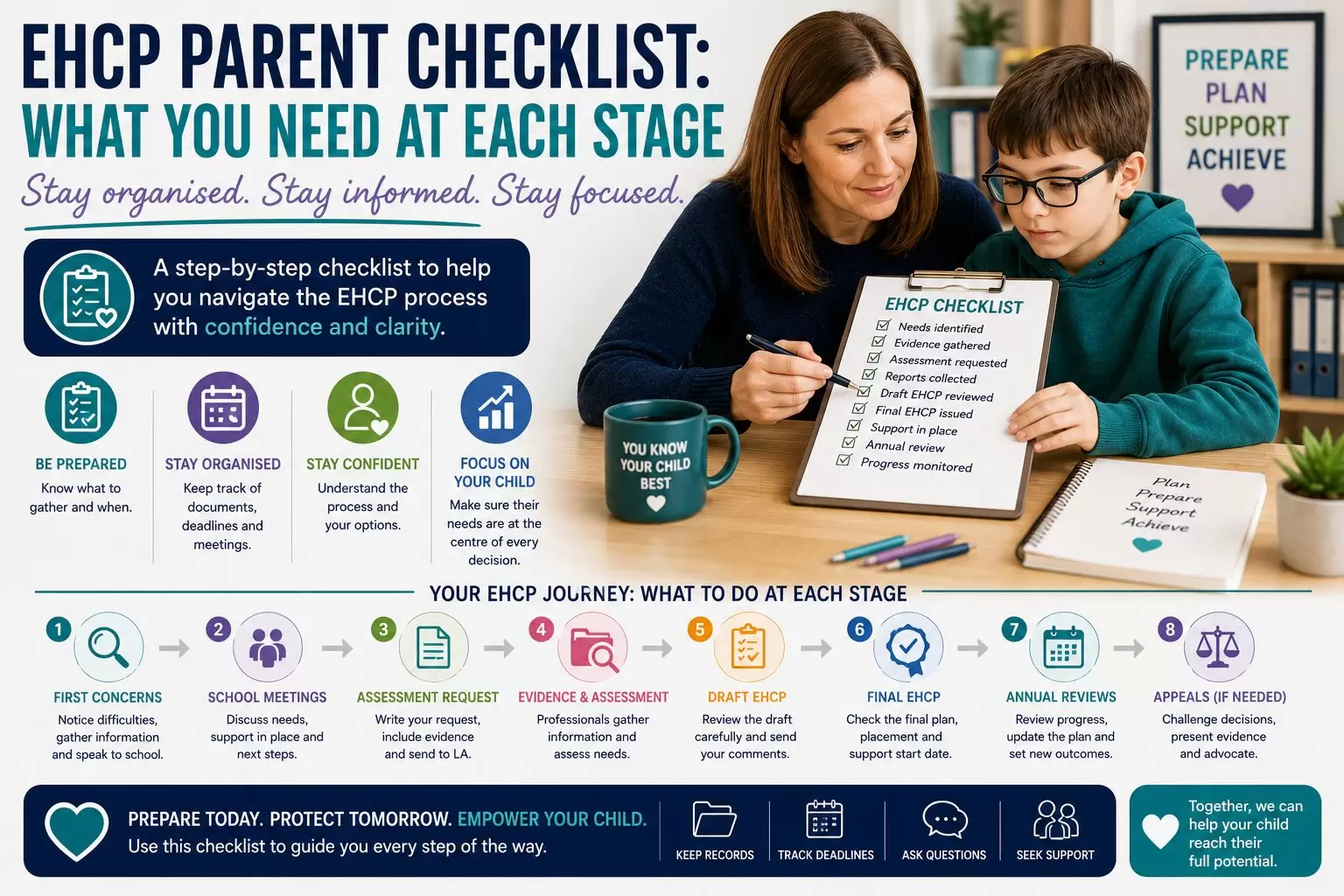
EHCP Parent Checklist: What You Need at Each Stage
The EHCP process can feel easier to manage when you know what to prepare and when.
Many parents find the process stressful because there are forms, reports, meetings, deadlines, and decisions to keep track of. A clear checklist can help you stay organised and make sure important information is not missed.
This guide takes you through each stage of the EHCP journey, from the first concerns to assessment, draft plans, final EHCPs, annual reviews, and appeals.
Why an EHCP Checklist Helps
An EHCP checklist helps you keep control of the process.
It can help you:
- Track key dates
- Gather evidence
- Prepare for meetings
- Record communication
- Understand next steps
- Avoid missing important deadlines
- Keep your child’s needs at the centre
You do not need to do everything at once. The key is to work through the process step by step.
Stage 1: When You First Become Concerned
Before requesting an EHCP assessment, it is useful to gather a clear picture of your child’s needs.
Checklist:
- Write down your main concerns
- Keep examples of difficulties at home and school
- Ask the school what support is already in place
- Request a copy of any SEN support plan
- Ask how progress is being measured
- Keep copies of school reports
- Record any concerns about anxiety, behaviour, learning, communication, or attendance
- Note what has helped and what has not worked
If you are unsure whether your child may need more formal support, read signs your child may need an EHCP.
Stage 2: Speaking to the School
Before applying, it is helpful to speak with the class teacher, form tutor, or SENCO.
Checklist:
- Ask for a meeting with the SENCO
- Prepare your questions in advance
- Take notes during the meeting
- Ask what support is currently being provided
- Ask whether your child is on SEN support
- Ask whether outside professionals have been involved
- Ask what the school recommends as next steps
- Follow up by email after the meeting
Clear written communication can help avoid confusion later.
You can also read working with schools to support your child effectively.
Stage 3: Preparing an EHCP Assessment Request
An EHCP assessment request should clearly explain why your child may need support beyond what school can usually provide.
Checklist:
- Include your child’s name, date of birth, and school
- Explain your child’s needs clearly
- Describe how those needs affect education
- Explain what support has already been tried
- Say why current support is not enough
- Include copies of evidence
- Attach professional reports if available
- Include your views as a parent
- Include your child’s views where appropriate
- Keep a copy of everything you send
You can read more about the EHCP assessment process.
Stage 4: Evidence to Gather
Evidence is one of the most important parts of the EHCP process.
Checklist:
- School reports
- SEN support plans
- Individual learning plans
- Attendance records
- Behaviour or regulation logs
- Emails with school
- Professional assessments
- Educational psychologist reports
- Speech and language reports
- Occupational therapy reports
- Medical letters if relevant
- Parent notes
- Examples of schoolwork
- Records of school refusal or anxiety
Evidence should show what your child needs, how they are affected, and why support is required.
You can read what evidence wins an EHCP appeal for more guidance.
Stage 5: If the Local Authority Agrees to Assess
If the local authority agrees to assess, professionals will gather information about your child’s needs.
Checklist:
- Check which professionals are being contacted
- Ask whether educational psychology advice is included
- Share any additional evidence
- Keep track of dates
- Respond promptly to requests for information
- Keep copies of all reports received
- Check whether advice accurately reflects your child’s needs
- Raise concerns if important needs are missed
This stage is about building a full picture of your child.
Stage 6: If the Local Authority Refuses to Assess
If the local authority refuses to assess, you still have options.
Checklist:
- Read the refusal letter carefully
- Note the date of the decision
- Identify the reason for refusal
- Contact a mediation service
- Request a mediation certificate if needed
- Gather stronger evidence
- Consider whether to appeal
- Track appeal deadlines
- Seek advice if you are unsure
You can read EHCP refused what next if you are at this stage.
Stage 7: Reviewing a Draft EHCP
If a draft EHCP is issued, read it carefully before responding.
Checklist:
- Check whether all needs are included
- Check whether needs are described accurately
- Review the outcomes
- Check whether provision is specific
- Look for vague wording
- Check whether therapy is included if needed
- Check whether support is quantified
- Check the named placement section
- Write comments clearly
- Respond within the deadline
The draft stage is your opportunity to ask for changes before the plan is finalised.
You can read what support should be included in an EHCP.
Stage 8: When the Final EHCP Is Issued
Once the final EHCP is issued, support should begin.
Checklist:
- Read the final plan carefully
- Check the named school or placement
- Confirm when support will start
- Arrange a meeting with the school or SENCO
- Ask who will deliver each part of the support
- Ask how progress will be monitored
- Keep records of what is being delivered
- Raise concerns early if support is not happening
You can read what happens after an EHCP is issued.
Stage 9: Preparing for an Annual Review
Annual reviews check whether the EHCP is still accurate and effective.
Checklist:
- Read the current EHCP
- Highlight outdated information
- Note what is working
- Note what is not working
- Gather updated evidence
- Ask your child for their views
- Request reports from professionals if needed
- Prepare questions
- Ask whether support needs changing
- Follow up after the meeting
You can read more about the EHCP annual review process.
Stage 10: If You Need to Appeal
You may need to appeal if you disagree with a local authority decision.
Checklist:
- Check the date of the decision letter
- Contact mediation
- Request your mediation certificate
- Check the appeal deadline
- Gather evidence
- Organise documents clearly
- Write down the key issues
- Focus on your child’s needs
- Prepare for tribunal if needed
- Seek support if the process feels difficult
You can read how to appeal an EHCP decision.
Stage 11: Keeping Everything Organised
Organisation can make the whole EHCP process easier.
Checklist:
- Create a folder for all EHCP documents
- Keep emails in one place
- Save decision letters
- Record dates and deadlines
- Keep a meeting log
- Keep copies of evidence
- Label reports clearly
- Keep a list of professionals involved
- Record phone calls with short notes
- Keep your child’s views updated
Good organisation helps you respond quickly and confidently.
Stage 12: Questions to Keep Asking Throughout the Process
At every stage, ask:
- What are my child’s needs?
- Are those needs fully understood?
- What support is currently in place?
- Is the support working?
- What evidence shows progress or difficulty?
- Does my child need specialist input?
- Are deadlines being followed?
- What happens next?
These questions keep the process focused on your child.
You can also read questions to ask at EHCP meetings.
Frequently Asked Questions: EHCP Parent Checklist
What should I include in an EHCP assessment request?
You should include your child’s needs, how those needs affect education, what support has already been tried, why current support is not enough, and any supporting evidence.
What documents do I need for an EHCP application?
Useful documents include school reports, SEN support plans, professional assessments, attendance records, behaviour logs, parent notes, and examples of your child’s work.
How do I stay organised during the EHCP process?
Keep all documents in one place, track deadlines, save emails, write notes after meetings, and keep a clear record of evidence and decisions.
What should I check in a draft EHCP?
Check that your child’s needs are accurate, provision is specific, outcomes are suitable, therapy is included where needed, and nothing important is missing.
What should I do if my EHCP request is refused?
Read the refusal letter, note the deadline, contact mediation, gather stronger evidence, and consider whether to appeal the decision.
What should I prepare for an annual review?
Prepare notes about what is working, what is not working, updated evidence, your child’s views, and questions about support, progress, and provision.
Do I need support with the EHCP process?
You may benefit from support if you are unsure what to include, your request has been refused, the draft plan is vague, or you are preparing for an appeal.
Final Thoughts
The EHCP process can feel complex, but a clear checklist helps you move through each stage with more confidence.
You do not need to have every answer at the beginning. What matters is staying organised, gathering evidence, and asking clear questions when decisions are made.
If you want a full overview of the EHCP journey, you can explore our comprehensive EHCP guide, which explains each stage in detail.