
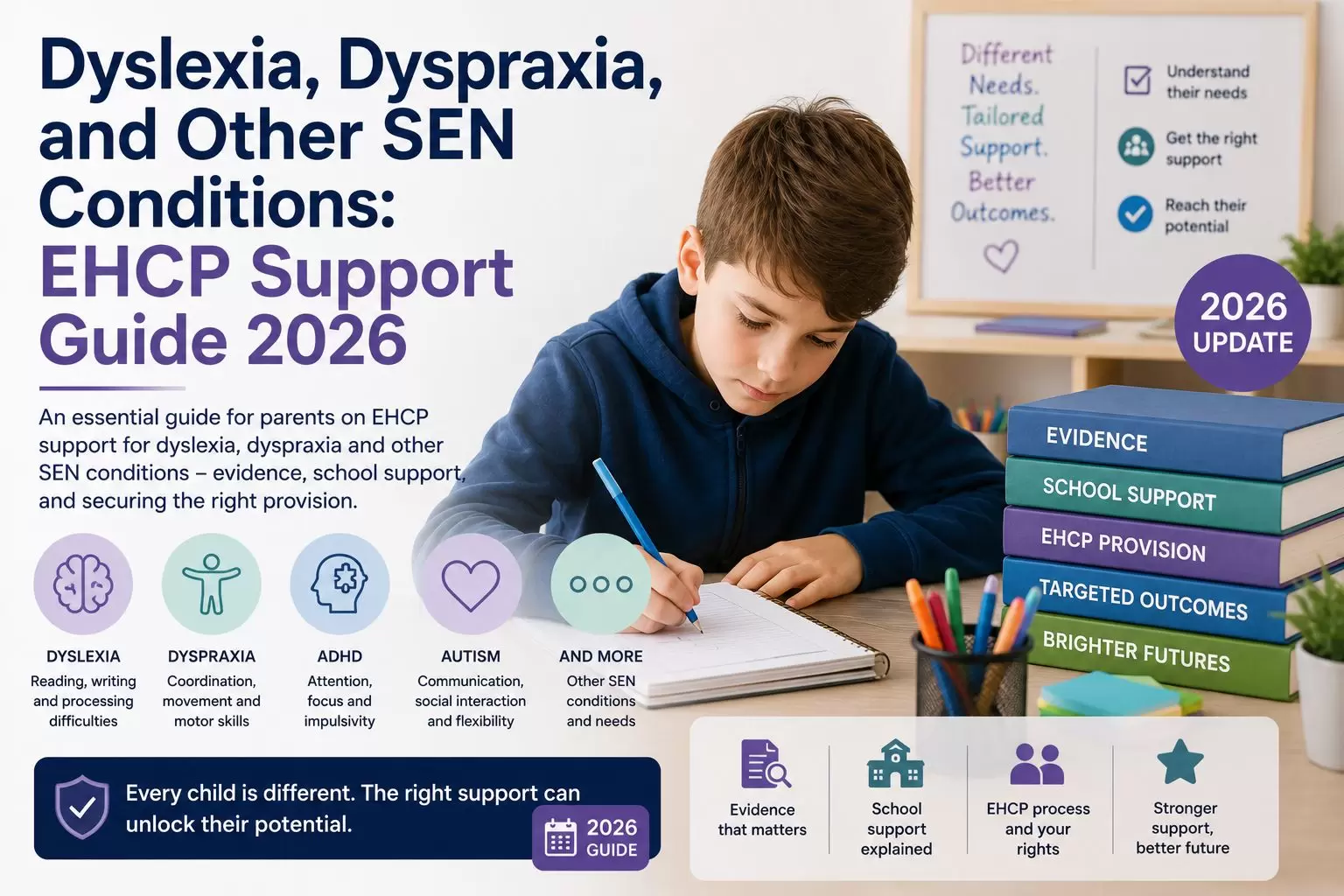
Dyslexia, Dyspraxia, and Other SEN Conditions: EHCP Support Guide 2026
Parents of children with special educational needs (SEN) often find themselves facing a complex system when trying to secure the right support at school. For conditions such as dyslexia and dyspraxia, the question of whether an Education, Health and Care Plan (EHCP) can be obtained is a common source of confusion. This guide explains what you need to know about the EHCP process for dyslexia, dyspraxia, and other SEN conditions, and how to strengthen your application.
What Are Dyslexia and Dyspraxia?
Dyslexia is a specific learning difficulty that primarily affects reading, writing, and spelling. It is recognised as a special educational need, which means children with dyslexia are entitled to support through the SEN system. Dyspraxia, also known as Developmental Coordination Disorder (DCD), affects movement and coordination. It can impact fine motor skills, gross motor skills, and planning abilities. Both conditions can overlap with other SEN needs, and many children require tailored support to thrive in school.
The British Dyslexia Association provides a guide for parents on identifying dyslexia and supporting a child at home. Organisations such as CRESTED, the British Dyslexia Association (BDA), and the Helen Arkell Centre are all available to support and guide parents through this process.
Can You Get an EHCP for Dyslexia?
Dyslexia is a special educational need, and parents should not be put off from applying for an EHC Plan when they hear that they cannot get one for dyslexia. This is a misconception that can prevent families from pursuing the legally enforceable support their child may need. An EHCP outlines a child’s specific needs related to dyslexia and any other difficulties, and it can secure tailored provision at school.
Quite often, parents are discouraged from applying following advice from schools or local authorities that suggests an EHCP is not available for dyslexia alone. However, if a child’s needs are significant and cannot be met through SEN Support alone, an EHC Needs Assessment is a legitimate route to explore.
Understanding SEN Support vs an EHCP
Many children with dyslexia or dyspraxia receive support through SEN Support, which is the first level of additional help provided by schools. This typically includes evidence-based interventions, small group work, or individualised teaching strategies. For some children, this level of support is sufficient to meet their needs.
An EHCP goes further. It is a legally binding document that sets out the education, health, and care provision a child or young person requires. Think of an EHCP as a personalised roadmap for your child’s education. It specifies the outcomes to be achieved and the support that must be put in place by the local authority. If SEN Support is not delivering adequate progress, or if your child’s needs are complex and long-term, an EHCP may be the right step.


The EHCP Application Process for Dyslexia and Dyspraxia
Applying for an EHCP begins with requesting an EHC Needs Assessment from your local authority. This request can be made by the child’s school, a parent, or a professional working with the child. The local authority must consider whether the child has or may have special educational needs, and whether they may need special educational provision to be made through an EHC Plan.
There is a lot of information available about the steps parents should take to give themselves the best chance of obtaining an EHCP. One helpful resource is the “Get started” checklist from Special Needs Jungle, which outlines the key actions to take early in the process. Gathering robust evidence is critical. This includes reports from educational psychologists, speech and language therapists, occupational therapists, and any other professionals involved with your child. Medical evidence relating to dyspraxia or other conditions can also strengthen the case.
It is important to document how your child’s difficulties impact their access to learning and their daily life at school. This should include specific examples of challenges with literacy, coordination, organisation, or social interaction, and the strategies that have already been tried through SEN Support.
What to Do If Your EHCP Request Is Refused
A refusal is not the end of the road. Parents have the right to appeal a decision to the First-tier Tribunal (Special Educational Needs and Disability). To strengthen an appeal, you will need to gather additional evidence and possibly seek independent assessments. Legal guidance from solicitors who specialise in SEN law can be valuable at this stage. Organisations that support parents, such as the British Dyslexia Association, may also be able to signpost you to further help.
The key is to demonstrate that your child’s needs are substantial and that without an EHCP, they are not receiving the provision necessary to make progress. An appeal can be a lengthy process, but many parents succeed in securing a plan with persistence and the right evidence.
Supporting a Child with Dyspraxia at Home
While the EHCP process focuses on school provision, support at home also plays a vital role in helping children with dyspraxia and other SEN conditions. Creating a predictable and supportive home environment can reduce anxiety and help children feel secure. Supporting fine motor development through activities such as modelling clay, threading, or drawing can be beneficial. Gross motor skills can be developed through movement activities like climbing, balancing, or swimming.
These home-based strategies complement the support provided at school and can help children build confidence and independence. Local authority guidance in areas such as Bromley suggests these practical approaches for parents of children with dyspraxia.
Dyslexia, Dyspraxia, and Overlapping Needs
It is not uncommon for children to have both dyslexia and dyspraxia, or for these conditions to co-occur with other SEN such as dyscalculia, ADHD, or autism. When applying for an EHCP, it is important to describe the full picture of your child’s needs, not just one diagnosis. An EHCP can address multiple areas of difficulty and ensure that provision is coordinated across education, health, and care.
The EHCP process is designed to be holistic. If your child has complex needs that cross different domains, the plan can bring together support from different agencies, giving you a single document that is legally enforceable against the local authority.
Finding Further Guidance and Support
For parents navigating this system, there are several organisations that offer practical advice and guidance. The British Dyslexia Association publishes a guide for parents and carers to support a child or young person who has or is thought to have dyslexia. This publication covers identifying dyslexia, working with schools, and understanding the EHCP process.
Local authorities also publish a Local Offer, which explains the support available in your area for children with SEN. The guidance for an Education, Health and Care Plan is available here, and many local authorities provide specific advice for conditions such as dyslexia and literacy difficulties.
For a more detailed overview of the EHCP process for dyslexia, the guide titled “The EHCP Process for Dyslexia: A Guide to Securing Support” is a dedicated resource that walks parents through each stage.
Frequently Asked Questions
Can I get an EHCP for dyspraxia alone?
Yes, dyspraxia is a special educational need, and if your child’s difficulties are significant and persistent, an EHCP can be secured. The key is to evidence how the condition affects their access to education and daily life, and to show that SEN Support is not sufficient to meet their needs.
What is the difference between SEN Support and an EHCP?
SEN Support is additional help provided by the school using its own resources and budget. An EHCP is a legally enforceable document issued by the local authority that specifies the exact provision a child must receive. An EHCP is typically for children with more complex or long-term needs.
How long does the EHCP process take?
The local authority has up to 20 weeks from the date of request to issue a final EHCP, if one is agreed. However, the process can take longer if assessments are delayed or if appeals are necessary. It is advisable to start gathering evidence early.
Can I appeal if my EHCP request for dyslexia is refused?
Yes, you have the right to appeal a refusal to the First-tier Tribunal. You will need to provide strong evidence, including professional reports, that demonstrates your child’s needs cannot be met without an EHCP. Legal advice can help with this process.
Does SEN support include dyslexia?
Yes, SEN Support includes provision for children with dyslexia. Schools should use evidence-based interventions to support reading, writing, and spelling. However, if these interventions are not producing adequate progress, an EHC Needs Assessment may be appropriate.
Final Thoughts
Children with dyslexia, dyspraxia and other SEN conditions can need very different types of support, so it is important that their difficulties are properly understood, evidenced and reflected in any EHCP provision. A diagnosis can be helpful, but the key question is always how your child’s needs affect their learning, independence, communication, emotional regulation and access to education. You may find it helpful to read our guides on EHCPs for dyslexia, EHCPs for sensory processing needs and what level of need qualifies for an EHCP. If you are unsure whether your child needs formal support, our guides on SEN Support vs EHCPs and how to apply for an EHCP can help you understand the next steps.