
Last reviewed: March 2026
Written by: School of Diversity SEND Support Team
Topic: Education, Health and Care Plans (EHCP)
This guide is designed to help parents understand the EHCP process in England and is regularly updated to reflect SEND guidance and procedures.
EHCP for Sensory Processing Needs: A Guide for Parents
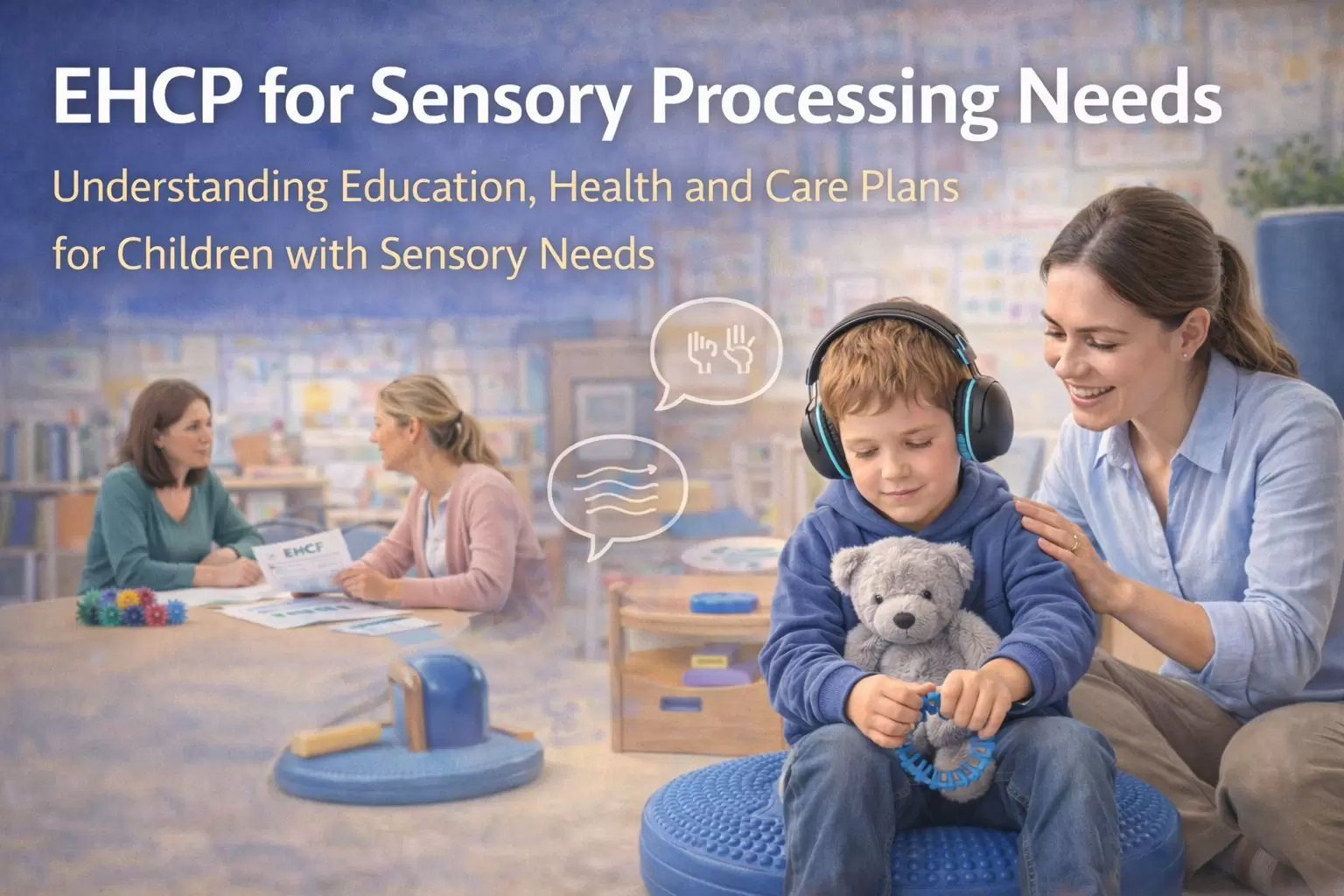
An EHCP for sensory processing needs provides additional support for children whose sensory differences significantly affect their ability to access education. The plan describes the child’s needs, the support required, and the educational setting responsible for delivering that support. This may include sensory regulation strategies, occupational therapy support, adapted classroom environments, or specialist teaching approaches.
Key Takeaways
Children with sensory processing needs may qualify for an Education, Health and Care Plan (EHCP) if their needs significantly affect their learning.
Sensory needs may include sensitivity to noise, touch, movement, or visual environments.
EHCP support may include occupational therapy, sensory regulation strategies, and adapted learning environments.
Evidence from professionals such as occupational therapists or educational psychologists may support an EHCP request.
The provision written in Section F of the EHCP must legally be delivered.
Some children experience differences in how they process sensory information. These differences may affect how they respond to noise, light, touch, movement, or busy environments.
While schools often provide support through SEN support, some children require additional strategies and specialist support to manage sensory needs in the classroom.
An Education, Health and Care Plan (EHCP) can help ensure the right support is in place when sensory processing needs significantly affect a child’s ability to access learning.
Can Children With Sensory Processing Needs Get an EHCP?
Direct answer:
Yes. Children with sensory processing needs may receive an EHCP if their sensory differences significantly affect their ability to access education.
Local authorities consider:
how sensory needs affect learning
the support already provided by the school
whether additional provision is required
Many children receive support through SEN support, while others require the structured support described in an EHCP.
What Support Can an EHCP Provide for Sensory Needs?
Direct answer:
An EHCP for sensory processing needs may include occupational therapy support, sensory strategies, and adjustments to the learning environment.
Support may include:
sensory regulation strategies
occupational therapy programmes
access to sensory equipment
adapted classroom environments
structured breaks to manage sensory overload
support from trained staff
Provision should be tailored to the child’s individual sensory profile.
What Evidence Is Needed for a Sensory EHCP?
Direct answer:
Evidence for a sensory EHCP usually includes professional assessments, school reports, and parent observations.
Evidence may include:
occupational therapy assessments
educational psychologist reports
school SEN support records
teacher observations
examples of sensory challenges affecting learning
This evidence helps demonstrate how sensory needs affect access to education.
What Should Section F Include for Sensory Needs?
Definition:
Section F of an EHCP describes the special educational provision required to meet the child’s needs.
For sensory processing needs, Section F may include:
occupational therapy programmes
sensory regulation strategies
access to quiet or sensory-friendly spaces
staff training on sensory support
structured sensory breaks
Provision should be clear, detailed, and measurable.
Can Children With Sensory Needs Attend Specialist Schools?
Some children with sensory needs attend mainstream schools with support, while others benefit from specialist settings designed to support sensory regulation and learning needs.
If a specialist placement is required, the school will be named in Section I of the EHCP.
The goal is always to ensure the child can feel comfortable, regulated, and able to learn.
EHCP for Sensory Processing Needs : FAQ
Does sensory processing disorder qualify for an EHCP?
It may qualify if the child’s sensory needs significantly affect their ability to access education.
Who assesses sensory needs for an EHCP?
Occupational therapists, educational psychologists, and school SEN staff may contribute to assessments.
Can sensory support be included in Section F?
Yes. Sensory strategies and occupational therapy support may be included when they are necessary for learning.
What if an EHCP request for sensory needs is refused?
Parents can request mediation or appeal the decision to the SEND Tribunal.
Explore More EHCP Guidance
If you are considering requesting an EHCP for your child, it may help to understand the wider process. You can read What is an EHCP? to learn how Education, Health and Care Plans work, or explore How to Apply for an EHCP for step-by-step guidance on requesting an assessment. Our guide on What Evidence Do I Need for an EHCP? explains the types of information that can support an application, while EHCP Assessment Process Explained outlines what happens during the assessment stage.