
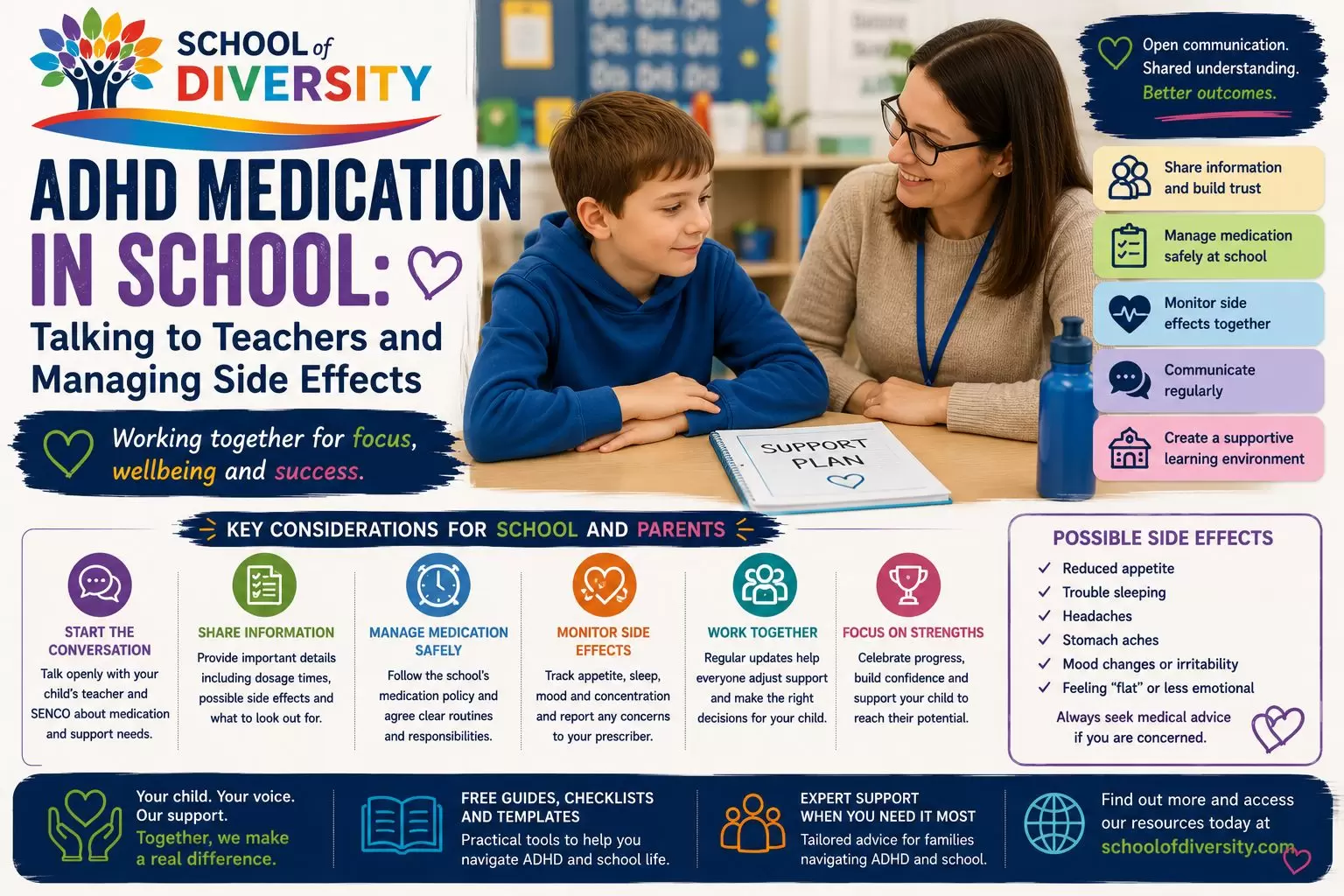
ADHD Medication in School: Talking to Teachers and Managing Side Effects
When your child takes medication for ADHD, the school day brings its own set of questions. How does the school manage midday doses? What happens if side effects interfere with learning? And how do you talk to teachers about it all? The answers depend on clear communication, a solid understanding of school policies, and a practical plan for handling side effects. This guide draws on UK guidance to help you navigate ADHD medication in the school environment.
Understanding School Policies on Medication
Schools in England are not required to manage pupils’ medicines, but where they do take on this responsibility, they must do so safely. The national guidance document Managing Medicines in Schools and Settings sets out the framework that schools should follow. This means no two schools may handle medication in exactly the same way. Your first step is to check your child’s school policy on administering medicines, including stimulant medication for ADHD. Some schools have a dedicated staff member trained to give doses, while others may ask parents to come in at lunchtime. Knowing the policy early helps you plan ahead.
What the Law and Guidance Say
The Managing Medicines in Schools and Settings guidance is designed to help schools and other children’s settings develop policies on managing medicines and put in place effective procedures. It emphasises that any medicine given at school must be stored securely, recorded accurately, and administered only by trained staff. For ADHD specifically, local multi-agency policies, such as the Stimulant Medication Policy used in some areas, provide extra detail on roles and responsibilities. Schools are expected to follow these policies, so it is worth asking your school which local or national guidance they use.
Starting the Conversation with Your Child’s School
Talking to teachers about ADHD medication can feel awkward, but a collaborative approach usually works best. Begin by requesting a meeting with the class teacher and the SENCO (Special Educational Needs Coordinator). Explain why your child takes the medication, how it helps with focus and impulse control, and what you have noticed about timing and side effects. Teachers who understand the purpose of the medication are better equipped to support your child in the classroom. The AAP recommends teacher-administered behaviour therapy as a treatment for school-aged children with ADHD, so many schools are already familiar with non-medication strategies that work alongside medicine.
Sharing Practical Details
Be specific about the medication schedule. If your child takes a stimulant at school, let the staff know the exact dose and time. Share information from your child’s clinician about how to handle missed doses or late administration. Also explain any side effects that might appear during the school day, such as reduced appetite or difficulty sleeping later. The more the school knows, the better they can adapt. If your child attends a school where medication is managed by staff, you will need to sign a consent form and provide the medicine in its original labelled container.
The Role of an Individual Health Care Plan (IHCP)
An Individual Health Care Plan (IHCP) is a practical tool for managing your child’s ADHD medication at school. It sets out in writing exactly what the school needs to do, when, and by whom. The plan typically covers the type and dose of medication, storage instructions, emergency procedures, and how to handle side effects. Schools often use an IHCP as part of their Managing Medicines in Schools policy. Many local authorities provide a template, so ask the school or your local NHS service for a copy. An up-to-date IHCP makes it easier for supply teachers and new staff to follow the same routine.
What to Include in the Plan
Your child’s IHCP should include the name and dose of the medication, the time it needs to be given, and any special instructions such as “take with or after food”. It should also list potential side effects and what to do if they occur. Include contact details for you, your child’s GP or specialist, and a note about whether the child can self-administer. Review the plan at least once a year or whenever the medication changes. An IHCP is not a legal requirement in the same way an Education, Health and Care Plan (EHCP) is, but it is strongly recommended for any child who needs regular medicine during school hours.
Managing Side Effects During the School Day
ADHD medication can cause side effects that affect your child at school. The most common ones include reduced appetite, difficulty falling asleep, and sometimes headaches or stomach upsets. The good news is that simple adjustments can often help. NICE guidance recommends taking ADHD medication either with or after food, rather than before meals. This can reduce stomach discomfort and help maintain some appetite during the day. If your child’s appetite drops significantly, consider providing additional meals or snacks early in the morning and late in the evening, when the medication’s effect is lower.
Practical Tips for Parents and Teachers
Teachers can help by allowing your child to eat a small snack at break time if needed. A lunchtime dose can be timed so that the main meal is taken before the medication peaks. If your child experiences rebound irritability as the medicine wears off in the afternoon, a short, calm transition period after school may help. Some children also benefit from a lower dose or a different type of stimulant. Always discuss side effects with your child’s prescribing clinician before making any changes. The goal is to find a balance where the medication helps with learning without causing unnecessary discomfort.
How ADHD Medication Can Affect Learning and Behaviour
Parents and teachers often ask whether ADHD medication actually improves school performance. Research shows that the answer is yes, but with important caveats. Medication can help a child focus, complete tasks, and reduce impulsive behaviour, which leads to better academic achievement. However, it is not a standalone solution. The best outcomes come when medication is combined with behavioural strategies, classroom accommodations, and consistent support at home. Most treated children take a stimulant every day, although some families prefer to use it predominantly on school days and only as needed. The decision on daily versus school-day-only use should be made with your doctor, taking into account how the child functions outside school hours.
Working with Teachers on Classroom Strategies
Teachers can reinforce the benefits of medication by using techniques such as giving clear instructions, breaking tasks into smaller steps, and offering frequent positive feedback. These strategies complement the medication and help your child develop self-regulation skills. A joint approach where teachers and parents share what works at school and at home creates a consistent environment. If your child seems over- or under-medicated during the day, report it to the school nurse or clinician promptly. Adjustments to timing or dosage can often make a big difference.
Frequently Asked Questions
Does my child’s school have to give ADHD medication?
Schools are not required to manage pupils’ medicines, but if they agree to do so, they must follow safe procedures. Many schools will administer medication if you provide a signed consent form and the medicine in its original labelled container. If the school cannot or will not give the dose, you may need to arrange to come in at lunchtime or ask your child to self-administer if they are old enough and the school policy allows it.
What if my child refuses to take their medication at school?
Refusal can happen, especially with younger children or when side effects are unpleasant. Start by talking with your child about why the medicine is important. You can also ask the school’s designated medication lead to offer it in a calm, private space. If refusal becomes a pattern, discuss it with your child’s clinician. A different formulation or a medication that lasts through the school day without a lunchtime dose might be an option.
Can ADHD medication affect my child’s appetite during lunch?
Yes, reduced appetite is a common side effect of stimulant medication. To help, give a good breakfast before the morning dose, and offer extra snacks in the evening when the medication wears off. Some schools allow children to have a small, healthy snack at break time if they have not eaten much at lunch. If appetite loss is severe, talk to your GP or specialist about adjusting the dose or trying a different medication.
How do I get an Individual Health Care Plan for my child?
Ask your child’s school for their medication policy and IHCP template. A health professional such as your child’s paediatrician or ADHD specialist can help complete the medical details. The IHCP should be agreed by you, the school, and the clinician. Keep a copy at home and give one to the school office and the class teacher. Review it regularly, especially when the medication or dose changes.
What side effects should I watch for and tell the school about?
Common side effects include loss of appetite, difficulty sleeping, headaches, stomach aches, and mood changes such as irritability or tearfulness. Tell the school about any side effects that might affect your child’s behaviour or concentration so that teachers can respond appropriately. If side effects persist or worry you, contact your child’s prescribing clinician. Never stop or change medication without medical advice.
Final Thoughts
ADHD medication in school works best when parents, teachers, the SENCO and healthcare professionals communicate clearly and regularly. Schools should understand any medication arrangements, be aware of possible side effects and respond supportively if your child experiences changes in appetite, sleep, mood, focus or emotional regulation. Medication is only one part of the picture, so it is also important to consider wider classroom strategies, reasonable adjustments and SEN support. You may find our guides on ADHD strategies for school success, ADHD and homework support and EHCPs for ADHD helpful. If school-based support is not enough, our guide on SEN Support vs EHCPs can help you understand what additional help may be available.