
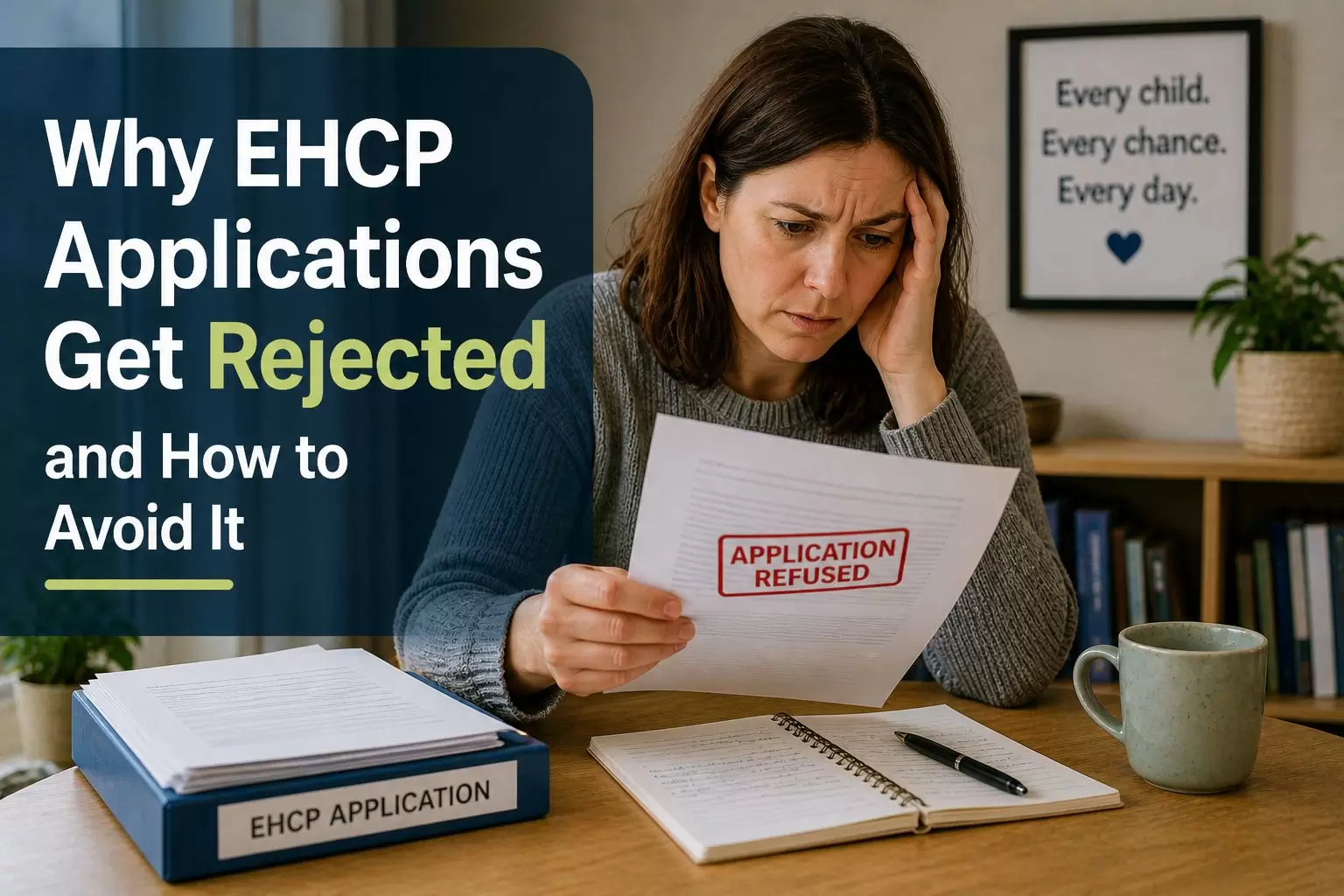
Why EHCP Applications Get Rejected and How to Avoid It
If your EHCP application has been refused, it can feel confusing and frustrating. Many parents are left wondering why the decision was made and what they could have done differently.
Understanding the reasons behind refusals can help you avoid common mistakes and build a stronger case moving forward.
Why Are EHCP Applications Refused?
Local authorities must decide whether a child’s needs require support beyond what a school can provide.
Applications are often refused when:
- Evidence is not detailed enough
- Needs are not clearly explained
- The school is considered able to meet those needs
- Progress is not clearly documented
A refusal does not always reflect your child’s needs. It often reflects how those needs have been presented.
Lack of Clear Evidence
One of the most common reasons for refusal is insufficient evidence.
General statements such as “my child struggles in school” are not enough. Decision-makers need clear, specific examples that show:
- What your child finds difficult
- How it affects their learning
- Why current support is not enough
You can explore this further in what evidence wins an EHCP appeal.
Needs Not Clearly Defined
Sometimes applications fail because the child’s needs are too broadly described.
For example:
- “Difficulty concentrating” is vague
- “Unable to focus for more than 5 minutes without support” is clear
Specific descriptions help demonstrate the level of support required.
Assumption That School Support Is Enough
Local authorities may decide that the school can meet your child’s needs through existing SEN support.
This often happens when:
- Interventions have not been fully documented
- The impact of support is unclear
- Progress data is limited
Showing that support has already been tried, and has not worked, is essential.
Lack of Professional Input
Applications are stronger when supported by professional evidence.
This may include:
- Educational psychologist reports
- Speech and language assessments
- Occupational therapy input
Without this, it can be harder to demonstrate the full extent of your child’s needs.
How to Avoid an EHCP Refusal
While not all refusals can be avoided, you can improve your chances by:
- Gathering detailed evidence early
- Using clear, specific language
- Showing lack of progress despite support
- Including professional input where possible
Preparation is one of the most important factors in a successful application.
What to Do If Your Application Is Refused
If your application is rejected, you still have options.
You can:
- Request mediation
- Appeal the decision
- Strengthen your evidence and reapply
To understand your next steps, read EHCP refused what next.
Frequently Asked Questions: EHCP Refusals
Why was my child’s EHCP application refused?
Applications are often refused due to lack of clear evidence, unclear descriptions of needs, or the belief that the school can provide sufficient support.
Can I reapply for an EHCP after a refusal?
Yes, you can reapply if you have new evidence or if your child’s needs have changed.
Can I appeal an EHCP refusal?
Yes, you have the right to appeal the decision. This usually involves mediation followed by a SEND tribunal if needed.
What evidence improves my chances of success?
Detailed reports from professionals, school records, and clear examples of your child’s difficulties all strengthen your case.
Do schools influence EHCP decisions?
Schools provide important input, but the final decision is made by the local authority based on all available evidence.
How long do I have to challenge a refusal?
You usually have two months from the decision letter or one month from your mediation certificate, whichever is later.
Are EHCP refusals common?
Yes, many initial applications are refused. However, a significant number of decisions are changed through appeals.
Final Thoughts
EHCP refusals are common, but they are not the end of the process. In many cases, they highlight where more clarity or evidence is needed.
If you want a clearer understanding of how everything fits together, you can explore our comprehensive EHCP guide, which explains the full process step by step.