
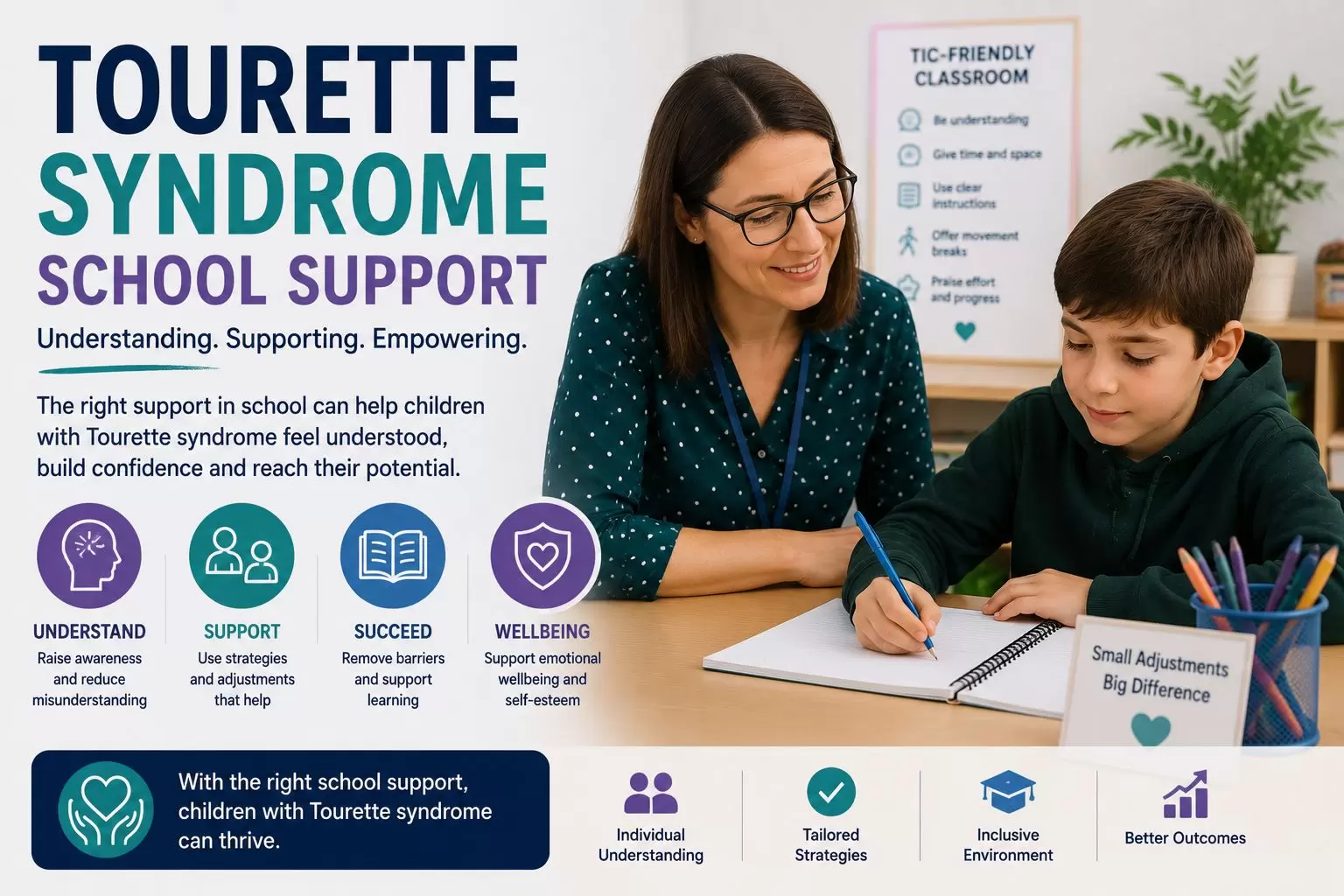
Tourette Syndrome and School Support: A Parent’s Guide to Your Child’s Rights
When your child has Tourette syndrome, ensuring they receive the right support at school can feel like a constant battle. Tics are involuntary, but the way a school responds can make a huge difference to your child’s learning and wellbeing. In the UK, schools have clear responsibilities to support pupils with Tourette syndrome, and understanding these rights is the first step to getting the help your child deserves.
This article explains what Tourette syndrome is, the basic level of support your child is entitled to, and practical strategies you can request in the classroom and during exams. You will also learn about the Tourette Syndrome Passport, a simple tool that can transform how staff understand and accommodate your child’s needs.
What Is Tourette Syndrome?
Tourette syndrome is a neurological condition that begins in childhood. Tics – sudden, repetitive movements or sounds – are the hallmark symptom, but the condition affects each person differently. Tics naturally wax and wane; they change in intensity and frequency over time, often becoming more noticeable during stress or excitement.
It is important to know that Tourette syndrome is not a learning disability. However, some symptoms can impact a student’s ability to learn. For example, a child may struggle to concentrate when suppressing tics, or motor tics might make handwriting difficult. Vocal tics can draw unwanted attention, leading to anxiety or social withdrawal.
Contrary to popular belief, swearing (coprolalia) only affects about 10 to 15 per cent of children with Tourette syndrome. The condition is three times more common in males than females, and it is believed to affect between 1 and 10 in every 1,000 children in the UK. Understanding these facts helps schools move past stereotypes and focus on individual needs.
The First Step: SEN Support
In UK schools, the first level of additional help is called Special Educational Needs (SEN) Support. This is not a formal plan or a legal document, but it is your child’s entitlement if they require extra help beyond what is normally available in the classroom. SEN Support is provided by the school itself, often with input from outside specialists such as the school nurse or educational psychologist.
For a child with Tourette syndrome, SEN Support might include simple adjustments like seating changes or extra time for tasks. The school must work with you and your child to identify what is needed and review progress regularly. If the support provided through SEN Support is not enough to meet your child’s needs, you have the right to request a formal assessment of their needs from your local authority – but that step comes later, after you have seen what SEN Support can achieve.
Practical Classroom Strategies
Evidence-based classroom strategies can make a real difference for students with Tourette syndrome. Many are simple and cost nothing to implement. You can ask the school to consider the following approaches, all of which are recommended by leading health and education organisations.
First, teachers should ignore tics as much as possible. Commenting on or reacting publicly to tics can increase a child’s anxiety and make tics worse. Punishment for tics is never appropriate, because tics are involuntary. Instead, the focus should be on reducing the pressure the child feels.
Fidget toys and chewing gum can be useful for tic management in some students. They provide an outlet for excess energy and can help the child stay focused. Some children also benefit from a quiet place to work in the classroom, such as a calm corner or a study carrel. A headset with music or semi-permeable earplugs might help block out distracting noise.
Seating near the door can be helpful if the student needs to exit at planned times, for example to release tics in a private space. You can also establish a hand gesture or signal for the student to indicate they need a break without drawing attention. This gives the child a sense of control.
Teachers should allow more time to complete tasks and tests. Breaking projects into shorter, manageable tasks can prevent overwhelm. If written work is difficult due to tics, the school can allow the use of computer programs, keyboarding, oral reports, voice recording, or a scribe. The goal is to remove barriers so the child can demonstrate their true ability.


Exam Access Arrangements
Exams are a particularly stressful time for students with Tourette syndrome. The pressure can increase tics, and the need to stay still and quiet for long periods is unrealistic for many children. During exams, special measures such as a separate room may be necessary. This allows the student to release tics without disturbing others or feeling self-conscious.
Other possible exam access arrangements include extra time, supervised rest breaks, and the use of a word processor or scribe. These are not automatic. The school must assess your child’s needs and apply to the exam board for approval. It is best to begin this process well before exam season, ideally at the start of Year 10 for GCSEs or during the autumn term of Year 11.
If you have an Education, Health and Care Plan (EHCP), exam access arrangements are likely to be included in your child’s plan. Even without an EHCP, schools have a duty to make reasonable adjustments under the Equality Act 2010. Keep records of any difficulties your child experiences during mock exams – this evidence can support your application.
The Tourette Syndrome Passport
The Tourette Syndrome Passport is a support aid designed specifically for students with Tourette syndrome. It contains information about the child’s symptoms and the strategies that help them. The passport can be shared with teachers, teaching assistants, and other school staff so that everyone understands how to support the child consistently.
You can create the passport together with your child and their healthcare team. It might include details such as which tics are most troublesome, what makes them better or worse, and what signals the child uses to request a break. The passport is not a legal document, but it is a practical tool that helps staff avoid common mistakes – like reacting to tics or expecting the child to “just stop”.
Ask your school to keep the passport on file and to share it with any new staff who work with your child. Review it each term as tics naturally change over time.
Working with Your Child’s School
Good communication between home and school is the foundation of effective support. Schools and colleges must be aware of the condition so that staff can accommodate and be flexible to the student’s needs. Educators and other school personnel can support children with Tourette syndrome by learning about the condition and how to help.
Start by arranging a meeting with your child’s class teacher or head of year. Bring information about Tourette syndrome from reputable sources such as Tourettes Action or the Great Ormond Street Hospital website. Explain that tics are involuntary and that punishment or public comment is counterproductive. Share the classroom strategies listed above and ask which ones the school can implement right away.
If you meet resistance, remind the school that they have a legal duty to make reasonable adjustments under the Equality Act 2010. Tourette syndrome is likely to meet the definition of disability under the Act if it has a substantial and long-term adverse effect on your child’s ability to carry out normal day-to-day activities. You can also ask for a referral to the school nurse or educational psychology service for further advice.
Keep a written record of all meetings, requests, and the school’s responses. This paper trail can be invaluable if you need to escalate your concerns later.
Frequently Asked Questions
Is Tourette syndrome a learning disability?
No. Tourette syndrome is not a learning disability. However, some symptoms can impact a student’s ability to learn, for example by making concentration difficult or interfering with handwriting. That is why school support tailored to the individual is so important.
What is the Tourette Syndrome Passport?
It is a support aid that contains information about a student’s Tourette syndrome symptoms and the strategies that help them. It can be shared with school staff to ensure consistent, understanding support. The passport is not a legal document but a practical tool.
How common is swearing in children with Tourette syndrome?
Swearing, known as coprolalia, only affects about 10 to 15 per cent of children with Tourette syndrome. The majority of children do not have this symptom, although media portrayals often suggest otherwise.
Can my child get extra time in exams?
Yes, if their needs are assessed. Extra time, a separate room, rest breaks, and the use of a computer or scribe are all possible exam access arrangements. The school must apply to the exam board, so start the process early.
Supporting a child with Tourette syndrome at school takes patience, persistence, and teamwork. By understanding your child’s rights and the practical strategies that work, you can help create an environment where they can learn, thrive, and feel accepted. Start with the simple steps – SEN Support, the Tourette Syndrome Passport, and open conversations with school staff – and build from there.
Final Thoughts
Tourette syndrome school support should focus on understanding the child’s individual needs, reducing anxiety, avoiding punishment for tics and making reasonable adjustments that help them access learning with confidence. For many children, support can begin through SEN Support, with strategies such as movement breaks, quiet spaces, flexible expectations, staff awareness and emotional wellbeing support. If your child’s needs are significant, persistent or not being met through school-based support alone, it may be helpful to read do I need an EHCP? and what level of need qualifies for an EHCP. Parents may also find our guide to EHCP evidence for parents useful when showing how Tourette syndrome affects learning, wellbeing, attendance, concentration and day-to-day school life.