
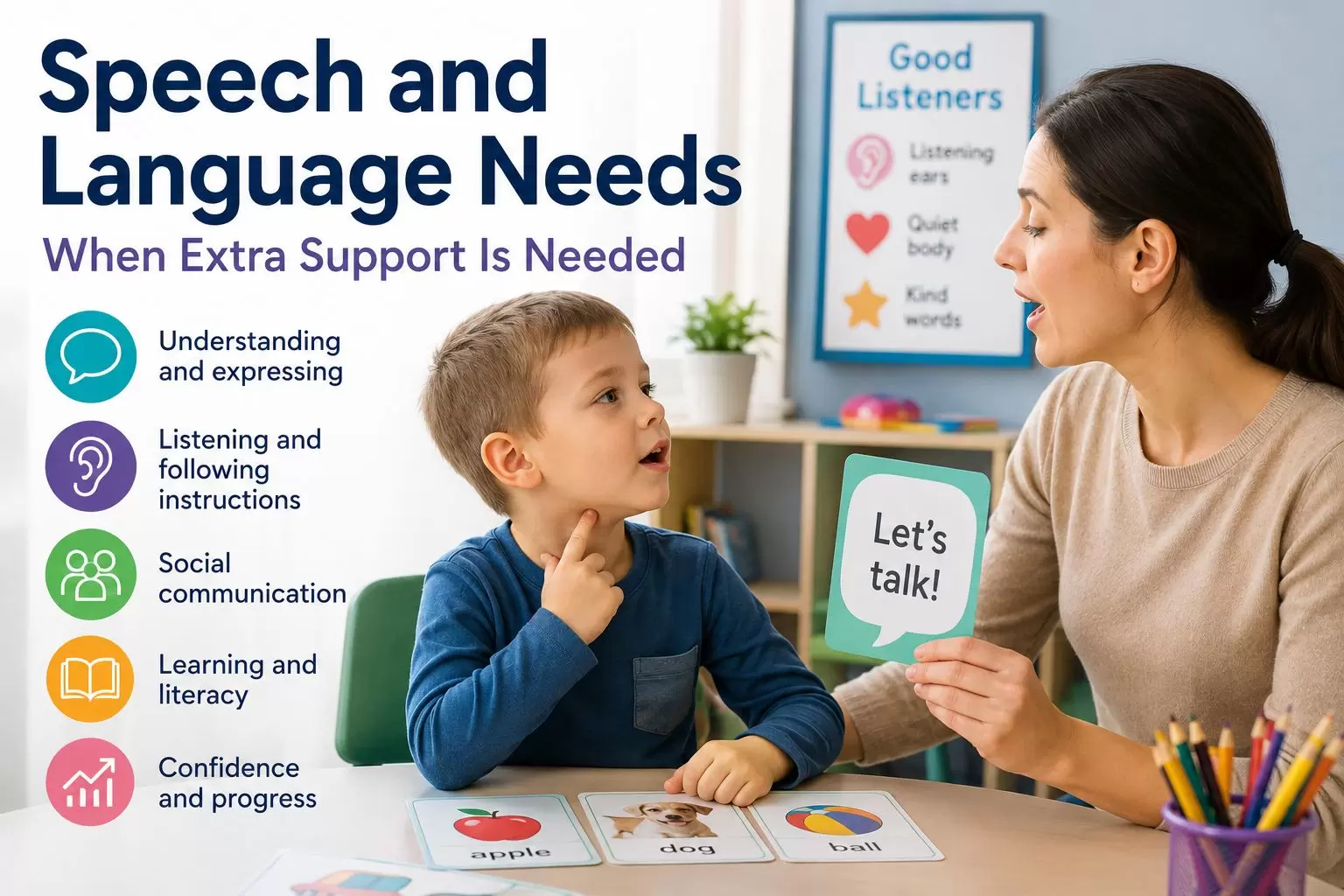
Speech and Language Needs in School: When Extra Support Is Needed
Speech and language needs can affect much more than how a child speaks.
They can influence learning, confidence, friendships, behaviour, emotional wellbeing, and a child’s ability to take part in school life.
Some children struggle to express themselves clearly. Others may find it difficult to understand instructions, follow conversations, process spoken information, or use language socially.
When these needs are not recognised, a child may appear distracted, withdrawn, anxious, frustrated, or reluctant to participate.
With the right support, children with speech and language needs can make meaningful progress.
What Are Speech and Language Needs?
Speech and language needs can include difficulties with:
- Understanding spoken language
- Following instructions
- Using words and sentences
- Speech sounds and clarity
- Processing information
- Social communication
- Conversation skills
- Vocabulary development
- Explaining thoughts or feelings
Some children have clear speech difficulties. Others speak fluently but struggle to understand or use language in more complex situations.
This means speech and language needs are not always obvious.
How Speech and Language Needs Affect Learning
Language is central to school life.
Children need language to:
- Understand lessons
- Follow instructions
- Ask for help
- Complete written work
- Join group activities
- Build friendships
- Explain what they know
- Manage emotions
If a child has difficulty understanding or using language, they may struggle across many areas of the curriculum.
A child may know the answer but be unable to explain it. They may understand a topic but struggle to put their ideas into writing.
Common Signs of Speech and Language Difficulties
Parents and teachers may notice signs such as:
- Difficulty following multi-step instructions
- Limited vocabulary
- Trouble explaining ideas clearly
- Short or unclear answers
- Difficulty joining conversations
- Misunderstanding questions
- Frustration when trying to communicate
- Avoiding speaking in class
- Struggling with reading or writing
- Difficulty making or keeping friends
Some children may also become upset or behave in ways that reflect communication frustration.
Behaviour can sometimes be a sign that a child cannot express what they need.
Why Speech and Language Needs Are Sometimes Missed
Speech and language needs are often missed because they can look like other difficulties.
A child may be described as:
- Not listening
- Distracted
- Shy
- Defiant
- Slow to respond
- Uninterested
- Poorly behaved
In reality, they may not have understood what was said or may not know how to respond.
This is why careful assessment and observation are important.
What Support Can Help in School?
Support should be tailored to the child’s specific communication needs.
Helpful strategies may include:
- Short, clear instructions
- Visual prompts
- Extra processing time
- Pre-teaching key vocabulary
- Checking understanding
- Small group language work
- Speech and language therapy input
- Social communication support
- Communication aids where needed
- Staff training around communication needs
Consistency matters. Support is most effective when all staff understand how to communicate with the child.
Speech and Language Therapy in School
Some children may need input from a speech and language therapist.
This may involve:
- Assessment of communication needs
- Direct therapy sessions
- Programmes delivered by school staff
- Advice for teachers and parents
- Targets for communication development
- Support with social interaction
If speech and language therapy is necessary for your child to access education, it may need to be included in an EHCP.
Speech and Language Support In EHCP
You can read more about what support should be included in an EHCP.
When SEN Support May Be Enough
Some children make good progress with school-based SEN support.
This may include classroom adjustments, targeted language groups, or regular support from teaching staff.
SEN support may be enough if:
- Your child is making progress
- Support is consistent
- Needs are clearly understood
- Communication difficulties are not significantly limiting learning
However, if difficulties remain significant, further support may be needed.
When an EHCP Assessment May Be Needed
An EHCP assessment may be appropriate if speech and language needs are having a significant impact on your child’s education.
You may want to consider an assessment if:
- Your child is not making progress despite support
- Communication needs affect learning across the school day
- Specialist therapy input is required
- Social communication difficulties are affecting wellbeing
- Your child struggles to access the curriculum
- Support needs to be clearly defined and legally secured
You can explore the EHCP assessment process if you are considering next steps.
What Evidence Can Help?
Evidence is important when seeking more support.
Useful evidence may include:
- Speech and language therapy reports
- School reports
- SEN support plans
- Examples of written work
- Teacher observations
- Parent notes
- Records of progress over time
- Evidence of communication difficulties at home and school
The goal is to show how speech and language needs affect your child’s learning, confidence, and access to school life.
Questions to Ask Your Child’s School
If you are concerned about speech and language needs, you may want to ask:
- Has my child’s understanding of language been assessed?
- What support is currently in place?
- Are instructions being adapted?
- Is vocabulary being pre-taught?
- Does my child receive speech and language support?
- How is progress being measured?
- Is a referral to speech and language therapy needed?
These questions can help clarify whether your child’s needs are being properly understood.
Frequently Asked Questions: Speech and Language Needs in School
What are speech and language needs?
Speech and language needs can affect how a child understands, processes, uses, or expresses language. They may also affect speech clarity and social communication.
How can speech and language needs affect learning?
They can make it harder for a child to follow instructions, understand lessons, complete written work, ask for help, and explain what they know.
Can speech and language needs be included in an EHCP?
Yes, if speech and language needs significantly affect a child’s education, they can be included in an EHCP with specific support or therapy provision.
Does my child need a speech and language therapy report?
A speech and language therapy report can be very helpful. It can identify your child’s needs and recommend specific support.
What support can schools provide for speech and language needs?
Schools may provide visual prompts, simplified instructions, vocabulary support, small group language work, extra processing time, and targeted communication strategies.
When should I request an EHCP assessment for speech and language needs?
You may want to request an assessment if your child is not making progress, needs specialist input, or cannot access learning through SEN support alone.
Can speech and language needs affect behaviour?
Yes. If a child cannot understand or express themselves clearly, they may become frustrated, anxious, withdrawn, or distressed.
Final Thoughts
Speech and language needs can affect every part of school life, from learning to friendships and confidence.
The right support can help a child communicate more clearly, understand expectations, and take part more fully in education.
If you want to understand how speech and language support fits into the wider EHCP process, you can explore our comprehensive EHCP guide, which explains each stage in detail.