
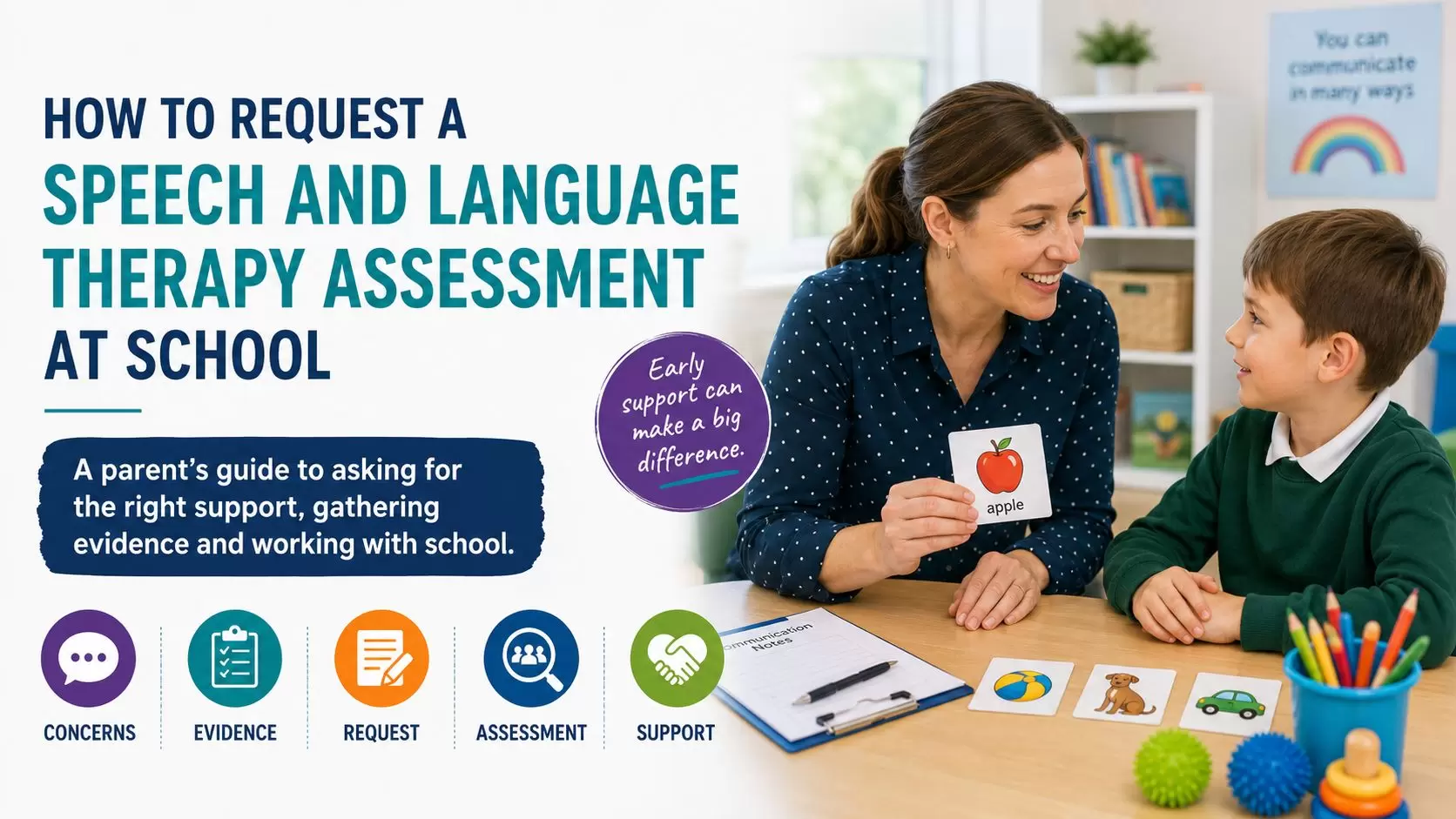
How to Request a Speech and Language Therapy Assessment at School
If you are worried about your child’s speech, language, or communication skills at school, you are not alone. Many parents notice that their child struggles to follow instructions, find the right words, or join in conversations with classmates. A speech and language therapy assessment can identify exactly what support your child needs. Understanding how to request this assessment through school or the local authority is an important step in securing the right help, whether that is SEN support or a more formal Education, Health and Care Plan (EHCP). This guide explains the options available in England, how assessments fit into the school system, and what you can do to move things forward.
How Schools Identify Speech and Language Needs
Schools have different ways of spotting speech and language difficulties. Some schools use standardised screening tools to check all pupils at certain ages. For example, GL Assessment offers WellComm Early Years and WellComm Primary, which help staff identify children who may need extra support and guide appropriate interventions. Their Phonological Assessment Battery (PhAB2) can also highlight gaps in a child’s phonological awareness, which is essential for reading and spelling. Similarly, Speech and Language Link provides complete SLCN toolkits for schools. These packages include assessment materials, staff training, resources, and therapist support. The main options are Speech Link for speech sound difficulties, Language Link for general language skills, Secondary Language Link for older pupils, and Little Link for early years children aged three to five.
One independent London school, Burlington House School, screens all new pupils for listening comprehension, vocabulary, grammar, expressive language, verbal reasoning, and speech sound processing. This gives a detailed picture from the start. However, screening is not universal across all schools, so it is worth asking your child’s class teacher or SENCO (Special Educational Needs Coordinator) whether screening tools are used and what the results mean for your child.
When a Comprehensive Speech and Language Assessment Is Needed
If screening or your own observations suggest deeper difficulties, a full speech and language therapy assessment can provide a clearer diagnosis and recommendations. There are several routes to obtain this, each with different features.
Charity-Led Assessments: Speech and Language UK
Speech and Language UK is a charity that provides assessments for children aged 3 to 19. These can be either multidisciplinary or speech and language therapy only. A multidisciplinary assessment involves other professionals such as occupational therapists, teachers, or educational psychologists, giving a broader understanding of your child’s needs. Assessment takes place at dedicated centres in Surrey (Bill Harrison Assessment Centre) or Nottinghamshire.
The assessment itself lasts between one and three days, and you receive a detailed report within three to four weeks. Reports from Speech and Language UK can be used as evidence in SENDIST (Special Educational Needs and Disability Tribunal) appeals, although the assessing professionals cannot attend the tribunal as witnesses. This makes them a valuable source of independent evidence if you are applying for an EHCP or appealing a refusal.
Private Speech and Language Therapy Clinics
Private clinics offer another route. For families in Manchester and the North West, SLT for Kids provides speech and language assessments. Other private speech and language therapists operate across England and can be found through professional registers. Private assessments are often quicker to obtain than NHS or school-based ones, but costs vary and are not covered in this article. You would need to check directly with clinics for current fees and availability.
Independent Schools with In-House Therapy
Some independent schools integrate speech and language therapy into the school day. Burlington House School, for example, provides weekly speech and language therapy sessions for pupils in Years 3 to 8 and social communication groups for pupils in Years 9 to 13. This model means assessment and therapy happen within the school environment, reducing the need for external appointments. However, this level of provision is uncommon in mainstream state schools.


How to Request an Assessment Through School or the Local Authority
The first step is usually to speak with your child’s school. Your first point of contact should be the class teacher or the SENCO. Explain your concerns and ask what the school has already observed. The school may agree to use its own screening tools or refer your child to the NHS speech and language therapy service. The research pack did not include details on NHS waiting times or referral processes, so you should ask the school or your GP about local arrangements.
If the school’s screening suggests a need for a more detailed assessment, the SENCO can help you explore external options. The school may already use packages from Speech and Language Link or GL Assessment and can share results with an external therapist. For independent assessments, such as those from Speech and Language UK, you can contact the charity directly to arrange a referral. You do not necessarily need the school’s permission, but involving the school from the start helps ensure that any recommendations are implemented effectively.
If your child already has an Education, Health and Care Plan, the EHCP should specify the speech and language therapy provision they are entitled to. You can request an early annual review if the current plan is not meeting their needs. If your child does not have an EHCP, a thorough speech and language therapy assessment can be powerful evidence when applying for an EHC needs assessment.
Using the Assessment Report to Strengthen SEN Support and an EHCP Application
A well-written report from a speech and language therapy assessment provides more than just a diagnosis. It describes your child’s strengths and difficulties, quantifies their needs, and recommends specific support strategies and outcomes. When you request an EHC needs assessment from your local authority, this report can form a central part of your evidence. The local authority must consider all submitted professional advice when deciding whether to issue an EHCP.
Even if your child does not have an EHCP, the report can help the school deliver better SEN support. The school can use the recommendations to set targets, adjust classroom strategies, and provide resources such as visual timetables or social communication groups. The report may also support a referral to other services, such as occupational therapy, if multidisciplinary needs are identified.
For families who reach a SENDIST tribunal, independent assessment reports are especially valuable. As noted, Speech and Language UK reports are accepted as evidence, though the professionals cannot attend the hearing. Other private assessments may include the option for the therapist to attend if you arrange this separately. Always check with the assessment provider about their policy on tribunal attendance before you proceed.
Frequently Asked Questions
How long does a speech and language therapy assessment take?
A full assessment from Speech and Language UK takes between one and three days at their centres, depending on whether it is a multidisciplinary assessment or speech and language therapy only. The report is usually provided within three to four weeks after the assessment. Other providers may have different timescales, so always check when booking.
Can a speech and language therapy report be used for an EHCP tribunal?
Yes, independent assessment reports can be used as evidence in SENDIST tribunals. Speech and Language UK states that their reports are accepted for this purpose, but the professionals who carried out the assessment cannot attend the tribunal as witnesses. If you need a therapist to attend, you should arrange this separately with a private therapist who offers that service.
Will the school automatically screen my child for speech and language difficulties?
Not all schools screen every pupil. Burlington House School screens all new pupils, but this is not standard practice across all schools. Many schools use screening tools from providers such as GL Assessment or Speech and Language Link, but they may only screen children who are already causing concern. If you have worries, ask the SENCO whether any screening has been done and what it showed.
Can I request an assessment directly from Speech and Language UK without involving the school?
Yes, you can contact Speech and Language UK directly to arrange an assessment. The charity accepts referrals from parents. However, it is usually helpful to keep the school informed so that they can support any recommendations and incorporate them into your child’s SEN support or EHCP application.
Does the NHS provide speech and language therapy assessments through schools?
The research pack did not provide specific details about NHS assessment routes via schools. In many areas, schools can refer a child to the local NHS children’s speech and language therapy service. Waiting times vary considerably. To find out how it works in your area, speak to your child’s school SENCO or your GP, who should be able to direct you to the correct service.
Final Thoughts
Requesting a speech and language therapy assessment at school can be an important step if your child is struggling with communication, understanding instructions, social interaction, expressive language or accessing learning in the classroom. The strongest requests are usually supported by clear examples, school observations and evidence showing how your child’s needs affect their education. You may find it helpful to read our guide on EHCPs for speech and language needs, as well as our wider page on what support an EHCP can provide. If school-based support is not enough, our guides on how to apply for an EHCP and EHCP evidence for parents can help you understand the next steps.
One Response