
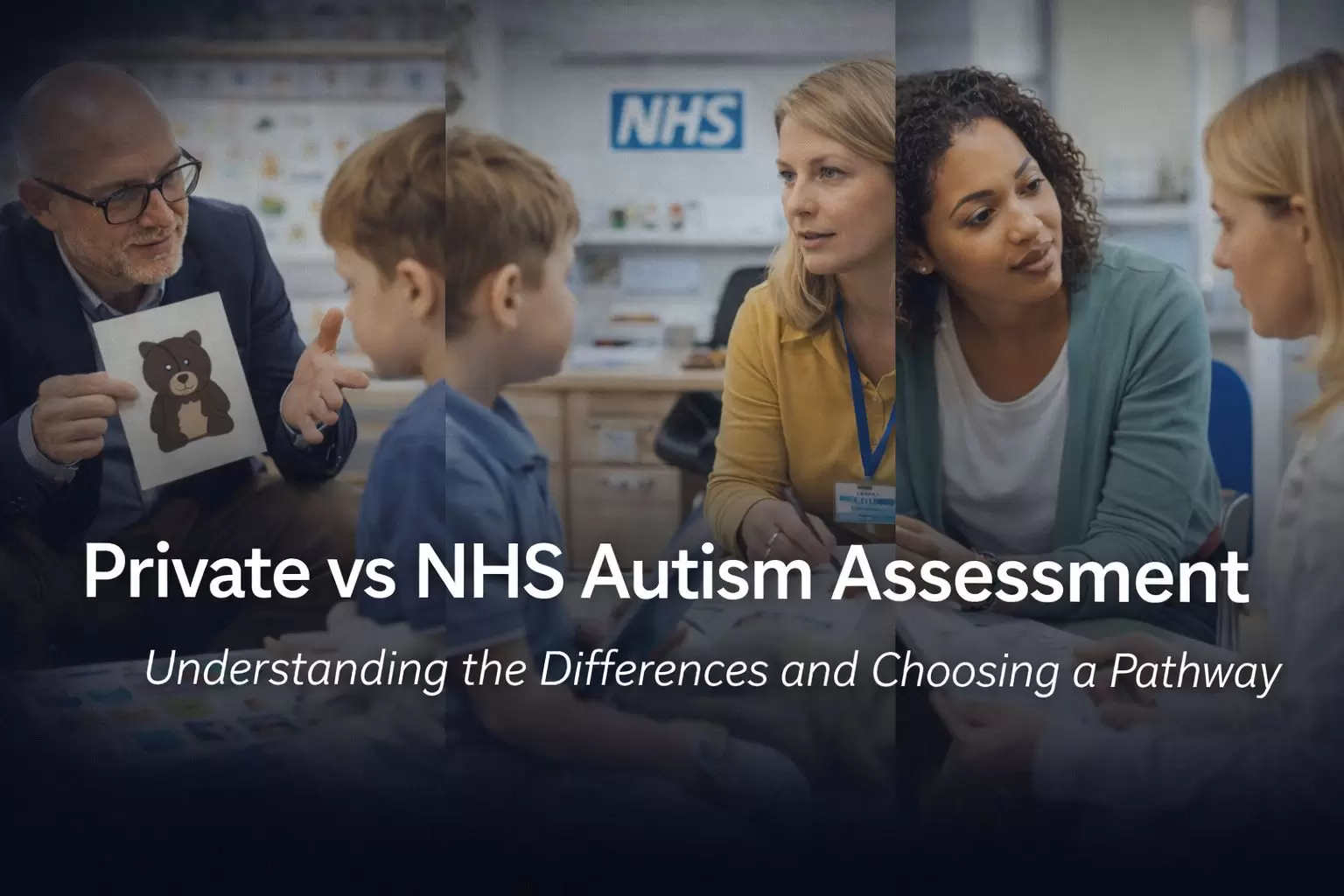
Private vs NHS Autism Assessment
Last reviewed: March 2026
Written by: School of Diversity SEND Support Team
Topic: Autism Assessment and Diagnosis
This guide helps parents understand the differences between NHS and private autism assessments for children, including referral pathways, waiting times and how assessments support children in education.
In the UK, autism assessments for children may be accessed through NHS referral pathways or through private assessment providers. Both assessment routes involve professional evaluation of a child’s communication, behaviour and developmental history to determine whether they meet the criteria for autism.
Key Takeaways
Autism assessments may be accessed through NHS services or private providers.
NHS assessments usually require a referral from a GP or specialist professional.
Private assessments are arranged directly with qualified specialists.
Waiting times can vary depending on local services.
Assessment results can help inform support for children in school.
When parents begin exploring autism assessments for their child, they often discover that assessments may be accessed through different pathways. In the UK, children may be assessed through NHS services or through private specialists.
Understanding how these pathways work can help parents decide which option may be appropriate for their family and their child’s needs.
NHS Autism Assessments
Direct answer:
NHS autism assessments are usually accessed through referrals from healthcare professionals or educational services.
Parents typically begin the process by speaking with:
a GP
a health visitor
a school SENCO
child development services
Following referral, the child may be assessed by specialist teams that evaluate communication, behaviour and development.
Private Autism Assessments
Direct answer:
Private autism assessments are arranged directly with specialist clinicians or assessment services.
Private assessments are often conducted by professionals such as:
clinical psychologists
paediatric specialists
multidisciplinary assessment teams
The assessment process usually includes developmental history discussions, observation of the child and a detailed diagnostic report.
Waiting Times
Direct answer:
Waiting times for autism assessments can vary depending on service availability.
NHS assessment waiting times may vary depending on local demand and specialist service capacity.
Private assessments are typically arranged directly with providers and appointment availability may vary between clinics.
Parents considering assessment options may wish to explore both pathways to understand what is available.
Cost of Private Autism Assessments
Direct answer:
Private autism assessments involve fees that vary depending on the provider and type of evaluation.
Costs may depend on:
the number of appointments involved
the professionals involved in the assessment
the level of evaluation required
Parents considering private assessments should ensure the assessment includes a comprehensive evaluation and written report.
What Happens During Both Types of Assessment?
Regardless of whether an assessment is accessed through NHS services or private providers, the evaluation process usually includes similar steps.
These typically involve:
developmental history discussions with parents
observation of communication and behaviour
evaluation by trained professionals
assessment reports and recommendations
The aim is to understand the child’s developmental profile and identify appropriate support.
Autism Assessments and School Support
Assessment outcomes can help schools better understand how to support a child.
Schools may use assessment information to:
adapt teaching strategies
develop SEN support plans
consider additional educational support
evaluate whether an EHCP may be appropriate
This ensures the child’s learning environment reflects their needs.
Choosing an Assessment Pathway
Parents considering assessment pathways may wish to consider factors such as:
referral routes
availability of specialist services
timing of appointments
professional expertise
Speaking with healthcare professionals or school staff may help families understand available options.
FAQ
Can a private autism diagnosis be recognised by schools?
Schools may consider professional assessment reports when planning support for children.
Do all children assessed for autism receive a diagnosis?
Not necessarily. Assessments help professionals understand development and determine whether diagnostic criteria are met.
Can parents request an NHS autism assessment?
Parents can discuss concerns with their GP, health visitor or school professionals to explore referral options.
Does an autism diagnosis mean a child automatically receives an EHCP?
No. Some children receive support through SEN support while others may require an EHCP depending on their needs.
Explore More Autism Guidance
If you are exploring autism assessments for your child, you may find these guides helpful:
You can also explore our Autism Support for Parents hub, which brings together guidance on autism signs, assessments and school support.