
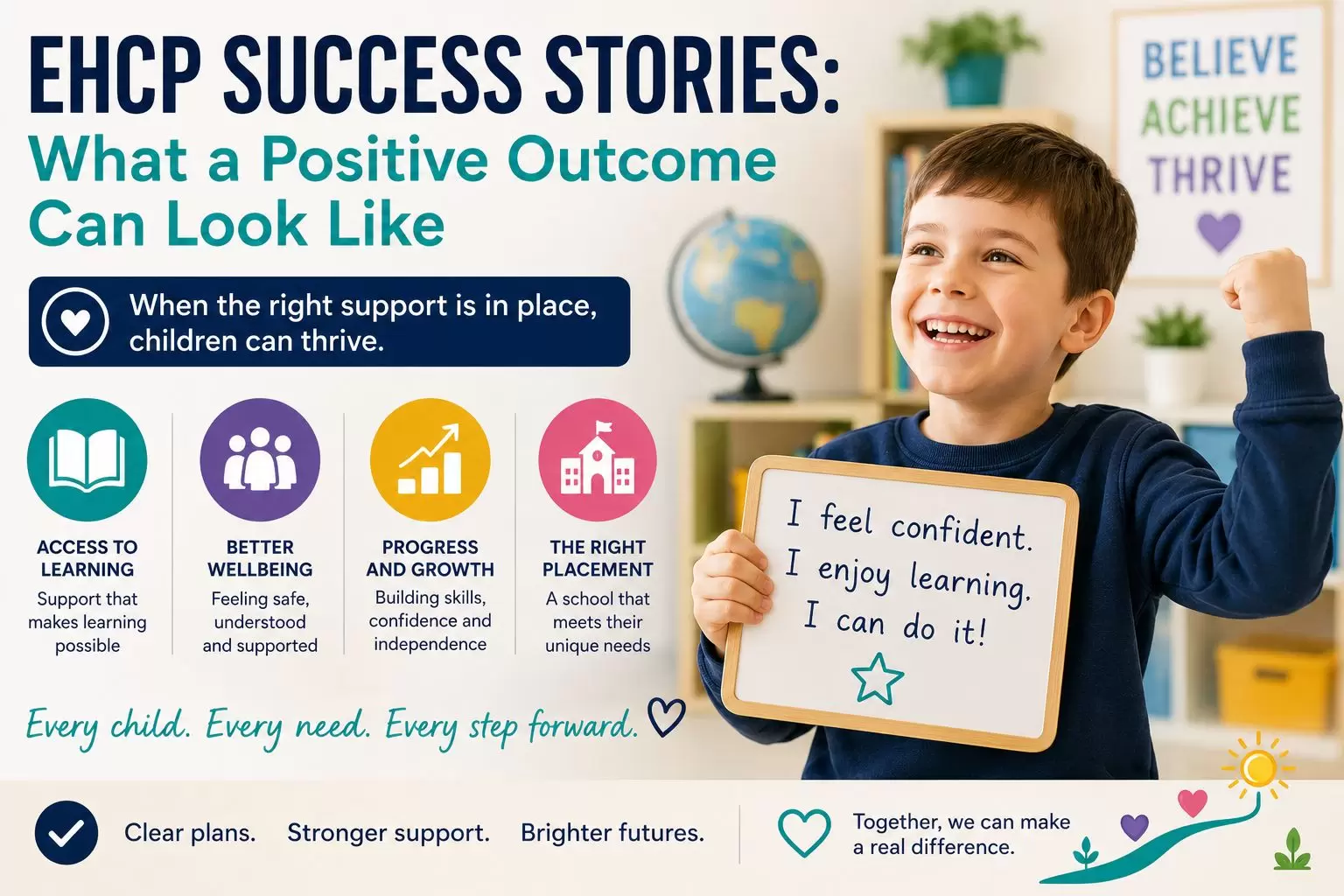
EHCP Success Stories: What a Positive Outcome Can Look Like
When you are going through the EHCP process, it can feel uncertain, stressful, and at times overwhelming.
Many parents reach this stage after months or even years of trying to secure the right support. You may have been told that school support is enough, that your child is coping, or that there is not enough evidence.
EHCP success stories matter because they show what can happen when needs are properly understood and support is clearly defined.
A positive outcome does not always mean everything becomes easy overnight. It means your child has a clearer support structure, stronger accountability, and a better chance of accessing education in a way that works for them.
What Does EHCP Success Actually Mean?
EHCP success can look different for every family.
For some, success means the local authority agrees to assess. For others, it means a plan is issued after an initial refusal. For some families, success means securing clearer wording, more appropriate provision, or the right school placement.
A positive EHCP outcome may include:
- A full assessment being agreed
- An EHCP being issued
- More specific support added to the plan
- Therapy provision included
- A more suitable school named
- Better support for anxiety, sensory needs, or communication
- Stronger accountability from school and local authority
The key is whether the outcome gives your child the support they need to make progress.
Why Some EHCP Cases Improve Over Time
Many EHCP cases improve when the evidence becomes clearer.
At first, a local authority may decide that a child’s needs can be met through SEN support. However, when parents gather stronger evidence, patterns often become easier to see.
This may include:
- Lack of progress despite support
- Increasing anxiety or distress
- Missed learning
- Communication difficulties
- Sensory overwhelm
- Emotional regulation challenges
- School refusal
- Specialist recommendations
When the evidence clearly explains both the need and the required support, the case becomes stronger.
You can read more about this in what evidence wins an EHCP appeal.
Example 1: From Refusal to Assessment
A family may request an EHCP assessment because their child is falling behind, becoming distressed at school, or struggling despite SEN support.
The local authority may refuse the request, saying the school can meet the child’s needs.
A positive outcome may happen when parents:
- Review the refusal letter carefully
- Gather clearer school evidence
- Add professional reports where available
- Show what support has already been tried
- Explain why current support is not enough
With stronger evidence, the decision may be changed through mediation or appeal.
If your child has been refused, you may find EHCP refused what next helpful.
Example 2: Better Support Written Into the Plan
Sometimes an EHCP is issued, but the support is too vague.
For example, wording such as “access to support” or “regular help as needed” can make it difficult to know what the school must actually provide.
A stronger outcome may include clear wording such as:
- How often support will happen
- Who will deliver it
- What the support will focus on
- How progress will be reviewed
- What specialist input is required
This matters because an EHCP should be specific enough to guide real support in school.
You can read more in what support should be included in an EHCP.
Example 3: Securing the Right School Placement
For some families, the main issue is placement.
A child may need a school that can better support communication, sensory needs, anxiety, emotional regulation, or learning differences.
A successful outcome may involve:
- Evidence showing the current placement cannot meet needs
- Reports explaining what type of environment is required
- Clear reasons why a proposed placement is not suitable
- A stronger case for a preferred school
The right placement can make a significant difference to a child’s confidence, wellbeing, and access to learning.
What Helps Families Achieve Better Outcomes?
While every case is different, successful EHCP outcomes often have common features.
These include:
- Clear evidence
- Specific examples
- Consistent communication
- Professional input where possible
- Accurate records
- A focus on need rather than frustration
- Understanding the EHCP process
- Knowing when to challenge decisions
The process can feel emotional, but strong cases are built on clarity.
Why Evidence Matters So Much
EHCP decisions are based on evidence.
This does not mean parents are not believed. It means the local authority or tribunal needs information that clearly shows:
- What the child’s needs are
- How those needs affect education
- What support has already been tried
- Why further support is required
- What provision should be included
Evidence helps turn concerns into a clear case for support.
Can Appeals Lead to Positive Outcomes?
Yes, many families achieve better outcomes after challenging a decision.
This may happen through:
- Mediation
- Further negotiation with the local authority
- Additional evidence being submitted
- A SEND tribunal decision
Appealing does not mean you are being difficult. It means you are using the process available to advocate for your child.
You can explore this further in how to appeal an EHCP decision.
What Parents Can Learn From EHCP Success Stories
EHCP success stories often show that persistence matters.
They also show that parents should not ignore concerns when a child is struggling.
Useful lessons include:
- Start gathering evidence early
- Keep communication in writing
- Record what support has been tried
- Ask for clarity when wording is vague
- Trust your knowledge of your child
- Seek support if the process feels overwhelming
A strong outcome is often built step by step.
Frequently Asked Questions: EHCP Success Stories
Are EHCP appeals successful?
Many EHCP appeals result in improved outcomes, especially when parents provide clear evidence that explains their child’s needs and required support.
What does a successful EHCP outcome look like?
Success may mean an assessment is agreed, an EHCP is issued, support is improved, therapy is added, or a more suitable school placement is named.
Can an EHCP decision be changed after refusal?
Yes, EHCP decisions can be changed through mediation, further evidence, negotiation, or appeal to the SEND Tribunal.
What improves the chances of EHCP success?
Clear evidence, professional reports, school records, specific examples, and well-organised information can all strengthen an EHCP case.
Can EHCP support be improved after a plan is issued?
Yes, support can be reviewed and changed, especially during the draft stage, annual reviews, or if needs change over time.
Do parents need professional reports for a successful EHCP outcome?
Professional reports can be very helpful, but they are not the only evidence. School records, parent observations, and progress data can also support a case.
How long does it take to achieve a positive EHCP outcome?
Timescales vary. Some issues are resolved during assessment or mediation, while appeals may take several months.
Final Thoughts
EHCP success does not always happen quickly, but positive outcomes are possible.
For many families, success begins with clearer evidence, stronger wording, and a better understanding of what their child needs to access education.
If you want to understand how EHCP applications, refusals, appeals, and support fit together, you can explore our comprehensive EHCP guide, which explains each stage in detail.