

EHCP Refusal to Assess Support
Practical, evidence-led help reviewing a local authority’s refusal, understanding your appeal rights and deciding what to do next.
Receiving a refusal to carry out an Education, Health and Care needs assessment can feel disheartening, particularly when your child continues to struggle and existing school support is not meeting their needs.
A refusal does not necessarily mean that your child does not need an assessment or that the matter is closed.
School of Diversity can help you understand the reasons given, review the evidence, identify weaknesses in the decision and prepare for mediation or an appeal to the SEND Tribunal.
What Does a Refusal to Assess Mean?
A refusal to assess means that the local authority has decided not to carry out a formal Education, Health and Care needs assessment.
It does not mean that:
- your child has no special educational needs;
- your concerns are not valid;
- an EHCP could never be required;
- you must accept the decision;
- the school must agree before you can challenge it.
An EHC needs assessment is the formal process through which a local authority gathers and considers advice about a child or young person’s education, health and social care needs.
Under section 36 of the Children and Families Act 2014, the local authority must determine whether:
- the child or young person has or may have special educational needs; and
- it may be necessary for special educational provision to be made through an EHC plan.
The legal test is whether an EHCP may be necessary. The parent does not have to prove at the refusal-to-assess stage that an EHCP must definitely be issued.
Why Do Local Authorities Refuse to Assess?
Refusal letters often give one or more of the following reasons:
- the school has not completed enough SEN Support cycles;
- the child is making academic progress;
- existing support is considered sufficient;
- there is not enough professional evidence;
- the child does not have a formal diagnosis;
- the school has not used all available resources;
- the child’s needs are not considered sufficiently complex;
- further intervention should be attempted first;
- the request does not demonstrate why an EHCP may be necessary.
These reasons should be considered against the statutory legal test.
For example, there is no universal legal requirement for a child to:
- have a diagnosis;
- be academically behind;
- complete a fixed number of assess, plan, do and review cycles;
- exhaust every possible school intervention;
- wait until the placement is close to breakdown.
The relevant question is whether the child has or may have special educational needs and whether provision through an EHC plan may be necessary.
Can I Appeal a Refusal to Assess?
Yes. A parent or an eligible young person can appeal a local authority’s refusal to secure an EHC needs assessment to the First-tier Tribunal for Special Educational Needs and Disability.
The current tribunal form used specifically for this type of appeal is SEND35A.
The appeal is not an application for the tribunal to issue an EHCP immediately. The tribunal is asked to decide whether the local authority should carry out an EHC needs assessment.
If the appeal succeeds, the local authority must proceed with the statutory assessment process.
What Is the Appeal Deadline?
The SEND Tribunal must normally receive the appeal within:
- two months of the date on the local authority’s decision letter; or
- one month from the date of the mediation certificate;
whichever gives the later deadline.
Do not calculate the deadline based only on when you opened the letter or first read the email. The date shown on the decision letter is important.
Appeal deadlines are strict. Contact the mediation service and obtain advice promptly, even if you are still deciding whether to appeal.
Do I Have to Consider Mediation?
Before registering most refusal-to-assess appeals, the parent or young person must contact a mediation adviser.
You can then decide whether to:
- take part in mediation; or
- obtain a mediation certificate without proceeding to a mediation meeting.
The mediation certificate is normally required before the appeal can be registered.
Mediation may provide an opportunity to ask the local authority to reconsider the decision and explain the evidence supporting the request.
However, parents should prepare carefully and should not assume that attending mediation automatically extends every deadline indefinitely. The tribunal deadline must still be checked using the date of the decision letter and mediation certificate.

How We Can Help After a Refusal to Assess
Our support can be tailored to the stage you have reached and the amount of assistance required.
Refusal Letter Review
We review the local authority’s decision and explain:
- the reasons given;
- whether the correct legal test appears to have been applied;
- which parts of the decision may need to be challenged;
- what evidence the authority appears to have relied upon;
- what important evidence may have been overlooked;
- what the available next steps are.
Original Application Review
We consider whether the original EHC needs assessment request clearly explained:
- the child’s special educational needs;
- the educational impact of those needs;
- the support already provided;
- progress despite intervention;
- why existing SEN Support may be insufficient;
- why provision through an EHCP may be necessary.
Evidence Review
We examine relevant evidence such as:
- SEN Support plans;
- assess, plan, do and review records;
- school reports;
- provision maps;
- attendance records;
- behaviour or incident logs;
- professional reports;
- autism or ADHD assessment reports;
- educational psychology advice;
- speech and language therapy evidence;
- occupational therapy evidence;
- medical information;
- parental records and observations;
- correspondence with school and the local authority.
Identification of Evidence Gaps
We help identify information that may strengthen the case, including:
- clearer evidence of limited progress;
- specific details about the support already attempted;
- the intensity of adult support required;
- attendance or school-avoidance evidence;
- sensory, communication or emotional-regulation needs;
- examples of distress, exclusion or placement instability;
- professional recommendations that have not been implemented;
- evidence showing that provision exceeds ordinarily available SEN Support.
Grounds of Appeal
We can help prepare clear grounds explaining why an EHC needs assessment may be necessary.
The appeal should usually focus on:
- the statutory test;
- the child’s special educational needs;
- the impact on access to education;
- the provision currently required;
- the limitations of existing SEN Support;
- the need for coordinated assessment and professional advice.
Parent Statement
We can help prepare a parent statement describing:
- your child’s strengths;
- their needs and difficulties;
- how those difficulties affect education and daily life;
- support provided at home;
- school experiences;
- changes over time;
- why you believe an assessment is required;
- what you want the tribunal to understand.
Evidence Organisation
We help organise the evidence into a logical structure so that the tribunal and local authority can understand how each document supports the appeal.
Mediation Preparation
We can help you prepare:
- your principal arguments;
- the evidence you want to rely upon;
- questions for the local authority;
- the outcome you are seeking;
- notes of any agreement reached.
Tribunal Preparation
Depending on the package agreed, support may include:
- completing or reviewing the SEND35A appeal form;
- preparing grounds of appeal;
- preparing a chronology;
- organising the evidence bundle;
- reviewing the local authority’s response;
- preparing a case summary;
- helping identify witnesses;
- preparing questions and key points;
- supporting preparation for a paper or oral hearing.
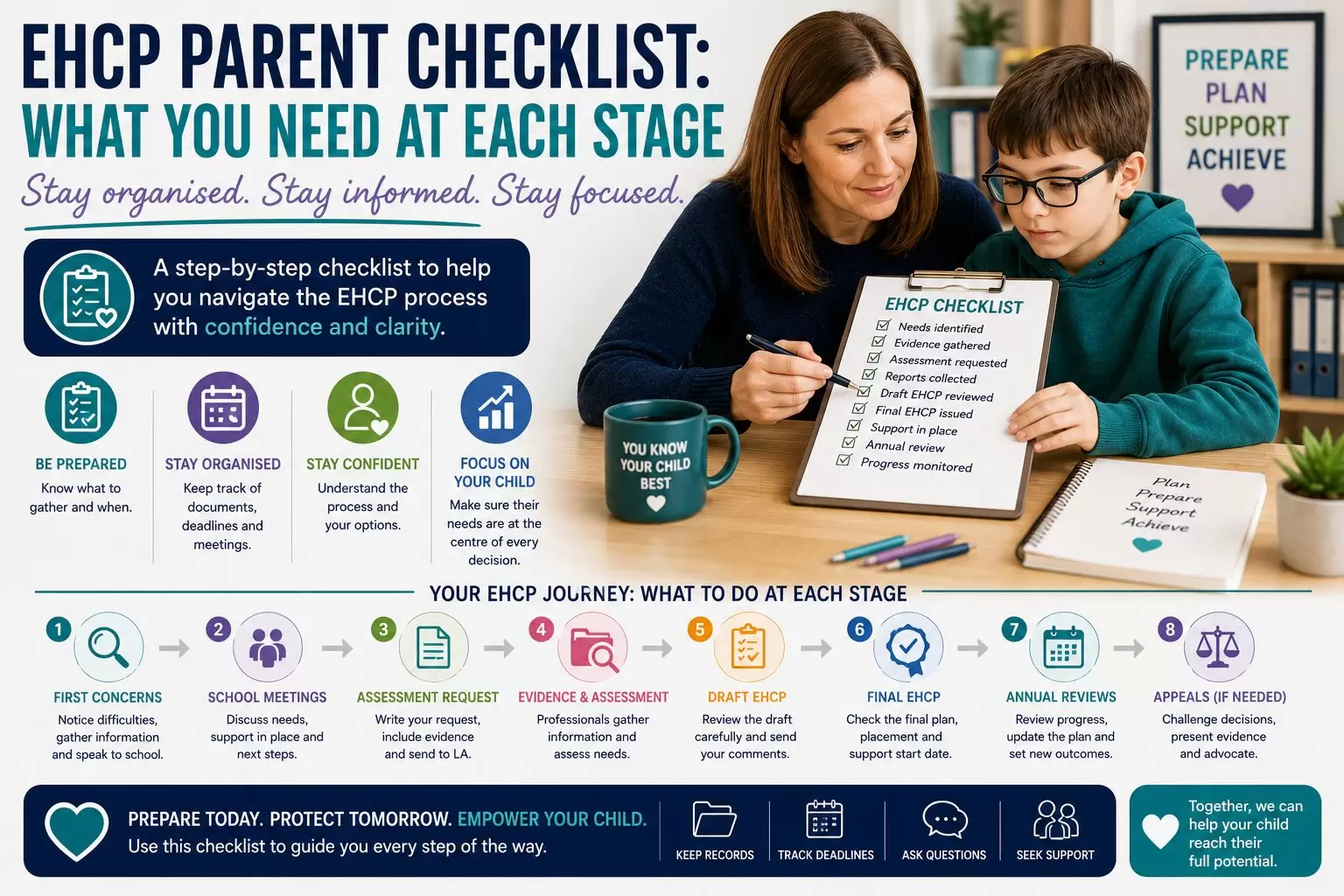
What Evidence Helps in a Refusal-to-Assess Appeal?
The tribunal must decide whether an EHC needs assessment is required, not whether the child should immediately receive a final EHCP.
Evidence should therefore help demonstrate that a coordinated statutory assessment may be necessary.
Evidence of Special Educational Needs
This may include evidence relating to:
- communication and interaction;
- cognition and learning;
- attention and executive functioning;
- social, emotional and mental health;
- sensory processing;
- physical or medical needs;
- emotional regulation;
- independence and self-care;
- preparation for adulthood.
Evidence of Educational Impact
Relevant evidence may show:
- limited or inconsistent progress;
- difficulty accessing lessons;
- high levels of adult support;
- reduced attendance;
- school avoidance;
- emotional distress;
- shutdowns or meltdowns;
- exclusions;
- difficulties during transitions;
- inability to work independently;
- exhaustion or distress after school;
- risk of placement breakdown.
Evidence of Existing SEN Support
The tribunal may need to understand:
- what support has been attempted;
- how long it has been in place;
- who delivered it;
- how frequently it was delivered;
- whether it was consistently implemented;
- what progress resulted;
- why it remains insufficient.
Professional Evidence
Professional reports are particularly useful when they identify:
- specific needs;
- required interventions;
- specialist teaching or therapy;
- frequency and duration of provision;
- environmental adaptations;
- staffing requirements;
- risks if needs remain unsupported;
- the need for further multidisciplinary assessment.
A diagnosis can be helpful, but it is not a legal prerequisite for an assessment.
Common Problems With Refusal Decisions
The Wrong Legal Threshold Is Applied
A local authority may appear to ask whether an EHCP is definitely necessary.
At this stage, the statutory question is whether an EHCP may be necessary.
Too Much Weight Is Placed on Academic Attainment
A child may be academically capable but still have significant needs relating to:
- communication;
- sensory processing;
- emotional regulation;
- attention;
- attendance;
- social interaction;
- independence.
Education includes more than attainment data.
The Authority Says the School Should Do More First
The support already provided is relevant, but there is no fixed national rule requiring a specific number of SEN Support cycles before an assessment can be requested.
The seriousness, complexity and persistence of the child’s needs should also be considered.
The Child Does Not Have a Diagnosis
An EHCP assessment is needs-led rather than diagnosis-led.
A child may have substantial special educational needs before, during or without a formal diagnostic process.
Support Is Described as Available Rather Than Delivered
A provision map may list interventions that are theoretically available, but the evidence should show:
- whether the child actually receives them;
- how often they are delivered;
- whether staff are suitably trained;
- whether the provision is effective;
- whether it is sustainable.
Progress Is Considered Without the Level of Support
A child may appear to make progress only because of substantial adult help, reduced expectations, parental support or a highly modified timetable.
The level of support required to achieve that progress is relevant.
What Happens After an Appeal Is Submitted?
Once the appeal has been accepted, the tribunal will issue case directions and a timetable.
This may include deadlines for:
- the local authority’s response;
- submitting additional evidence;
- providing attendance information;
- identifying witnesses;
- completing case-management documents;
- the hearing.
The local authority may reconsider its decision before the hearing.
Possible outcomes include:
- the local authority agrees to assess;
- an agreement is reached during mediation;
- the local authority concedes the appeal;
- the matter proceeds to a paper hearing;
- the matter proceeds to an oral hearing;
- the tribunal orders the local authority to carry out an assessment;
- the tribunal dismisses the appeal.
If the authority agrees to assess, clarify in writing whether the appeal has been resolved and what the new statutory timetable will be.
Paper Hearing or Oral Hearing?
A refusal-to-assess appeal may sometimes be considered on the papers or at an oral hearing.
Paper Hearing
The tribunal decides the appeal using the written evidence without the parties attending.
This may be suitable where:
- the issues are narrow;
- the evidence is clear;
- there is little factual disagreement;
- the parent is confident that the written case fully explains the situation.
Oral Hearing
The parties attend remotely or in person and answer questions from the tribunal panel.
An oral hearing may be helpful where:
- the child’s presentation needs further explanation;
- there are substantial factual disagreements;
- recent evidence requires clarification;
- witnesses need to answer questions;
- the parent wants to explain day-to-day needs directly.
The appropriate format depends on the circumstances of the case.

How Our Support Process Works
1. Contact Us Promptly
Provide:
- the refusal letter;
- its date;
- the original EHC needs assessment request;
- the main supporting documents;
- the mediation position;
- any known deadline.
2. Initial Case Review
We identify:
- the reasons for refusal;
- the main appeal issues;
- the evidence currently available;
- any urgent procedural action;
- the level of support required.
3. Written Scope and Fee
You receive confirmation of:
- the work included;
- documents required;
- expected timescales;
- fees;
- any limitations to the service.
4. Evidence and Case Preparation
We prepare the agreed documents and help organise the evidence.
5. Mediation or Appeal Submission
Depending on the service agreed, we help you prepare for mediation or complete the tribunal appeal documentation.
6. Ongoing Support
Where included in the package, we can continue supporting you through:
- the local authority’s response;
- evidence deadlines;
- case review;
- hearing preparation;
- post-decision next steps.
Who Is This Service For?
This service may be suitable where:
- the local authority has refused to assess;
- you believe the wrong legal test was applied;
- your child is struggling despite SEN Support;
- the school does not support an appeal;
- you have been told to wait for a diagnosis;
- attendance or emotional wellbeing is deteriorating;
- your child requires substantial adult support;
- several professionals are involved;
- your original request did not fully explain the evidence;
- you are unsure whether to mediate or appeal;
- you need help completing SEND35A;
- you feel overwhelmed by the process or deadlines.
Why Choose School of Diversity?
Focused Refusal Review
We examine the refusal against the statutory assessment test rather than simply rewriting the original application.
Evidence-Led Preparation
We connect the child’s needs, educational impact and existing support to the reasons an assessment may be necessary.
Parent-Friendly Guidance
We explain the tribunal and mediation process in clear, practical language.
Integrated SEND and Psychological Insight
Our wider services combine SEND advocacy with Chartered Psychologist-led ADHD and autism assessment expertise.
Flexible Levels of Support
Support can range from a refusal-letter review to more comprehensive mediation and tribunal preparation.
Support Across England
Document review and consultation services can be provided remotely to families throughout England.
Refusal-to-Assess Support Options
Adjust this section to reflect your confirmed service packages and prices.
Refusal Decision Review
Suitable for parents who want to understand the decision and available options.
May include:
- review of the refusal letter;
- review of the original request;
- review of selected evidence;
- written recommendations;
- discussion of mediation and appeal options.
Request a Refusal Review
Appeal Preparation Support
Suitable for parents preparing their own tribunal appeal.
May include:
- case review;
- SEND35A support;
- grounds of appeal;
- parent statement;
- evidence index;
- appeal submission guidance.
Get Appeal Preparation Support
Full Refusal-to-Assess Appeal Support
Suitable for more complex cases or parents requiring continued assistance.
May include:
- complete appeal preparation;
- evidence review;
- mediation preparation;
- local-authority response review;
- case-management support;
- hearing preparation;
- witness guidance;
- ongoing assistance until the appeal concludes.
Discuss Full Appeal Support
Frequently Asked Questions
Does a Refusal Mean My Child Does Not Need an EHCP?
No. It means the local authority has decided not to carry out the assessment at this stage.
That decision can be challenged.
Do I Need the School’s Permission to Appeal?
No. A parent can appeal even if the school does not agree.
School records and evidence may still be important.
Does My Child Need a Diagnosis?
No. The legal test is based on special educational needs and whether provision through an EHCP may be necessary.
Can I Appeal if My Child Is Doing Well Academically?
Yes. Academic attainment does not exclude significant special educational needs.
The appeal should explain the child’s wider educational access, support requirements and functional difficulties.
Do I Have to Attend Mediation?
You normally have to contact a mediation adviser before registering this type of appeal.
You can then decide whether to take part in mediation or obtain the certificate without a mediation meeting.
Which Tribunal Form Do I Use?
The form specifically used to appeal a refusal to secure an EHC needs assessment is SEND35A.
Always use the current version published by HM Courts and Tribunals Service.
How Long Do I Have to Appeal?
The tribunal must normally receive the appeal within two months of the decision-letter date or one month from the mediation-certificate date, whichever is later.
Can the Local Authority Change Its Mind?
Yes. The authority can reconsider its decision during mediation or after an appeal has been registered.
What Happens if I Win?
The tribunal can order the local authority to carry out an EHC needs assessment.
Winning a refusal-to-assess appeal does not automatically guarantee that an EHCP will ultimately be issued.
Can You Guarantee That the Appeal Will Succeed?
No. No responsible advocate can guarantee a local-authority or tribunal decision.
We can help you present the case and evidence as clearly and thoroughly as possible.
Can You Attend the Hearing?
Hearing attendance, witness support or representation must be expressly included in the agreed package.
Is This Service Available Across the UK?
This service concerns the EHCP and SEND Tribunal system in England.
Different statutory systems apply in Wales, Scotland and Northern Ireland.
Do Not Let the Appeal Deadline Pass
A refusal to assess can be challenged, but the appeal timetable is limited.
Send us the refusal letter as soon as possible so that we can identify the decision date, review the reasons given and explain the available support options.
Already preparing an appeal? Tell us the date of your decision letter and whether you have obtained a mediation certificate.
Important Information
School of Diversity provides SEND advocacy, document preparation, evidence review and practical appeal support.
We do not guarantee that the local authority will reconsider its decision or that a tribunal appeal will succeed.
Unless expressly confirmed otherwise, our service does not constitute representation by a solicitor or barrister and is not a substitute for regulated legal advice where this is required.
Parents and young people remain responsible for checking and meeting mediation and tribunal deadlines. The precise scope of work will be set out in the client agreement.