
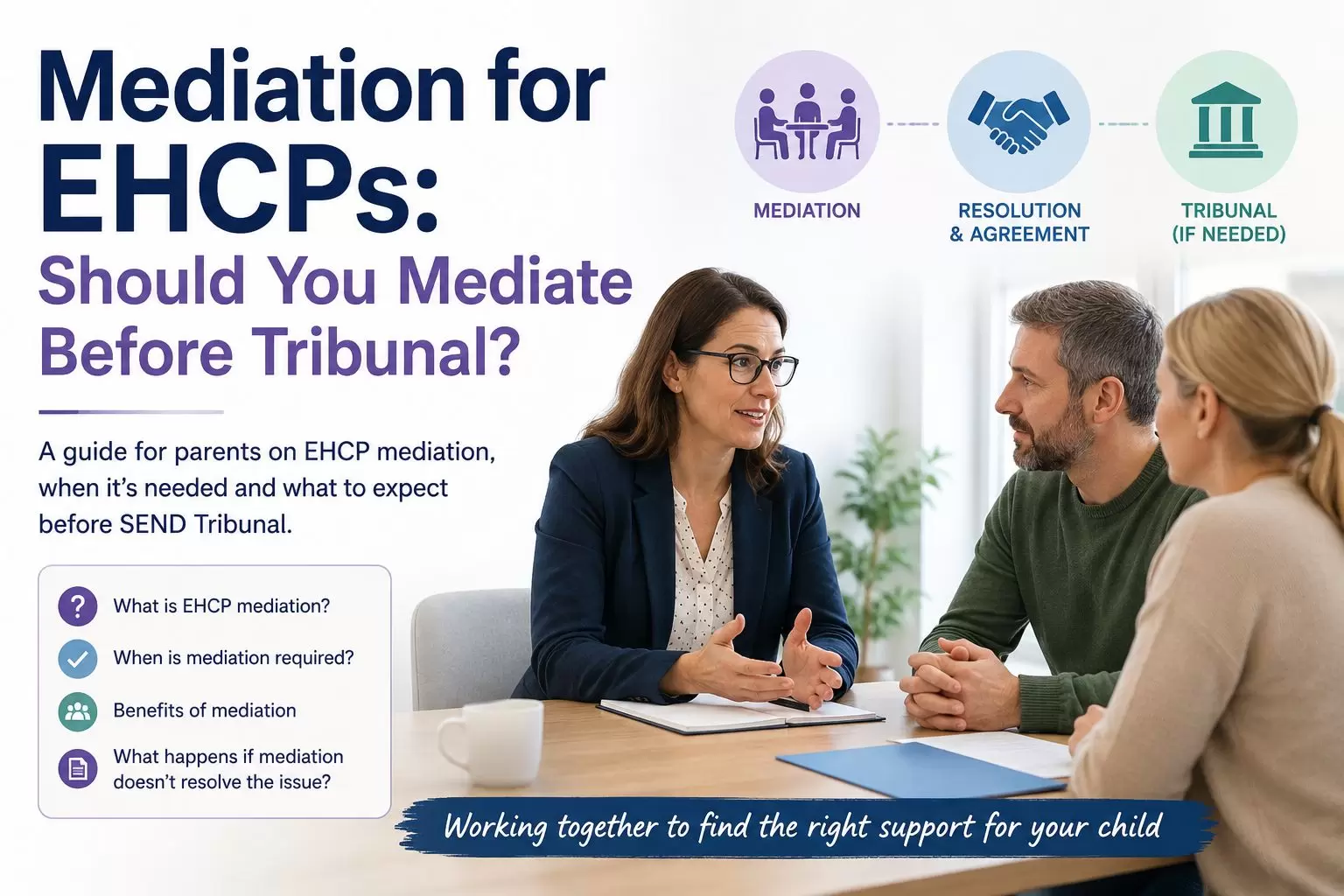
Mediation for EHCPs: What Parents Need to Know Before Going to Tribunal
When a local authority decides not to issue an Education, Health and Care Plan (EHCP), or makes changes you disagree with, the next step is often the SEND Tribunal. But before you can lodge an appeal, you usually need to consider mediation. Mediation for EHCPs is a voluntary, free process that can sometimes resolve disagreements without the stress of a formal hearing. This article explains what mediation involves, when it is required, and how to decide whether it is the right option for your family.
What Is Mediation for an EHCP?
Mediation is a structured conversation between you and the local authority (and, if health issues are involved, the Integrated Care Board). An independent mediator, who is not employed by the council or NHS, helps both sides talk through the disagreement and explore possible solutions. The goal is to reach an agreement that works for your child without needing a tribunal hearing.
You do not have to attend mediation if you do not want to. It is entirely voluntary for parents, carers, and young people. However, if you decide to skip mediation, you may still need a mediation certificate before you can appeal to the tribunal, unless your appeal is only about the placement named in Section I of the plan.
Who Can Attend Mediation?
You can bring a supporter to mediation. This could be a friend, a family member, or a professional. You are also allowed to bring a lawyer. The person from the local authority or Integrated Care Board must have the authority to make decisions on the spot. They cannot say they need to go away and get someone else approval. This rule is designed to make mediation productive and avoid delays.
When Is Mediation Required Before a Tribunal Appeal?
If your appeal is about any part of an EHCP other than Section I (the placement), you must obtain a mediation certificate before you can register your appeal with the SEND Tribunal. This applies when you are appealing a decision to refuse an assessment, refuse to issue a plan, or change the content of the plan. If your appeal is solely about which school or setting is named in Section I, you do not need a mediation certificate and do not have to consider mediation at all.
What Does Mediation Cover?
Mediation can address education, health, and social care aspects of an EHC plan. You can choose to mediate only health issues if that is the main area of disagreement. In that case, the Integrated Care Board arranges the mediation and must complete it within 30 days. Health mediation alone does not require a tribunal appeal for health provision, because the tribunal cannot make decisions about health care. Mediation is the only formal way to resolve health disputes outside of court.
The Mediation Process Step by Step
You must request mediation within two calendar months from the date of the decision letter. If you miss this deadline, you lose the right to mediation and also lose the right to appeal that decision. After you request mediation, the local authority must arrange a session within 30 days. If for any reason mediation cannot be arranged within that time, you will be issued a deemed mediation certificate, which allows you to proceed straight to tribunal.
After mediation takes place, you receive a mediation certificate within three working days. The only exception is if the mediation was solely about placement (Section I), in which case no certificate is issued. You need that certificate to lodge most appeals, so keep it safe.
What Happens If You Reach an Agreement?
Any agreement reached in mediation is written down and becomes legally binding on both parties. This means the local authority must follow through on whatever was agreed. If they do not, you can take enforcement action. A case study from Manchester’s SEND Information, Advice and Support Service shows that careful preparation using the legal test for issuing an EHCP (section 37(1) of the Children and Families Act 2014) can lead to overturning a refusal to issue a plan at mediation. That is a powerful reason to prepare thoroughly.
| Aspect | Mediation | SEND Tribunal |
|---|---|---|
| Formality | Informal, guided conversation | Formal legal hearing |
| Cost to family | Free | Free for the appeal itself, but legal help can cost |
| Timeframe | Mediation arranged within 30 days of request | Can take several months from appeal to hearing |
| Outcome | Voluntary agreement, legally binding if reached | Binding decision on education and placement |
| Representation | Can bring supporter or lawyer, but not required | Lawyer recommended but not mandatory |
| Scope | Education, health, social care | Education and placement only (health cannot be appealed) |
When Mediation Might Be a Waste of Time
Mediation is not always the best path. If your appeal is only about the school placement (Section I), you can go straight to tribunal with no need to consider mediation. In that scenario, attending mediation would add unnecessary delay.
Mediation also depends on both sides being willing to compromise. If the local authority has a fixed position and has already made clear they will not change their decision, mediation may not achieve anything. However, you still need the mediation certificate to appeal, so you might have to attend or request mediation simply to get the certificate. In that case, it is still worth preparing well because a skilled mediator can sometimes shift a position that seemed locked.
Remember that disagreement resolution meetings are different from mediation. They are not mandatory and do not produce a certificate for appeal. Do not confuse the two.


How to Prepare for Mediation
Preparation is the key to making mediation work for you. Start by gathering all relevant documents: the decision letter, any reports from professionals, your child school records, and any evidence that supports why the local authority decision was wrong. Understand the legal test the authority should have applied. For a refusal to issue an EHCP, that test is whether the child has or may have special educational needs and whether it is necessary for the local authority to make special educational provision. If you can show that the authority got the test wrong, mediation can be a good place to get it corrected.
Write down exactly what outcome you want. Be realistic but firm. Think about alternatives that might be acceptable. For example, you might agree to a different wording in the plan if it still protects your child needs, or you might accept a phased approach to provision.
It can also help to attend mediation with a supporter who knows the system. Even a friend who takes notes frees you to focus on the discussion. If you bring a lawyer, let them know in advance so the local authority can also bring legal representation if they wish. That is fine, but do not feel you need a lawyer for mediation many parents go alone and succeed.
What Happens If Mediation Does Not Work?
If mediation does not lead to an agreement, you receive your mediation certificate within three working days. You can then use that certificate to lodge a tribunal appeal. The mediation process does not prejudice your appeal in any way. Nothing you say in mediation can be used against you at tribunal. So there is no downside to trying.
The tribunal is a formal legal process that can take months. It can make binding decisions on education and placement, but it cannot address health provision. If your main concern is health care, mediation is the only route outside of court to get a binding agreement on that. If health issues are not resolved at mediation, you may need other legal advice.
Costs and Timing
Mediation is free to families. The local authority covers the cost of the independent mediator. You do not pay anything to attend. You must request mediation within two calendar months of the decision letter, so act promptly. Once requested, the local authority has 30 days to arrange the session. If they cannot meet that deadline, you get a deemed certificate and can appeal straight away.
After mediation, the certificate arrives within three working days. That gives you the green light to register your appeal if you need to. Keep track of the overall time limits for appealing to tribunal: you generally have two months from the decision letter, but the clock stops once you request mediation. Check the latest guidance on GOV.UK for exact deadlines in your area.
.
Frequently Asked Questions
Is mediation mandatory for all EHCP appeals?
No. Mediation is voluntary for parents and young people. However, for most appeals you must obtain a mediation certificate before the tribunal will accept your case. The only exception is an appeal that is solely about the placement named in Section I of the plan, where no mediation certificate is needed.
Can I bring a solicitor to EHCP mediation?
Yes, you can bring a lawyer or any other supporter to mediation. The local authority representative must also have decision-making authority and cannot delay by seeking approval from others. Bringing a solicitor is not required, but some parents find it helpful, particularly if the case is complex.
How long does mediation for an EHCP take?
The local authority must arrange mediation within 30 days of your request. The actual mediation session usually lasts a few hours. After the session, you receive a mediation certificate within three working days. If mediation cannot be arranged within 30 days, you receive a deemed certificate and can proceed to appeal.
What if the local authority does not follow the mediation agreement?
Any agreement reached in mediation is written down and legally binding. If the local authority does not comply, you can take enforcement action through the courts. It is important to have the agreement in writing and to keep a copy.
Can mediation resolve health issues related to an EHCP?
Yes, mediation can address health care provision alone, without discussing education or social care. If only health is at issue, the Integrated Care Board arranges the mediation. Unlike education issues, you cannot appeal health provision to the SEND Tribunal, so mediation is the main way to resolve health disputes.
Final Thoughts
Mediation can be a useful step in some EHCP disputes, especially where there is still a realistic chance of reaching agreement without a full tribunal hearing. However, parents should understand their rights, the evidence needed and the timescales involved before deciding how to proceed. If your child’s EHCP request has been refused, you may find it helpful to read our guide on EHCP refused: what to do next and our page explaining why an EHCP may have been refused. If mediation does not resolve the issue, our EHCP appeal process guide explains the next steps, and our EHCP evidence for parents guide can help you prepare a stronger case.