
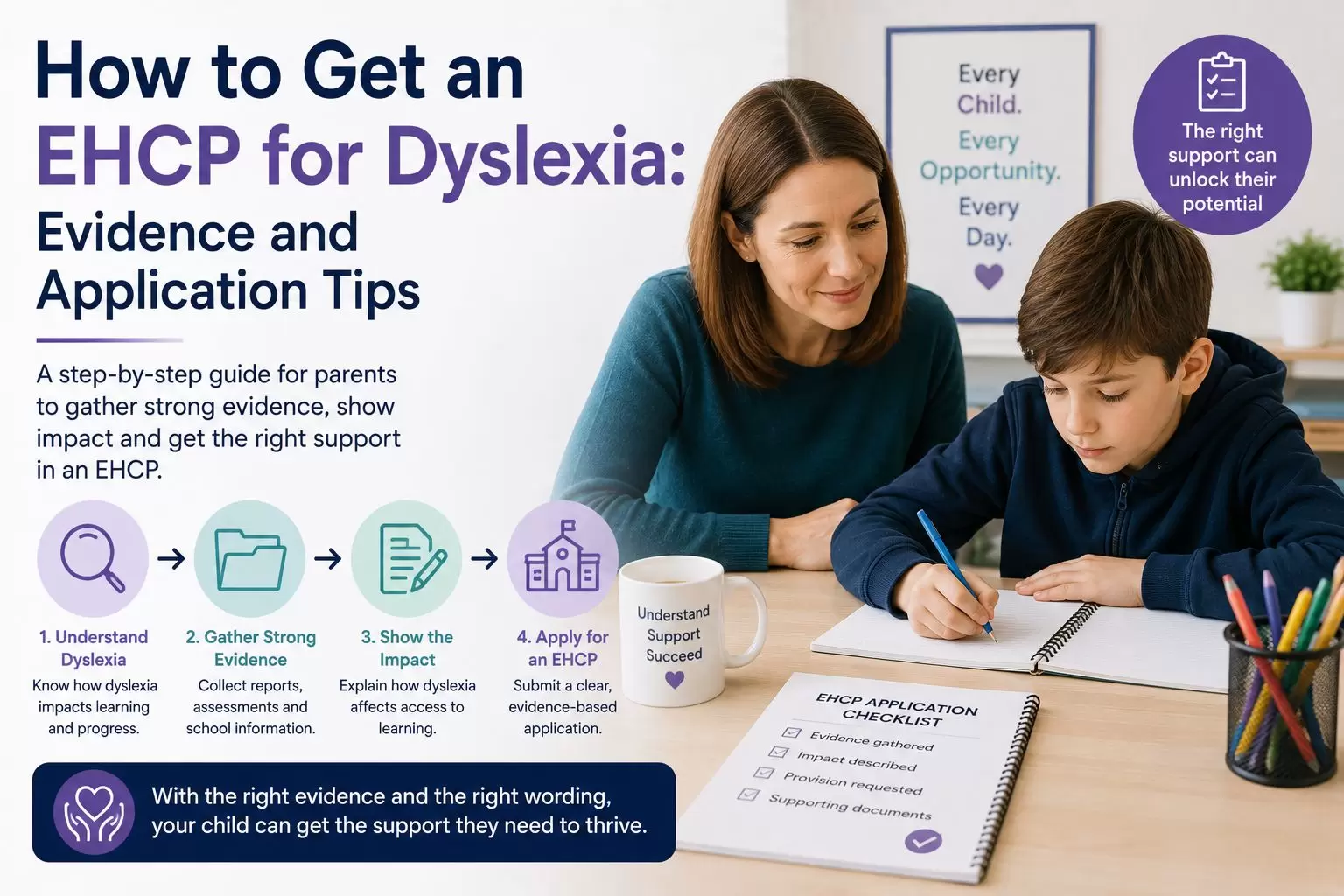
How to Get an EHCP for Dyslexia: Evidence and Application Tips
Many parents of dyslexic children are told that an Education, Health and Care Plan (EHCP) is not available for dyslexia alone. This is a myth. Dyslexia is a recognised special educational need under the SEND Code of Practice, and families have every right to request an EHC Needs Assessment. Understanding the legal framework, gathering the right evidence, and knowing when to appeal can make the difference between a refusal and securing the legally enforceable support your child needs.
Can You Get an EHCP for Dyslexia?
Yes. The belief that you cannot get an EHCP for dyslexia is legally incorrect. Dyslexia is a specific learning difficulty that affects reading, writing, and spelling, and it can have a significant impact on a child’s access to education. Local authorities are required to consider requests for an EHC Needs Assessment for any child who may have special educational needs, including dyslexia. The legal threshold for an assessment is low, but it is often misapplied by local authorities, leading to a high number of initial refusals. Parents who appeal these refusals succeed in more than 90% of cases, according to legal sources.
The Legal Threshold for an EHC Assessment
The test your local authority applies when deciding whether to carry out an EHC Needs Assessment is whether the child “has or may have special educational needs” and whether it “may be necessary for special educational provision to be made through an EHCP.” This is a deliberately low threshold. It does not require proof that an EHCP is definitely needed, only that there is a reasonable possibility. Despite this, many local authorities refuse assessments for dyslexic children, often arguing that the school can meet the child’s needs through SEN support and an Individual Education Plan (IEP). To strengthen your application, you must show that the support available from the school’s notional budget (around £6,000 per year) is not sufficient to meet your child’s needs.
Evidence You Need for a Strong EHCP Application for Dyslexia
Gathering the right evidence is the most important step. Your local authority will look for documented proof that your child’s dyslexia creates needs that go beyond what a school can reasonably provide. The following types of evidence are essential:
Educational Psychology or Specialist Teacher Reports
Dyslexia is not formally assessed until a child is at least 7 years old. A diagnostic assessment from a qualified educational psychologist or a specialist teacher with an Assessment Practising Certificate can confirm the condition and detail the child’s cognitive profile, literacy levels, and specific areas of difficulty. These reports should include recommended interventions, such as structured multisensory teaching programmes or assistive technology, and state why these are likely to exceed the school’s resources.
School-Based Evidence of SEN Support
Your child’s school should already be providing SEN support through an Individual Education Plan (IEP). Collect copies of all IEPs, along with records of interventions tried, their frequency and duration, and any progress data. If the school has implemented a literacy programme, such as Nessy or Lexia, but your child is still falling behind, this demonstrates that SEN support alone is not enough. Also include any referral letters to external agencies, such as the local authority’s specialist teaching service or speech and language therapy.
Medical and Health Records
If your child has any co-occurring difficulties, such as anxiety, attention issues, or sensory processing problems, include reports from your GP, paediatrician, or any other health professional. While the “H” in EHCP stands for health, the education content is what the local authority must fund. Health evidence can help build a fuller picture of your child’s needs and the impact on their ability to learn.
Parental Observations and Impact Statements
You know your child best. Write a clear, factual statement describing how dyslexia affects your child at home – for example, difficulty reading homework instructions, low self-esteem, homework battles, or avoidance of reading tasks. Link this to learning: “My child cannot access the curriculum at age-expected levels without one-to-one support for reading and writing tasks.” This kind of testimony is valuable and often carries weight with tribunals.


The Application Process Step by Step
Here is the timeline you can expect, based on statutory guidance:
- Step 1 – Request an EHC Needs Assessment: You, your child’s school, or your child themselves (if over 16) can make the request. Write to the local authority’s SEN team. Include all your evidence and a clear statement of why your child’s dyslexia requires more than SEN support.
- Step 2 – LA decision within 6 weeks: The local authority has up to 6 weeks from receiving your request to tell you whether they will carry out an assessment. If they refuse, they must explain why. You have a right to appeal that decision.
- Step 3 – Assessment period (if agreed): If the local authority agrees to assess, they will gather information from you, the school, educational psychologists, and health professionals. This process must conclude within 16 weeks of the original request date.
- Step 4 – Decision on whether to issue an EHCP: By week 16, the local authority will tell you if they intend to issue a plan. If they decide not to, they must inform you with reasons. You can appeal this decision too.
- Step 5 – Draft plan and final plan: If the local authority decides an EHCP is needed, they will send you a draft. You have 15 days to comment on it and request amendments, such as naming a specific school. The final plan must be issued within 20 weeks of the original request.
Once an EHCP is in place, it must be reviewed at least once every 12 months. The local authority must fund all the special educational provision specified in the plan, including specialist teaching, therapies, and even school fees if an independent school is named on the plan.
EHCP vs IEP for Dyslexia: What’s the Difference?
Some children with dyslexia receive support through an Individual Education Plan (IEP) at school. An IEP is a school-level document that sets targets and strategies, but it is not legally enforceable. In contrast, an EHCP is a legally binding document that gives parents the right to specified provision. The decision to apply for an EHCP depends on whether your child’s needs can be met within the school’s notional SEN budget. If the school is already spending this budget but your child is still not making adequate progress, an EHCP may be the right next step. Even if you have an IEP, you can request an EHC Needs Assessment at any time – even after moving to secondary school.
What to Do If the Local Authority Refuses Your EHCP Request
Refusals at the assessment stage are common, but the law is on parents’ side. If the local authority decides not to carry out an assessment or not to issue a plan, you have the right to appeal to the SEND Tribunal. You can also appeal if the local authority does not name your chosen school in the final plan. The appeal success rate for parents is over 90%, which shows that many refusals are based on an incorrect application of the low legal threshold. When appealing, ensure you have evidence that highlights the gap between your child’s needs and what the school can currently provide. Contact a parent support organisation like IPSEA or a specialist solicitor if you need help preparing your case.
Remember that your child’s school still has a legal duty to use its best endeavours to provide appropriate support, regardless of the EHCP process. Do not stop advocating for SEN support while you wait for the assessment outcome.
Frequently Asked Questions
Is dyslexia considered a special educational need for an EHCP?
Yes. Dyslexia is a special educational need under the SEND Code of Practice. It is a myth that you cannot apply for an EHCP for dyslexia. The legal threshold for an EHC Needs Assessment is low, and many children with dyslexia go on to receive plans when their needs cannot be met through SEN support alone.
Can I request an EHCP for dyslexia if my child already has an IEP?
Absolutely. Having an IEP does not prevent you from requesting an EHC Needs Assessment. In fact, a history of IEP targets and interventions can be strong evidence that your child’s needs exceed the school’s notional budget. You can request an assessment at any age, including after moving to secondary school.
What evidence should I include in my EHCP application for dyslexia?
Include an educational psychologist or specialist teacher’s diagnostic report, copies of all IEPs and intervention records, school progress data, any medical or health reports, and a personal impact statement from you as a parent. The stronger your evidence showing that SEN support is insufficient, the better your chances of being granted an assessment.
How long does the EHCP process take for dyslexia?
The local authority has 6 weeks to decide whether to assess, 16 weeks from the original request to tell you if a plan will be issued, and 20 weeks to issue the final EHCP if they proceed. These are legal deadlines, but delays do happen. If the local authority misses a deadline, you can raise a formal complaint.
What if the local authority refuses my EHCP request for dyslexia?
You have a right to appeal to the SEND Tribunal. Parents succeed in over 90% of appeals because the legal threshold is low and often misapplied. You can also appeal if the local authority refuses to name your chosen school in the plan. Seek advice from IPSEA or a specialist solicitor to strengthen your appeal.
Final Thoughts
Getting an EHCP for dyslexia depends on showing how your child’s needs affect their learning, progress, confidence and access to education. Strong evidence is key, including school records, assessment reports, examples of written work and clear parent observations. You may find it helpful to read our dedicated guide on EHCPs for dyslexia, alongside our wider guides on EHCP evidence for parents and how to apply for an EHCP. If you are unsure whether your child’s needs meet the threshold, our page on what level of need qualifies for an EHCP can help you understand the next steps.