
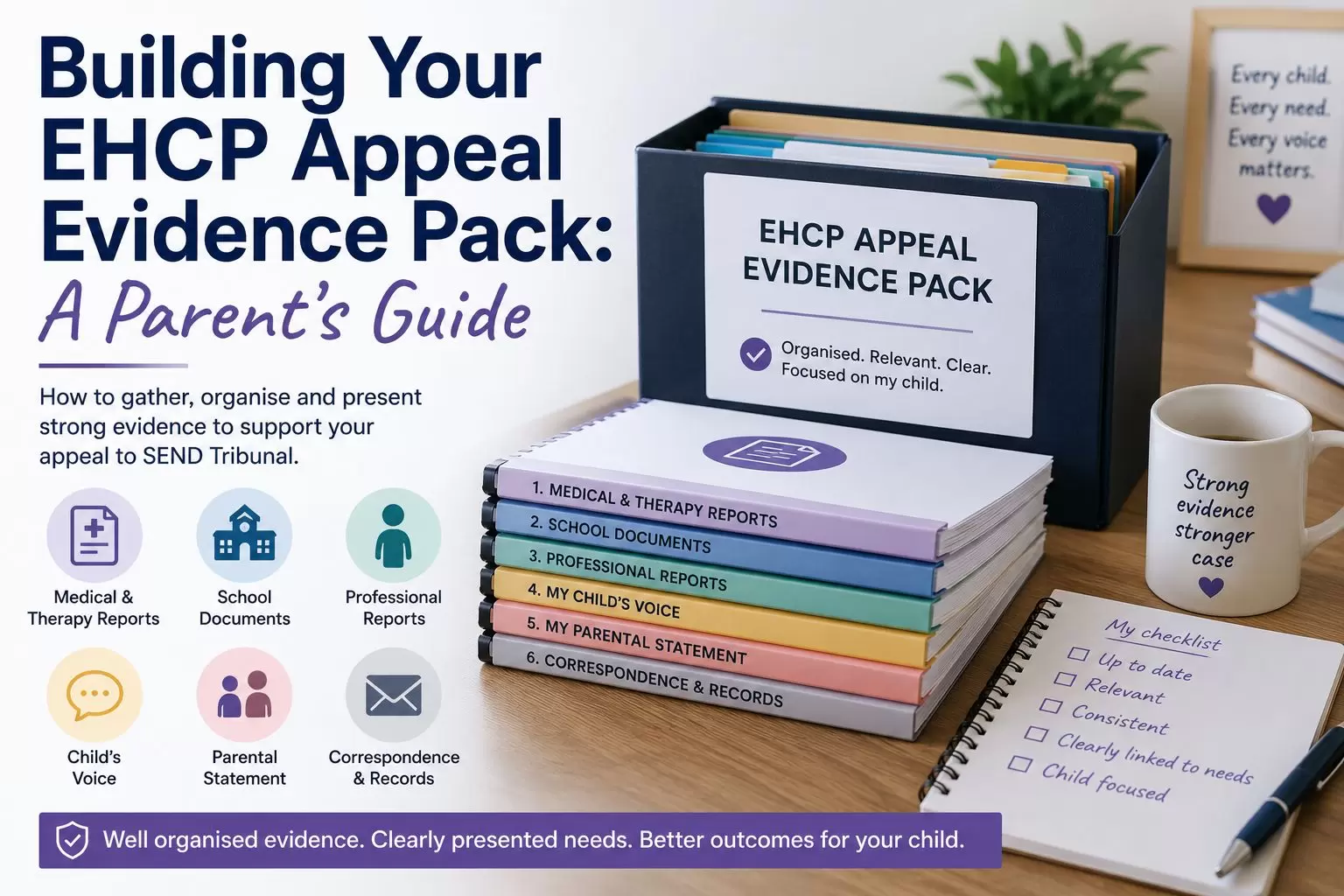
Building Your EHCP Appeal Evidence Pack: A Parent's Guide
Organising your evidence is one of the most important steps when lodging an appeal against a local authority’s decision about your child’s Education, Health and Care Plan. The SEND Tribunal is evidence-based, which means the strength of your case depends heavily on the documents and reports you provide. A well-prepared EHCP appeal evidence pack can make the difference between a successful outcome and a frustrating process. This guide explains what you need to include, where to get the right reports, and how to present everything so the Tribunal can clearly see your child’s needs.
Why a Well-Organised Evidence Pack Matters
The Tribunal does not rely on verbal claims alone. Every piece of evidence you submit helps build a picture of your child’s special educational needs and the support they require. Your local authority will also provide evidence, and it must supply all relevant information even if it is unhelpful to its own case and helps your appeal. This means you and the local authority are working from the same set of facts, but your evidence pack ensures your child’s perspective is fully represented.
The Tribunal is Evidence-Based
Because the SEND Tribunal makes decisions based on written and oral evidence, the documents you include carry significant weight. The appeal form itself asks you to list the evidence you have enclosed. You will be given a deadline by which to submit final evidence, so it is wise to start gathering materials as soon as you decide to appeal. Keep copies of everything you send and note the page numbers of your key evidence in the bundle you receive before the hearing.
What Should Go Into Your Evidence Pack
Your EHCP appeal evidence pack should be a structured collection of documents that supports the specific grounds of your appeal. You can appeal sections B (special educational needs), F (special educational provision), and I (placement) of a final EHC plan. The content of your pack will vary depending on which sections you are challenging, but the following items are essential for most appeals.
Essential Documents to Include
- A copy of the local authority’s decision letter, with the date noted clearly.
- The current EHC plan or, if you are appealing a refusal to issue a plan, the refusal letter.
- Completed SEND35 appeal form, specifying which sections (B, F, and/or I) you are appealing.
- Professional reports from educational psychologists, speech and language therapists, occupational therapists, or other specialists who assess your child.
- Any recent school reports, teacher observations, or provision maps that show your child’s current support and progress.
- Medical or health reports if your child has diagnosed conditions such as autism or ADHD.
- Witness statements from professionals or school staff who will attend the hearing. All witnesses attending must have provided a written report or witness statement as written evidence in the appeal.
Gathering Professional Reports
You may need evidence from other professionals to back up your appeal. These can include speech and language therapists, educational psychologists, occupational therapists, and other specialists who have assessed your child. Professional reports are often the most persuasive evidence because they provide independent, expert opinion on your child’s needs and the provision required to meet them.
If you do not already have recent reports, consider requesting an assessment through your local authority or privately. Any evidence you obtain should be sent to the local authority as well. Your case directions will tell you if you need to copy the SEND Tribunal at the same time. Previously the Tribunal always needed to be copied in, but it is changing some of its internal processes, so check the specific instructions for your case.
How to Organise Your Bundle
A messy, unindexed pile of documents can weaken even a strong case. Take time to arrange your evidence logically. Start with the appeal form and decision letter, then group professional reports by type or date. Include a contents page that lists each document with its page number. The hearing will be much smoother if you and the panel can quickly find the relevant information.
Practical Organisation Tips
- Number every page consecutively.
- Use dividers or bookmarks for each section.
- Make a separate list of your key evidence with page numbers so you can refer to it during the hearing.
- Keep a master copy for yourself and provide copies to the local authority and Tribunal according to the directions.
- If you are appealing the content of a final EHC plan, the working document (a version of the plan with your proposed changes tracked) should also be included in your pack.
Parent Evidence Checklist
| Item | Examples |
|---|---|
| LA decision letter | Copy of the refusal or final plan |
| Current EHCP or refusal letter | Most recent version from the local authority |
| Professional reports | Educational psychologist, speech and language therapist, occupational therapist |
| School evidence | School reports, provision maps, teacher notes |
| Health records | Medical diagnoses, paediatrician letters |
| Witness statements | Written reports from professionals attending the hearing |
If you are requesting changes and amendments to an EHC plan, you will need to provide evidence that directly supports the changes you want made. For example, if you believe section F should include a certain number of hours of speech and language therapy, include a report from a speech and language therapist that recommends that exact provision. The more specific your evidence, the clearer the Tribunal can see why the plan needs amending.
Frequently Asked Questions
Can I include evidence after I submit my appeal form?
Yes, you can continue to send evidence that supports your appeal after it has been registered. The Tribunal directions will give you a final deadline. Always send your evidence to the local authority at the same time; in certain cases you may also need to copy the Tribunal, so follow your case directions carefully.
What if I cannot afford private professional reports?
You can ask your local authority to arrange assessments through the NHS or education services, but these can take time. Some parents apply for funding from charities or contact their local SENDIASS for advice on free sources of evidence. You should still submit whatever reports and school documents you already have.
How many pieces of evidence are enough?
There is no set number. Quality matters more than quantity. Focus on reports and documents that directly address the needs and provision you are appealing about. A single strong professional report can be more effective than dozens of generic school letters.
Building your EHCP appeal evidence pack takes time and careful thought, but getting it right can significantly improve your chances at the SEND Tribunal. Start early, gather the right professional reports, and organise everything into a clear bundle. Every document you include helps the panel understand your child’s needs and why the current plan falls short. If you feel unsure at any stage, contact your local SENDIASS for free, impartial support.
Final Thoughts
A well-prepared EHCP appeal evidence pack can make your case clearer, stronger and easier for the SEND Tribunal to understand. The most effective evidence is organised, relevant and directly linked to your child’s special educational needs, the support they require and the decision you are challenging. Before submitting your appeal, it may help to review our guides on EHCP evidence for parents, why an EHCP may have been refused and EHCP refused: what to do next. You may also find our EHCP appeal process guide useful when preparing your documents, statements and supporting reports for tribunal.
One Response