
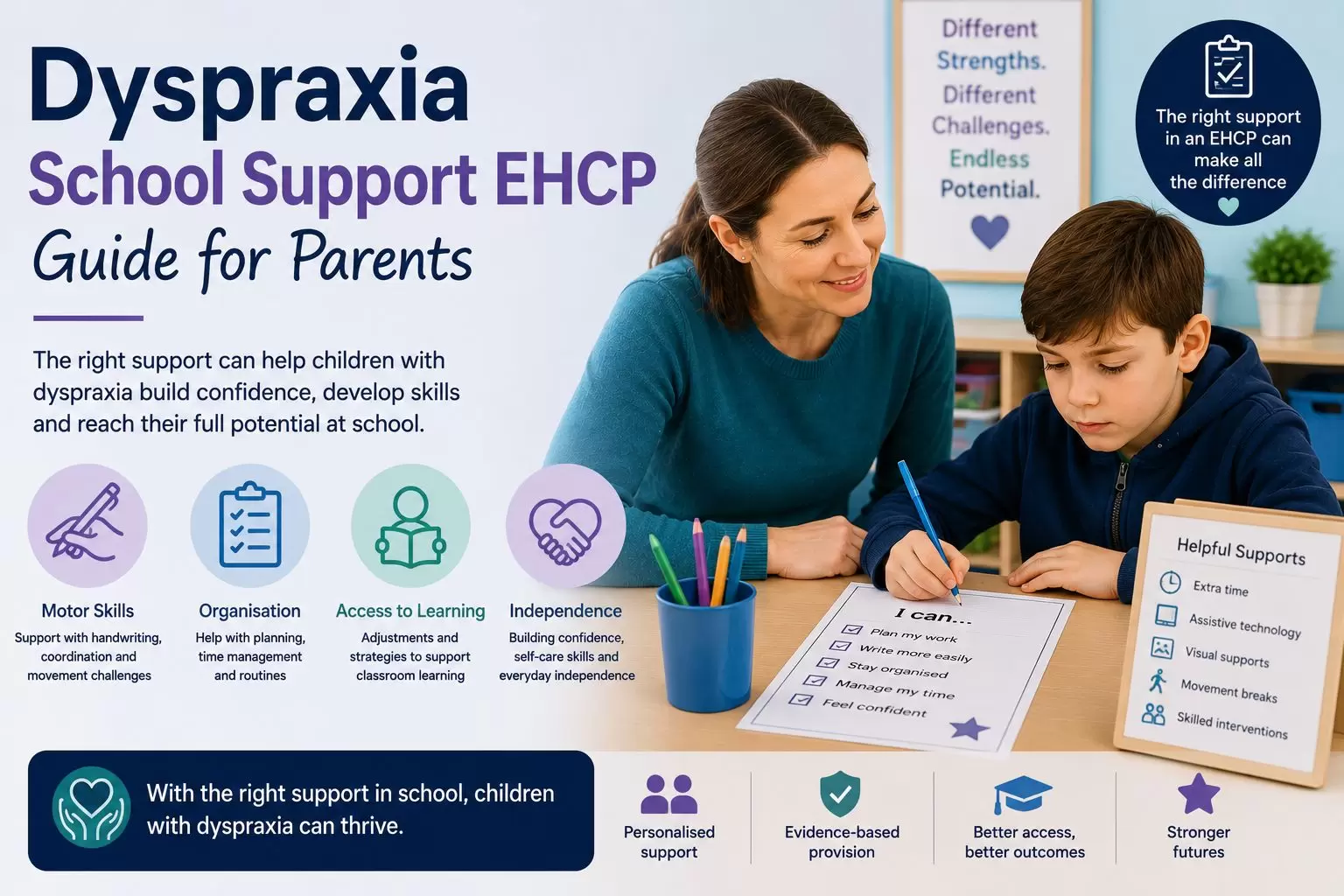
Supporting a Child with Dyspraxia in School: From SEN Support to EHCP
Dyspraxia can affect much more than handwriting or coordination. In school, a child with dyspraxia may struggle with organisation, processing speed, PE, fine motor tasks, independence, self-esteem and keeping up with classroom expectations. With the right support, many children can make strong progress, but their needs must be properly understood and responded to. This guide explains how schools can support a child with dyspraxia through SEN Support, what reasonable adjustments may help, and when parents may need to consider requesting an EHCP to secure clearer, more consistent provision.
Understanding Dyspraxia and Special Educational Needs
It is entirely possible that a child with dyspraxia will have special educational needs (SEN). Many children with dyspraxia, also known as Developmental Coordination Disorder (DCD), experience difficulties with coordination, organisation, handwriting, and motor skills that can affect their learning and participation in school. In some cases, the additional support provided through the school’s SEN Support system may be enough to meet their needs. In others, a more formal and legally enforceable plan – an Education, Health and Care Plan (EHCP) – becomes necessary, Dyspraxia school support EHCP
A DCD diagnosis is a health diagnosis and requires a referral to an Occupational Therapist. The occupational therapy service will need to see that the school has already put in appropriate support before considering further involvement. This highlights how important it is for parents to work closely with the school from the outset.
SEN Support: The First Step for Your Child
Schools are expected to support children through SEN Support first before an EHCP is considered. This is the graduated approach described in the SEND Code of Practice. Your child’s school should use a cycle of assess, plan, do, and review to identify needs and put in place interventions. If your child has dyspraxia, this might include extra time for written tasks, use of a laptop or tablet, handwriting practice with a teaching assistant, or sensory breaks.
If the school and you as a parent feel that your child is not making adequate progress despite these targeted interventions, it may be time to think about requesting an Education, Health and Care needs assessment. The school have to prove that they are already spending at least £6,000 on additional support for your child – over and above the usual school provision – before an EHCP can be justified. This threshold is not a hard limit but it gives you an idea of the level of extra support that is expected before a plan is considered.
When is an EHCP Necessary for Dyspraxia?
An EHCP stands for an Education Health and Care Plan. This is a legal document for individuals aged between 0 and 25 who have a special educational need or disability and require additional support beyond what educational institutions usually provide. An EHCP may be necessary when the support provided through SEN Support is no longer enough to meet your child’s needs.
You might consider an EHCP if your child with dyspraxia is falling significantly behind academically, struggling with self-care or emotional regulation at school, or if the school’s resources are not sufficient to deliver the intensity of support required. Some parents also find that a smaller, EHCP-funded school that can support their child emotionally is a better fit – but getting a plan in place first is often the essential step to accessing such a placement.
The EHCP Assessment Process
To obtain an EHCP you will need to have a needs assessment completed. This assessment looks at the education, health care, and social care needs of your child or young person. The process is started by making a request to your local authority. You can make this request yourself, or the school can do it with your agreement.
Once the local authority agrees to carry out an assessment, they will gather information from you, the school, and any professionals involved with your child – such as an occupational therapist or a speech and language therapist. After the assessment, they will decide whether to issue an EHC plan. If they refuse, you have the right to appeal and strengthen your evidence.
The Special Needs Jungle website provides a helpful “get started” checklist for the EHCP assessment. Their quick tips include: find out how the school thinks your child is doing, gather together and review all existing reports and records, and start documenting your own observations. This kind of preparation can make a significant difference to the strength of your application.


Gathering Evidence for Your Child's Needs
Strong evidence is the backbone of a successful EHCP application for a child with dyspraxia. Because dyspraxia is a hidden condition, it is important to show how it affects your child’s ability to access the school curriculum and participate in everyday activities. Reports from an Occupational Therapist, a paediatrician, and the school’s own records of interventions and progress are all key pieces of evidence.
You may also want to keep a diary of specific difficulties your child faces at school and at home – for example, trouble with PE lessons, lunchtime routines, or handwriting in exams. The aim is to demonstrate that the school’s current provision, though costing at least £6,000 in additional support, is not meeting your child’s needs. Remember: a DCD diagnosis alone is not enough – you need to show the impact on learning and daily life.
What to Do If School Is Not Following the EHCP
Once your child has an EHCP in place, the local authority and school are legally required to provide the support listed in the plan. Legally, schools and local authorities must provide the support in your child’s EHC plan, even if your child is not at school. If the school fails to deliver the specified provision, you have grounds to challenge this. Start by raising the issue informally with the SENCO and headteacher. If that doesn’t work, you can make a formal complaint or use the local authority’s disagreement resolution service.
It can be frustrating when a plan exists on paper but doesn’t translate into practice. Keep copies of all letters, emails, and meeting notes. If necessary, you can seek further legal advice about enforcing your child’s rights. The fact that the plan is legally binding is your strongest tool
Frequently Asked Questions
Is dyspraxia classed as special educational needs?
Yes, it is entirely possible that a child with dyspraxia will have special educational needs (SEN). The impact of dyspraxia on coordination, fine motor skills, and organisation can create barriers to learning that require additional support under the SEN framework.
What support can a school provide for a child with dyspraxia before an EHCP?
Schools are expected to deliver SEN Support first, which might include handwriting interventions, use of assistive technology, extra time, visual timetables, and support from a teaching assistant. The school must show they have spent at least £6,000 on additional support above usual provision before an EHCP would typically be considered.
How do I get an EHCP for my child with dyspraxia?
You need to request an Education, Health and Care needs assessment from your local authority. The assessment looks at your child’s educational, health and social care needs. You will need to provide evidence from professionals such as an Occupational Therapist and from the school to show that SEN Support is not enough.
What should I do if the school isn’t following my child’s EHCP?
You should first raise the issue with the school’s SENCO. If the problem persists, you can make a formal complaint. Remember, the provision in an EHCP is legally enforceable, and the local authority must ensure it is delivered even if your child is not attending school.
Supporting a child with dyspraxia in school requires persistence and a clear understanding of the SEN system. Starting with SEN Support, building a strong evidence base, and progressing to an EHCP when necessary can secure the help your child needs to thrive. Every child is different, but knowing your rights and the steps involved puts you in a stronger position to advocate effectively.
Final Thoughts
Supporting a child with dyspraxia in school starts with recognising how their needs affect everyday learning, not just handwriting or coordination. The right SEN Support can make a meaningful difference, but where difficulties are significant, persistent or not improving despite school-based support, parents may need to consider whether an EHCP is needed. You may find it helpful to read our wider guides on SEN Support vs EHCPs, what level of need qualifies for an EHCP and how to apply for an EHCP. If you are preparing evidence, our guide to EHCP evidence for parents can help you show clearly how dyspraxia affects your child’s access to learning, independence and school life.