
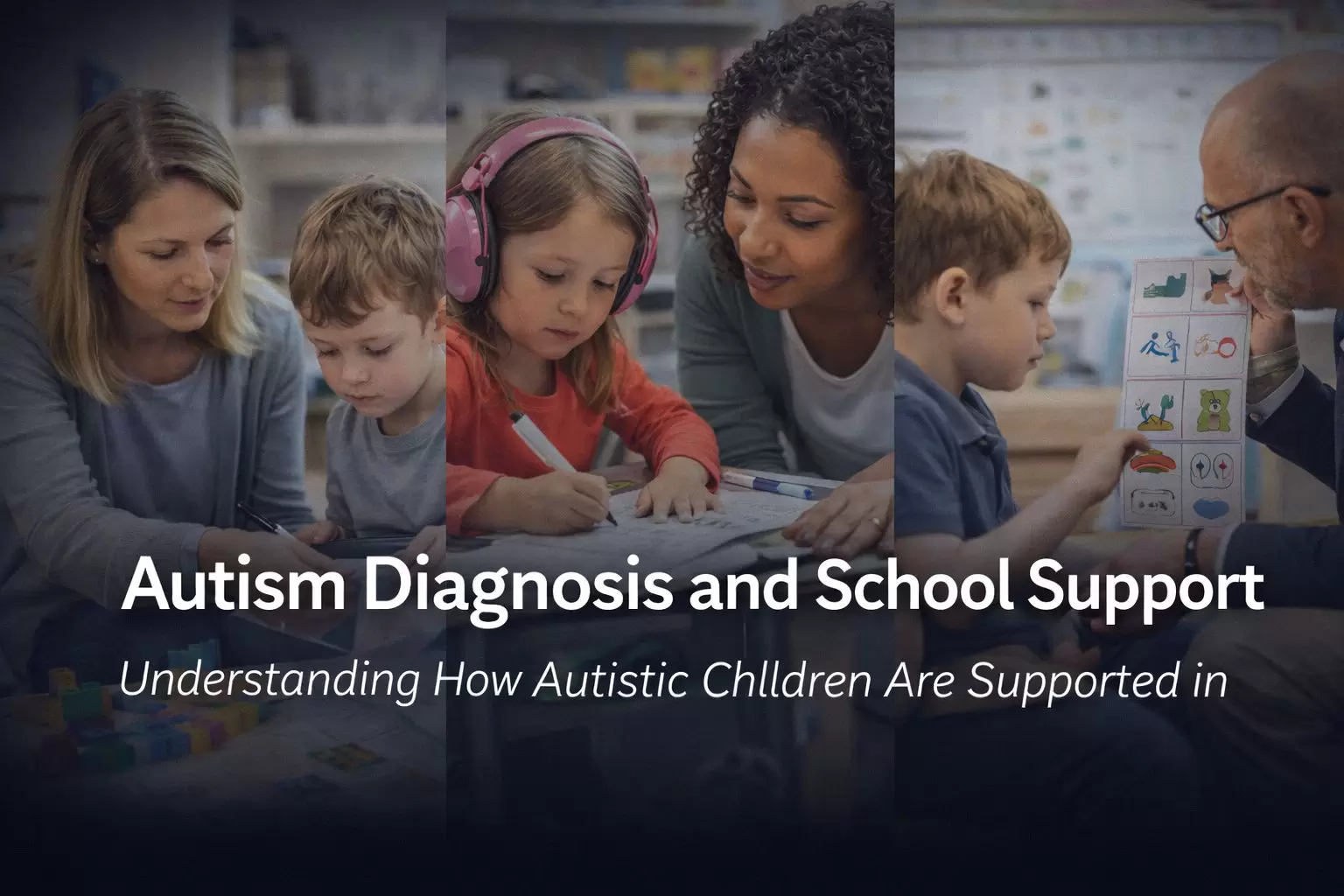
Autism Diagnosis and School Support
Last reviewed: March 2026
Written by: School of Diversity SEND Support Team
Topic: Autism and Educational Support
This guide explains how schools support autistic children after diagnosis, including SEN support, classroom strategies and when additional educational support may be considered.
After an autism diagnosis, schools can provide support through SEND support plans, classroom strategies and specialist interventions. Some children may also receive additional support through an Education, Health and Care Plan (EHCP) depending on their needs.
Key Takeaways
An autism diagnosis helps schools understand how to support a child’s learning and development.
Many autistic children receive support through SEN support in school.
Schools may implement strategies to support communication, learning and sensory needs.
Some children may require additional support through an EHCP.
Parents and schools work together to ensure support meets the child’s needs.
When a child receives an autism diagnosis, parents often begin exploring what support may be available in school. An autism diagnosis can help teachers and school staff understand how a child learns and what adjustments may help them succeed in the classroom.
Schools can provide a range of support strategies designed to help autistic children thrive in educational environments.
How Schools Support Autistic Children
Direct answer:
Schools support autistic children through teaching strategies, support plans and adjustments to the learning environment.
Support may include:
communication support strategies
structured routines and predictable schedules
visual learning tools
additional adult support where needed
These approaches help create a learning environment that supports the child’s needs.
SEN Support in Schools
Direct answer:
Many autistic children receive support through SEN support, which is additional support provided by schools for children with special educational needs.
SEN support may involve:
individual learning plans
targeted interventions
additional teaching support
collaboration between teachers and SEN coordinators
This support aims to help the child make progress in education.
Classroom Strategies for Autistic Children
Teachers may use a variety of strategies to support autistic children in the classroom.
These may include:
visual timetables
structured learning environments
clear instructions and communication
sensory-friendly adjustments
predictable routines
These strategies help reduce anxiety and support learning.
Communication With Parents
Schools usually work closely with parents to ensure support strategies are effective.
Parents and teachers may discuss:
progress in learning
support strategies that work well
adjustments needed in the classroom
future support planning
Regular communication helps ensure the child receives consistent support.
When an EHCP May Be Considered
Direct answer:
Some autistic children may require additional educational support through an Education, Health and Care Plan (EHCP).
An EHCP may be considered when a child’s needs require support beyond what schools can normally provide.
An EHCP can describe:
the child’s needs
the provision required to support learning
the educational setting responsible for delivering support
Autism Diagnosis and Emotional Support
Receiving an autism diagnosis can bring many emotions for families.
Parents may experience:
relief in understanding their child’s needs
questions about future support
concerns about school environments
Schools and professionals can help families navigate the support available.
Supporting Autistic Children at School
Parents and schools often work together to support autistic children.
Helpful approaches may include:
clear communication between school and home
consistent routines
understanding sensory needs
supporting social interaction
Collaboration between parents and teachers is essential.
FAQ
Does an autism diagnosis automatically mean a child receives an EHCP?
No. Many autistic children receive support through SEN support depending on their needs.
Can schools provide support without a diagnosis?
Yes. Schools can provide SEN support based on a child’s needs even before a diagnosis is confirmed.
Who decides what support a child receives?
Schools, parents and professionals usually work together to determine appropriate support.
Can autism support change as a child grows?
Yes. Support strategies may be adjusted as a child’s needs change.
Explore More Autism Guidance
If you are exploring autism support for your child, you may find these guides helpful:
You can also explore our Autism Support for Parents hub, which explains autism signs, assessments and school support in more detail.