
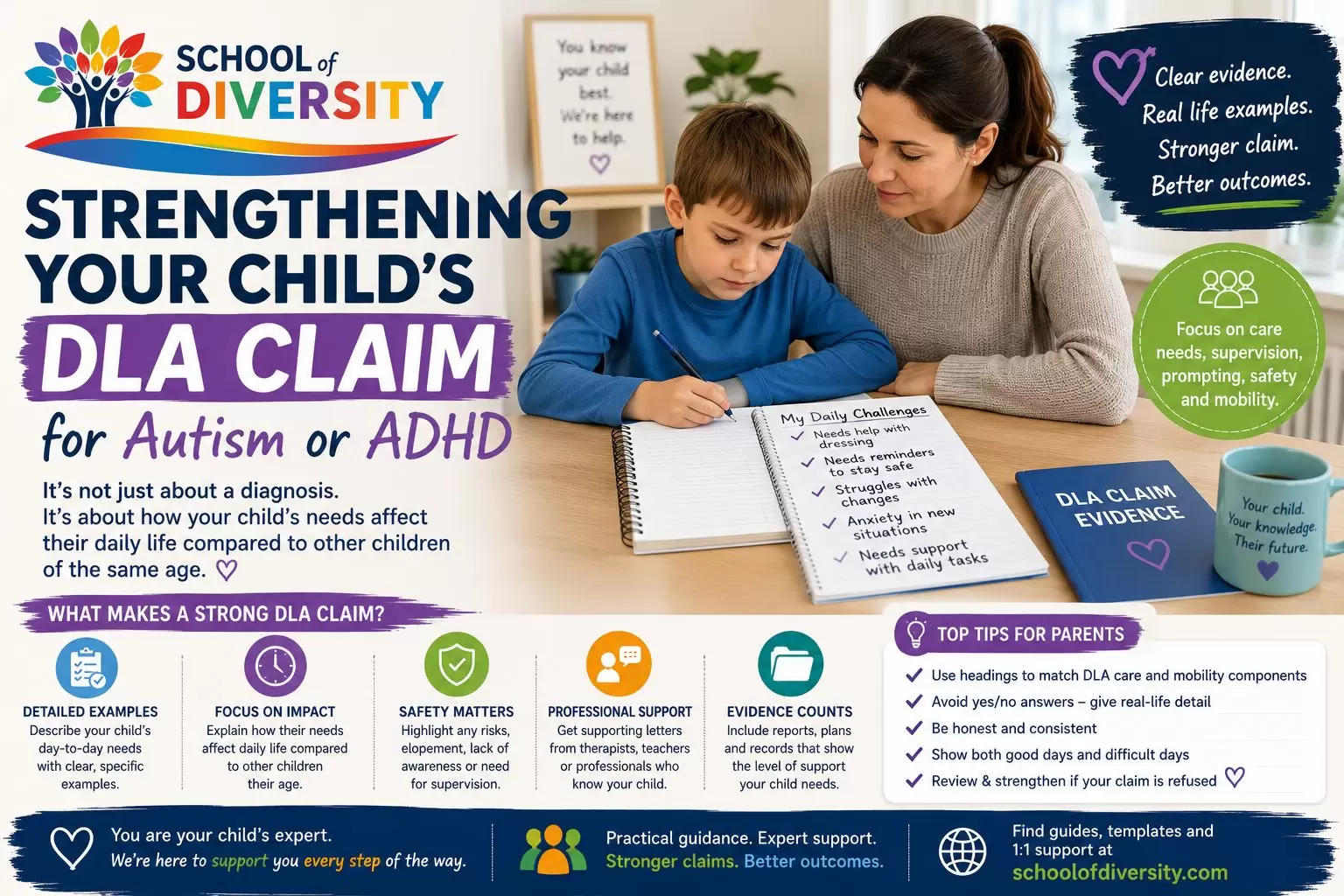
Strengthening Your Child's DLA Claim for Autism or ADHD
If your child has autism, ADHD or both, you may be entitled to Disability Living Allowance (DLA) for children. This benefit is designed to help with the extra costs of looking after a child who has difficulties walking or who needs much more looking after than a child of the same age without a disability. DLA is not just for physical conditions; it fully covers behavioural and mental health conditions, learning disabilities and developmental delay. For a child with autism or ADHD, the daily care and supervision required can be significantly greater than for a neurotypical child, and this benefit can make a real difference to your family’s finances. The weekly rate ranges from £30.30 to £194.60 depending on the level of help your child needs, and it is not means-tested, so your income or savings do not affect eligibility.
Understanding DLA Eligibility for Autism and ADHD
To be eligible for DLA, your child must be under 16 and have had the condition or care needs for at least three months, with an expectation that they will last for at least another six months (unless the child is terminally ill). Your child does not need a formal diagnosis to claim; the claim is based entirely on their needs. However, having a diagnosis can strengthen your case. DLA for children living in England and Wales is claimed through the Department for Work and Pensions. If you live in Scotland, you need to apply for Child Disability Payment from Social Security Scotland instead. For children under 3, the mobility component of DLA cannot be claimed, but the care component can still be awarded if your child needs substantially more care than other children of the same age.
Why Detailed Evidence Matters
The DLA claim form (form DLA1 Child (ALT)) relies heavily on tick boxes. Many parents complete only the tick boxes and then wonder why their claim is refused. The key to a strong claim is to add extra sheets with detailed descriptions and examples of your child’s care needs. You need to show not just what your child cannot do, but how you help them and how that compares to a child of the same age without autism or ADHD. For example, a five-year-old without autism may need prompting to get dressed, but a child with ADHD may need constant redirection, physical help to stay on task, and supervision to avoid harm. Write down specific incidents, describe a typical day from morning to night, and explain the supervision required around safety, impulsivity, emotional dysregulation, and social situations.
Gathering Written Examples
Include real-life examples that illustrate the extra care your child needs. For a child with ADHD, this might include running into the road without awareness of danger, needing constant supervision during mealtimes to avoid choking or food throwing, or being unable to stay in bed at night without someone present. For an autistic child, examples could include severe anxiety that prevents leaving the house, sensory meltdowns that require hours of calming, or the need for a carefully structured routine that demands constant parental input. Describe how you intervene and how long you spend on each task. The more specific you can be, the better the claims assessor can understand your child’s circumstances.
Using a Care and Supervision Diary
One of the most effective tools is a care and supervision diary. Keep it for two to four weeks, noting every instance of care, supervision, prompting or comforting you provide. Include the time, duration, and what you did. This provides concrete evidence of the level of help your child needs and directly supports what you put on the form. For a child with autism or ADHD, you will likely be surprised by just how much extra time you spend each day compared to a parent of a child without these conditions.
Common Mistakes to Avoid
- Relying only on the tick boxes without adding extra sheets of written explanations.
- Describing your child’s diagnosis instead of their care needs. Focus on what you actually do for them.
- Not comparing your child’s needs to a child of the same age who does not have a disability.
- Being vague about frequency or duration. Instead of saying “needs help with washing,” say “needs physical help and verbal prompting for every bath, which takes 30 minutes, and I must stay with them the whole time.”
- Omitting nighttime care needs. Many children with autism and ADHD wake repeatedly, need reassurance, or cannot settle without a parent present.
- Forgetting about supervision for safety. If your child cannot be left unsupervised even for a few minutes, make that clear.
No Diagnosis? You Can Still Claim
You do not need a formal diagnosis of autism or ADHD to claim DLA for your child. The benefit is awarded based on the care and supervision needs, not the label. If you are on a waiting list for an assessment, you can still apply now. However, any medical evidence you can gather will help. School reports, letters from a health visitor, GP notes, or a paediatrician’s opinion can all support your claim. A formal diagnosis, when available, makes it easier to link your child’s needs to a recognised condition, but the absence of one should not stop you from applying.
What Happens When Your Child Turns 16?
DLA is for children under 16. When your child reaches that age, they will need to claim Personal Independence Payment (PIP) instead. PIP has different criteria and rates, so it is a good idea to start preparing early. If your family moves to Scotland, DLA continues for up to 13 weeks after the move, after which you must claim Child Disability Payment.
DLA as a Gateway to Other Support
Receiving DLA for your child can unlock other financial help. It can act as a gateway to Carer’s Allowance if you care for your child for at least 35 hours a week. It can also increase means-tested benefits such as Universal Credit. Even if the DLA award is low, it may still qualify for these linked benefits, so it is worth checking your entitlement.
Frequently Asked Questions
Can I claim DLA for my child with ADHD if they don’t have a formal diagnosis?
Yes. DLA is based on the care and supervision needs your child has, not on a medical label. You can claim even while awaiting an assessment. However, any medical or professional reports you can obtain will strengthen your application.
How much DLA can my child get for autism or ADHD?
The weekly rate ranges from £30.30 to £194.60 depending on the level of help your child needs. The amount is determined by how much care and supervision they require compared to a child of the same age without a disability. Detailed evidence of your child’s needs is essential to achieving the correct rate.
Does DLA affect other benefits?
DLA is not means-tested, so it does not reduce your income-related benefits like Universal Credit. On the contrary, it can increase them and may qualify you for Carer’s Allowance if you provide at least 35 hours of care per week.
Can I claim DLA for a child under 3 with autism?
Yes, but the mobility component of DLA cannot be claimed for children under 3. The care component can still be awarded if your child needs substantially more care than other children of the same age. Many parents of autistic toddlers successfully claim the care component.
What if my DLA claim is refused?
You can request a mandatory reconsideration from the Department for Work and Pensions. If that does not change the decision, you can appeal to an independent tribunal. Many initial refusals are overturned on appeal, especially when parents add extra evidence and follow the tips in this article.
Preparing a DLA claim for your child’s autism or ADHD requires time and attention to detail, but the financial and practical support it brings can be significant. Focus on describing what you do for your child, use a care diary to back up your form, and always include extra sheets with specific examples. With careful preparation, you can give your claim the best possible chance of success.
Final Thoughts
Strengthening a DLA claim for a child with autism or ADHD is about showing the real impact of their needs in daily life, not simply naming the diagnosis. The strongest claims explain the extra care, supervision, prompting, safety support, emotional regulation help and mobility-related needs your child has compared with another child of the same age. You may find it helpful to read our wider DLA for Children guide and our step-by-step guide on how to apply for Disability Living Allowance for your child. Before submitting or challenging a decision, you may also want to review common mistakes when claiming DLA for a child with ADHD or autism. For tailored help reviewing your answers, strengthening your evidence and presenting your child’s needs clearly, explore our DLA Application Support for Children service.