
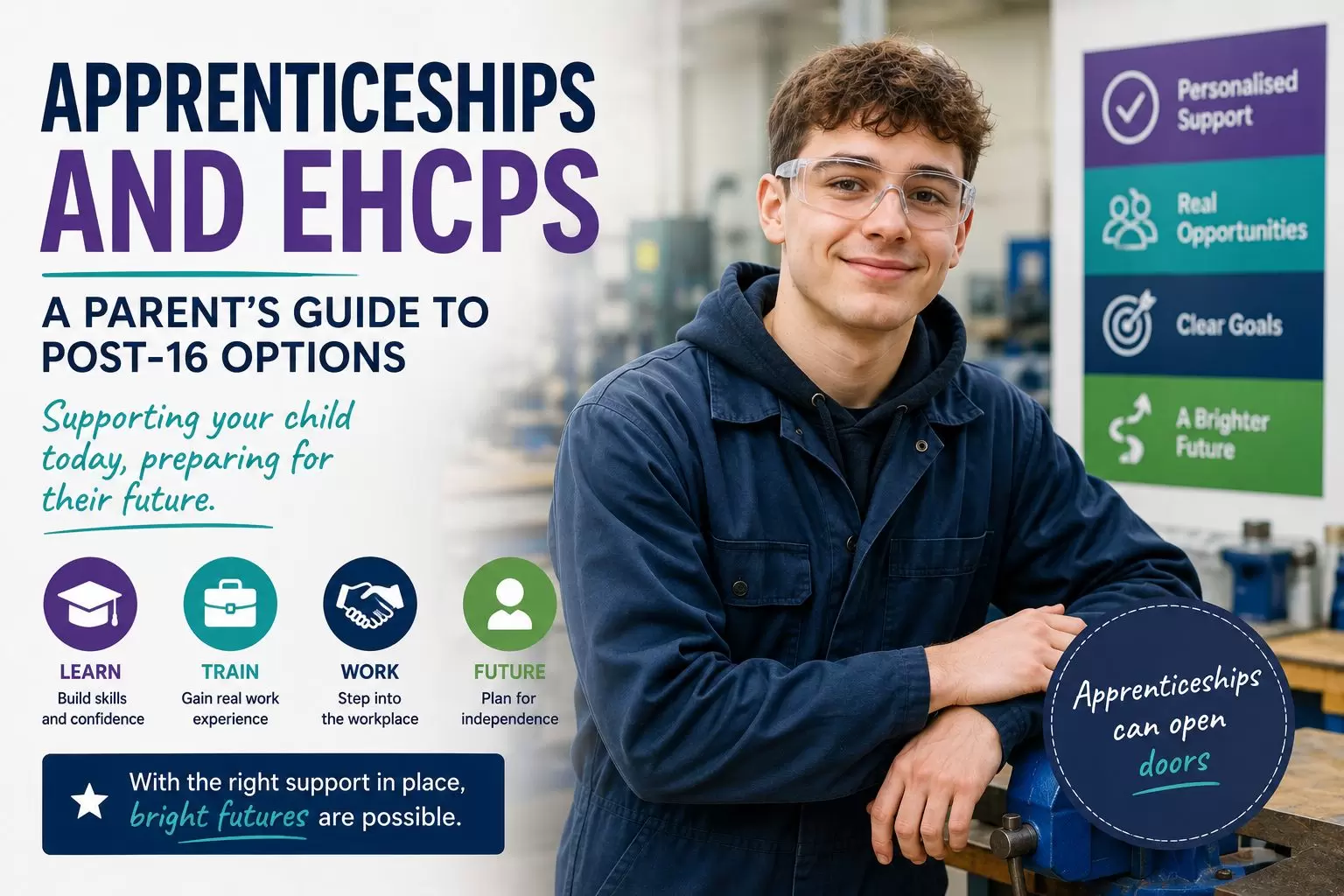
Apprenticeships and EHCPs: A Parent's Guide to Post-16 Options
As your child approaches the end of school, thinking about what comes next can feel both exciting and uncertain, especially when an Education, Health and Care Plan (EHCP) is in place. Many parents assume that university or college are the only routes after year 11, but apprenticeships offer a genuine and valuable alternative. The good news is that apprenticeships are open to anyone aged 16 or older, including young people with an EHCP. With the right information about funding, reasonable adjustments, and how the plan works alongside an apprenticeship, you can help your child choose a path that suits their strengths and ambitions.
How Apprenticeships Work with an EHCP
An apprenticeship is a paid job that combines practical work with structured learning. Apprentices typically spend at least 20% of their working hours on off-the-job training, which can take place at a college, training centre, or online. Apprenticeships can last from 1 to 5 years, depending on the level and occupation. Young people with an EHCP have the same right to apply for apprenticeships as anyone else. Crucially, apprenticeship providers have a duty under the Equality Act 2010 to make reasonable adjustments for disabled learners. This means the training environment, course materials, and assessment methods should be tailored to your child’s needs, just as they would be in school.
The EHCP itself does not end when an apprenticeship starts. It continues to operate the same way as it would for education or training. The plan should name the training provider, and annual reviews are still required to check that the support remains appropriate. Employers are also expected to provide reasonable adjustments in the workplace, although learning support funding cannot be used for those workplace adjustments – that responsibility sits with the employer.
Funding and Additional Payments
Funding for apprentices with an EHCP works differently depending on age. For apprentices aged 16 to 18, additional funding payments (known as EEF code 2) are automatic. This means the training provider receives extra money to support the apprentice, regardless of whether they have an EHCP. For apprentices aged 19 to 24, additional payments require that the young person has a current (maintained) EHCP at the start date of the apprenticeship. If the EHCP is in place when the apprenticeship begins, the provider can access the extra funding. If not, those payments are not available.
Beyond these age-related payments, there is also learning support funding available for apprentices who have an EHCP, a statement of special educational needs, or a learning difficulty assessment after a thorough assessment. This funding can be used for staff time, specialist equipment, additional time in exams, and other reasonable adjustments for apprentices with learning difficulties or disabilities. It is important to note that learning support funding covers training-related costs only; workplace adjustments remain the employer’s responsibility.
When an EHCP Continues or Ceases
One of the most common questions parents ask is whether the EHCP remains in place once their child starts an apprenticeship. The answer depends on the level of the apprenticeship. For apprenticeships at Levels 2 and 3 (intermediate and advanced), the EHCP continues as normal. The plan still has legal force, and the local authority must review it annually. The training provider should be named in the plan, and the same processes you are used to – such as annual reviews and rights of appeal – continue to apply.
However, if a young person moves onto a Higher or Degree apprenticeship at Level 4, 5, 6, or 7, the EHCP ceases. This is because these higher-level apprenticeships are classed as higher education, and the legal framework for EHCPs changes at that point. It is worth planning for this transition in advance, so that your child has appropriate support arrangements in place before the plan ends. Also bear in mind that Child Benefit stops if a young person starts an apprenticeship in England, regardless of their EHCP status.


Practical Considerations for Parents
When exploring apprenticeship options, it helps to ask the right questions early. Check whether the training provider has experience supporting apprentices with special educational needs. Ask about the kinds of reasonable adjustments they have made for other learners. Adjustments might include reduced hours, extended time to complete tasks, or a supported apprenticeship agreement that sets out extra mentoring and supervision. The provider should be willing to work with you and the local authority to ensure the plan reflects the apprenticeship placement.
If your child is 19 or over and has an EHCP, make sure the plan is maintained and current at the start of the apprenticeship. Without it, the additional funding that helps the provider deliver extra support may not be available. Also remember that the EHCP remains your child’s legal document until they reach age 25, provided they continue in approved education or training. An apprenticeship at Level 2 or 3 qualifies as approved training, so the plan stays active. If your child later moves to a higher-level apprenticeship, the plan will cease, and you will need to look at other sources of support, such as the university’s disability services.
For parents who feel unsure about how the system works, it can be reassuring to speak directly with the local authority’s SEND team or the apprenticeship provider’s learning support coordinator. Every situation is different, and the official rules can be complex. If you need precise details about funding rates or your child’s specific entitlements, it is always best to check the latest government guidance or seek advice from a specialist SEND information service.
Frequently Asked Questions
Can my child start an apprenticeship if they have an EHCP?
Yes. Apprenticeships are open to anyone aged 16 or older, including young people with an EHCP. Apprenticeship providers have a legal duty to make reasonable adjustments under the Equality Act 2010, and learning support funding is available to help meet the extra costs of supporting disabled apprentices.
Does the EHCP fund the apprenticeship?
No, the EHCP itself does not cover apprenticeship fees. Funding comes from the government through the apprenticeship levy and direct payments to providers. However, the EHCP can trigger additional learning support funding for reasonable adjustments such as specialist equipment, extra staff time, and additional exam time.
What happens to the EHCP if my child does a degree apprenticeship?
If your child moves onto a Higher or Degree apprenticeship at Level 4 or above, their EHCP ceases. This is because these are classed as higher education. You should plan ahead to ensure that alternative support arrangements, such as university disability services, are in place.
Does my child lose benefits if they start an apprenticeship?
Child Benefit stops when a young person starts an apprenticeship in England. Other means-tested benefits may also be affected. It is advisable to contact the benefits office or a welfare rights adviser before the apprenticeship begins to understand the full impact on your household.
What if my child is 19 or older with an EHCP – can they still do an apprenticeship?
Yes, but the additional funding that providers receive requires the EHCP to be current and maintained at the start date of the apprenticeship. Without a live EHCP at that point, the extra payments for 19- to 24-year-olds are not available, which may affect the level of support the provider can offer.
Every young person’s journey is different, and the apprenticeship route can offer meaningful employment alongside continued learning. By understanding how the EHCP operates within this system, you can advocate effectively for the support your child needs and help them take a confident step into their working life.
Final Thoughts
Apprenticeships can be a valuable post-16 pathway for young people with SEND, but the right support must be clearly planned, evidenced and reviewed. If your child has an EHCP, it is important to check whether their outcomes, provision and preparation for adulthood targets reflect their future training, employment and independence goals. You may find it helpful to read our wider guide to what support an EHCP can provide, understand the importance of clear Section F wording, and use the EHCP annual review process to make sure post-16 options are properly considered. If you are still at the early stages, our guide on how to apply for an EHCP explains the next steps for parents seeking formal support.