
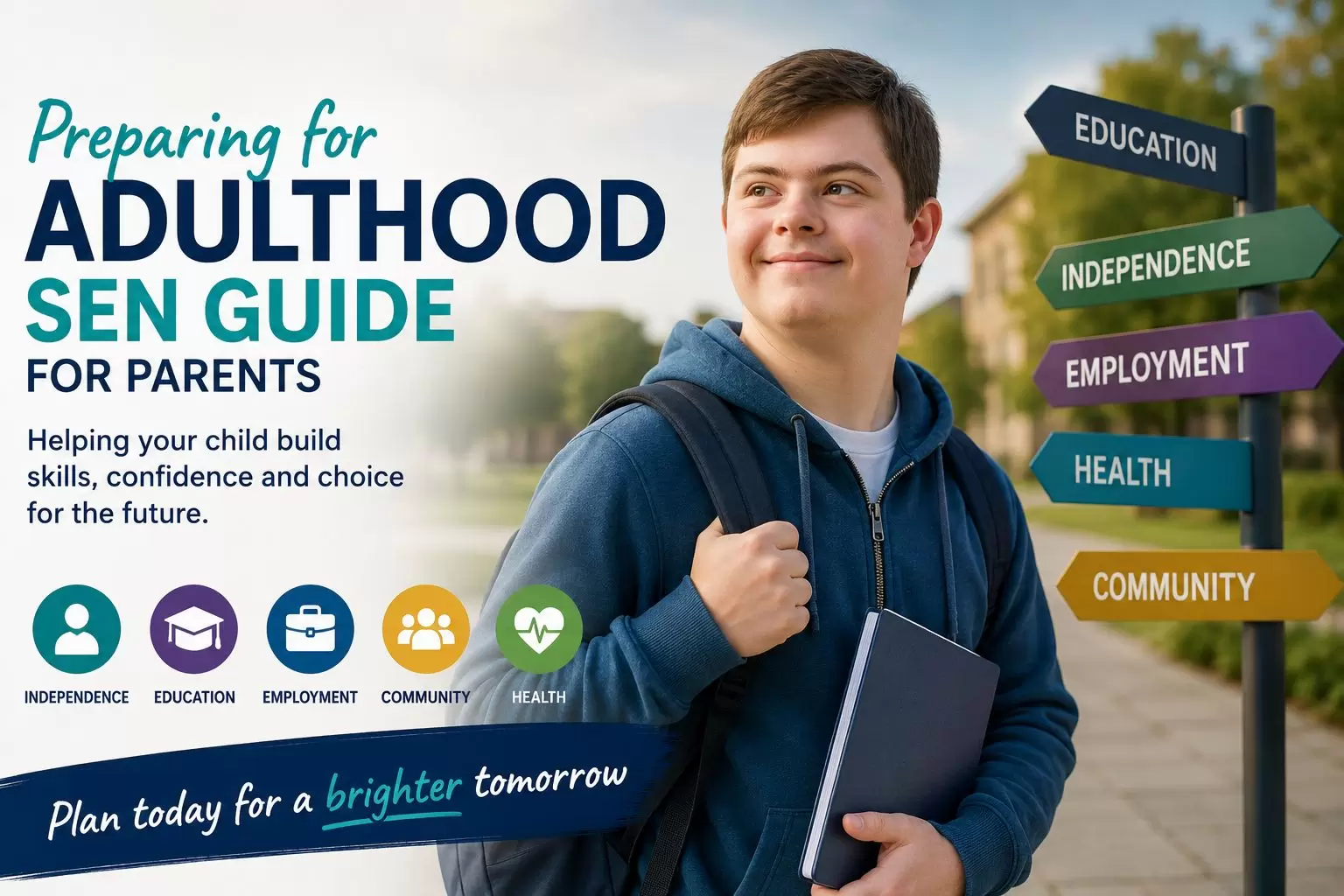
Preparing for Adulthood SEN Parent Guide
If your teenage child has special educational needs (SEN), you may be wondering what their path to adult life should look like and what support your family can expect from the system. In England, the legal framework provides a clear structure called “Preparing for Adulthood” (PfA), which becomes a formal part of your child’s planning from Year 9 onwards. This guide walks you through the key stages, your legal rights, and the practical steps you can take to ensure your child has the best possible foundation for their future.
What Does Preparing for Adulthood Mean?
Preparing for Adulthood is not a single event but a process that runs throughout a young person’s later school years. According to the SEND Code of Practice (2015), which sets out the requirements of the Children and Families Act 2014, PfA means preparing for four main areas of adult life: higher education and/or employment, independent living, participating in society (including friendships and contributing to the community), and being as healthy as possible in later life. These four areas are often referred to as the PfA pathways. The goal is to help young people with SEN move towards an adult life that is fulfilling, as independent as possible, and well-supported.
The Legal Framework: Your Rights from Year 9
The law gives clear rights and responsibilities for preparing for adulthood. Under Regulation 20(6) and 21(6) of the SEN and Disability Regulations 2014, the local authority has a duty to ensure that from Year 9 onwards, the annual review meeting of an Education, Health and Care (EHC) plan considers preparation for adulthood and independent living. The SEND Code of Practice reinforces this at paragraph 8.9, requiring local authorities to ensure that the EHC plan review at Year 9 and every review thereafter includes a focus on preparing for adulthood.
This means that the annual review is no longer just about school progress; it must explicitly address your child’s long-term goals and the support needed to achieve them. Person-centred planning is expected throughout the process, with children, young people and families central to decision-making. The emphasis on high aspirations is crucial, and the Code of Practice encourages discussions about longer-term goals to start early, ideally well before Year 9.
How the EHCP Review Changes at Year 9
Before Year 9, annual reviews of an EHC plan focus on progress in school and whether the plan still meets the child’s needs. From Year 9, the review must also look ahead to adulthood. The school (or the local authority if your child is home-educated) organises the review. It should involve the young person, parents or carers, teachers, and other professionals who work with them. Conversations about your child’s future should centre on your child’s own views and ambitions. The PfA planning within the review should include support for higher education or employment, independent living, maintaining good health in adult life, and participating in society (as stated in SEND Code of Practice paragraph 8.10).
It is important to come prepared. Think about what your child enjoys, what they are good at, and what support they need to be part of their community. Do they want to go to college, get a job, or learn independent travel skills? The annual review is the place to put these goals into writing as outcomes in the EHC plan.


The Four Pathways Explained
Higher Education or Employment
This pathway covers further education, training, apprenticeships, supported employment, or paid work. The EHC plan should specify what support your child needs to access these opportunities, such as a job coach, travel training, or reasonable adjustments in a college setting. The aim is to build skills that lead to meaningful activity after school.
Independent Living
Independent living does not mean living entirely alone. It means having choice and control over where and how you live, with the right support. This could include help with daily living skills, housing options, budgeting, and personal care. Planning for independent living should start early so that skills can be developed gradually.
Participating in Society
Having friendships, being part of local groups, and contributing to the community are all part of participating in society. This pathway focuses on social skills, relationships, and community inclusion. Support might include social groups, mentoring, or activities that help your child build a network of peers and adults outside of school.
Good Health
Staying healthy in adult life covers physical and mental health. This includes managing conditions, attending appointments, understanding medication, and developing a healthy lifestyle. The transition from children’s to adult health services can be a challenge, so the EHC plan should include how health needs will continue to be met.
Support Extends to Age 25
Young people with SEN can be supported up to age 25, beyond compulsory school age. This means that even if your child stays in further education or training, their EHC plan can continue. However, the transition from Children’s Services to Adult Social Care is a key step. The Dorset Council guidance notes that young people with SEND moving into adulthood may face challenges in this transition, so it is important to discuss this with your local authority during reviews. The NDTi programme offers tailored support to local areas to improve transitions into adulthood through coproduction, system change, training, and peer-led research.
Common Challenges and How to Prepare
A thematic review by the Department for Education in December 2024 highlighted familiar issues experienced by children, young people, parents and carers in preparation for adulthood arrangements across local area partnerships. This suggests that, although the legal framework is in place, local implementation can vary. Some areas may have strong person-centred planning; others may struggle with capacity or consistency.
To prepare, make sure you understand your child’s rights. Ask the school and local authority to show how the annual review is addressing the four PfA outcomes. If your child does not yet have an EHC plan, request an assessment as soon as possible, because the plan provides the legal basis for PfA planning. The School of Diversity offers guidance on EHCP applications, appeals, and evidence strengthening that can help you secure the support your child needs.
Frequently Asked Questions
When should I start thinking about preparing for adulthood for my SEN child?
The law requires that the annual review from Year 9 focuses on preparation for adulthood, but it is advisable to start having conversations earlier. High aspirations are crucial, and discussing longer-term goals well before Year 9 can help shape the right support and outcomes in the EHC plan.
Does my child need an EHC plan to get preparing for adulthood support?
While the legal duty for preparation for adulthood reviews applies specifically to children with EHC plans, all young people with SEN can benefit from early planning. However, an EHC plan provides a legally enforceable framework for the support needed to achieve PfA outcomes, including extended support up to age 25.
What if my local authority is not following the PfA requirements?
The SEN and Disability Regulations 2014 and the SEND Code of Practice are statutory. If your local authority is not including preparation for adulthood in your child’s annual review, you can raise the issue with the school or local authority, and seek advice from a local SEND information, advice and support service (SENDIASS).
How long can an EHC plan continue after age 18?
Young people with SEN can be supported up to age 25 through their EHC plan, provided they are still in education or training and the plan remains necessary. The plan should be reviewed annually to ensure it still supports their preparation for adulthood goals. After age 25, support may continue through Adult Social Care if eligible.
Final Thoughts
Preparing for adulthood should never be treated as a last-minute discussion. For children and young people with SEN, early planning can help ensure the right education, health, independence and support arrangements are clearly identified before key transition points. If your child already has an EHCP, it is important to understand how each part of the plan should support their long-term outcomes, especially through the EHCP annual review process and when checking whether the support in Section F is specific, clear and legally enforceable. If you are unsure whether your child needs more formal support, you may also find it helpful to read our guides on SEN Support vs EHCPs and how to apply for an EHCP. Early preparation can make a meaningful difference to confidence, independence and future opportunities.