
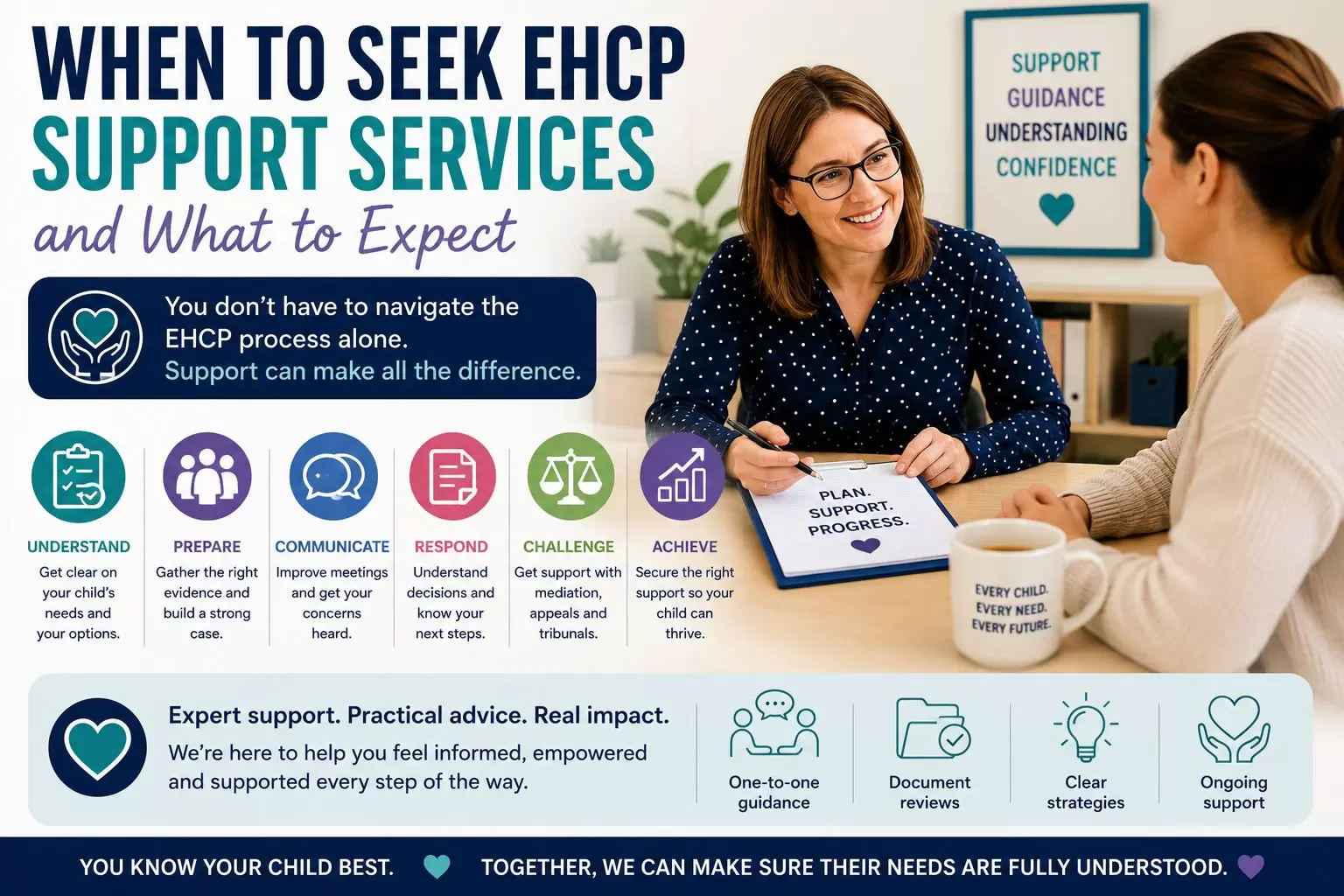
When to Seek EHCP Support Services and What to Expect
The EHCP process can feel overwhelming, especially when you are trying to understand decisions, gather evidence, speak to schools, and advocate for your child at the same time.
Many parents start the process alone and only seek support when something becomes difficult. This might be after a refusal, a vague plan, an unsuccessful school meeting, or growing concerns that their child’s needs are not being fully understood.
EHCP support services can help parents make sense of the process, understand their options, and prepare more confidently.
What Are EHCP Support Services?
EHCP support services are designed to help parents navigate the Education, Health and Care Plan process.
Support may include help with:
- Understanding whether an EHCP may be needed
- Preparing an EHCP assessment request
- Reviewing evidence
- Responding to local authority decisions
- Understanding refusal letters
- Preparing for mediation
- Supporting appeals
- Reviewing draft EHCPs
- Preparing for annual reviews
- Communicating with schools or local authorities
The aim is to make the process clearer and less stressful.
When Should Parents Seek EHCP Support?
You do not have to wait until something goes wrong.
Parents may seek support at any stage, especially if they feel unsure, overwhelmed, or concerned that their child’s needs are not being recognised.
You may benefit from support if:
- Your child is struggling despite SEN support
- You are unsure whether to request an EHCP assessment
- The school says support is enough, but you disagree
- Your assessment request has been refused
- Your child has been refused an EHCP
- The draft EHCP is vague or incomplete
- The named placement does not feel right
- Support in the plan is not being delivered
- You are preparing for an annual review
- You are considering an appeal
If your child has already been refused, you may want to read EHCP refused what next.
Support Before Requesting an EHCP Assessment
Some parents seek help before making an assessment request.
This can be useful because the quality of the request matters.
Support may help you:
- Clarify your child’s needs
- Gather the right evidence
- Explain why SEN support is not enough
- Structure your request clearly
- Avoid vague wording
- Understand what the local authority will consider
You can read more about the EHCP assessment process if you are at this early stage.
Support After an EHCP Refusal
A refusal can feel like a setback, but it does not have to be the end of the process.
EHCP support services can help parents understand:
- Why the request was refused
- Whether the decision can be challenged
- What evidence may be missing
- Whether mediation is appropriate
- How to prepare for an appeal
- What deadlines apply
A clearer understanding of the refusal can help you decide what to do next.
Support With EHCP Appeals
Appeals can feel formal and intimidating, especially if you have not been through the process before.
Support may help with:
- Understanding your appeal rights
- Organising evidence
- Preparing written arguments
- Identifying weak points in the case
- Understanding tribunal expectations
- Staying focused on your child’s needs
- Preparing for hearings
If you are considering this step, you can read how to appeal an EHCP decision.
Support Reviewing a Draft EHCP
A draft EHCP is an important stage.
This is your opportunity to check whether the plan accurately reflects your child’s needs and whether the support is specific enough.
Support may help you review:
- Section B, your child’s needs
- Section F, special educational provision
- Outcomes
- Health and social care sections
- School placement wording
- Therapy provision
- Whether support is specific and measurable
Vague wording can cause problems later. Clear wording makes it easier to know what must be delivered.
Support With Annual Reviews
Annual reviews are not just routine meetings. They are opportunities to check whether the EHCP is still working.
Support can help parents prepare by:
- Reviewing the current EHCP
- Identifying outdated information
- Gathering evidence
- Preparing questions
- Clarifying requested changes
- Understanding local authority decisions after the review
You can read more about the EHCP annual review process.
How EHCP Support Can Reduce Stress
The process can feel emotionally draining because parents are often managing several things at once.
You may be trying to support your child at home, communicate with school, understand paperwork, and respond to deadlines.
Good support can help by:
- Breaking the process into manageable steps
- Explaining your options clearly
- Helping you focus on evidence
- Reducing uncertainty
- Giving structure to meetings and decisions
- Helping you feel less alone
Support does not remove every challenge, but it can make the process feel more manageable.
What to Expect From Good EHCP Support
Good EHCP support should be clear, practical, and focused on your child’s needs.
You should expect:
- Clear explanations
- Honest guidance
- Practical next steps
- Help understanding evidence
- Support that avoids unnecessary jargon
- A focus on your child’s education, wellbeing, and progress
The best support helps you feel informed, not overwhelmed.
Choosing the Right Support
When choosing EHCP support, look for someone who understands:
- SEND processes
- EHCP assessment requests
- Local authority decision-making
- Appeals and tribunal preparation
- School communication
- Parent concerns
- Neurodivergent learners and individual needs
It is also important that support feels calm, respectful, and realistic.
When Support Is Especially Important
Some situations are more complex and may benefit from specialist guidance.
These include:
- Refusal to assess
- Refusal to issue an EHCP
- Disagreement over placement
- Vague or missing provision
- School refusal
- Complex neurodivergent needs
- Multiple professional reports
- Tribunal preparation
- Plans that are not being followed
In these cases, early support can prevent confusion and help you act within deadlines.
Frequently Asked Questions: EHCP Support Services
When should I seek EHCP support?
You may want support if your child is struggling, you are unsure whether to request an EHCP assessment, your request has been refused, or you are preparing for an appeal or review.
Can EHCP support services help before I apply?
Yes, support can help you prepare a clearer assessment request, gather evidence, and explain why your child may need more than SEN support.
Can I get help after an EHCP refusal?
Yes, support can help you understand why the decision was made, what evidence may be missing, and whether mediation or appeal may be appropriate.
Do I need EHCP support for an appeal?
You do not have to get support, but many parents find it helpful when organising evidence, understanding deadlines, and preparing for tribunal.
Can support services review a draft EHCP?
Yes, a draft EHCP can be reviewed to check whether needs are accurate, support is specific, and important provision has not been missed.
Can EHCP support help with annual reviews?
Yes, support can help you prepare for the meeting, identify concerns, gather evidence, and request changes to the plan where needed.
What makes good EHCP support?
Good support is clear, practical, parent-friendly, evidence-focused, and centred on what your child needs to access education.
Final Thoughts
EHCP support services can help parents understand the process, prepare stronger evidence, and make informed decisions.
You do not need to wait until things become difficult. If you feel unsure, support can help you move forward with more confidence and clarity.
If you want to understand how EHCP support fits into the wider process, you can explore our comprehensive EHCP guide, which explains each stage in detail.
One Response