
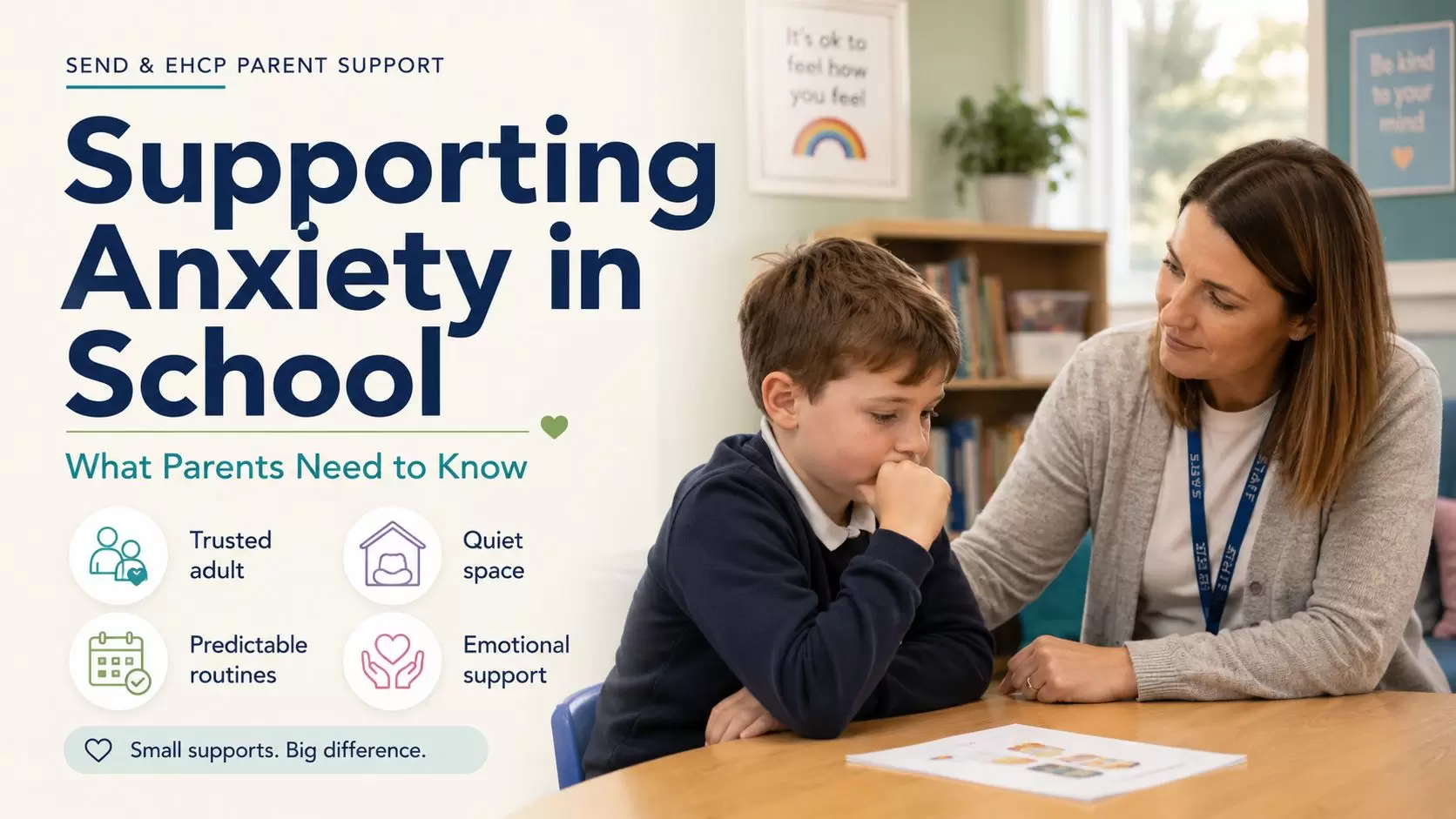
Supporting Anxiety in School: What Parents Need to Know
Anxiety can have a significant impact on a child’s school experience.
Some children may appear quiet, withdrawn, or reluctant to take part. Others may become tearful, angry, distracted, or physically unwell before school. Anxiety can affect learning, friendships, attendance, confidence, and emotional wellbeing.
For children with SEND or neurodivergent profiles, anxiety is often linked to feeling overwhelmed, misunderstood, or unsupported.
The right support can help children feel safer, more confident, and better able to access learning.
What Does Anxiety Look Like in School?
Anxiety does not always look like worry.
In school, it may show as:
- Avoiding certain lessons or activities
- Becoming upset before school
- Complaining of stomach aches or headaches
- Refusing to answer questions
- Struggling with transitions
- Becoming withdrawn
- Appearing distracted
- Needing frequent reassurance
- Becoming angry or tearful
- Avoiding friendships or group work
- Refusing school
Some children mask anxiety during the school day and release their distress at home.
Why Children May Feel Anxious at School
School can be demanding in many different ways.
A child may feel anxious because of:
- Academic pressure
- Noise and busy environments
- Social situations
- Fear of getting things wrong
- Bullying or friendship difficulties
- Sensory overwhelm
- Changes in routine
- Unclear expectations
- Communication difficulties
- Previous negative experiences
- Feeling unsupported
Understanding the cause of anxiety is essential. Without that understanding, support may only address the surface behaviour.
Anxiety and SEND
Anxiety can be closely linked to SEND.
A child with autism may feel anxious about change, noise, social expectations, or unpredictable routines.
A child with ADHD may feel anxious after repeated criticism, difficulties with organisation, or feeling constantly behind.
A child with speech and language needs may feel anxious because they cannot understand instructions or express themselves clearly.
A child with sensory processing difficulties may feel anxious because the environment feels too intense.
You can explore this further in understanding neurodivergent learners in school.
When Anxiety Affects Learning
Anxiety can make it much harder for a child to learn.
When a child feels anxious, their brain is focused on staying safe rather than processing new information.
This can affect:
- Concentration
- Memory
- Listening
- Participation
- Problem-solving
- Reading and writing
- Social communication
- Confidence
A child may seem capable one day and unable to cope the next. This does not mean they are not trying. It may mean their anxiety is affecting their ability to access learning.
School Refusal and Anxiety
For some children, anxiety can lead to school refusal.
This may happen gradually, with more frequent complaints of feeling unwell, increased distress in the mornings, or avoidance of certain days.
School refusal is often a sign that school feels unmanageable.
It should be treated as a support need, not simply a behaviour issue.
You can read more in school refusal and SEND.
What Support Can Help Anxiety in School?
Support should be calm, practical, and consistent.
Helpful strategies may include:
- A trusted adult
- Predictable routines
- Visual schedules
- Quiet spaces
- Reduced sensory demands
- Emotional check-ins
- Gradual exposure to difficult situations
- Support during transitions
- Clear instructions
- Flexible approaches to attendance or reintegration
- Positive reassurance
- Access to counselling or pastoral support where appropriate
Support works best when it is planned, reviewed, and understood by all staff involved.
The Importance of Identifying Triggers
Anxiety often has patterns.
Triggers might include:
- Specific lessons
- Break times
- Assemblies
- Lunchtime
- Crowded corridors
- Tests
- Changes in routine
- Particular social situations
- Being asked questions in front of others
Identifying triggers helps adults put support in place before anxiety escalates.
Parents can help by keeping notes about when anxiety increases and what seems to make it worse or better.
When SEN Support May Be Enough
Some children’s anxiety can be supported through school-based SEN or pastoral support.
This may be enough if:
- Anxiety is reducing
- Your child is attending regularly
- They are making progress
- Support is consistent
- School understands the triggers
- Your child feels safe enough to engage
However, if anxiety is having a significant impact on learning, attendance, or wellbeing, more formal support may be needed.
When an EHCP Assessment May Be Needed
An EHCP assessment may be appropriate if anxiety is linked to wider SEND needs and is significantly affecting education.
You may want to consider an assessment if:
- Your child is missing learning because of anxiety
- School refusal is developing
- Current support is not working
- Anxiety is linked to autism, ADHD, sensory needs, or communication difficulties
- Specialist support is needed
- The school cannot meet needs through existing resources
- Support needs to be clearly defined and legally secured
You can read more about the EHCP assessment process if you are considering next steps.
What Anxiety Support Might Look Like in an EHCP
If anxiety is included in an EHCP, support should be clear and specific.
It may include:
- Daily check-ins with a trusted adult
- A calm arrival routine
- Access to a quiet space
- A planned response when anxiety increases
- Support during transitions
- Reduced exposure to known triggers
- Emotional regulation strategies
- Specialist advice
- A reintegration plan if attendance has been affected
- Staff training where needed
Vague wording is less helpful. The plan should explain what support will happen, when it will happen, and who is responsible.
You can read more about what support should be included in an EHCP.
What Evidence Can Help?
If you are seeking more support, evidence can help show the impact of anxiety.
Useful evidence may include:
- Attendance records
- Anxiety logs
- Parent notes
- School communication
- SEN support plans
- Medical letters if relevant
- Professional reports
- Records of distress before or after school
- Evidence of school refusal
- Notes about triggers and patterns
The aim is to show how anxiety affects your child’s access to education.
Questions to Ask Your Child’s School
If your child is anxious, you may want to ask:
- What anxiety triggers have been noticed in school?
- What support is currently in place?
- Does my child have a trusted adult?
- Is there a quiet space they can use?
- How are transitions being supported?
- How is progress being monitored?
- Is anxiety affecting attendance or learning?
- Is further assessment needed?
These questions can help keep the focus on support rather than blame.
How Parents Can Help at Home
Parents can support anxious children by noticing patterns and sharing information with school.
Helpful steps may include:
- Keeping mornings predictable
- Avoiding too many questions when your child is overwhelmed
- Recording worries or triggers
- Sharing what helps your child feel calm
- Allowing time to decompress after school
- Keeping communication with school in writing
- Asking for regular review meetings
The aim is not to remove every challenge, but to help your child feel supported enough to manage them.
Frequently Asked Questions: Supporting Anxiety in School
How does anxiety affect children at school?
Anxiety can affect concentration, attendance, confidence, friendships, participation, emotional regulation, and a child’s ability to access learning.
Can anxiety be linked to SEND?
Yes, anxiety can be linked to autism, ADHD, sensory needs, communication difficulties, learning challenges, and other SEND needs.
What support can schools provide for anxiety?
Schools may provide a trusted adult, quiet spaces, visual routines, emotional check-ins, transition support, reduced sensory demands, and pastoral support.
Can anxiety be included in an EHCP?
Yes, anxiety can be included in an EHCP if it affects a child’s education and requires specific support.
Can anxiety cause school refusal?
Yes, anxiety can contribute to school refusal, especially if school feels overwhelming or unsafe for the child.
When should I ask for more support for anxiety?
You should ask for more support if anxiety is affecting attendance, learning, wellbeing, friendships, or your child’s ability to cope in school.
What evidence helps show anxiety is affecting school?
Useful evidence includes attendance records, anxiety logs, parent notes, school communication, SEN plans, professional reports, and records of distress.
Final Thoughts
Anxiety in school should always be taken seriously.
It can affect learning, attendance, confidence, friendships, and emotional wellbeing. For children with SEND, anxiety may be a sign that their needs are not being fully understood or supported.
With the right approach, children can feel safer, more settled, and more able to learn.
If you want to understand how anxiety support connects with SEND support and EHCPs, you can explore our comprehensive EHCP guide, which explains each stage in detail.
One Response