
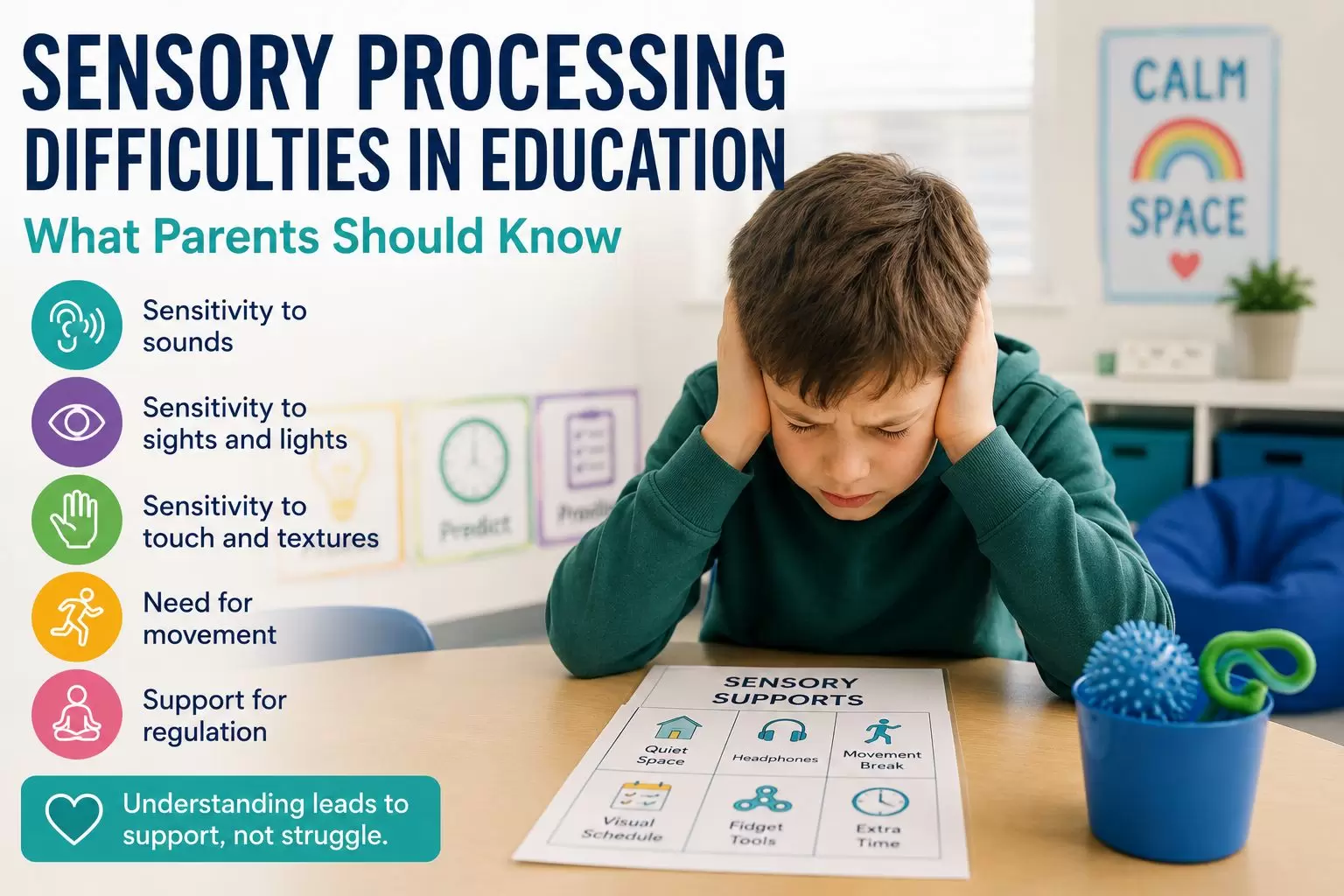
Sensory Processing Difficulties in Education: What Parents Should Know
Sensory processing difficulties can make school feel overwhelming for some children.
A busy classroom, noisy lunch hall, bright lights, crowded corridors, strong smells, or unexpected touch can all affect a child’s ability to feel calm, concentrate, and take part in learning.
For parents, sensory needs can sometimes be hard to explain. A child may seem fine one moment, then suddenly become upset, withdrawn, restless, or distressed.
Understanding sensory processing can help schools respond with practical support instead of seeing behaviour in isolation.
.
What Are Sensory Processing Difficulties?
Sensory processing difficulties happen when a child’s brain processes sensory information differently.
This can affect how they respond to:
- Sound
- Light
- Touch
- Movement
- Smell
- Taste
- Body awareness
- Balance
Some children are oversensitive to sensory input. Others seek extra sensory input to feel regulated. Some children experience both.
This means one child may cover their ears in a noisy room, while another may constantly move, fidget, climb, or crash into objects.
How Sensory Needs Can Affect School Life
School is full of sensory demands.
Children may need to manage:
- Bells
- Classroom noise
- Bright displays
- Uniform textures
- Crowded corridors
- Lunchtime smells
- PE changing rooms
- Playground noise
- Sitting still for long periods
- Unexpected changes
For a child with sensory processing difficulties, these everyday experiences can feel intense or exhausting.
When a child is overwhelmed, learning becomes much harder.
Common Signs of Sensory Processing Difficulties
Signs can vary, but parents and teachers may notice:
- Covering ears
- Avoiding noisy spaces
- Refusing certain clothing or uniform
- Difficulty sitting still
- Chewing sleeves or pencils
- Seeking movement
- Becoming distressed in busy places
- Avoiding messy play
- Struggling with transitions
- Meltdowns after school
- Withdrawal or shutdowns
- Difficulty concentrating
Some children may mask sensory distress at school, then become overwhelmed once they get home.
Why Sensory Needs Are Often Misunderstood
Sensory difficulties are sometimes mistaken for behaviour problems.
A child may be described as:
- Defiant
- Fussy
- Distracting
- Overreacting
- Avoidant
- Disruptive
In reality, they may be trying to manage sensory overload.
For example, refusing to enter the lunch hall may not be about behaviour. It may be because the noise, smell, and crowding feel unbearable.
When adults understand the sensory trigger, support becomes much more effective.
What Support Can Help in School?
Support should be based on the child’s specific sensory profile.
Helpful adjustments may include:
- Access to a quiet space
- Ear defenders or noise-reducing headphones
- Movement breaks
- Sensory circuits
- Flexible seating
- Reduced visual clutter
- Calm transition plans
- Advance warning of changes
- Alternative lunch arrangements
- Uniform adjustments where appropriate
- Fidget tools
- Occupational therapy input
Small adjustments can have a significant impact when they are used consistently.
The Role of Occupational Therapy
Some children benefit from occupational therapy assessment or support.
An occupational therapist may assess:
- Sensory processing
- Motor skills
- Self-regulation
- Coordination
- Functional skills
- Environmental barriers
They may recommend strategies for school and home, including sensory breaks, regulation tools, seating adjustments, or structured movement activities.
If occupational therapy is necessary for your child to access education, it may need to be included in an EHCP.
You can read more about what support should be included in an EHCP.
Sensory Needs and Emotional Regulation
Sensory overload can affect emotional regulation.
A child may become distressed, anxious, angry, tearful, or withdrawn when they are overwhelmed.
This does not mean they are choosing to behave badly. It may mean their nervous system is struggling to cope.
Support should focus on prevention as much as response.
This may include:
- Identifying triggers
- Reducing sensory demands
- Offering breaks before crisis point
- Using calm communication
- Creating predictable routines
- Avoiding shame after overwhelm
You can explore this further in emotional regulation in school.
When SEN Support May Be Enough
Some children’s sensory needs can be supported through school-based SEN provision.
This may be enough if:
- Adjustments are working
- Your child is making progress
- Sensory needs are understood
- Support is consistent
- Distress is reducing
However, if sensory needs are significantly affecting learning, attendance, or wellbeing, more structured support may be needed.
When an EHCP Assessment May Be Needed
An EHCP assessment may be appropriate if sensory processing difficulties are having a significant impact on your child’s education.
You may want to consider requesting an assessment if:
- Your child is frequently overwhelmed at school
- Sensory needs affect attendance or learning
- Support is inconsistent
- Specialist occupational therapy input is needed
- Your child is not making progress
- School-based support is not enough
- Sensory distress is contributing to school refusal
You can read more about the EHCP assessment process if you are considering next steps.
What Evidence Can Help?
Evidence can help show how sensory needs affect your child in school.
Useful evidence may include:
- Occupational therapy reports
- School observations
- SEN support plans
- Behaviour or regulation logs
- Attendance records
- Parent notes
- Examples of sensory triggers
- Records of meltdowns, shutdowns, or distress
- Professional assessments
The aim is to show patterns over time and explain how sensory needs affect access to learning.
Questions to Ask Your Child’s School
If you are concerned about sensory processing difficulties, you may want to ask:
- What sensory adjustments are currently in place?
- Has my child’s sensory profile been assessed?
- Is there access to a quiet space?
- Are movement breaks available?
- What happens when my child becomes overwhelmed?
- Are staff aware of sensory triggers?
- Is occupational therapy input needed?
These questions can help move the conversation toward practical, consistent support.
Frequently Asked Questions: Sensory Processing Difficulties in School
What are sensory processing difficulties?
Sensory processing difficulties happen when a child processes sensory information differently, such as sound, light, touch, movement, smell, or body awareness.
How can sensory processing difficulties affect school?
They can affect concentration, emotional regulation, behaviour, learning, friendships, attendance, and a child’s ability to cope with busy environments.
Can sensory needs be included in an EHCP?
Yes, sensory needs can be included in an EHCP if they affect a child’s access to education and require specific support.
What school support helps sensory processing difficulties?
Helpful support may include quiet spaces, movement breaks, sensory circuits, reduced noise, fidget tools, visual adjustments, and occupational therapy input.
Does my child need an occupational therapy report?
An occupational therapy report can be very useful if sensory needs are affecting school life. It can identify needs and recommend practical support.
Can sensory difficulties cause behaviour problems?
Sensory difficulties can lead to behaviours such as avoidance, distress, meltdowns, shutdowns, or restlessness. These behaviours often reflect overwhelm rather than deliberate behaviour.
When should I request an EHCP assessment for sensory needs?
You may want to request an assessment if sensory needs are significantly affecting learning, attendance, emotional wellbeing, or your child’s ability to cope in school.
Final Thoughts
Sensory processing difficulties can have a major impact on a child’s school experience, but the right support can make school feel safer, calmer, and more accessible.
When sensory needs are understood, children are better able to learn, communicate, and regulate.
If you want to understand how sensory support connects to the wider EHCP process, you can explore our comprehensive EHCP guide, which explains each stage in detail.