
Autism and EHCP Support in Schools: What Parents Need to Know
Autistic children can experience school in very different ways. Some may need support with communication, sensory processing, emotional regulation, social interaction, learning, or transitions.
For parents, it can be difficult to know whether school-based SEN support is enough or whether an EHCP may be needed.
An Education, Health and Care Plan can provide clear, structured support when a child’s needs go beyond what school can usually provide on its own.
What Is an EHCP for an Autistic Child?
An EHCP is a legal document that sets out your child’s special educational needs and the support required to meet them.
For an autistic child, this may include support for:
- Communication
- Sensory needs
- Emotional regulation
- Social understanding
- Learning differences
- Anxiety
- Transitions and changes in routine
An EHCP should not simply name autism as a diagnosis. It should explain how your child is affected in school and what support they need to access learning.
Does an Autistic Child Automatically Qualify for an EHCP?
No, an autism diagnosis does not automatically mean a child will receive an EHCP.
The decision is based on your child’s needs, not the diagnosis alone.
A child may need an EHCP if:
- They are not making progress despite SEN support
- Their needs require specialist input
- They need consistent support across the school day
- They struggle significantly with anxiety, communication, or sensory overload
- The school cannot meet their needs using existing resources
If you are unsure where your child sits, it may help to read signs your child may need an EHCP.
Common School Challenges for Autistic Children
Autistic children may find school challenging for many reasons.
Common difficulties include:
- Coping with noise, crowds, or bright lights
- Understanding social rules
- Managing changes in routine
- Following verbal instructions
- Expressing needs clearly
- Coping with unstructured times such as lunch or break
- Managing anxiety during transitions
- Staying regulated in a busy classroom
Some children mask their difficulties at school and release stress at home. This can make their needs harder for school staff to recognise.
What Support Can Be Included in an EHCP?
Support should be specific to your child.
For an autistic child, EHCP provision may include:
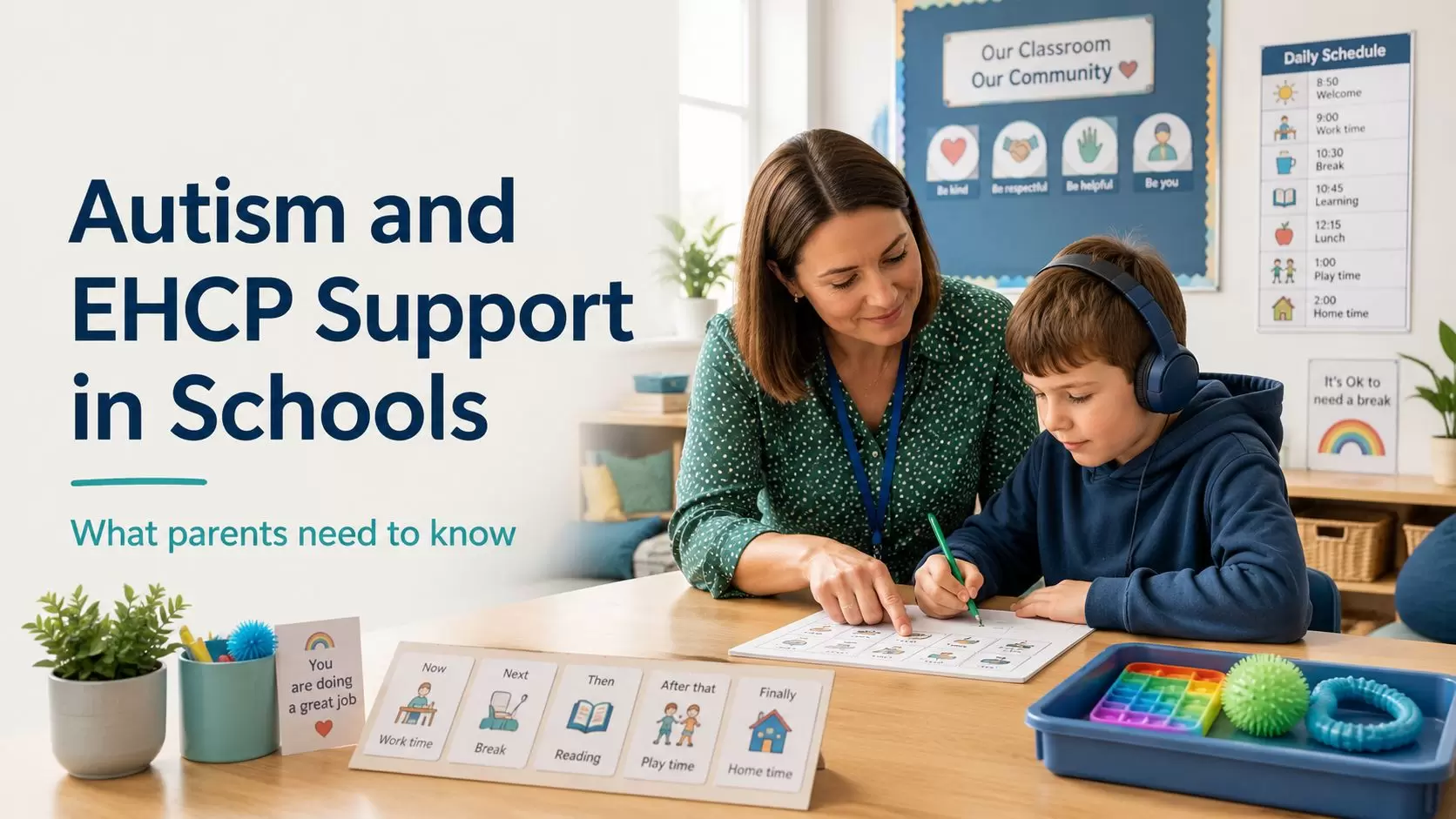
- Visual timetables
- Predictable routines
- Sensory breaks
- Access to a quiet space
- Support during transitions
- Social communication support
- Speech and language therapy
- Occupational therapy
- Emotional regulation strategies
- Reduced sensory demands
- Staff training around autism
- One-to-one or small group support where needed
You can explore this further in what support should be included in an EHCP.
Why Specific Wording Matters
EHCP wording must be clear.
Vague phrases such as “access to support” or “as required” can make it difficult to ensure support is delivered.
Stronger wording might explain:
- Who will provide the support
- How often it will happen
- How long each session will last
- What the support is designed to achieve
- How progress will be reviewed
For autistic children, consistency is often vital. The plan should clearly explain what needs to happen, not leave too much open to interpretation.
Autism, Anxiety, and School Attendance
Many autistic children experience high levels of anxiety at school.
This may show through:
- Refusing to attend school
- Frequent stomach aches or headaches
- Shutdowns or meltdowns
- Emotional distress after school
- Difficulty sleeping before school days
- Avoidance of certain lessons or spaces
If anxiety is affecting attendance or learning, it should be taken seriously. Support should focus on understanding the cause, not simply managing the behaviour.
What Evidence Helps an EHCP Request for an Autistic Child?
Evidence is important when requesting an EHCP assessment.
Useful evidence may include:
- Autism diagnostic reports
- School reports
- SEN support plans
- Behaviour or anxiety logs
- Educational psychologist reports
- Speech and language assessments
- Occupational therapy reports
- Parent observations
- Examples of distress, masking, or sensory overwhelm
The aim is to show how your child’s needs affect them in school and why additional support is required.
What If the School Says Your Child Is Coping?
Some autistic children appear to cope in school because they mask their difficulties.
Masking can involve copying others, hiding distress, staying quiet, or suppressing emotions until they get home.
If school says your child is fine, but you see distress at home, it is important to record patterns.
You may want to note:
- Changes in mood after school
- Sleep difficulties
- Emotional outbursts
- Refusal to attend
- Physical symptoms linked to anxiety
- Withdrawal or exhaustion
This information can help build a fuller picture of your child’s needs.
When Should Parents Request an EHCP Assessment?
You may want to request an EHCP assessment if your autistic child’s needs are not being met through SEN support.
This may be the case if:
- Support is inconsistent
- Progress is limited
- Anxiety is increasing
- Your child is regularly overwhelmed
- Specialist input is needed
- The school cannot provide enough support from existing resources
You can read more about the EHCP assessment process if you are considering applying.
Frequently Asked Questions: Autism and EHCP Support
Do autistic children need an EHCP?
Not every autistic child needs an EHCP. An EHCP may be needed if your child requires support beyond what the school can provide through SEN support.
Does an autism diagnosis guarantee an EHCP?
No, a diagnosis does not automatically guarantee an EHCP. The local authority looks at your child’s needs, evidence, and whether additional provision is required.
What support can an autistic child get in an EHCP?
Support may include sensory adjustments, visual timetables, communication support, therapy input, emotional regulation strategies, and structured help during transitions.
Can anxiety be included in an EHCP for an autistic child?
Yes, if anxiety affects your child’s learning, attendance, or ability to cope in school, it should be considered as part of their needs and support.
What evidence helps an EHCP application for autism?
Useful evidence includes diagnostic reports, school records, SEN plans, parent observations, educational psychologist reports, and therapy assessments.
What if my child masks at school but struggles at home?
Masking should be taken seriously. Keep records of what happens before and after school, including anxiety, exhaustion, meltdowns, or refusal to attend.
Can an EHCP include autism-specific strategies?
Yes, an EHCP can include autism-specific strategies such as predictable routines, sensory breaks, social communication support, and staff training.
Final Thoughts
Autistic children can thrive in school when the right support is in place. The key is making sure their needs are understood clearly and support is specific, consistent, and practical.
An EHCP can provide structure and accountability when school-based support is not enough.
If you want to understand how autism support fits into the wider EHCP journey, you can explore our comprehensive EHCP guide, which explains each stage in detail.