
ADHD guidance for parents
ADHD assessment for children
Understand the process, prepare useful information and feel clearer about your child’s next steps.
If attention, activity levels or impulsivity are affecting everyday life, an assessment can help explore what is happening and what support may help.
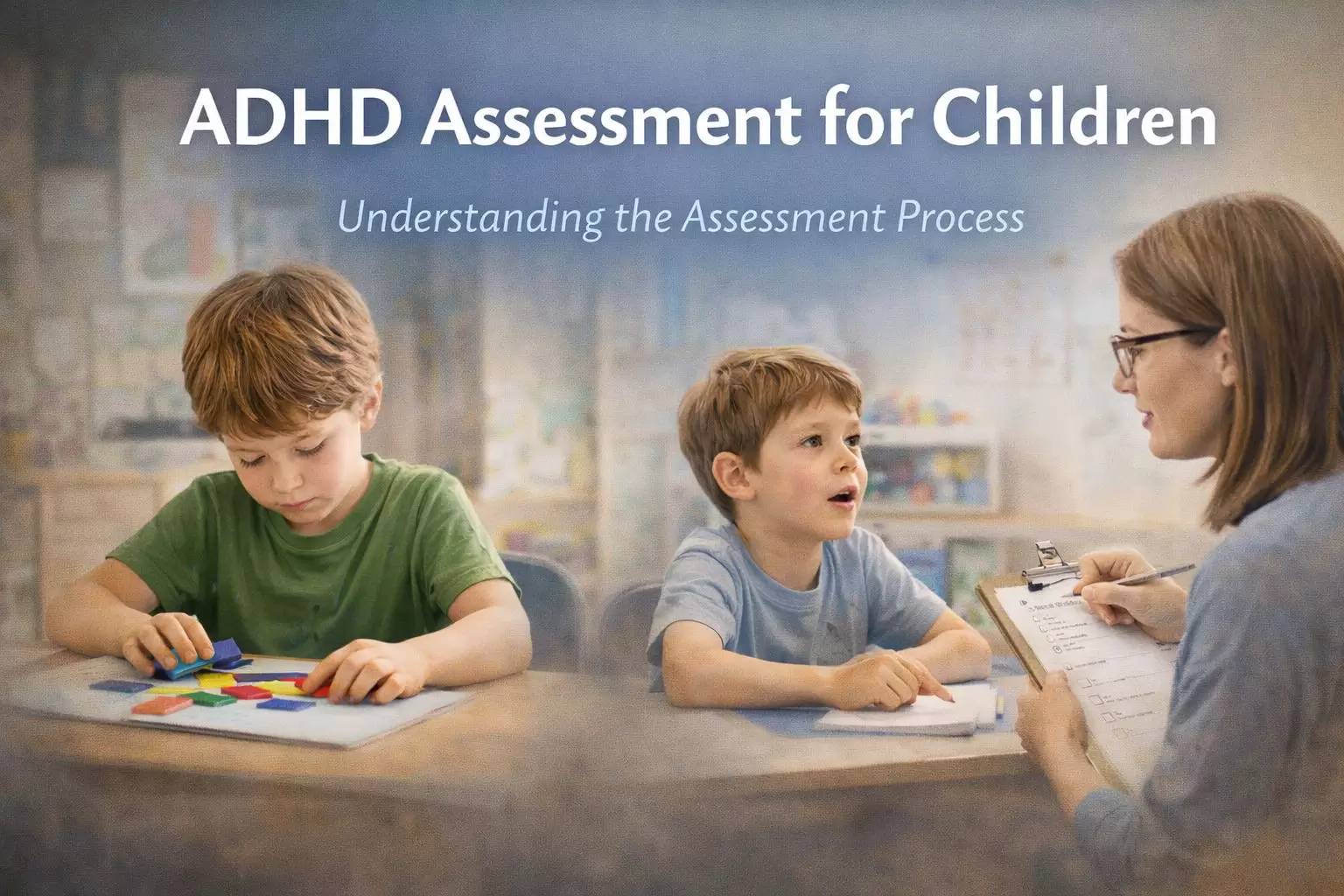
A fuller picture of your child
What is an ADHD assessment?
An assessment explores your child’s development, attention, activity levels and impulsivity, alongside how they manage everyday situations.
It brings together information from your family, your child and, where appropriate, school or other settings. The clinician considers whether ADHD is present, other possible explanations and any additional needs.
Who carries it out?
A suitably qualified healthcare professional with specific training and expertise in diagnosing ADHD. This may be a specialist psychiatrist, paediatrician or another appropriately qualified clinician, including a psychologist with relevant expertise.
Ask about the clinician’s qualifications, registration and experience assessing children.
More than a questionnaire
Rating scales and observations can contribute useful information, but do not establish a diagnosis on their own. They need to be considered within a comprehensive clinical assessment.
The aim is to understand your child, rather than to reach a particular outcome.
Finding the right route
How can parents access an assessment?
NHS pathways
Discuss your concerns with your GP and your child’s school. Ask how referrals work locally, what information is needed and what support is available while waiting.
Referral arrangements and waiting times vary between services and across the UK.
Private pathways
Ask the provider about suitability for your child’s age and needs, who will assess them and what the fee includes.
Check report arrangements, follow-up options and any separate costs before booking.
What to expect
The assessment journey
The exact format varies. Ask your provider how their process works and how your child will be involved.
1. Background information
You may be asked about early development, health, family history and when difficulties first became noticeable.
2. Everyday experiences
Parents and school may share examples of learning, routines, friendships and the support already being provided.
3. Clinical assessment
The clinician brings together conversations, relevant tools and observations to understand your child’s presentation.
How long does it take?
Waiting time, appointment length and the time needed to reach a conclusion are different things. Some assessments involve several appointments or additional information. Ask when to expect feedback and any written report.
Read more about what happens during assessment →Practical preparation
What information can you bring?
Clear examples help explain your child’s experiences. You do not need to prove a diagnosis in advance.
Gather the everyday picture
- Examples of attention, organisation, activity or impulsivity difficulties.
- When they happen and how they affect daily life.
- What helps, including support already tried.
- Your child’s interests, strengths and views.
Bring relevant background
- School feedback and existing support plans.
- Relevant health or developmental reports.
- Information about sleep, health and current medication.
- Questions you want the clinician to answer.
Turning understanding into support
What happens after an assessment?
Ask for a clear explanation of the findings, any remaining uncertainty and the next steps.
Understand the outcome
Discuss whether ADHD has been identified, how the conclusion was reached and whether further assessment or information is needed.
Agree practical support
Ask which recommendations apply at home and school and how they can be put into practice.
Diagnosis and school support →Clarify follow-up
Check who to contact with questions, what ongoing care is available and whether further appointments have separate fees.
What if ADHD is not diagnosed?
Your child’s difficulties still deserve attention. Ask what the findings suggest and what support or further advice is appropriate. A diagnostic outcome should not be the end of the conversation about needs.
Support alongside assessment
Keep school support moving
Discuss your child’s current needs with their teacher or SENCO while an assessment is being considered or awaited. Agree what will be tried, who will provide it and when progress will be reviewed.
Some children may need an Education, Health and Care Plan (EHCP) in England. An assessment report can contribute evidence, but a diagnosis does not automatically result in an EHCP. Education systems differ across the UK.
Common questions
Before you take the next step
Can I request an assessment for my child?
You can raise concerns with your GP and ask about the local referral process. Private services may accept direct enquiries; check their requirements before booking.
How does school contribute?
Teachers or the SENCO may provide observations, questionnaires and information about learning and support. Tell the clinician if your child is home educated, out of school or if school information is difficult to obtain.
Will every child have the same tests?
No. The clinician chooses appropriate methods for the child and the questions being explored. Ask why a particular tool is being used and how it contributes to the wider assessment.
Does my child need a diagnosis before school can help?
No. Keep discussing their needs and suitable support with school while waiting for assessment or following an outcome that does not identify ADHD.
What should I ask before booking privately?
Ask who will assess your child, what is included, how school information is gathered, when feedback and reports are provided, and how follow-up or prescribing would work if relevant.
Further information: NHS ADHD guidance and NICE guidance on ADHD diagnosis and management. This page provides general information; individual assessment and treatment decisions belong with appropriately qualified clinicians.
School of Diversity
Need help understanding your options?
Contact us to ask about assessment options or support with your child’s educational needs.