
ADHD guidance for parents
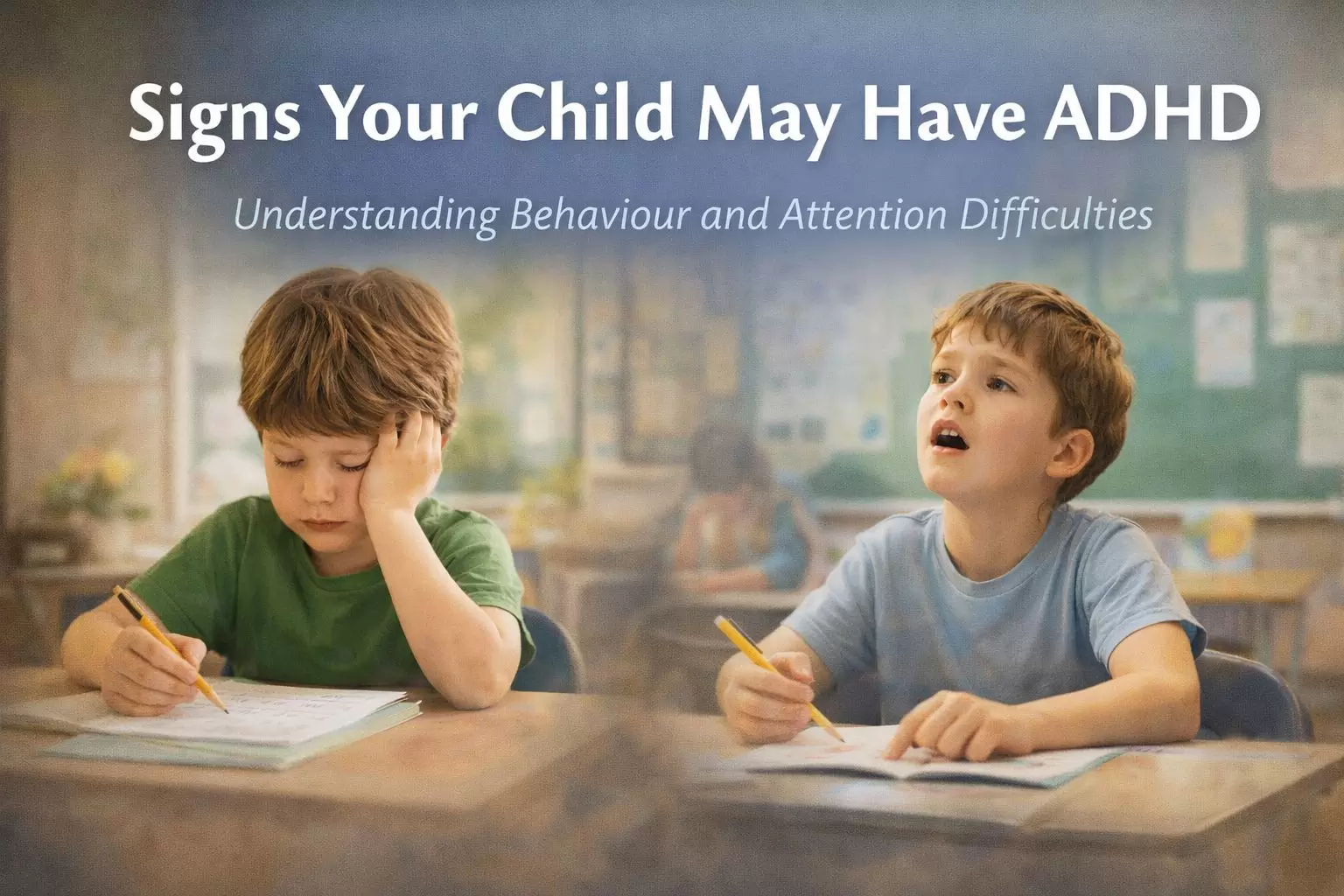
Signs your child may have ADHD
If attention, activity levels or impulsive actions are making everyday life difficult, understanding the pattern can help you decide what to do next.
This guide explores common signs, differences between home and school, and how to prepare for a conversation about support.
A helpful starting point
Look at the pattern and its impact
An occasional forgotten instruction or burst of energy is not enough to tell you whether a child has ADHD.
Consider what happens repeatedly, how it affects learning, friendships and daily routines, and the support your child needs. The examples below are prompts for a conversation, rather than a diagnostic checklist.
Recognising differences
Common signs parents may notice
Not every child shows the same combination. Some difficulties are more visible than others.
Attention and organisation
- Losing track of instructions.
- Frequently misplacing belongings.
- Finding tasks hard to finish.
- Needing repeated help to get started or stay organised.
Notice which activities are difficult, what distracts your child and what helps.
Movement and activity
- Frequent fidgeting or movement.
- Finding seated activities uncomfortable.
- Talking a great deal.
- Seeming restless when an activity calls for stillness.
Think about what is expected for your child’s age and the demands of the situation.
Impulsivity
- Interrupting conversations.
- Finding turn-taking difficult.
- Acting before considering what could happen.
- Needing extra reminders or supervision in everyday situations.
Describe the situation and help needed, rather than labelling your child as naughty.
Building a fuller picture
Home and school may tell different parts of the story
Compare specific examples and the conditions around them. Different accounts are a reason to explore further.
What parents may notice
Getting ready can take repeated reminders. Homework may be hard to start, belongings may go missing, or transitions between activities may cause difficulty.
Parents may also notice distress or emotional outbursts. Record these, while keeping in mind that they are not specific to ADHD.
What school may notice
Your child may lose track during lessons, leave work unfinished, move frequently or find waiting and turn-taking difficult.
Ask about less structured times too, including lunch, breaktimes and changes between lessons.
Ask what helps, as well as what is hard
Does your child manage better with a quieter space, a clearer instruction, a shorter task or adult support? Record their interests, strengths and views alongside difficulties.
Prepare for a conversation with school →Useful preparation
Keep a short record of everyday examples
A few clear notes can make a conversation more useful than a long list of labels.
Describe what happened
- The activity and setting.
- What your child found difficult.
- How often you notice the pattern.
- The effect on learning, relationships or routines.
Describe the support
- What help or reminders were needed.
- Changes that made things easier.
- Your child’s explanation, where they can share it.
- Questions you want to ask school or a clinician.
Moving forward
What to do if you recognise these patterns
1. Speak to school
Share examples with the teacher or SENCO. Ask what they notice and agree practical support and a review date.
ADHD and school support →2. Discuss your concerns
If difficulties are affecting daily life, speak to your GP about your concerns and the appropriate local assessment pathway.
ADHD assessments for children →3. Understand the process
Find out how an assessment gathers information and how you can prepare to explain your child’s experiences.
What happens during an assessment →Support does not have to wait for a diagnosis
Keep discussing current needs and helpful changes with school while an assessment is being considered or awaited.
Explore practical school support →If more support is needed
ADHD and EHCPs
Some children need additional assessment and provision. In England, an Education, Health and Care Plan (EHCP) sets out special educational needs and the provision required to meet them.
A diagnosis alone does not determine whether an EHCP is needed. Focus on your child’s needs, the help being provided and whether it is working. Education systems differ elsewhere in the UK.
Common questions
Understanding what the signs may mean
When do signs of ADHD appear?
Signs usually begin before age 12, but may only be recognised later. Increasing demands at school can make existing difficulties more noticeable.
Does every child with ADHD seem hyperactive?
No. Some children mainly show difficulties with attention. Visible activity levels alone do not tell the whole story.
Can children grow out of ADHD?
Experiences and support needs can change as children grow. Avoid assuming difficulties will simply disappear; seek advice about concerns affecting your child now.
Should I speak to school or my GP first?
Either can be a useful starting point. School can discuss learning and everyday support; a GP can discuss health concerns and assessment routes. Share information between them where appropriate.
Does recognising these signs mean my child has ADHD?
No. Similar experiences can have other explanations. Only an appropriate clinical assessment can determine whether ADHD is present.
Further reading: NHS information about ADHD in children and young people. This guide provides general information and does not replace an individual clinical assessment.
School of Diversity
You do not have to work out every next step at once
Explore our ADHD guidance or contact us to discuss the support you are looking for.