
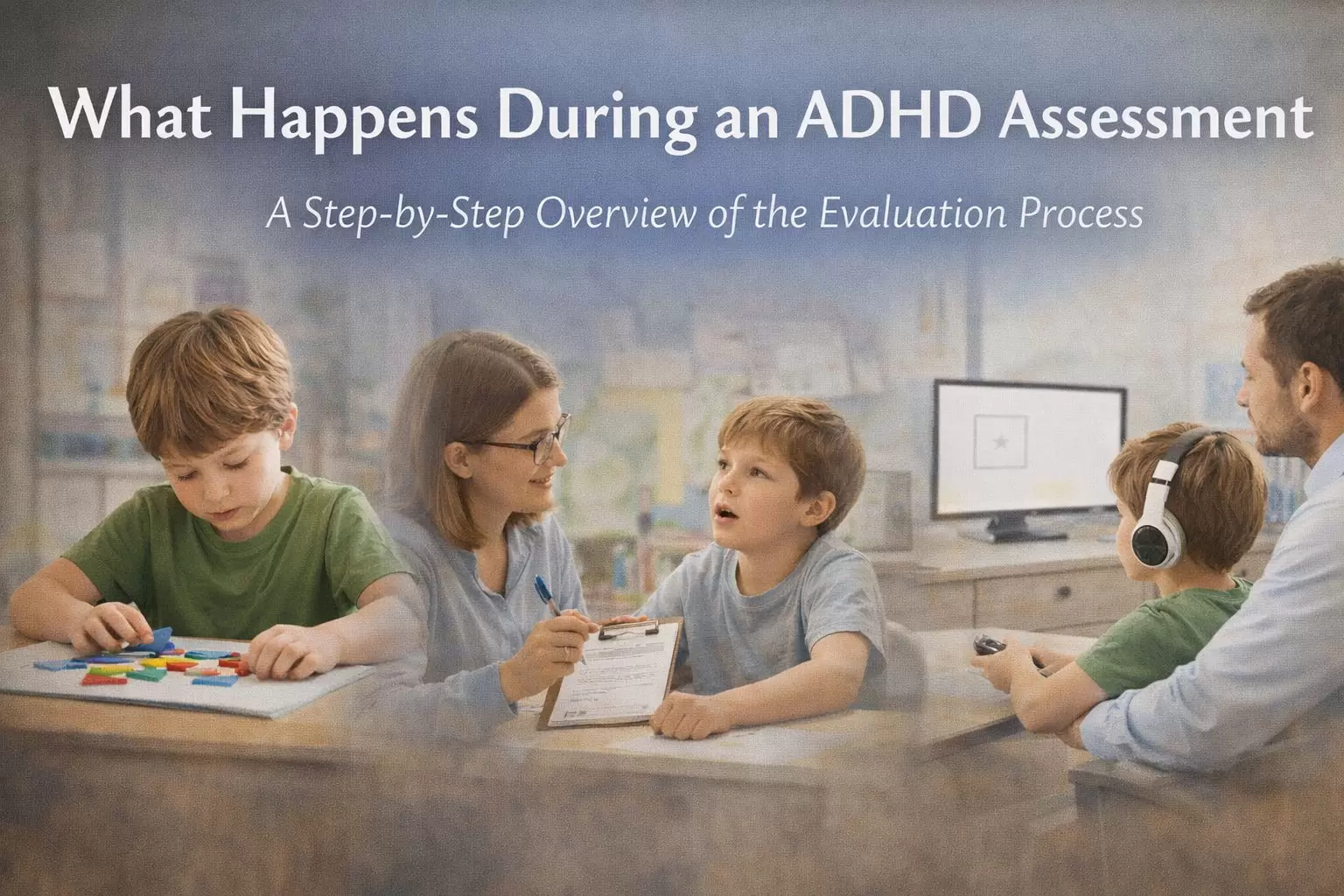
What Happens During an ADHD Assessment
Last reviewed: March 2026
Written by: School of Diversity SEND Support Team
Topic: ADHD Assessment Process
This guide explains what happens during an ADHD assessment, including the stages involved, how children are assessed and what parents can expect.
An ADHD assessment involves gathering information about a child’s behaviour, attention and development. This usually includes discussions with parents, input from school, observation and structured assessment tools.
Key Takeaways
- ADHD assessments involve multiple stages and sources of information.
- Professionals gather input from parents and schools.
- Observation and structured tools may be used.
- Assessments help build a full picture of the child’s needs.
- The process may take place over more than one appointment.
If your child is going through an ADHD assessment, you may be wondering what the process involves and what to expect.
Understanding each stage of the assessment can help you feel more prepared and confident as you support your child.
Overview of the ADHD Assessment Process
Direct answer:
An ADHD assessment usually involves several stages to understand a child’s behaviour and development.
These stages typically include:
- gathering background information
- collecting input from school
- observing behaviour
- using structured assessment tools
- reviewing findings and providing feedback
Stage 1: Gathering Background Information
Direct answer:
Professionals begin by gathering information about the child’s development and behaviour.
This may include:
- early development history
- behaviour patterns at home
- family observations
- medical or educational background
Parents play an important role in providing this information.
Stage 2: Input From School
Direct answer:
Schools provide important information about how the child behaves in a learning environment.
This may include:
- teacher observations
- reports on attention and behaviour
- feedback on learning and progress
- completed questionnaires
This helps build a picture across different settings.
Stage 3: Observation and Interaction
Direct answer:
Professionals may observe the child during activities or interactions.
This may involve:
- structured tasks
- play-based activities
- conversations with the child
Observation helps professionals understand how the child responds in different situations.
Stage 4: Questionnaires and Assessment Tools
Direct answer:
Structured tools may be used to assess behaviour and attention.
These may include:
- behaviour rating scales
- questionnaires for parents and teachers
- structured assessment frameworks
These tools help ensure a consistent and evidence-based approach.
Stage 5: Review and Diagnosis
Direct answer:
Professionals review all the information gathered to determine whether ADHD may be present.
This includes:
- analysing behaviour patterns
- comparing information across settings
- applying diagnostic criteria
A diagnosis is based on a full assessment rather than a single observation.
Stage 6: Feedback and Next Steps
Direct answer:
After the assessment, parents receive feedback and recommendations.
This may include:
- explanation of findings
- whether ADHD has been identified
- suggested strategies
- recommendations for school support
➡ ADHD Diagnosis and School Support
How Many Appointments Are Involved?
The number of appointments may vary depending on:
- the assessment pathway
- the complexity of needs
- the professionals involved
Some assessments take place over multiple sessions.
How to Prepare Your Child
Parents can support their child by:
- explaining the process in a simple way
- reassuring them
- keeping routines consistent
- bringing familiar items if helpful
Preparation can help children feel more comfortable.
What Happens If ADHD Is Identified?
Direct answer:
If ADHD is identified, support can be put in place to help the child.
This may include:
- school-based support
- SEN support
- behaviour strategies
- possible EHCP consideration
➡ EHCP for ADHD
➡ How to Apply for an EHCP
FAQ
Do children need to behave in a certain way during the assessment?
No. The assessment looks at patterns over time, not just one session.
Can parents stay with their child?
This depends on the assessment setting and provider.
What if my child is nervous?
Professionals aim to create a calm and supportive environment.
Will I get a written report?
Parents usually receive feedback and a written report.
Explore More ADHD Guidance
You may find these guides helpful:
- Signs Your Child May Have ADHD
- ADHD Assessment for Children
- Private vs NHS ADHD Assessment
- ADHD Diagnosis and School Support
- EHCP for ADHD
You can also explore our ADHD Support for Parents hub, which explains signs, assessments and school support in more detail.