

A Clear Path Through SEN Support
Understanding and navigating Special Educational Needs (SEN) support can feel challenging for many parents. The terms are unfamiliar, the processes vary across schools, and it can be difficult to judge whether your child is receiving the right help at the right time. This guide has been developed to bring clarity, structure, and confidence to your journey.
It outlines how the SEN support system works in England, what you can expect from your child’s school, how the legal framework protects your child’s rights, and when additional support such as an Education, Health and Care Plan (EHCP) may be necessary. Most importantly, it helps you understand the steps you can take to ensure your child gets the support they need to thrive.
Throughout the guide, you will find straightforward explanations, practical examples, and clear action points. Where helpful, we also highlight the value of consulting with professionals who specialise in SEN processes — particularly at decision-making stages such as applying for an EHCP or challenging inadequate provision.
What SEN Means — and Why Early Support Matters
SEN (Special Educational Needs) describes any learning difficulty or disability that makes it harder for a child to learn than their peers. SEN is not a label of limitation; it is a framework that ensures a child receives targeted support to access the curriculum, develop skills, and participate fully in school life.
A child may have SEN if they experience challenges in one or more areas such as:
Understanding and using language
Reading, writing, or processing information
Concentration, attention, or executive functioning
Social communication and interaction
Emotional regulation or mental health
Sensory processing
Physical access or mobility
Importantly, SEN does not require a diagnosis. Many children receive support long before any formal diagnostic assessment takes place. What matters is the child’s needs, not their diagnostic category.
Early identification and intervention are essential. The earlier a child’s needs are recognised, the better the long-term outcomes tend to be.
How SEN Support Works in Mainstream Schools
In England, the SEN system is governed by the Children and Families Act (2014) and the SEND Code of Practice (2015). All mainstream schools must follow these statutory guidelines.
The system is designed around three core principles:
1. Every child is entitled to high-quality, inclusive teaching.
Teachers must differentiate and adapt lessons to meet diverse needs.
2. SEN support should be personalised and evidence-based.
Children should receive interventions that match their specific profile.
3. Parents are partners in the process.
Schools must involve parents in discussions about needs and progress.
SEN support in school typically begins with the APDR cycle — Assess, Plan, Do, Review. This is a structured, ongoing method for identifying needs, planning targeted interventions, implementing support, and evaluating progress.
The APDR cycle forms the backbone of all SEN work in schools, and it continues even if the child later requires an EHCP.
A Quick Overview of the Support Pathway
o help ground the rest of the guide, here is a simple overview of how SEN support progresses from early concerns to more formalised provision:
Concerns identified (by teacher or parent)
Initial strategies or adaptations made in class
If concerns remain → SENCO involvement
Assess–Plan–Do–Review cycle begins
If progress remains limited → targeted interventions / external professionals
If needs exceed what school can provide → EHCP considered
At each step, communication between school and home should be clear and proactive. Parents should never feel excluded from discussions or decision-making.
How Our Organisation Supports This Stage
Parents often feel uncertain about whether the school’s support is appropriate or sufficient at the Assess/Plan stage. We can:
Review school evidence
Help parents prepare questions for SENCO meetings
Provide guidance on whether an EHCP should be explored
Offer strategies for improving communication with the school
This ensures parents feel confident and informed before key decisions are made.
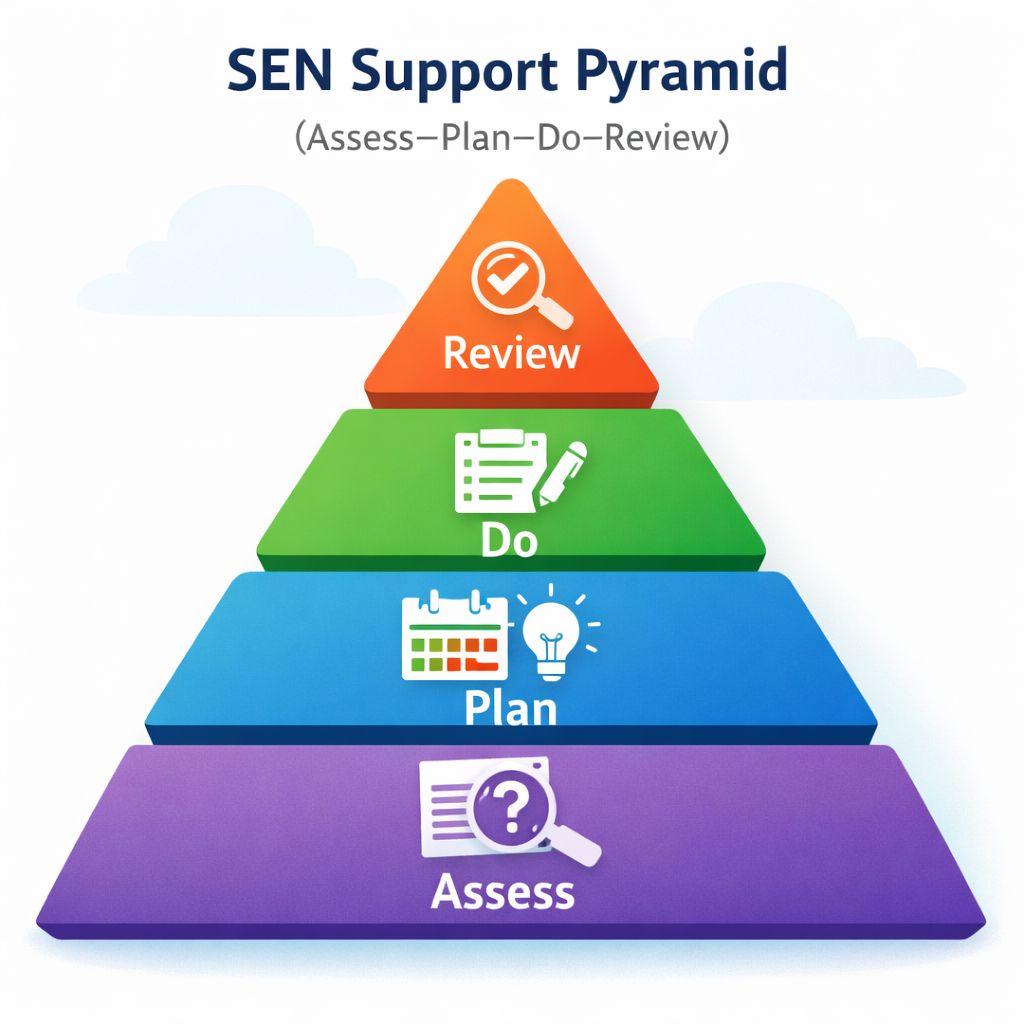
Understanding the SEN Support Cycle: Assess, Plan, Do, Review (APDR)
Once a child has been identified as having potential SEN, the school must begin a structured cycle of support known as Assess, Plan, Do, Review (APDR). This is a statutory requirement under the SEND Code of Practice and applies to all mainstream schools.
APDR is not a one-off process. It is an ongoing, responsive approach designed to ensure that support evolves as the child’s needs change. When used correctly, APDR is the engine that drives effective SEN provision.
Below is a clear breakdown of each stage and what parents can expect.
Assess: Building a Clear Picture of Need
The school must gather a range of information to understand your child’s strengths, challenges, and barriers to learning.
This might include:
Teacher observations
Standardised assessments or screening tools
Work samples and progress data
Behaviour or engagement logs
Information from home
Reports or input from external professionals (EP, SALT, OT, CAMHS)
A high-quality assessment stage should feel thorough, collaborative, and child-centred.
What parents can do at this stage:
Share anything you notice at home
Provide copies of external reports or letters
Ask what assessment tools the school is using
Request clarity on exactly which needs have been identified
When the assessment is rushed or overly narrow, the entire support plan suffers. This is often a stage where professional guidance can ensure needs are properly understood and documented.
Plan: Designing Targeted Support
Once the child’s needs are understood, the SENCO and class teacher must work with parents to design a specific, measurable support plan.
A good SEN plan should include:
A clear description of the child’s needs
Specific targets written in accessible language
What support will be provided
Who will deliver it and how often
What success will look like
When the plan will be reviewed
Parents should be active contributors at this stage. You have the right to:
Ask for clarity about any part of the plan
Request that interventions be evidence-based
Ensure that the plan reflects both school and home perspectives
A vague plan is a red flag. It is reasonable to expect measurable detail.
Do: Implementing Support Consistently
During the “Do” stage, the support plan is carried out with fidelity. This is where the quality of provision makes the biggest difference to outcomes.
Effective implementation includes:
Adapted teaching in the classroom
Targeted small-group or one-to-one interventions
Environmental or sensory adjustments
Emotional or behavioural support
Regular communication between teacher, SENCO, and parents
Consistency is key. Support should not be ad hoc or dependent on staffing changes.
Questions parents can ask:
Who is delivering each intervention?
How often will it take place?
Will my child miss core lessons?
How will you track whether it’s working?
Review: Evaluating Progress and Next Steps
Reviews should take place at least three times per year, though many schools review more frequently.
A meaningful review meeting should cover:
What progress has been made
What has worked well
What barriers remain
Whether interventions need to continue, adapt, or increase
Whether external professionals should be involved
Whether the school should consider an EHCP
The review stage is where decisions are made about escalation.
Limited progress does NOT mean:
The child is “not trying”
The child doesn’t need more support
The school can continue with the same plan indefinitely
It means the plan needs to change.
When APDR Is Working — and When It Is Not
APDR is effective when:
Strategies change based on results
There is clear communication with parents
Interventions are evidence-based and consistent
The SENCO leads the process with confidence
Reviews are honest and child-centred
APDR is not working when:
Reviews simply repeat previous plans
Support is inconsistent or unclear
There is no measurable progress
Parents are excluded from decision-making
Needs are minimised or reframed as “behavioural”
The school resists external involvement
These are often the moments when parents benefit significantly from impartial professional guidance or advocacy.
What to Expect From a High-Quality SEN Support System
A strong school will:
Be proactive, not reactive
Use data and evidence to guide decisions
Communicate openly and regularly
Welcome parent involvement
Recognise when needs exceed SEN Support and an EHCP is required
Your child should feel:
Included
Supported
Encouraged
Understood
And you, as the parent, should feel:
Heard
Respected
Informed
Valued
If you do not feel this way, it may indicate gaps in provision or process.
How Our Organisation Assists Parents at the APDR Stage
Many parents reach out to us when:
They are unsure whether the school’s plan is sufficient
Progress has plateaued
Support is inconsistent
Meetings feel rushed or unclear
The school resists escalating to an EHCP
We provide:
Expert review of school support plans
Guidance on what good APDR looks like
Strategies for strengthening SENCO communication
Advice on whether an EHCP application is appropriate
Support with gathering evidence
Our aim is not conflict, but clarity and constructive progress.
The SENCO Role & How to Work Effectively With the School
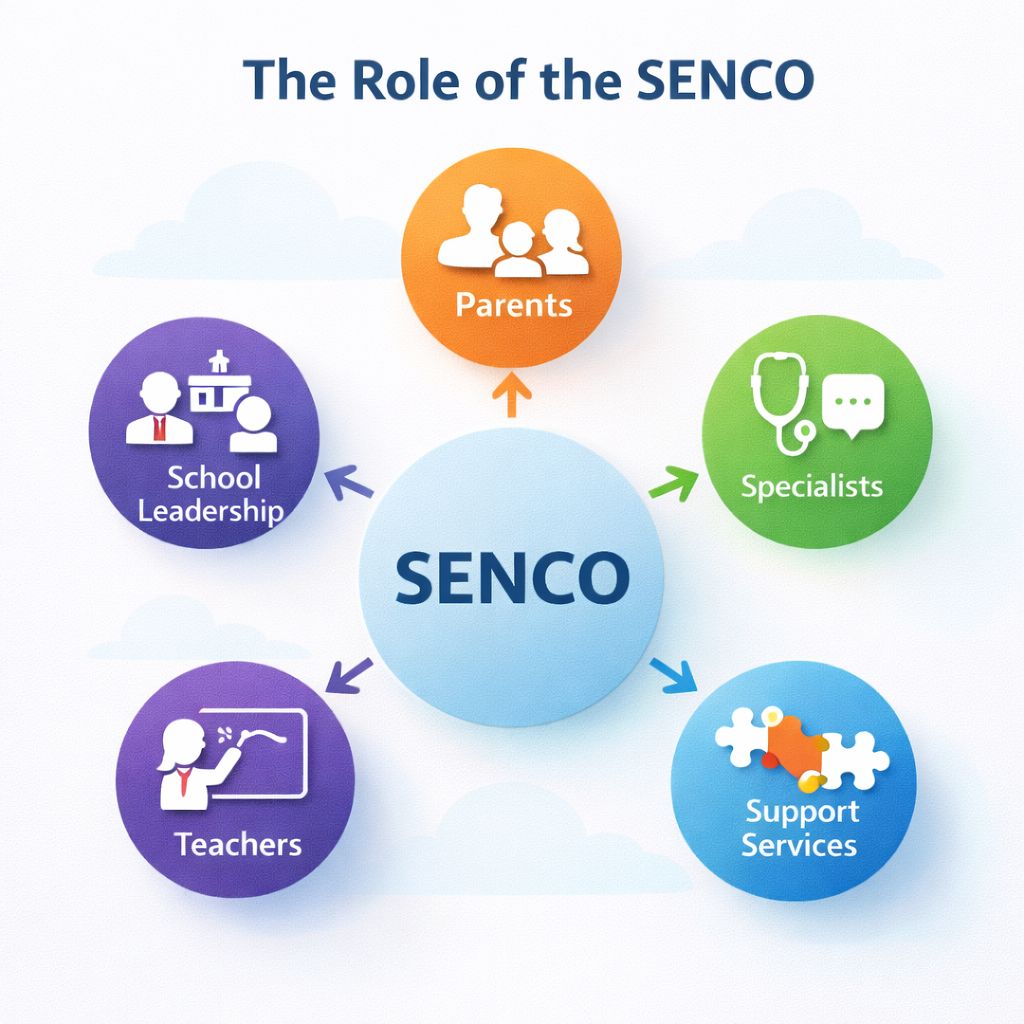
The SENCO (Special Educational Needs Coordinator) is the member of staff who holds overall responsibility for coordinating SEN provision. Although every teacher is responsible for meeting the needs of the pupils in their classroom, the SENCO provides strategic oversight, professional expertise, and a point of contact for parents.
A skilled SENCO can be transformative. They can:
Identify needs early
Coordinate targeted interventions
Connect with external professionals
Ensure teachers have the right strategies
Oversee assessments and reviews
Support the EHCP process where necessary
The SENCO should be a partner in your child’s journey — approachable, informed, and proactive in ensuring support is consistent and effective.
What Parents Can Expect From a SENCO
1. Clear communication
You should be kept informed about your child’s support, progress, and next steps.
2. A structured approach to SEN support
The SENCO must ensure the Assess–Plan–Do–Review (APDR) cycle is implemented correctly.
3. Coordination of interventions
This includes ensuring support is evidence-based, timely, and delivered by someone trained to do so.
4. Collaboration with external specialists
This may include Educational Psychologists, Speech and Language Therapists, Occupational Therapists, and others.
5. Guidance on whether an EHCP may be appropriate
The SENCO is expected to understand the legal criteria for EHCPs and advise parents accordingly.
6. Oversight of reviews
Review meetings should be meaningful, reflective, and should guide next steps.
If any of the above are inconsistent, unclear, or absent altogether, it may indicate gaps in provision.
How to Build a Strong Working Relationship With the SENCO
A positive relationship benefits your child directly. The goal is a collaborative, supportive partnership, even if you do not always agree.
Below are strategies that consistently help parents build constructive relationships.
Be Prepared for Meetings
Keep a notebook or digital record of:
Questions you want answered
Observations from home
Concerns about progress
Notes from previous meetings
Preparation helps meetings stay focused and ensures your voice is heard.
Communicate Concisely and Clearly
Short, clear emails help prevent misunderstandings.
Examples of effective communication include:
“Could you clarify which interventions are currently in place?”
“Could we agree on a date to review progress against the targets?”
“Can you confirm who is delivering the intervention and how often?”
This demonstrates engagement and encourages accountability.
Ask for Information in Writing
If you are told that strategies, interventions, or decisions are in place, it is reasonable to ask for written confirmation.
Written records help avoid confusion and ensure commitments are clear.
Share What You See at Home
Sometimes, school staff see one part of a child; parents see another. Your insight can improve the accuracy of assessments and support planning.
If your child:
Struggles with homework
Shows anxiety before school
Has sensory sensitivities
Shows emotional or behavioural changes
…this information can help refine support.
Stay Solution-Focused
If you disagree with the school’s approach, try framing your concerns in terms of finding a constructive way forward. For example:
“Could we explore alternative strategies for supporting X?”
“What options do we have if progress continues to be limited?”
This positions you as cooperative and child-focused.
When Communication With School Becomes Difficult
Most schools aim to work collaboratively with parents. However, challenges do arise. Common issues include:
Vague or incomplete SEN plans
Repeated interventions with no measurable progress
Lack of clarity about strategies
Resistance to external professionals
Pushback when parents mention EHCPs
Slow or inconsistent responses
Failure to implement agreed support
When this happens, parents often feel isolated or unsure how to proceed.
How to Identify if SENCO Capacity Is Impacting Support
Not all schools resource the SENCO role equally. You may see signs such as:
Delayed responses
Missed review meetings
Lack of coordination across adults working with your child
Plans that remain unchanged for long periods
Teachers appearing unsure about strategies
These issues usually reflect capacity, not intent — but they still impact your child’s support.
This is often where professional guidance becomes beneficial, especially if you need help reviewing provision or determining whether escalation to an EHCP is appropriate.
How Our Organisation Supports Parents in Working With the SENCO
Many parents contact us when they:
Feel unheard during meetings
Believe their child’s support plan is inadequate
Are unsure what “good” SEN support should look like
Need support preparing for SENCO or review meetings
Want help navigating next steps such as EHCP requests
We provide:
Review of SEN plans and support evidence
Suggestions for specific questions to ask the school
Templates for emails, meeting requests, or follow-up notes
Guidance on whether school support is appropriate or insufficient
Advice on documentation and evidence gathering
Our goal is to help you advocate effectively, constructively, and confidently.
The Four Areas of Need & Early Identification
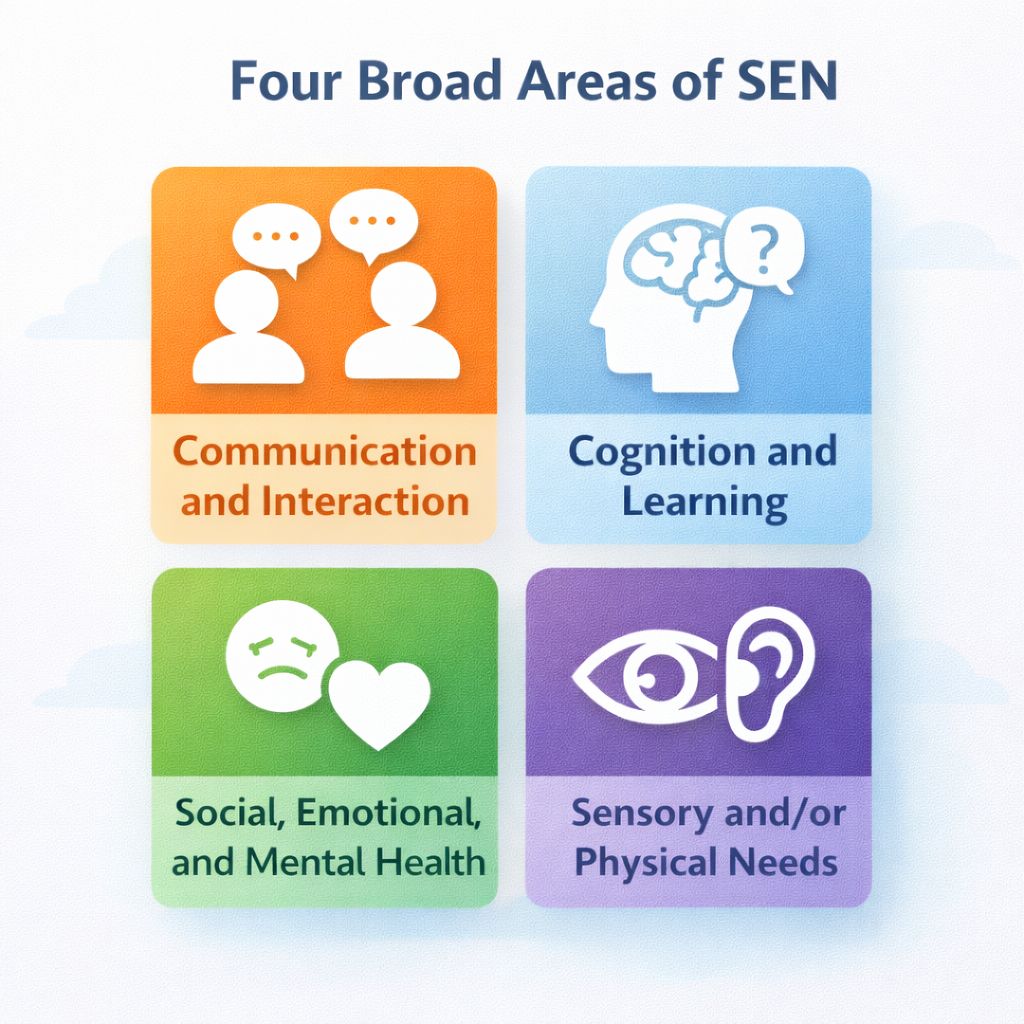
The SEND Code of Practice groups Special Educational Needs into four broad areas. These categories help schools identify need, plan provision, and determine whether specialist input is required. It is important to note that these areas are not rigid boxes — many children have needs that span more than one area.
Below is a parent-friendly explanation of each area.
1. Communication and Interaction (C&I)
This area includes difficulties with:
Understanding or using language
Social communication and social understanding
Interaction with peers or adults
Following conversation or instructions
Pragmatic communication (knowing how to communicate appropriately)
Common profiles include:
Autism Spectrum Condition (ASC)
Social communication difficulties
Developmental Language Disorder (DLD)
Possible signs:
Difficulty explaining needs
Limited eye contact or unusual social interactions
Challenges following complex instructions
Reliance on routines
Distress with changes in environment
Effective support often involves visual communication tools, structured routines, explicit social instruction, and clear language.
2. Cognition and Learning (C&L)
This area includes difficulties with:
Reading, writing, phonics, spelling
Number sense and maths concepts
Memory, processing speed, or reasoning
Retaining and transferring learning
Organisation and problem-solving
Learners may receive diagnoses such as:
Dyslexia
Dyscalculia
Dyspraxia (Developmental Coordination Disorder)
Moderate or specific learning difficulties
Possible signs:
Slow progress compared to peers
Difficulty retaining new information
Problems with sequencing or following steps
Avoidance of reading or writing tasks
Support often includes targeted interventions, differentiated teaching, scaffolded tasks, and assistive technology.
3. Social, Emotional and Mental Health (SEMH)
This area covers needs that affect emotional wellbeing, behaviour regulation, or mental health, including:
Anxiety
Trauma-related needs
ADHD
Emotional dysregulation
Withdrawal or social isolation
Behaviour that expresses unmet needs
Possible signs:
Heightened anxiety about school or learning
Meltdowns, shutdowns, or distress
Difficulty sustaining attention
Emotional volatility
Avoidance or refusal
Support may include mentoring, emotional literacy programmes, structured behaviour support, and safe spaces. SEMH needs often overlap with neurodivergent profiles.
4. Sensory and/or Physical Needs (SPN)
This area covers needs related to:
Hearing or visual impairments
Mobility or physical challenges
Sensory processing differences
Fine or gross motor coordination
Medical conditions affecting learning
Possible signs:
Sensitivity to noise, light, or touch
Difficulty sitting still due to sensory needs
Challenges with handwriting or motor tasks
Fatigue or pain impacting access to learning
Support might include sensory regulation strategies, adapted equipment, movement breaks, occupational therapy input, or assistive technologies.
Why Understanding the Area of Need Matters
Knowing the primary or dominant area(s) of need helps:
Guide the type of support required
Ensure strategies match the child’s profile
Inform whether external professionals should be involved
Shape the “Needs” and “Outcomes” sections in an EHCP
Improve teacher understanding of the child’s learning style
However, SEN is rarely simple or linear. Many children have a combination of:
Social communication + sensory needs
Dyslexia + working memory difficulties
ADHD + emotional regulation challenges
Speech and language difficulties + anxiety
This is completely normal.
Schools should look at the whole picture, not a single characteristic.
Early Identification: What Parents Should Look For
Parents often spot subtle differences well before the school does. Early identification is one of the most important parts of the SEN journey.
Common early signs across all areas include:
A persistent gap between ability and output
Difficulty retaining learning
High anxiety related to school
Emotional or behavioural changes
Avoidance of tasks that seem too demanding
Fatigue or distress after school
Sensory-seeking or sensory-avoidant behaviours
Communication challenges at home or school
Noticeable gaps compared to peers
If you see several of these indicators, it is reasonable — and encouraged — to raise your concerns with the school early.
What the School Should Do When You Raise Concerns
A good school will:
Listen and take your concerns seriously
Observe your child in different contexts
Discuss next steps with you clearly and respectfully
Begin the Assess stage if concerns persist
Keep you informed throughout the process
A weak school response may sound like:
“He just needs to try harder.”
“She’ll grow out of it.”
“Let’s wait until next term.”
“We don’t have capacity for that right now.”
These responses ignore statutory obligations. They also delay support at a time when early intervention is most effective.
How Our Organisation Supports Early Identification
We help parents:
Understand whether a child’s challenges align with SEN areas
Prepare evidence when approaching the school
Interpret early screening results or teacher comments
Determine whether the concerns justify SEN Support or an EHCP request
Identify whether specialist assessment may be beneficial
We ensure you enter your first SENCO meetings with clarity and confidence.
Interventions & Reasonable Adjustments in Schools
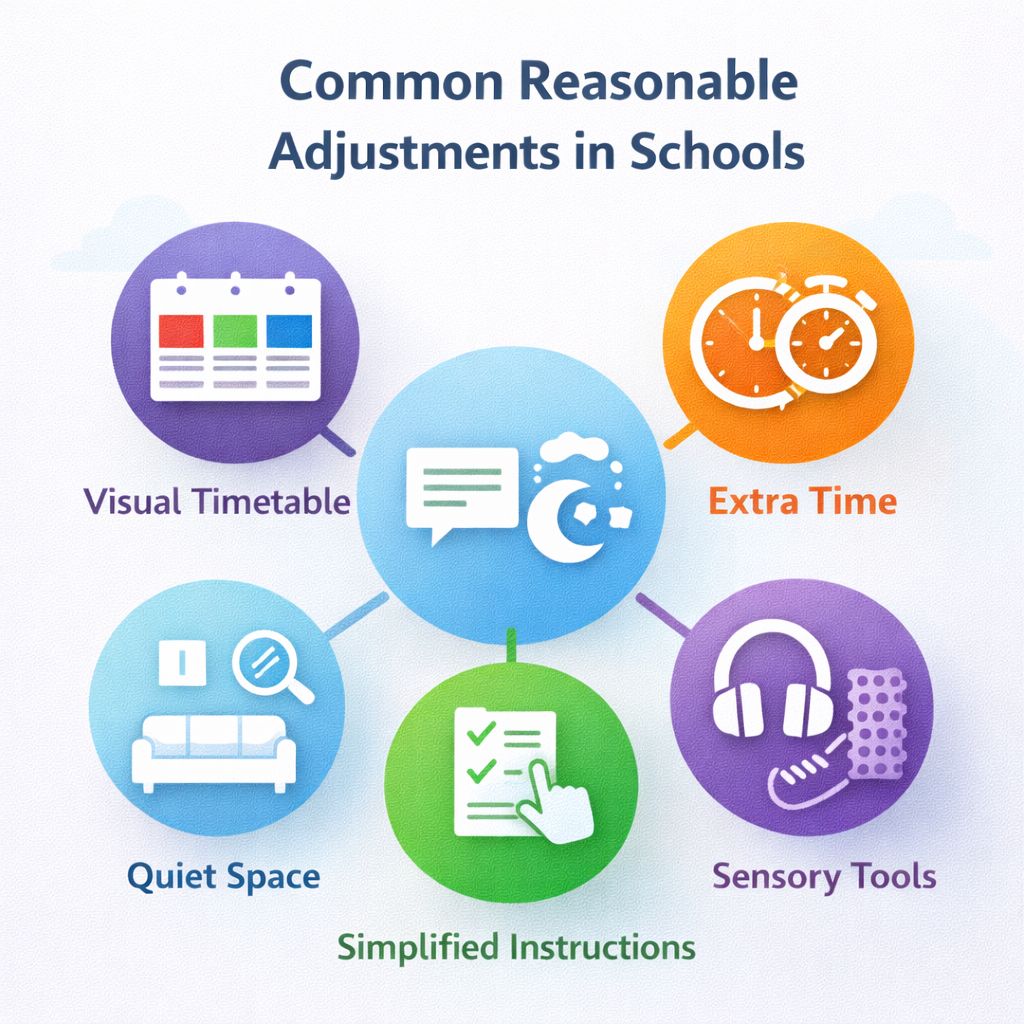
What Effective SEN Support Looks Like Inside the Classroom
Once a child is identified as having SEN, support must not hinge on “extra help when available.”
Instead, the SEND Code of Practice requires high-quality, evidence-informed teaching, often called Quality First Teaching (QFT).
Effective QFT includes:
Clear instructions broken into manageable steps
Use of visual supports
Reduced cognitive load
Examples and models before independent work
Opportunities for repetition and overlearning
Flexible grouping
Adjustments to pace, language, and scaffolding
You should be able to see these adaptations in your child’s classroom experience. If support is limited to occasional TA time or sporadic small-group work, it likely does not meet required standards.
Targeted Interventions: What They Are and When They Help
Targeted interventions are structured programmes delivered in small groups or one-to-one. These are more specific than classroom adaptations and respond directly to your child’s defined needs.
Common interventions include:
Literacy Support
Phonics-based reading programmes
Structured spelling/phonological awareness programmes
Handwriting or fine motor support
Numeracy Support
Number sense development
Explicit teaching of maths vocabulary
Sequential, cumulative maths programmes
Language and Communication
Speech and language therapy homework programmes
Vocabulary-building sessions
Social communication groups
Emotional or Behavioural Support
Emotional literacy programmes
Mentoring or check-in systems
Regulated break plans
Safe spaces for dysregulation
Executive Functioning Support
Organisational coaching
Visual timetables and task boards
Chunked instructions
Prompting strategies
A high-quality intervention programme must:
Be consistent
Be delivered by trained staff
Have clear session structures
Include progress tracking
Relate directly to the needs identified in the plan
If interventions run sporadically or are cancelled frequently, this undermines effectiveness.
Reasonable Adjustments: Levelling the Playing Field
Reasonable adjustments are changes to school practices or environments that help a child access learning on an equal basis with others. Schools are legally required to provide these under the Equality Act 2010.
Common reasonable adjustments include:
Curriculum and Instruction Adjustments
Simplified instructions
Alternative methods of recording work
Pre-teaching vocabulary or concepts
Extra processing time
Environmental Adjustments
Sitting in a low-distraction area
Access to movement breaks
Noise-reducing headphones
Adapted lighting
Emotional and Social Adjustments
A trusted adult or mentoring system
Safe space for regulation
Flexible entry or transition routines
Reduced sensory demands during busy times
Assessment Adjustments
Extra time
Rest breaks
Use of assistive technology
Small-room testing environments
These adjustments are not “special treatment.”
They are legal entitlements that ensure equitable access to education.
How Schools Should Track the Impact of Interventions
Tracking must be quantitative (results) and qualitative (observations).
A strong school will measure:
Reading/spelling/math standardised scores
Writing samples over time
Engagement and participation
Social or behavioural trends
Progress toward SEN targets
Teacher and parent observations
You should be able to ask for — and receive — evidence that shows whether interventions are working. Vague comments such as:
“They are doing fine.”
“We think it’s helping.”
“There’s been some improvement.”
…are not sufficient. SEN support must be measured, not assumed.
Signs That SEN Support Is Working Well
You may notice:
Increased confidence
Better engagement in learning
Reduced anxiety
Improved behaviour or self-regulation
Observable progress toward targets
Positive relationships with staff
Feedback from your child is vital. Children often reveal whether support feels meaningful or frustrating.
Signs That SEN Support May Be Insufficient
Common indicators include:
Little or no measurable progress
Strategies repeated without change
Behaviour labelled as “choice” or “attitude” rather than “need”
Interventions frequently cancelled
Lack of clarity about provision
Plans that remain unchanged for multiple terms
Increasing distress or refusal at school
When this happens, parents often feel stuck — unsure whether to escalate concerns, request external assessments, or start considering an EHCP.
This is a key point where professional guidance can be transformative.
How Our Organisation Supports Parents During the Intervention Stage
We help parents:
Review the quality and appropriateness of interventions
Understand whether reasonable adjustments are suitable and sufficient
Request improved strategies or updated plans
Communicate more effectively with SENCOs and teachers
Determine whether lack of progress indicates the need for an EHCP request
We also provide templates for:
Asking for intervention evidence
Requesting updates to SEN plans
Escalating concerns constructively
Preparing for review meetings
Our aim is to ensure your child receives the support they need — not the support that happens to be available.
The Parent Journey: From Concerns to Support Plan
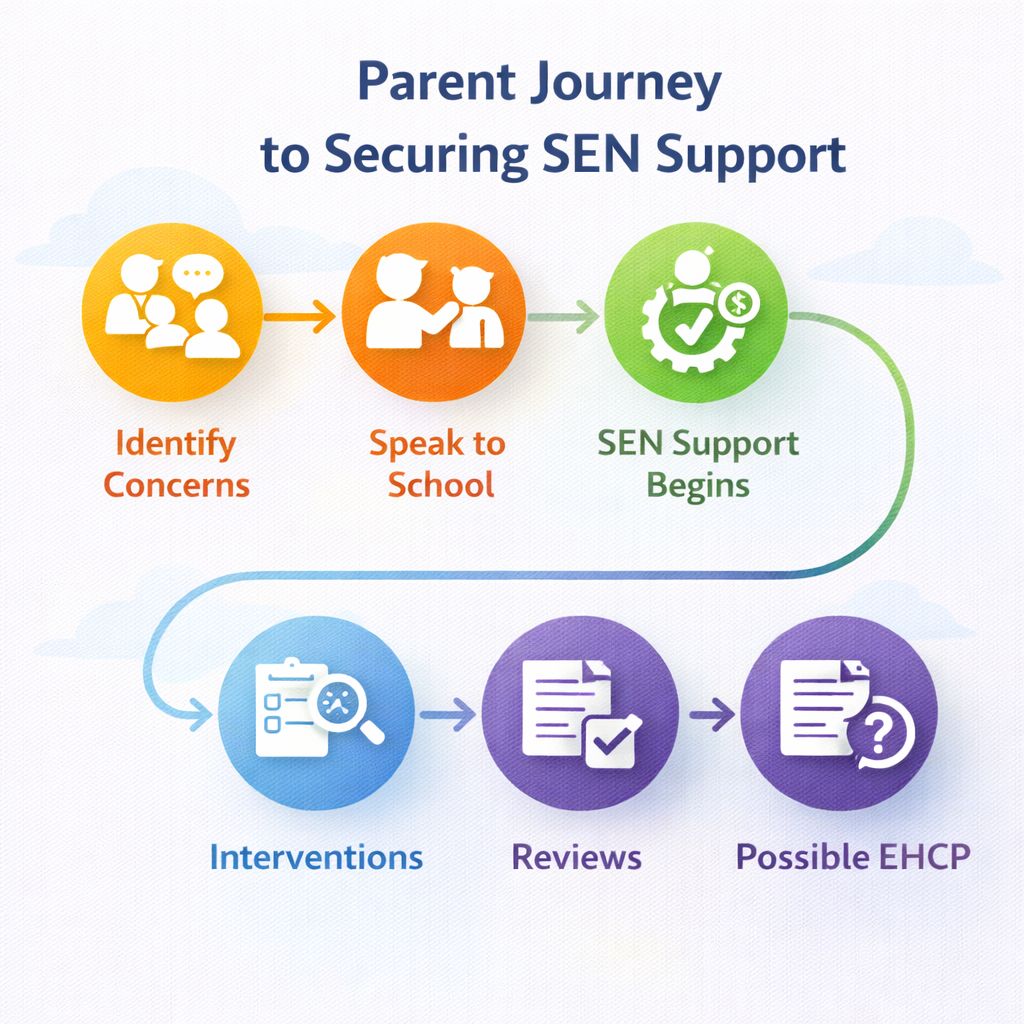
Understanding the Parent Journey Through the SEN System
Every parent’s pathway looks slightly different, but there is a recognisable progression that most families experience when navigating SEN support in England. Understanding this journey helps you anticipate what comes next and know whether support is being implemented as it should.
The typical journey includes the following stages:
Recognising early concerns
Raising these concerns with the school
Initial classroom strategies and observation period
SENCO involvement and more formal assessment
The APDR cycle begins
Targeted interventions and monitoring
Review meetings with SENCO and teachers
Escalation if progress remains limited
Consideration of an EHCP if needs exceed SEN Support
This journey is not always linear; children’s needs evolve, and support strategies change. However, at each step, parents should be informed, involved, and respected as partners.
Stage 1: When You First Notice Concerns
Parents are usually the first to notice patterns such as:
Struggles with reading, writing, or numbers
Difficulty explaining themselves
Emotional distress about school
Sensory sensitivities
Speech or communication delays
Avoidance or refusal behaviours
Anxiety or overwhelm in busy environments
Your instinct matters. Early concerns should be acknowledged and addressed.
What you can do immediately:
Make notes about specific examples
Gather school work samples showing difficulty
Request a meeting with the class teacher
Avoid minimising concerns — your observations are valid
Stage 2: First Conversations With the School
Your first point of contact is usually the class teacher. In this meeting, you might discuss:
What you’re seeing at home
What the teacher is seeing in class
What strategies have already been attempted
Whether further observation is needed
Whether the SENCO should become involved
A good school will treat your concerns seriously and begin early information gathering.
If the teacher seems dismissive or vague, it is appropriate to request a meeting with the SENCO directly. You do not need permission to do so.
Stage 3: Early Monitoring and Classroom Strategies
Many schools begin with a period of informal monitoring. During this time, the teacher may try adjustments such as:
Seating changes
Simplified or chunked instructions
More visual supports
Enhanced structure or routine
Low-stress tasks to build confidence
This stage should be short, focused, and lead to concrete outcomes.
Monitoring that drifts on for terms without change is a red flag.
Stage 4: SENCO Involvement and Initial Assessment
Once concerns persist, the SENCO should become actively involved. Assessment at this stage may include:
Lesson observations
Standardised tests
Work analysis
Speaking with you and your child
Teacher completion of SEN checklists
Referral to external professionals if needed
After assessment, the SENCO should explain:
What needs have been identified
How these needs affect learning
What support is required next
This is a turning point where support becomes more structured.
Stage 5: The APDR Cycle Begins
At this stage, your child should have:
A clear SEN plan
Specific, measurable targets
Interventions that match their needs
Regular progress monitoring
A scheduled review date
APDR is a legal expectation, not an optional strategy. It is the ESSENTIAL part of SEN support.
If progress is limited over one or more cycles, the school should consider escalating to involve external specialists or exploring whether an EHCP is appropriate.
Stage 6: Review Meetings — What to Expect
Review meetings should occur at least three times per year. These meetings should feel:
Structured
Transparent
Collaborative
Solution-focused
You should leave with clear answers to:
What progress has been made?
What hasn’t worked?
What needs to change?
What additional support or assessment is needed?
What is the revised plan moving forward?
Parents often find it helpful to prepare questions in advance or have professional support interpreting data and next steps.
Stage 7: When School Support Is Not Enough
If your child is:
Not making adequate progress
Falling further behind
Experiencing significant emotional or behavioural distress
Requiring increasingly specialised support
Needing frequent input from external professionals
…then SEN Support alone may not be sufficient.
This is when an EHCP should be considered.
A common misconception is that:
A diagnosis is required for an EHCP
The school must agree before parents apply
You must wait for years of APDR reviews
None of these are true.
Parents can apply independently, and many children qualify for an EHCP without having a confirmed diagnosis.
How Our Organisation Supports Parents at Every Stage of the Journey
Parents often seek our support because:
They want clarity on whether support is appropriate
School communication feels difficult or unclear
They want help preparing for SENCO/review meetings
They are unsure whether to request an EHCP
They need help gathering evidence or understanding reports
We offer:
Step-by-step guidance personalised to your situation
Review of SEN plans, strategies, or school reports
Advice on whether progress is adequate or insufficient
Templates for effective communication
Support with understanding or starting the EHCP process
Our aim is to help you make informed decisions with confidence — and ensure your child receives meaningful, timely support.
EHCPs: Process, Criteria & How to Apply
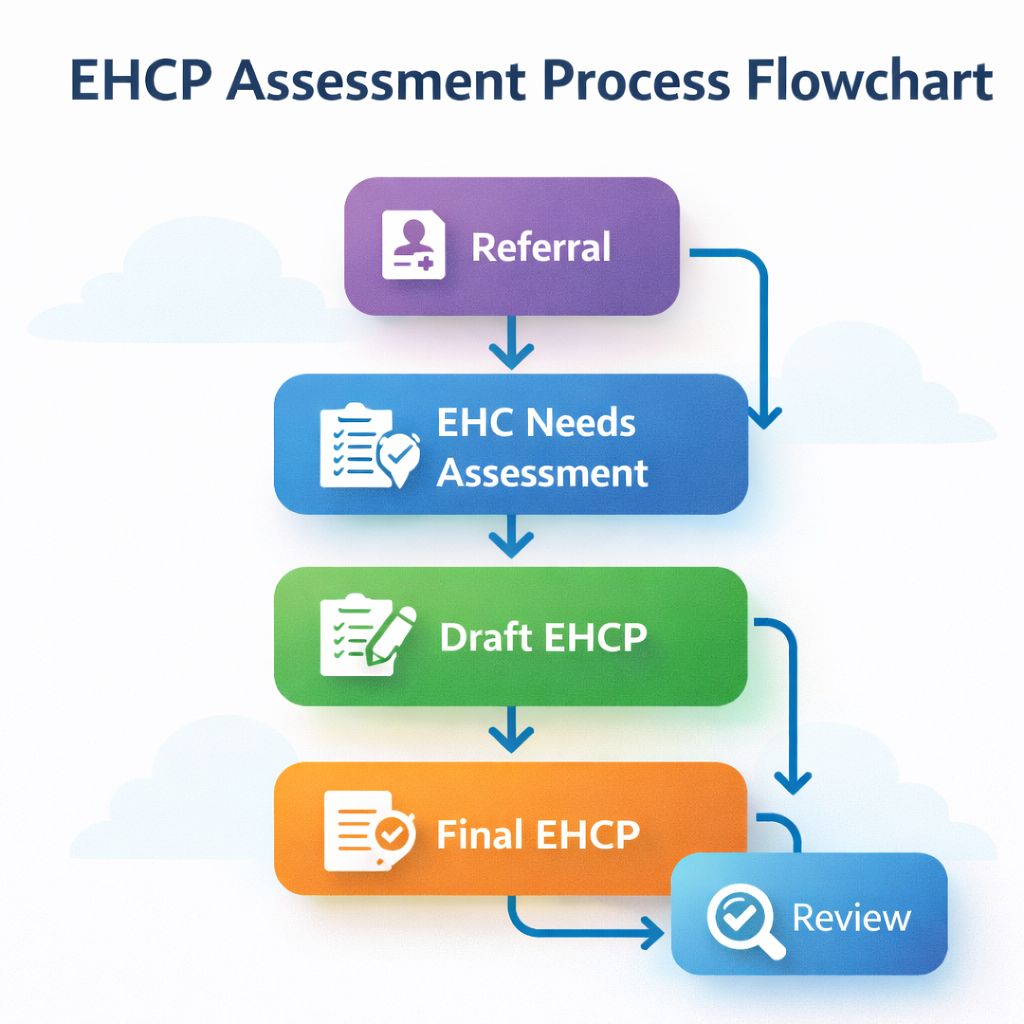
What an EHCP Is — and Why It Exists
An Education, Health and Care Plan (EHCP) is a legally binding document that sets out a child’s special educational needs and the support required to meet them. EHCPs are designed for children whose needs go beyond what a mainstream school can reasonably provide from its standard SEN budget.
An EHCP provides:
A clear description of needs
Long-term outcomes tailored to the child
Precisely specified support and provision
Accountability for delivery
Funding for additional support
Legal protection for the child
EHCPs are enforceable by law, meaning schools and local authorities must deliver the provision listed in Section F.
An EHCP is not “a last resort,” and should not be presented to parents as such.
It is a tool for identifying, coordinating, and funding the right support for children whose needs are significant or complex.
When an EHCP May Be Needed
Parents often struggle to know when SEN Support is no longer enough.
Your child may need an EHCP if:
They are not making expected progress despite high-quality SEN support
They require intensive, frequent, or highly specialised support
Their needs affect learning across multiple areas
They need coordinated input from several professionals (EP, SALT, OT, CAMHS)
School staff are struggling to meet their needs within standard resources
Anxiety, regulation difficulties, or behaviour significantly impact access to learning
Their learning profile requires 1:1 or small-group support beyond what is normally available
A child does not need:
A diagnosis
A set number of APDR cycles
Agreement from the school
…before an EHCP request can be made.
Who Can Request an EHCP Needs Assessment?
The law (Section 36 of the Children and Families Act 2014) states clearly:
Parents can request an EHC Needs Assessment (EHCNA)
Young people aged 16–25 can request one
Schools or early years settings can request one
Social care or health professionals may notify the local authority of the need
The local authority must reply within six weeks stating whether they will assess.
Schools cannot block, delay, or refuse your right to apply.
A parent application is just as valid as a school application.
The Two Legal Tests for EHCP Eligibility
For a local authority to SEND an EHCP Needs Assessment, both tests must be met:
Test 1 — The child may have SEN.
(This threshold is extremely low. If you suspect SEN, this test is usually met.)
Test 2 — It may be necessary for special educational provision to be made through an EHCP.
This means the child’s needs or required support may exceed what the school can deliver from its existing resources.
If the answer to both questions is “possibly,” the LA should agree to assess.
Many refusals are unlawful — and parents often do not realise this.
What Happens During an EHCP Needs Assessment
If the local authority agrees to assess, they must gather advice from:
An Educational Psychologist (EP)
School
Parents
Health professionals (GP, paediatrician, CAMHS if involved)
Social care (if relevant)
Speech and Language Therapy (if needs suggest SLT)
Occupational Therapy (if needs suggest OT)
You may also submit independent reports if you choose.
This stage is evidence-driven. The clearer and more organised the evidence, the stronger the final plan.
The Draft EHCP
If, after assessment, the local authority agrees to issue an EHCP, they produce a draft plan. This includes:
Section A: Child’s views, interests, and aspirations
Section B: Special educational needs
Section C: Health needs
Section D: Social care needs
Section E: Desired outcomes
Section F: Special educational provision
Section G: Health provision
Section H: Social care provision
Section I: Educational placement (added after consultation)
Parents have the right to:
Suggest changes
Disagree with sections
Provide additional evidence
Request a specific school
Do not feel pressured to approve a draft that is vague, incomplete, or inaccurate.
Section F must be specific, quantified, and legally enforceable.
The Final EHCP and Annual Review
Once agreed, the local authority issues the final EHCP.
From this point:
The provision becomes legally binding
The school must deliver it
The plan must be reviewed annually (more often for early years)
Parents should expect:
Clear timetables
Consistent delivery of provision
Regular monitoring
Input from professionals during reviews
If provision is not delivered or the plan becomes outdated, parents have rights to challenge.
When EHCP Requests Are Refused
There are two common refusal points:
1. Refusal to Assess
(Local authority denies the initial request.)
2. Refusal to Issue an EHCP
(Local authority assesses but says no EHCP is needed.)
Both decisions can be appealed to the SEND Tribunal.
Approximately 96% of appeals succeed or are conceded by the local authority — demonstrating how often parents are initially misinformed.
Parents should not feel discouraged by a refusal.
With proper evidence and guidance, appeals are often straightforward.
How Our Organisation Supports Parents Through the EHCP Process
Many parents come to us at the EHCP stage because it feels complex and overwhelming.
We provide support with:
Assessing whether an EHCP request is appropriate
Drafting strong evidence-based parental contributions
Structuring needs in a way aligned with EHCP criteria
Helping interpret professional reports
Preparing for meetings with SENCOs or local authorities
Reviewing draft EHCPs to ensure Section F is specific, quantified, and legally compliant
Advising on next steps if an application is refused
Our role is to make the process manageable, transparent, and child-focused — while helping families achieve the support their child is legally entitled to.
SEND Code of Practice & Your Legal Rights
Why the SEND Code of Practice Matters
The SEND Code of Practice (2015) is the statutory guidance that outlines how children and young people with special educational needs must be supported across England. It applies to:
All mainstream schools
Academies and free schools
Early years settings
Further education colleges
Local authorities
Health services
Although the Code of Practice is not law, schools and local authorities must follow it, and any deviation must be justified with strong evidence.
For parents, the Code is an essential tool.
It outlines your rights, your child’s entitlements, and what you can reasonably expect from the education system.
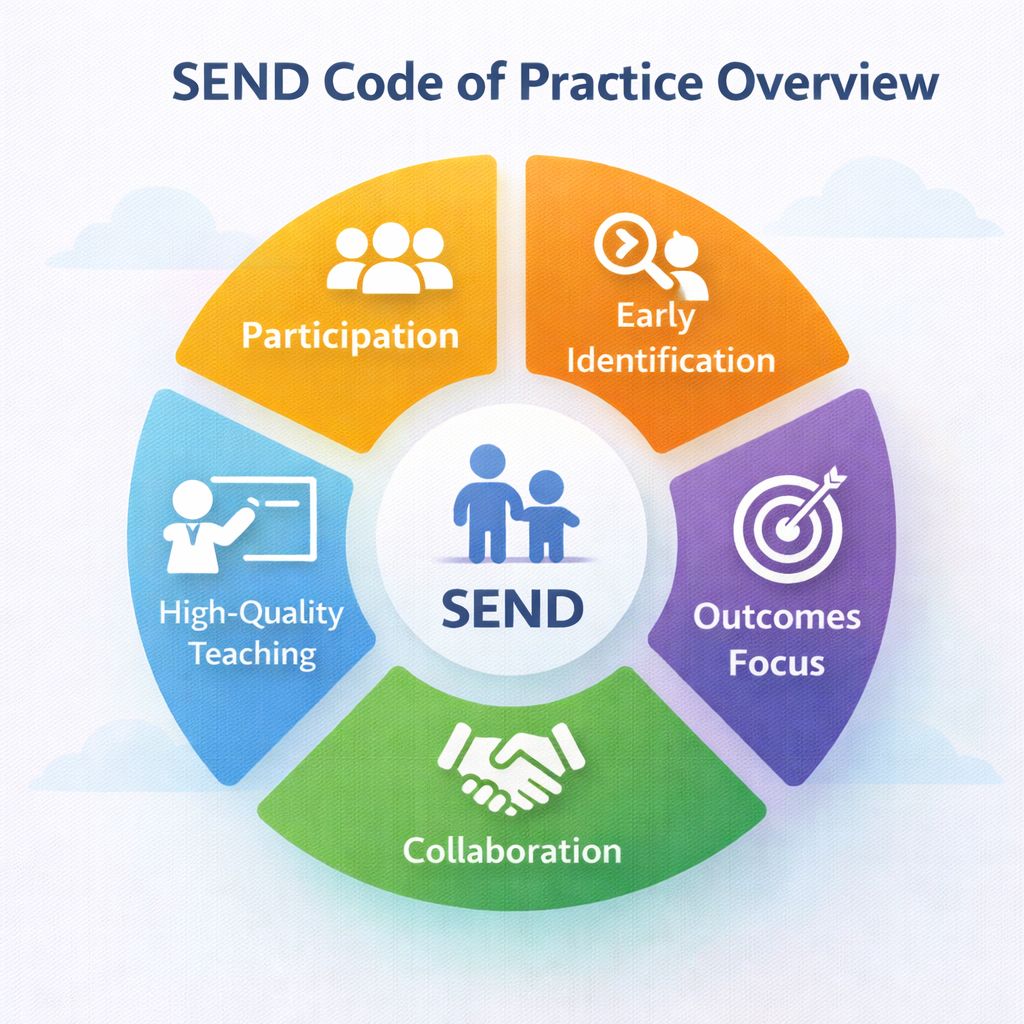
The Five Core Principles of the SEND Code of Practice
The five principles of the Code underpin every decision schools and local authorities should make.
1. Participation of children, parents, and young people
You are not an observer — you are an equal partner.
Schools must involve you in decisions at every stage.
2. Early identification of needs
Needs should be identified as early as possible, not after repeated struggles or waiting for a diagnosis.
3. High-quality teaching as the first response
Support should begin in the classroom, not only through add-on interventions.
4. Collaboration between education, health, and social care
Professionals should work together, particularly where complex needs are involved.
5. A focus on outcomes, not hours
Support should aim for measurable progress toward long-term goals, not simply the delivery of hours of intervention.
What Schools Are Legally Required to Do
Under the Children and Families Act (2014) and the SEND Code of Practice, schools must:
Identify SEN early
Inform parents when SEN is identified
Put SEN Support in place
Use the Assess–Plan–Do–Review cycle effectively
Track progress and impact
Provide reasonable adjustments under the Equality Act 2010
Involve parents in decision-making
Liaise with external professionals
Escalate to an EHCP where appropriate
These are not optional tasks.
If a school claims to lack staffing, funding, or time, this does not remove its legal duties.
Your Rights as a Parent Under SEND Law
You have the legal right to:
Request an EHCP Needs Assessment (without the school’s permission)
Receive information in a clear and timely manner
Attend meetings and contribute to plans
Access and review school records relevant to SEN
Challenge decisions made by the school or local authority
Appeal refusals of EHC Needs Assessments or EHCPs
Receive provision listed in Section F of the EHCP
Request a specific school for your child’s placement
If you feel your child is not receiving the support they need, you are entitled to ask questions, request evidence, and challenge decisions respectfully.
Understanding “Reasonable Adjustments” Under the Equality Act 2010
Separate from SEN support, the Equality Act requires schools to make reasonable adjustments for disabled pupils.
This includes:
Policy changes
Removal of physical barriers
Adjustments to teaching approaches
Support during unstructured times
Emotional regulation strategies
Access to sensory tools
A child does not need an EHCP to receive reasonable adjustments.
They do not need a diagnosis either.
If a school refuses adjustments, parents have a legal basis to challenge this.
When the School Is Not Following the Code of Practice
Signs of non-compliance include:
Repeatedly delaying SEN identification
Failing to involve parents
Vague or incomplete SEN plans
No measurable targets
Little or no tracking of interventions
Inconsistent delivery of support
Refusing to consider an EHCP despite limited progress
If you experience these issues, it is appropriate to:
Ask for clarification in writing
Request a meeting with the SENCO
Refer to the Code of Practice in your communication
Seek professional guidance if concerns persist
The goal is always resolution and constructive collaboration — but parents have the right to escalate if necessary.
When the Local Authority Is Not Following Legal Duties
Local authorities must:
Respond to EHCP requests within six weeks
Complete assessments within 20 weeks
Gather required professional reports
Issue final EHCPs that are specific and enforceable
Review EHCPs annually
Provide mediation where requested
Uphold appeals when ordered by the Tribunal
Failure to comply with timeframes or quality standards is unfortunately common.
Parents may need support when:
The LA refuses to assess without clear justification
The EHCP is vague, incomplete, or inaccurate
Section F is not quantified
Annual reviews are not held
Provision is not being delivered
How Our Organisation Supports Parents With Legal Rights
We help parents:
Understand exactly what the Code of Practice requires
Identify where schools or LAs may not be meeting duties
Frame concerns in a clear, constructive, legally aware manner
Navigate disputes without escalating conflict prematurely
Seek advice on EHCP appeals or mediation
Understand when legal intervention may be necessary
Our support empowers parents to advocate knowledgeably, calmly, and effectively — with the law on their side.
External Professionals (EPs, SALTs, OTs & More)
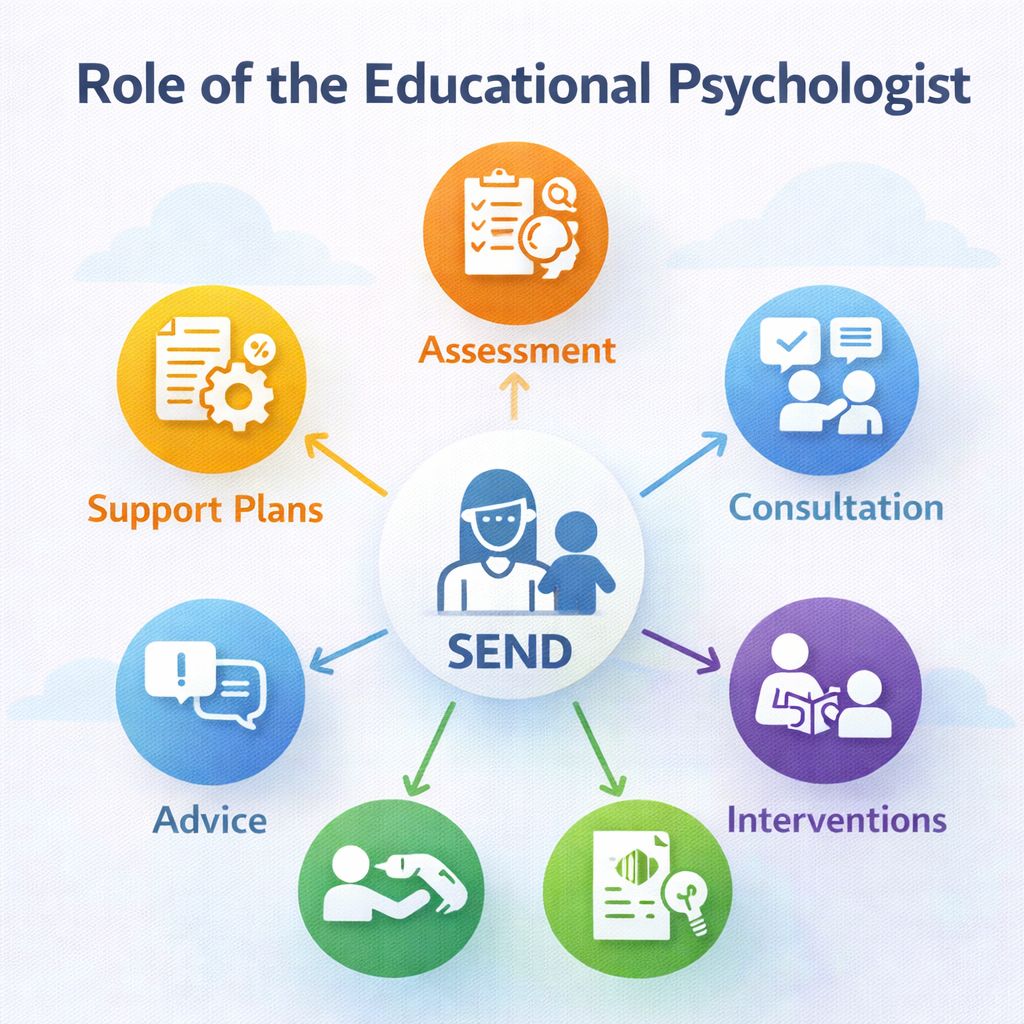
Why External Professionals Are Important in SEN Support
Many children with SEN benefit from the involvement of external specialists who can provide expert assessment, tailored recommendations, and targeted intervention strategies. Their insights help schools understand the child’s profile more accurately and determine what kind of support is needed.
External input becomes especially important when:
Progress is limited despite interventions
The child’s needs are complex or multi-layered
Staff require specialist guidance
A family is considering an EHCP application
Specialists add precision and clarity to a child’s support plan. Strong professional reports often influence whether an EHCP is approved and shape what provision is included in Section F.
Educational Psychologists (EPs)
EPs specialise in learning, behaviour, cognition, and emotional development. Their assessments help identify how a child learns, what barriers exist, and what strategies are required.
EPs typically provide:
Cognitive assessments (e.g., working memory, processing speed)
Observations in class
Interviews with parents, teachers, and the child
Recommendations for interventions and support
Insight into whether needs exceed SEN Support
Contribution to EHCP Needs Assessments
When should an EP be involved?
When learning difficulties are suspected
When behaviour is masking unmet needs
When progress is significantly below expectations
When a school lacks clarity on the child’s profile
When preparing evidence for an EHCP
An EP report is one of the most influential documents in the EHCP process.
Speech and Language Therapists (SALTs)
SALT involvement is not limited to children with speech delays. They also support:
Receptive language (understanding)
Expressive language (using language)
Social communication
Speech sound disorders
Selective mutism
Language processing
Pragmatic communication difficulties
Widely recommended SALT strategies include:
Visual supports
Simplified language
Pre-teaching vocabulary
Language modelling
Structured speech programs
Social communication groups
If language or communication difficulties impact learning or relationships, SALT involvement is highly appropriate.
Occupational Therapists (OTs)
OTs support children whose needs relate to:
Fine motor skills (e.g., handwriting)
Gross motor skills
Sensory processing
Regulation and attention
Coordination
Daily functional tasks
Physical access or posture
OT strategies may include:
Sensory diets
Movement breaks
Adapted seating
Handwriting programmes
Environmental adjustments
Regulation tools (weighted items, fidgets, etc.)
Where sensory needs or coordination difficulties affect learning, OT input becomes essential.
Physiotherapists
Typically involved when a child has:
Mobility challenges
Musculoskeletal needs
Physical disabilities
Hypermobility-related fatigue or pain
They assess physical function and recommend adaptations or exercises to support access to education.
CAMHS and Mental Health Professionals
CAMHS involvement is appropriate when a child demonstrates:
Anxiety
Depression
Trauma-related needs
Emotional dysregulation
Attention or behavioural concerns
Eating difficulties
Self-harm risk
CAMHS input can strengthen understanding of SEMH needs, though waiting times are often lengthy.
Specialist Teachers or Advisory Services
These professionals often support children with:
Autism
Visual impairment
Hearing impairment
Specific learning difficulties
Physical disabilities
They help schools understand how to adapt teaching and the environment effectively.
When Schools Should Refer to External Professionals
A school should not wait years to seek external input.
Referrals should happen when:
Needs are not fully understood
Progress is slower than expected
Strategies are not having sufficient impact
Staff require specialist advice
EHCP evidence is needed
Parents have the right to ask which external services the school has contacted — and when.
If the School Will Not Refer
Schools sometimes delay external referrals due to:
Waiting lists
Staffing
Budget concerns
Misunderstanding referral criteria
Parents may:
Request the referral directly
Contact the service themselves (depending on local pathways)
Use private assessments to strengthen evidence
Seek professional guidance to escalate appropriately
Remember:
External involvement should be needs-led, not budget-led.
How External Reports Strengthen SEN Support and EHCPs
External assessments provide:
Independent evidence
Specific strategies tailored to the child
Clear identification of need
Recommendations that are difficult for schools or LAs to dismiss
A professional basis for escalation to an EHCP
Reports often shift support from vague to targeted — especially when they include quantified recommendations.
How Our Organisation Supports Engagement With Specialists
We help parents:
Understand which professionals are appropriate
Know when a referral is justified
Prepare for assessments
Interpret reports and recommendations
Use reports effectively during EHCP processes
Ensure recommendations are written into support plans or EHCPs
Many parents feel overwhelmed when reading specialist reports.
We make them clear, actionable, and strategically useful.
Reviewing SEN Support & Knowing When to Escalate
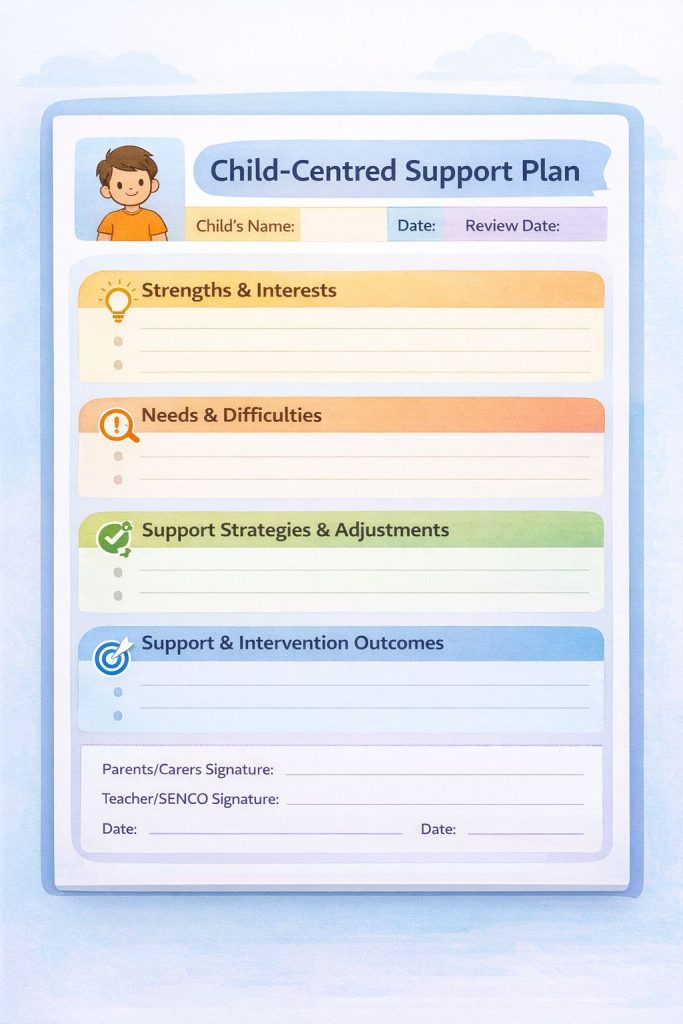
Why Reviewing SEN Support Is Crucial
Reviews are not a formality; they are an essential part of the SEN process.
A well-run review meeting helps determine:
Whether your child is making progress
Whether current strategies are effective
What new approaches may be needed
Whether additional professional input is required
Whether the level of need suggests an EHCP may be appropriate
Reviews must take place at least three times per year, although more frequent reviews are recommended for complex needs.
If your child’s support has not been reviewed for a term or more, this indicates a procedural failure that should be addressed promptly.
What a High-Quality SEN Review Looks Like
A strong review meeting includes:
1. Clear, structured discussion
All participants understand the purpose and agenda.
2. Evidence of progress
This may include:
Work samples
Assessment scores
Observations from teachers and parents
Intervention tracking data
Emotional or behavioural measures
3. Honest reflection
What worked?
What didn’t?
Why?
4. Agreed next steps
This includes:
New or revised targets
Updated interventions
Referral to professionals if needed
Timescales and responsibilities
5. Parent involvement
You should be invited to contribute throughout — not just at the end.
Warning Signs the Review Process Is Not Working
Parents often report issues such as:
Meetings lasting only 10 minutes
Vague statements like “doing fine” with no evidence
No measurable targets
Plans repeated term after term
Targets that are unattainably broad
Interventions not actually being delivered
School minimising needs to avoid escalation
These issues suggest the APDR cycle is not being implemented properly.
What Progress Should Look Like
Progress may be:
Academic
Improved reading levels
Better writing fluency
Gains in maths understanding
Behavioural
Longer periods of regulation
Reduced distress or overwhelm
Improved participation
Communication-related
Clearer expressive language
Greater understanding of instructions
Increased confidence interacting with others
Functional
Improved organisation
Greater independence
Better engagement in routines
Progress does not need to be dramatic — but it must be measurable.
If your child makes little or no progress over two or more APDR cycles, escalation should be considered.
When to Consider Escalating Support
Parents should consider escalation when:
Interventions are not producing measurable improvements
Needs are increasing in complexity
Emotional wellbeing or behaviour is deteriorating
The child is becoming disengaged from learning
The school appears unsure how to support the child
Professionals recommend more specialist provision
SEN Support is no longer enough to meet needs
Escalation may include:
Requesting more frequent reviews
Asking for external referrals
Updating or replacing interventions
Discussing whether an EHCP request is appropriate
If the school resists escalation, professional guidance can help you advocate confidently.
Escalating to an EHCP: Key Indicators
You may consider requesting an EHCP when:
Support needs exceed what the school can deliver
The child requires specialist teaching or therapeutic input
Progress remains limited despite strong interventions
The child cannot access learning without significant adjustments
The child experiences high levels of distress or dysregulation
External professionals identify needs beyond school capacity
The law is clear:
EHCP decisions should be based on need, not budget or resource limitations.
Parents do not have to wait until the school initiates the process.
You can apply independently at any time.
How to Prioritise Evidence When Escalating
Evidence can include:
From school:
SEN plans
APDR cycles
Tracking data
Teacher statements
Behaviour logs
Attendance or anxiety-related information
From home:
Descriptions of challenges with homework
Meltdowns, shutdowns, or distress
Evidence of masking or autistic burnout
Medical letters
From professionals:
EP, SALT, OT reports
Paediatrician letters
CAMHS assessments
Other useful evidence:
Private assessments
Copies of emails showing concerns raised
Notes from meetings
Clear evidence strengthens both SEN reviews and EHCP applications.
How Our Organisation Helps Parents Escalate Effectively
We support parents by:
Reviewing existing SEN provision
Identifying gaps or weaknesses in school support
Preparing for review meetings
Helping parents request referrals or further assessments
Advising whether an EHCP is appropriate
Helping structure evidence to strengthen applications
Providing guidance on next steps when progress remains limited
We help parents remain in control of the process — calm, informed, and supported.
Bringing It All Together: Your Child’s SEN Journey
Navigating the SEN system can feel overwhelming, especially when you are trying to balance school communication, professional reports, your child’s emotional wellbeing, and your own instinct that something is not quite right.
This guide has shown that:
SEN support should begin early
Schools must follow the Assess–Plan–Do–Review cycle
Parents are equal partners in the process
Interventions must be measurable and targeted
Reasonable adjustments are a legal requirement
External professionals should be involved when appropriate
An EHCP is an option whenever needs exceed school capacity
The SEND Code of Practice sets clear rights and expectations
You are never required to wait for school permission to seek help
Most importantly:
You are not alone in this journey.
Parents often tell us they feel isolated, confused, or worried that they are being “difficult” for asking questions.
But advocating for your child is not only your right — it is part of how the system is designed to work.
The more informed and confident you become, the more effectively you can ensure your child’s needs are recognised, understood, and met.
What “Good” SEN Support Should Feel Like
Parents should feel:
Heard
Respected
Informed
Included
Supported
And children should feel:
Safe
Understood
Confident
Regulated
Able to access learning
If this is not your experience, it may be a sign that the SEN process is not functioning as it should — and that you may benefit from expert guidance.
Suggested “Next Steps” for Parents
Here are some practical next steps you can take immediately:
Gather your concerns in written form.
Notes, examples, and observations provide a clear foundation.Ask the school for a meeting with the SENCO.
You do not need to wait for them to initiate.Request written details of current support.
This includes interventions, adjustments, and review dates.Compare the support to the four areas of need.
This helps identify whether any needs are being overlooked.Track your child’s progress weekly.
Small notes can be powerful evidence.Contact us for professional guidance if unsure.
We can help you identify next steps quickly and clearly.
Every SEN journey is different.
Some children need a small number of well-chosen strategies; others require long-term, multi-professional support. Some schools respond swiftly and effectively; others struggle to meet expectations. And many parents feel unprepared, especially at the beginning.
But with the right information — and the right support — you can navigate this system successfully.
Your voice matters.
Your instincts matter.
And your child deserves the right support at the right time.
If you ever feel uncertain, stuck, or overwhelmed, reaching out for guidance is not a sign of weakness — it is a strategic step toward ensuring your child receives the education they are entitled to.
Feel More Certain About What Should Happen Next
If you feel stuck or overwhelmed, I can help you make sense of everything and plan clear next steps.