
Understanding Autism: Embracing Neurodiversity and Promoting Inclusion in the UK
In the contemporary world, diversity is celebrated in many forms, yet when it comes to autism there remains a significant gap in understanding and acceptance. Autism, or Autism Spectrum Disorder (ASD), is a developmental condition that affects how a person communicates, interacts with others, and experiences the world. Recognising and appreciating the nuances of autism is essential for fostering a society that truly values each individual’s unique contributions. Autism is not a disease or a deficit; it is a different way of being, which brings with it a variety of strengths and challenges that society needs to acknowledge and support.
Understanding autism is pivotal for several reasons. Firstly, it leads to better support for individuals on the spectrum, enabling them to reach their full potential. When society is educated about autism, it can create environments that accommodate different needs, rather than forcing autistic individuals to conform to conventional standards. This understanding also promotes empathy and reduces the stigma and discrimination that autistic people often face, allowing for more meaningful and inclusive interactions.
Moreover, understanding autism enriches society by embracing neurodiversity. Neurodiversity is the concept that neurological differences, such as autism, are natural variations of the human brain. By valuing these differences, society benefits from a broader range of perspectives and problem-solving approaches. This not only enhances creativity and innovation but also ensures that every person, regardless of their neurological makeup, has the opportunity to contribute and thrive. In a world increasingly focused on inclusivity, understanding autism is a crucial step towards a more equitable and compassionate society.
Common Myths and Misconceptions about Autism
Despite growing awareness, numerous myths and misconceptions about autism persist, often leading to misunderstanding and prejudice. One prevalent myth is that all autistic individuals are alike. In reality, autism is a spectrum condition, meaning that it manifests differently in each person. Some may have significant challenges with communication and social interaction, while others might excel in specific areas such as mathematics, music, or art. This variability underscores the importance of individualised approaches to support and inclusion.
Another common misconception is that autism is caused by poor parenting or certain vaccines. These notions have been thoroughly debunked by scientific research. Autism is a complex condition influenced by a combination of genetic and environmental factors, and there is no evidence to support the claim that vaccines cause autism. However, such myths continue to perpetuate fear and misinformation, which can hinder efforts to provide appropriate support and advocacy for autistic individuals and their families.
Additionally, there is a misconception that autistic people lack empathy or emotion. While it is true that some individuals on the spectrum may have difficulty expressing or interpreting emotions in conventional ways, this does not mean they are devoid of feelings. Many autistic individuals experience deep emotion and empathy but may communicate or process these feelings differently. Understanding and respecting these differences is crucial for fostering genuine connections and support.
The Spectrum of Autism: Variability in Experiences
Autism is often referred to as a spectrum because it encompasses a wide range of experiences and abilities. No two individuals with autism are the same, and their needs and strengths can vary greatly. This variability can include differences in communication styles, sensory sensitivities, social interactions, and cognitive abilities. Some people with autism may require significant support in their daily lives, while others may live independently and succeed in various professional fields.
The spectrum nature of autism means that support and interventions must be tailored to each individual’s unique needs. For example, some individuals may benefit from speech therapy to improve communication skills, while others might require occupational therapy to help with sensory processing. Understanding the diverse manifestations of autism allows for more personalised and effective support, promoting better outcomes for autistic individuals.
Moreover, the variability in autism highlights the importance of early diagnosis and intervention. Identifying autism early can lead to timely support and resources that significantly improve an individual’s quality of life. Early intervention can help address developmental challenges, enhance strengths, and provide families with the tools they need to support their loved ones. Embracing the spectrum nature of autism ensures that all individuals receive the recognition and support they deserve.
The Role of Education in Promoting Inclusion
Education plays a crucial role in promoting inclusion and understanding of autism. Schools and educational institutions are not just places of learning; they are environments where social attitudes and behaviours are shaped. Inclusive education practices ensure that autistic students receive the support they need to succeed academically and socially, while also fostering a culture of acceptance and empathy among their peers.
Inclusive education involves several key strategies. Firstly, it requires Individualised Education Plans (IEPs) that address the specific needs of each autistic student. These plans should be developed in collaboration with parents, teachers, and specialists to provide tailored support — whether this involves adaptations in teaching methods, the use of assistive technologies, or additional classroom support. By focusing on individual strengths and challenges, inclusive education helps autistic students thrive in their learning environments.
Teacher training is another critical component of promoting inclusion. Educators must be equipped with the knowledge and skills to support autistic students effectively. This includes understanding autism, recognising its diverse manifestations, and implementing strategies that accommodate different learning styles. Training can also help teachers create a classroom environment that is sensitive to sensory needs and social dynamics, ensuring that autistic students feel safe and supported.
Furthermore, inclusive education benefits not only autistic students but all students. It promotes a culture of empathy, respect, and collaboration, where diversity is seen as an asset rather than a challenge. By learning alongside their autistic peers, neurotypical students gain a deeper understanding of different perspectives and the importance of inclusivity. This prepares them to be more compassionate and inclusive members of society in the future.
Supporting Individuals with Autism in the Workplace
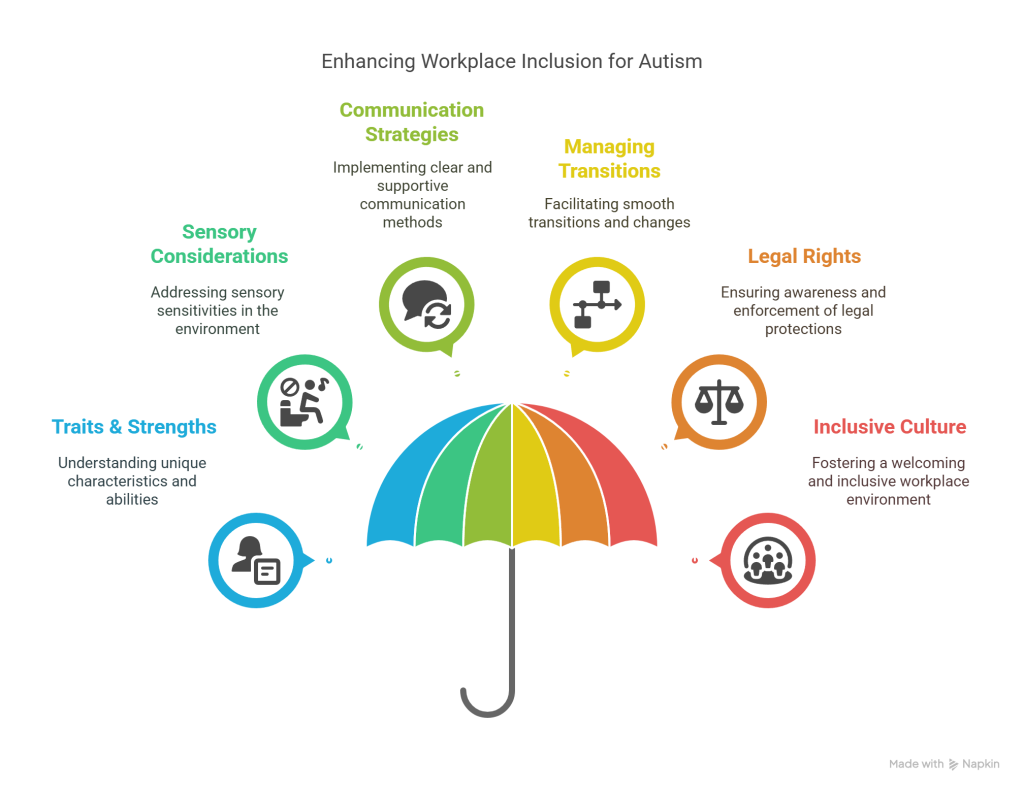
The workplace is another critical area where inclusion and support for autistic individuals can make a significant impact. Employment provides not only financial independence but also a sense of purpose and community. However, many autistic individuals face barriers to employment, including misunderstandings about their abilities and a lack of accommodations in the workplace. Promoting inclusion involves creating environments where autistic employees can succeed and thrive.
One of the first steps in supporting autistic individuals in the workplace is to challenge and change misconceptions about their capabilities. Autistic employees often possess unique strengths, such as attention to detail, problem-solving skills, and a strong work ethic. Employers need to recognise and value these strengths rather than focusing solely on perceived deficits. This shift in perspective can open up opportunities for autistic individuals to contribute meaningfully across many sectors.
Workplace accommodations are also essential for supporting autistic employees. These can include flexible working hours, sensory-friendly workspaces, clear and direct communication, and the use of assistive technologies. Providing reasonable adjustments ensures that autistic employees can perform their roles effectively and comfortably. Employers should work collaboratively with autistic employees to identify and implement the accommodations that best meet their needs.
Moreover, promoting a culture of inclusion involves training and educating all employees about autism and neurodiversity. This can reduce stigma and foster a more supportive and understanding work environment. Inclusive workplace practices not only benefit autistic employees but also enhance overall morale and productivity. By embracing neurodiversity, employers can tap into a wider pool of talent and create a more dynamic and innovative workforce.
Community Initiatives and Resources for Inclusion
Communities play a vital role in promoting inclusion and support for autistic individuals. Community initiatives and resources can provide essential services, create opportunities for social engagement, and raise awareness about autism. These initiatives are crucial for building inclusive environments where autistic individuals and their families feel valued and supported.
One example of a community initiative is the establishment of autism-friendly spaces and events. These are designed to accommodate the sensory and social needs of autistic individuals, providing safe and welcoming environments for them to participate in community activities. Autism-friendly events — such as sensory-friendly film screenings or quiet hours at local attractions — allow autistic individuals to enjoy social and recreational experiences without the stress of sensory overload or social pressure.
Support groups and organisations are also important resources for autistic individuals and their families. These groups provide platforms for sharing experiences, accessing information, and building a sense of community. They can offer practical support, such as guidance on navigating educational and healthcare systems, as well as emotional support through connections with others who understand the challenges and joys of living with autism.
Community education and awareness campaigns are another key component of promoting inclusion. These can help dispel myths and misconceptions about autism, educate the public about the diverse experiences of autistic individuals, and encourage supportive attitudes and behaviours. By raising awareness and fostering understanding, community initiatives can create more inclusive and compassionate environments for everyone.
Advocacy and Policy Changes for Neurodiversity
Advocacy and policy changes are essential for promoting neurodiversity and ensuring that autistic individuals have equal opportunities and rights. Advocacy efforts can take many forms — from grassroots campaigns to lobbying for legislative change. These efforts aim to address systemic barriers and promote policies that support inclusion, accessibility, and fairness for autistic individuals.
One critical area of advocacy is the push for equitable access to education and healthcare services. Autistic individuals often face challenges in accessing appropriate support and resources, which can impact their development and quality of life. Advocates work to ensure that policies are in place to provide timely and effective interventions, tailored education plans, and comprehensive healthcare. This includes advocating for funding to support these services and for policies that prioritise the needs of autistic individuals.
Employment rights and workplace inclusion are also key areas of advocacy. Autistic individuals have the right to fair employment opportunities and reasonable adjustments in the workplace. Advocacy efforts aim to enforce existing laws, such as the Equality Act 2010 in the UK, which protects against discrimination based on disability, and to promote policies that encourage inclusive hiring practices and workplace adjustments. This includes providing support for employers to implement inclusive practices and educating them about the benefits of neurodiversity.
Moreover, advocacy for neurodiversity involves promoting a societal shift in how autism is perceived and valued. This includes challenging the medical model of disability — which views autism as something to be cured or fixed — and embracing the social model, which recognises autism as a natural variation of human experience. Advocates work to amplify the voices of autistic individuals, ensuring that their perspectives and experiences are central to policy discussions and decision-making.
Personal Stories: Voices from the Autism Community
Personal stories from the autism community provide powerful insights into the diverse experiences and perspectives of autistic individuals. These stories highlight both the unique challenges and the strengths of autistic people, offering a deeper understanding of what it means to live with autism. Hearing directly from autistic individuals and their families can foster empathy, challenge stereotypes, and inspire positive change.
One compelling story might come from an autistic individual who has excelled in their career thanks to the support and accommodations provided by their employer. Their journey can illustrate the importance of inclusive workplace practices and the potential for success when autistic individuals are given the opportunity to thrive. This story can also highlight specific accommodations that made a difference — such as flexible work hours or a sensory-friendly workspace — providing practical examples for other employers to follow.
Another story might come from a parent of an autistic child, sharing their experiences navigating the education system and advocating for their child’s needs. This can shed light on the challenges and triumphs of securing appropriate support and resources, as well as the impact of inclusive education on their child’s development and wellbeing. It also highlights the importance of collaboration between parents, educators, and specialists in creating effective support plans.
Similarly, a story from an autistic adult who has found a supportive community or social group can demonstrate the value of community initiatives and resources. Their experiences can show how access to autism-friendly spaces and support groups has enriched their social life, provided a sense of belonging, and enhanced overall quality of life. These stories not only inspire but also offer practical insights into the types of support that can make a meaningful difference.
Building a More Inclusive Society
Building a more inclusive society requires a collective effort to understand, value, and support the diverse experiences of autistic individuals. By embracing neurodiversity, we recognise that differences in neurological functioning are a natural and valuable part of the human experience. This perspective shifts the focus from trying to “fix” or “cure” autism to creating environments where autistic individuals can thrive and contribute their unique strengths.
Education and awareness are fundamental to promoting inclusion. Schools, workplaces, and communities must be equipped with the knowledge and resources to support autistic individuals effectively. This includes providing individualised support, making reasonable adjustments, and fostering a culture of empathy and respect. Inclusive practices benefit not only autistic individuals but also society as a whole, by promoting diversity, creativity, and innovation.
Advocacy and policy change are also crucial for ensuring that autistic individuals have equal opportunities and rights. This involves challenging systemic barriers, promoting inclusive policies, and amplifying autistic voices in decision-making. By advocating for equitable access to education, healthcare, and employment, we can create a society that is fair and inclusive for everyone.
Ultimately, understanding autism and promoting inclusion is about valuing every individual’s unique contributions and potential. It is about creating a society where differences are celebrated and everyone has the opportunity to succeed and thrive. By working together, we can build a more inclusive and compassionate world for autistic individuals and their communities.
Continue Exploring Neurodiversity
Autism is just one expression of the many ways human minds work. Discover more about the different types of neurodiversity and how each contributes to a richer, more inclusive world.