
What Is SEN Support? A Simple Guide for Parents (UK)
SEN Support is part of the graduated approach used in schools across the UK. It exists to remove barriers to learning and help children make meaningful progress, socially, emotionally and academically.
SEN Support is one of the most important — yet most misunderstood — parts of the UK education system.
Many parents are told:
“Your child is on SEN Support.”
But nobody explains what that means, what should happen, or how to check whether it is actually working.
This guide explains SEN Support in plain English, so you feel informed, confident, and able to ask the right questions.
👉 If you want practical help and guidance as you read, see our page:
SEN Support for Parents
What Does SEN Support Mean?
SEN Support is extra help provided in school for children who need support with learning, behaviour, communication, or emotional needs — without having an EHCP.
It exists to remove barriers so your child can:
access learning
feel safe
make progress
reduce distress
build confidence
A child may be placed on SEN Support for reasons such as:
autism / ADHD / neurodiversity
speech and language difficulties
dyslexia or learning differences
anxiety, emotional regulation difficulties
sensory processing challenges
physical or medical needs
Important:
SEN Support is not a label.
It is a commitment to provide extra support.
Who Decides If a Child Needs SEN Support?
In most schools, the decision is led by the SENCo (Special Educational Needs Coordinator), working with teachers and parents.
They should consider:
assessments and observations
your child’s classroom experience
progress over time
feedback from parents
professional advice (if available)
You should:
be informed
be involved
be listened to
If decisions are being made without your knowledge, that’s a problem — and you have every right to ask questions.
What Should SEN Support Include?
Good SEN Support is structured.
It should clearly describe:
what the difficulty is
what support is being put in place
who is responsible
how often it happens
how progress will be measured
when it will be reviewed
Examples of appropriate SEN support may include:
small-group or 1:1 interventions
visual supports and timetables
literacy/numeracy programmes
social skills support
sensory regulation strategies
adjustments to instructions or workload
quiet space or movement breaks
mentoring / emotional check-ins
Weak SEN support often sounds like:
“We’ll keep an eye on it.”
“We’re monitoring.”
“We’ll see how it goes.”
Those phrases provide no detail and no accountability.
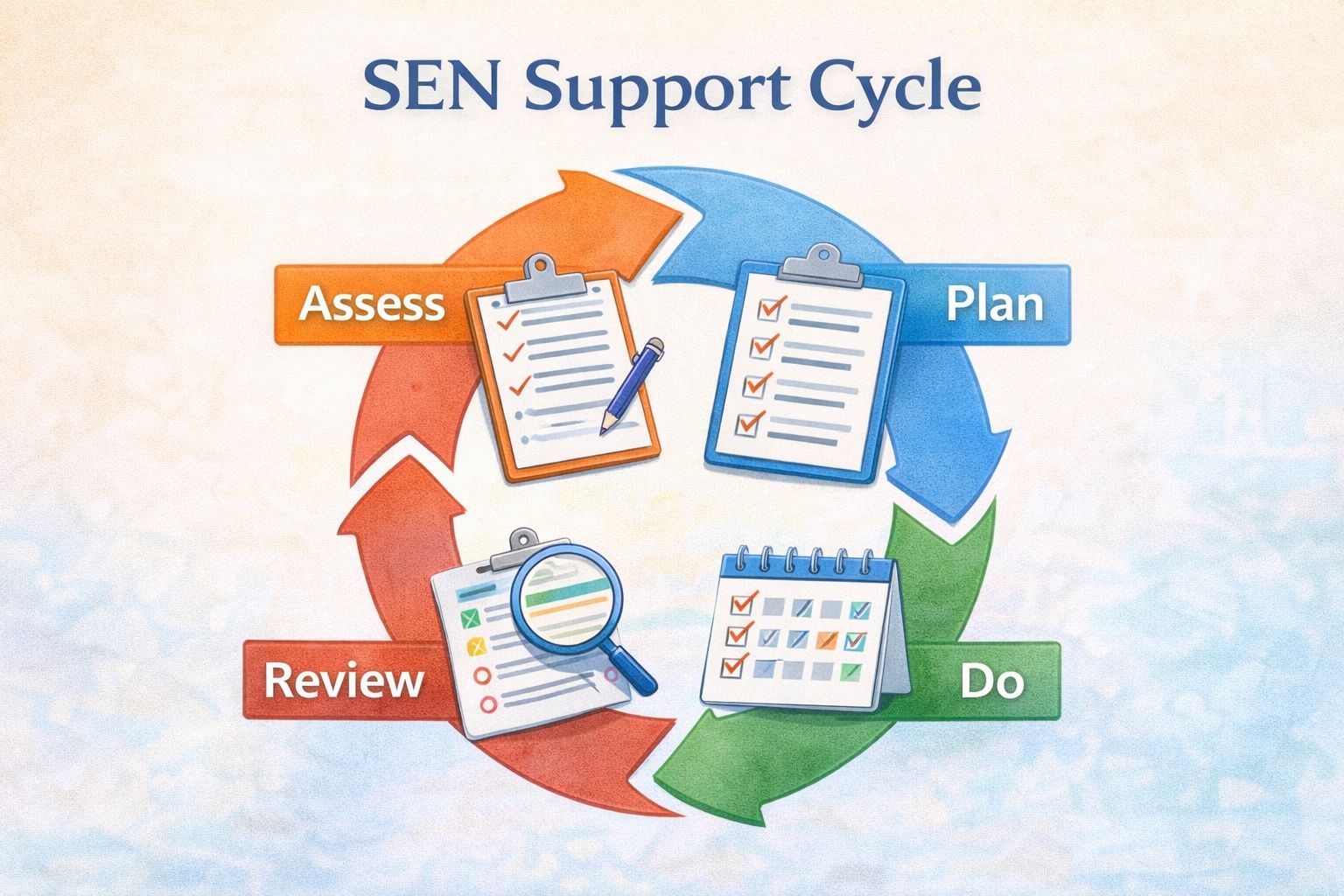
The SEN Support Cycle — Assess, Plan, Do, Review
By law and guidance, schools should follow the graduated approach:
Assess
Understand your child’s needs using:
assessments
classroom observations
discussions with parents
specialist advice if needed
Plan
Agree:
strategies and interventions
targets
timescales
who is responsible
Do
Put the plan into action consistently.
Review
After the agreed period, check:
Did it work?
What changed?
What needs adapting?
This cycle should repeat regularly — usually at least once per term.
If there is no formal review process, the SEN system is not being followed properly.
What Is the Role of the SENCo in SEN Support?
The SENCo should:
coordinate your child’s support
guide teachers on strategies
organise reviews
help monitor progress
involve specialists when necessary
work in partnership with families
You should feel able to contact the SENCo and ask for a meeting. You do not have to wait until school invites you.
Do Children Need a Diagnosis to Receive SEN Support?
Short answer: No.
Support should be based on need, not diagnosis.
A diagnosis can:
provide context
unlock specialist input
support long-term planning
But it is not a requirement for schools to begin supporting your child.
If school says:
“We can’t do anything until there’s a diagnosis”
— that is incorrect, and worth challenging politely.
Signs SEN Support Might Not Be Working
Sometimes SEN Support is in place — but your child is still struggling.
Watch for:
repeated exclusions or detentions
ongoing distress or refusal to attend
no measurable progress
increased anxiety or meltdowns
lack of communication from school
vague or inconsistent plans
early pick-ups or reduced timetables
These can be indicators that support needs changing — or that an EHCP may need to be considered.
👉 For guidance on next steps, read our SEN Support vs EHCP article (link internally).
What Can Parents Do If SEN Support Feels Inadequate?
Here are practical steps you can take.
1. Ask for a SEN meeting
Request a meeting with:
the SENCo
class teacher
anyone involved in support
2. Ask for the plan in writing
Request:
support plan / IEP
review dates
targets and interventions
3. Keep records
Emails, meeting notes, behaviour logs — everything matters.
(We have a full guide here: How to Keep Records for SEN Support — link internally.)
4. Consider whether further assessment is needed
Sometimes specialist input is essential.
5. Explore whether an EHCP may be appropriate
If needs are ongoing or complex, this may be the next step.
SEN Support vs “Bad Behaviour”
Many children labelled “disruptive” are actually:
overwhelmed
unsupported
misunderstood
masking all day and crashing at home
Behaviour is communication.
Good SEN Support aims to:
understand triggers
remove barriers
reduce stress
prevent escalation
Punishment alone rarely solves anything.
When Might an EHCP Be Needed?
Consider an EHCP where:
support is not working despite adjustments
multiple professionals are involved
your child requires intensive or specialist provision
needs are long-term and complex
You do not need school permission to apply — parents can request directly.
Final Thoughts — You Do Not Have To Navigate SEN Support Alone
SEN Support should feel:
collaborative
structured
reviewed
responsive
If instead it feels confusing or inconsistent, that is not your fault — and it can be improved.
👉 For step-by-step guidance and support, visit:
SEN Support for Parents — Clear Guidance and Help
And if you’d like individual support, you can always book a consultation.
Frequently Asked Questions
Is SEN Support the same as being on the SEN register?
In most schools, being on the SEN register usually means a child is receiving SEN Support. It is simply a record that extra help has been identified and should be reviewed regularly.
Does SEN Support mean my child is behind?
Not always. SEN Support is used when a child needs extra help because of learning, communication, emotional, sensory or behavioural needs. It is about support, not labelling.
Who should tell me if my child is on SEN Support?
The school should inform you and involve you in planning. You should normally be told what support is being put in place and when it will be reviewed.
Can SEN Support be temporary?
Yes. Some children need support for a period of time, and it can be reduced when progress is sustained. Changes should always be discussed and reviewed.
Does SEN Support always mean extra adults in the classroom?
No. SEN Support can include adapted teaching, targeted interventions, visual supports, routines, sensory strategies and other adjustments, depending on the child’s needs.
Should I be able to see my child’s SEN Support plan?
Yes. Parents should be able to view the plan, understand the targets, and know when reviews will take place. You should be involved in discussions about any changes.
What if I disagree with the SEN Support being offered?
You can ask how decisions were made, request clarification, and ask for a review. It is appropriate to discuss concerns and suggest changes where needed.
Can SEN Support continue if my child gets an EHCP?
Yes. SEN Support can continue alongside an EHCP. The EHCP sets out legally specified provision, while everyday school strategies still support learning.
Does SEN Support affect secondary school choices?
No. SEN Support does not restrict school options. It helps schools understand needs and plan support during transition.
What happens if the school removes SEN Support?
SEN Support should only be removed if needs have reduced and progress is sustained. Parents should be informed and given reasons, and the decision should be reviewed if concerns remain.
Unsure Whether Your Child Is Getting the Right Support?
If you need help understanding whether the right support is in place, you can book a Parent SEN Support Session. We’ll talk through everything calmly.