
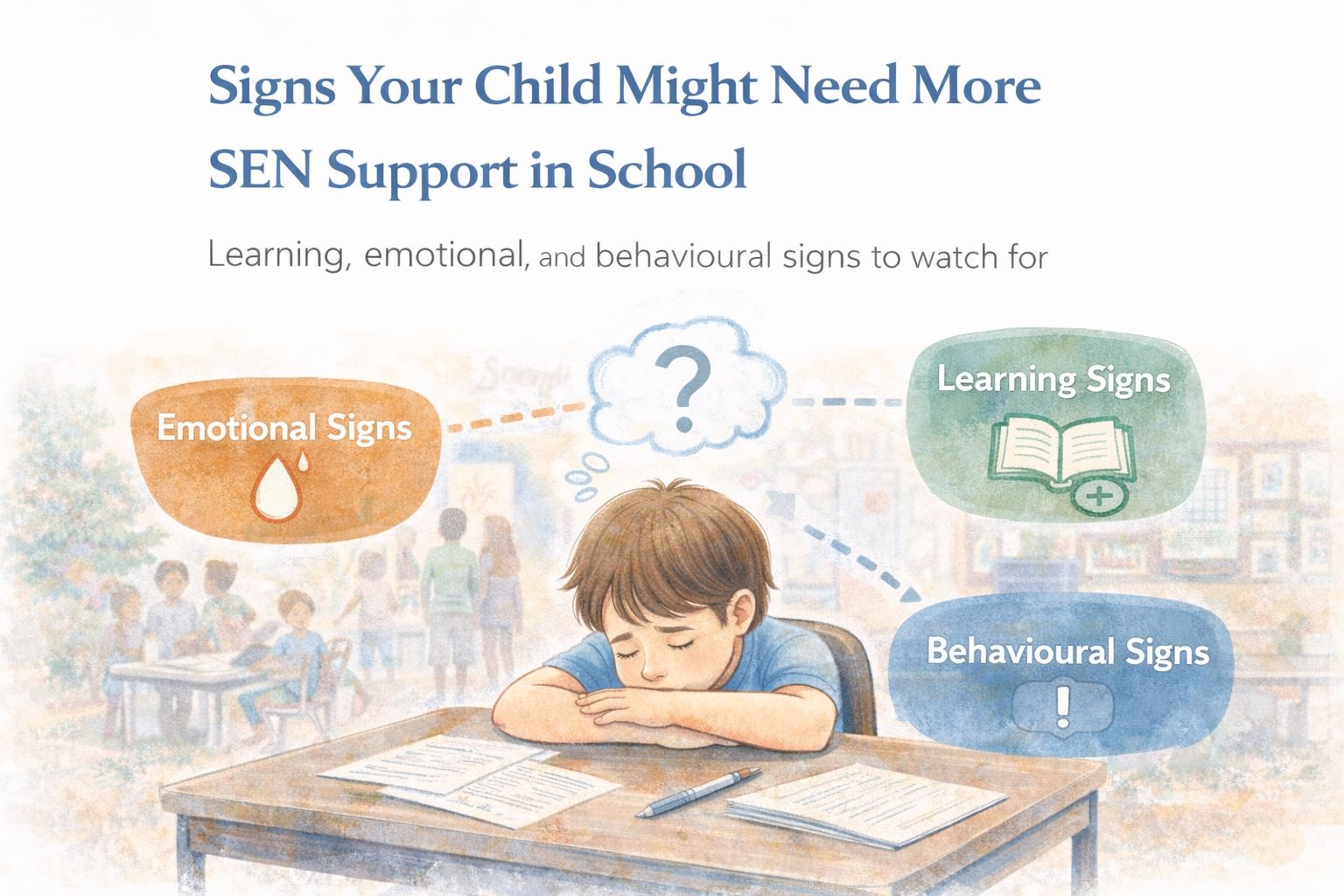
Signs Your Child Might Need More SEN Support in School
Many children struggle in school — but knowing when it is “normal” difficulty and when it may signal a Special Educational Need can feel confusing.
Parents often tell me:
“I don’t know if I’m worrying too much — or not enough.”
This guide will help you recognise common signs that a child may benefit from additional SEN Support, and what to do if these signs sound familiar.
If you’re still learning how SEN Support works, start with our full guide: SEN Support for Parents.
What Do We Mean by SEN Support?
SEN Support means a child receives extra help so they can access learning, manage emotions, and feel safe in school — without necessarily having an EHCP.
Support should be:
planned
written down
reviewed regularly
Emotional Signs Your Child May Need More Support
Emotional wellbeing is one of the clearest indicators that something isn’t working.
Watch for signs such as:
frequent tears after school
dread or anxiety before school
emotional shutdowns or withdrawal
clinginess or separation anxiety
exhaustion after school (“masking fatigue”)
Children who mask all day often “hold it together” in class, then release everything at home.
“school anxiety”, “emotional signs child struggling”, “masking in school”.
Behavioural Signs Linked to Unmet Needs
Behaviour is communication.
Patterns to look for include:
frequent detentions or sanctions
sudden changes in behaviour
meltdowns or explosive reactions
refusal to participate
being sent out of class often
exclusions or reduced timetables
Instead of asking:
“What’s wrong with the behaviour?”
Ask:
“What is the behaviour trying to tell us?”
Learn how schools should respond inside our SEN Support vs EHCP Guide.
Learning Signs Your Child May Need SEN Support
Not all learning difficulties are obvious.
Possible signs include:
working very hard but making little progress
forgetting instructions
difficulty organising tasks
avoiding reading or writing
losing confidence in learning
frequent headaches or stomach aches related to school
Slow progress alone does not define SEN — but persistent barriers should be explored.
Social and Communication Signs
Look for difficulties such as:
struggling to make or keep friends
misunderstanding social cues
taking things literally
being isolated or left out
conflict with peers
These may link to:
autism spectrum differences
language processing needs
emotional regulation challenges
Early support helps enormously.
Sensory and Physical Signs
Some children experience school environments as overwhelming.
Possible indicators:
covering ears due to noise
discomfort with clothing, smells, or crowds
difficulty sitting still
fatigue after busy environments
frequent complaints of feeling unwell
These may signal sensory processing differences that require adjustment.
When Patterns Repeat or Escalate
One-off incidents happen.
But if challenges are:
consistent
worsening
happening across settings (home and school)
it is time to discuss support.
Our Parent SEN Support Session can help you review concerns calmly.
When Children Struggle, It’s a Signal — Not a Judgment
Clarity Leads to Better Support
What To Do If These Signs Sound Familiar
Here are practical steps.
Step 1: Keep Notes
Record dates, examples, and concerns.
Step 2: Request a Meeting With School
Ask to meet with the teacher and SENCo.
Step 3: Ask What Support Is Already in Place
Be specific — ask about frequency, strategies, and review plans.
Use our article Questions to Ask in a SEN Support Meeting.
Step 4: Agree a Plan
Support should be written down and shared.
Step 5: Review Progress
If support is not helping, further assessment — or an EHCP request — may be appropriate.
Learn more on our EHCP Advocacy & Support page.
FAQ — Signs a Child Needs More SEN Support
Does every struggling child need SEN Support?
No. Some difficulties resolve with simple adjustments — others require more structured support.
Should I wait and see if things improve?
Waiting can sometimes help — but prolonged distress, persistent difficulties or repeated exclusions should be addressed sooner.
Do I need a diagnosis first?
No. Support is based on need, not diagnosis.
Can SEN Support be increased over time?
Yes. Support should adapt as needs change and should be reviewed regularly.
Conclusion
Not every struggle means a child has Special Educational Needs.
But when difficulties:
persist
cause distress
limit learning
impact wellbeing
— it is important to explore support early.
You are not “overreacting” by asking questions.
You are advocating for your child.