

Questions to Ask in a SEN Support Meeting (UK)
A SEN Support meeting can feel intimidating — especially when multiple professionals are involved and you’re trying to remember everything at once.
Many parents leave thinking:
“I wish I had asked that question…”
This guide will help you walk in prepared, calm and confident.
You will learn:
what SEN Support meetings are for
key questions to ask
what schools should record
how to follow up afterwards
If you’re new to the process, start with our full guide: SEN Support for Parents.
What Is a SEN Support Meeting?
A SEN Support meeting is a structured conversation between:
parents
the class teacher
the SENCo
sometimes additional staff or professionals
Its purpose is to:
review your child’s needs
agree support strategies
monitor progress
plan next steps
What Should Happen in a SEN Meeting?
A good SEN meeting should:
- share clear information about your child
- review what has been tried
- discuss what worked (and what didn’t)
- agree next steps
- set a review date
Meetings should never feel like:
vague updates
rushed conversations
decisions made without you
You are a partner — not an observer
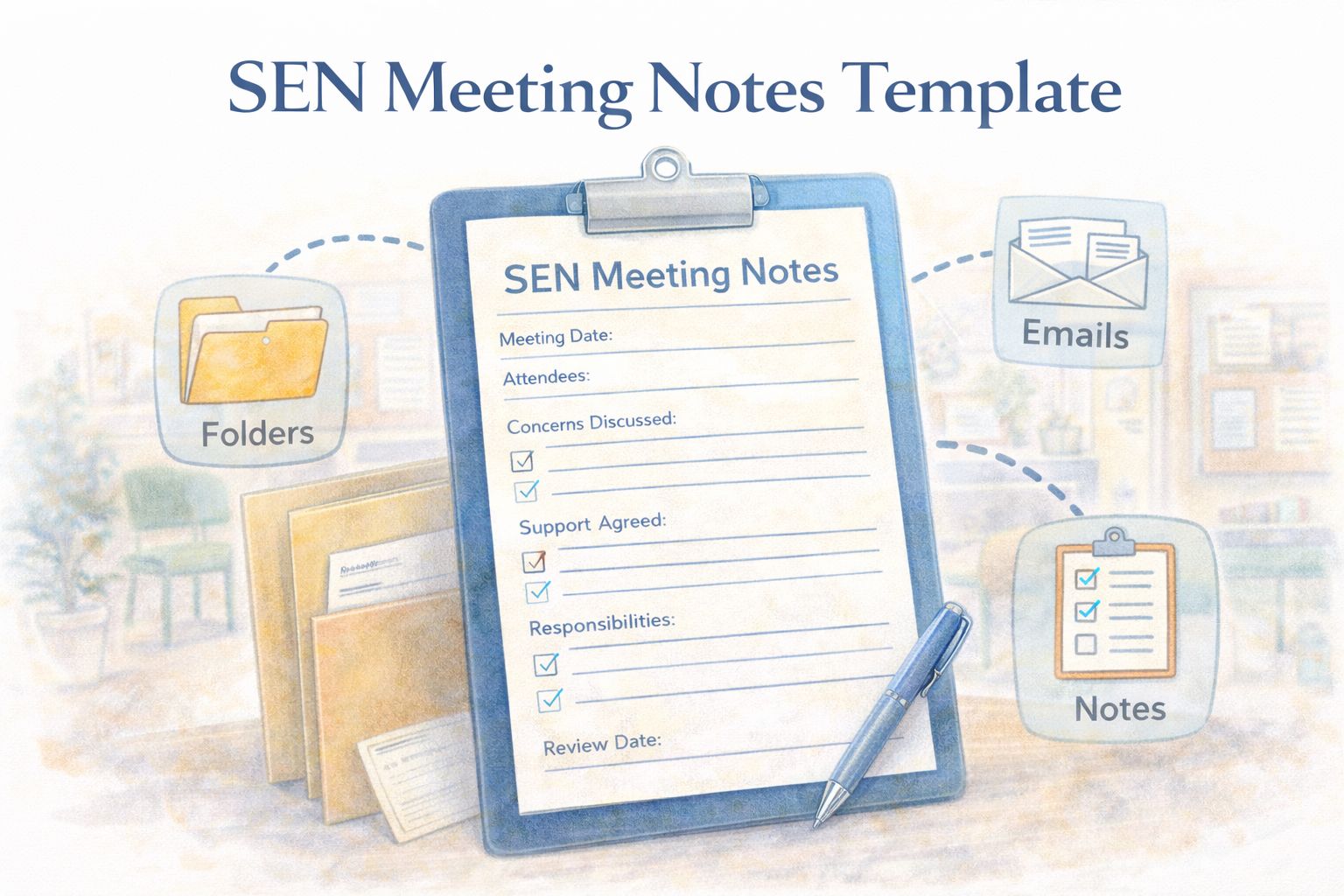
SEN Meeting Notes Template
Download our SEN Meeting Notes Template so you can keep everything recorded in one place.
Questions to Ask About Needs and Assessments
Start with clarity:
1. What needs have been identified?
Ask the school to explain in plain language.
2. What assessments have been completed?
This could include reading age tests, observation notes, or specialist assessments.
3. What concerns do teachers see day-to-day?
Sometimes behaviour at school is different to home — both matter.
4. How does my child describe their experience?
Children’s voices should be included.
Questions to Ask About Support Being Provided
This is where things often go vague — so ask specifically.
1. What support is currently in place?
Ask for details, not general statements.
2. Who delivers the support?
Teaching assistant? Teacher? Specialist?
3. How often does it happen — and for how long?
Frequency matters.
4. Where does the support take place?
Some children do better inside the classroom, others outside.
Learn more about reviewing support plans on our SEN Support vs EHCP Guide.
Questions About Progress and Outcomes
1. How will we measure progress?
Avoid vague responses like “we’ll see how they get on”.
2. What does success look like?
Small, realistic outcomes matter.
3. What happens if progress is slow?
Support should adapt — not disappear.
Questions About Reviews and Communication
1. When will we meet again to review this?
Reviews should usually be termly at minimum.
2. How will I be kept updated between meetings?
Email, home-school communication, or scheduled check-ins.
3. Who should I contact if I’m concerned?
You should always know who your point of contact is.
If you’d like help preparing, you can book a Parent SEN Support Session.
What Should Be Recorded From the Meeting?
Ask the school to record:
what was discussed
decisions made
support agreed
who is responsible
when it will be reviewed
A written record protects everyone — especially your child.
Keep copies in one organised folder.
See our guide on Keeping Records for SEN Support.
Questions About Reviews and Communication
1. When will we meet again to review this?
Reviews should usually be termly at minimum.
2. How will I be kept updated between meetings?
Email, home-school communication, or scheduled check-ins.
3. Who should I contact if I’m concerned?
You should always know who your point of contact is.
If you’d like help preparing, you can book a Parent SEN Support Session.
What If I Don’t Agree With School Decisions?
It’s okay to disagree respectfully.
You can ask:
“What evidence was used to make this decision?”
“What alternatives were considered?”
“Can we review this again sooner?”
If concerns continue, advocating for further assessment — or requesting an EHCP assessment — may be appropriate.
Learn more about when an EHCP may help.
FAQ — SEN Support Meeting Questions
Do I need to prepare for a SEN meeting?
Yes. Bringing notes, questions, and relevant documents helps you feel confident and organised.
Can I bring someone with me to the meeting?
Yes. You can usually bring another parent, relative, or advocate for support.
Will everything discussed be written down?
It should be. You can ask for meeting notes and copies of updated plans.
Can I ask for a review sooner than planned?
Yes — especially if your child is struggling or things are worsening.
Closing Section
The more prepared you are, the calmer the meeting becomes.
SEN meetings work best when:
everyone understands the goals
support is clearly planned
progress is reviewed properly
And remember — you are not “being difficult” when you ask questions.
You are advocating for your child.