
Last reviewed: March 2026
Written by: School of Diversity SEND Support Team
Topic: Education, Health and Care Plans (EHCP)
This guide is designed to help parents understand the EHCP process in England and is regularly updated to reflect SEND guidance and procedures.
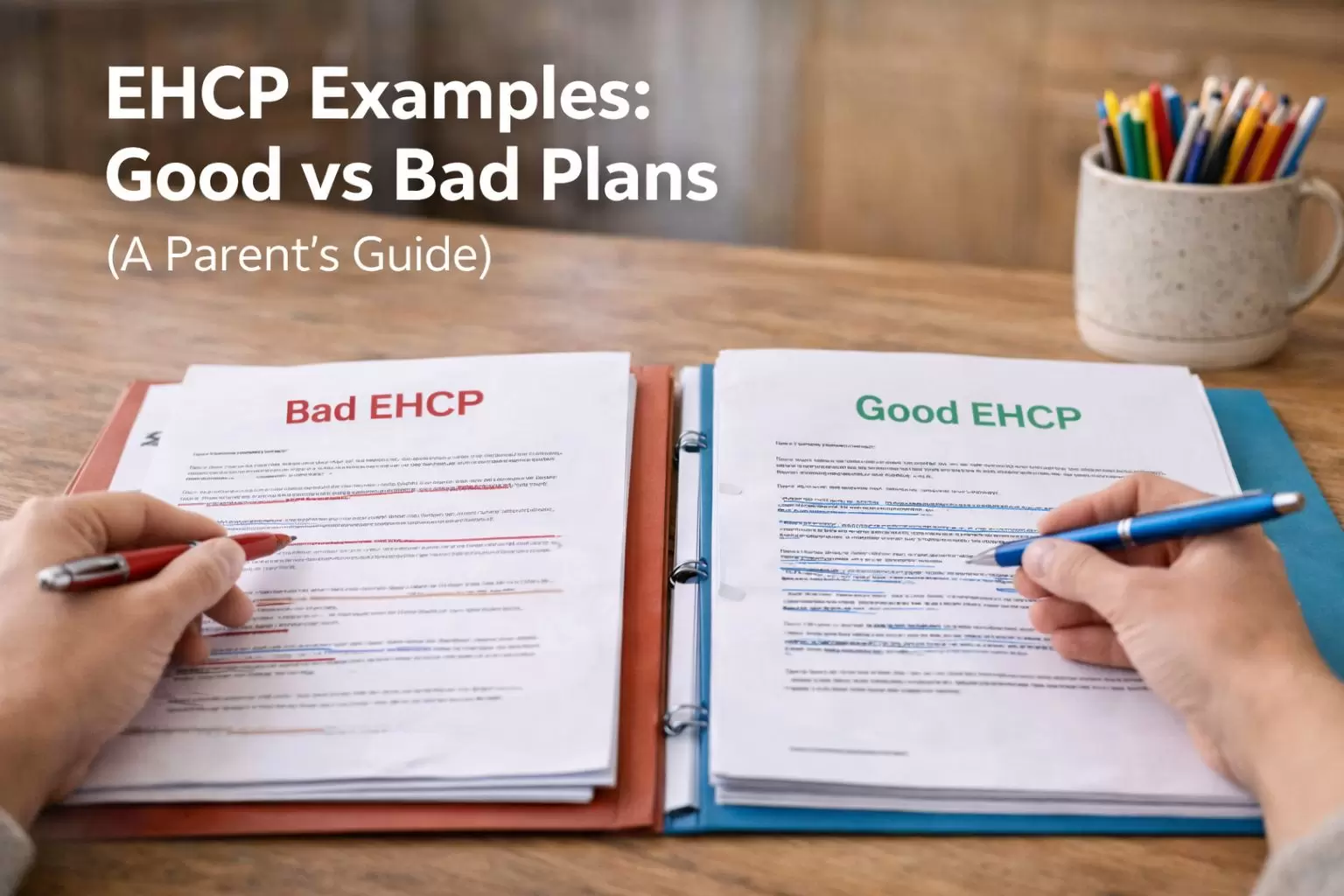
EHCP Examples: Good vs Bad Plans (A Parent’s Guide)
When parents first receive a draft EHCP, it can be hard to tell whether it is well written or missing important details.
Some plans clearly describe a child’s needs and support. Others contain vague language that makes it difficult to ensure support actually happens.
This guide explains the difference between strong and weak EHCP plans, with simple examples to help parents understand what to look for.
What makes a good EHCP?
A strong EHCP should:
Clearly describe the child’s needs
Link needs directly to support
Use specific, measurable language
Avoid vague phrases
Include provision that can be enforced
A good EHCP is clear, specific, and easy to understand.
What makes a weak EHCP?
Weak EHCPs often contain:
Vague descriptions of needs
Support that is not clearly defined
Language such as “access to” or “opportunities for”
Provision that depends on school resources
Missing links between needs and support
These problems can lead to support being inconsistent or reduced over time.
Example 1: Describing a child’s needs
Weak EHCP wording
The child has some difficulties with attention and behaviour in the classroom.
Strong EHCP wording
The child experiences significant difficulties sustaining attention for more than 5 minutes during teacher-led tasks and requires structured prompts to remain engaged.
The strong version is clearer and provides useful information about the difficulty.
Example 2: Linking needs to provision
Weak EHCP wording
The child would benefit from additional support in class.
Strong EHCP wording
The child will receive 15 hours per week of 1:1 support from a trained teaching assistant to support attention, task completion, and emotional regulation.
A good EHCP clearly explains what support will be provided.
Example 3: Vague vs specific provision (Section F)
Weak wording
The child will have access to literacy support where appropriate.
Strong wording
The child will receive three 30-minute sessions per week of structured literacy intervention delivered by a trained member of staff.
Specific wording ensures support is measurable and enforceable.
Example 4: Emotional support
Weak EHCP wording
Support will be provided for emotional wellbeing.
Strong EHCP wording
The child will have a daily 15-minute check-in with a designated member of staff trained in emotional regulation strategies.
Clear provision helps ensure emotional needs are actively supported.
Example 5: Sensory needs
Weak EHCP wording
Opportunities for sensory breaks will be provided.
Strong EHCP wording
The child will have a planned 10-minute sensory break every hour in a quiet space supervised by trained staff.
The strong example makes expectations clear.
Common warning signs in EHCPs
Parents should be cautious if an EHCP includes phrases such as:
“Access to”
“Opportunities for”
“As required”
“When necessary”
“Regular support”
These phrases are often too vague to guarantee provision.
Why vague wording causes problems
If support is not clearly described, schools may:
Provide less support than expected
Interpret provision differently
Reduce support over time
This is why clear language in Section F is so important.
How parents can strengthen an EHCP
Parents can ask for:
Needs to be described more clearly
Provision to be specific and quantified
Professional recommendations to be included
Links between needs and support
These changes can make a significant difference to how well the EHCP works.
EHCPs should reflect the child’s real needs
An EHCP is meant to ensure that children receive the support they need to access education.
When plans are clear and detailed, they help everyone involved — parents, schools, and professionals — work towards the same goal.
EHCP Examples – Parent FAQs
What should a good EHCP include?
A good EHCP clearly describes the child’s needs, links them to specific provision, and avoids vague language.
Why are some EHCPs considered weak?
Weak EHCPs often contain vague wording, unclear provision, or missing links between needs and support.
Why is Section F so important?
Section F describes the special educational provision that must be delivered. It is legally enforceable.
Can parents ask for changes to a draft EHCP?
Yes. Parents can request amendments before the EHCP is finalised.
What language should parents be cautious about in EHCPs?
Words such as “access to”, “as required”, or “when appropriate” can weaken provision if they are not clearly defined.
Explore more EHCP guidance
Looking at examples of strong and weak EHCP wording can help parents understand what a clear and effective plan should look like. If you would like a broader overview of the process, you can explore our complete EHCP guide for parents, where all of our EHCP resources are brought together in one place. It may also help to read EHCP sections explained (A–K) so you understand how each part of the plan should be structured. When reviewing your child’s plan, our EHCP checklist for parents can help you check whether the support and outcomes are clearly described. You may also find it useful to explore Section F wording examples, which show how provision should be written clearly and specifically.