
Last reviewed: March 2026
Written by: School of Diversity SEND Support Team
Topic: Education, Health and Care Plans (EHCP)
This guide is designed to help parents understand the EHCP process in England and is regularly updated to reflect SEND guidance and procedures.
What Evidence Do I Need for an EHCP?
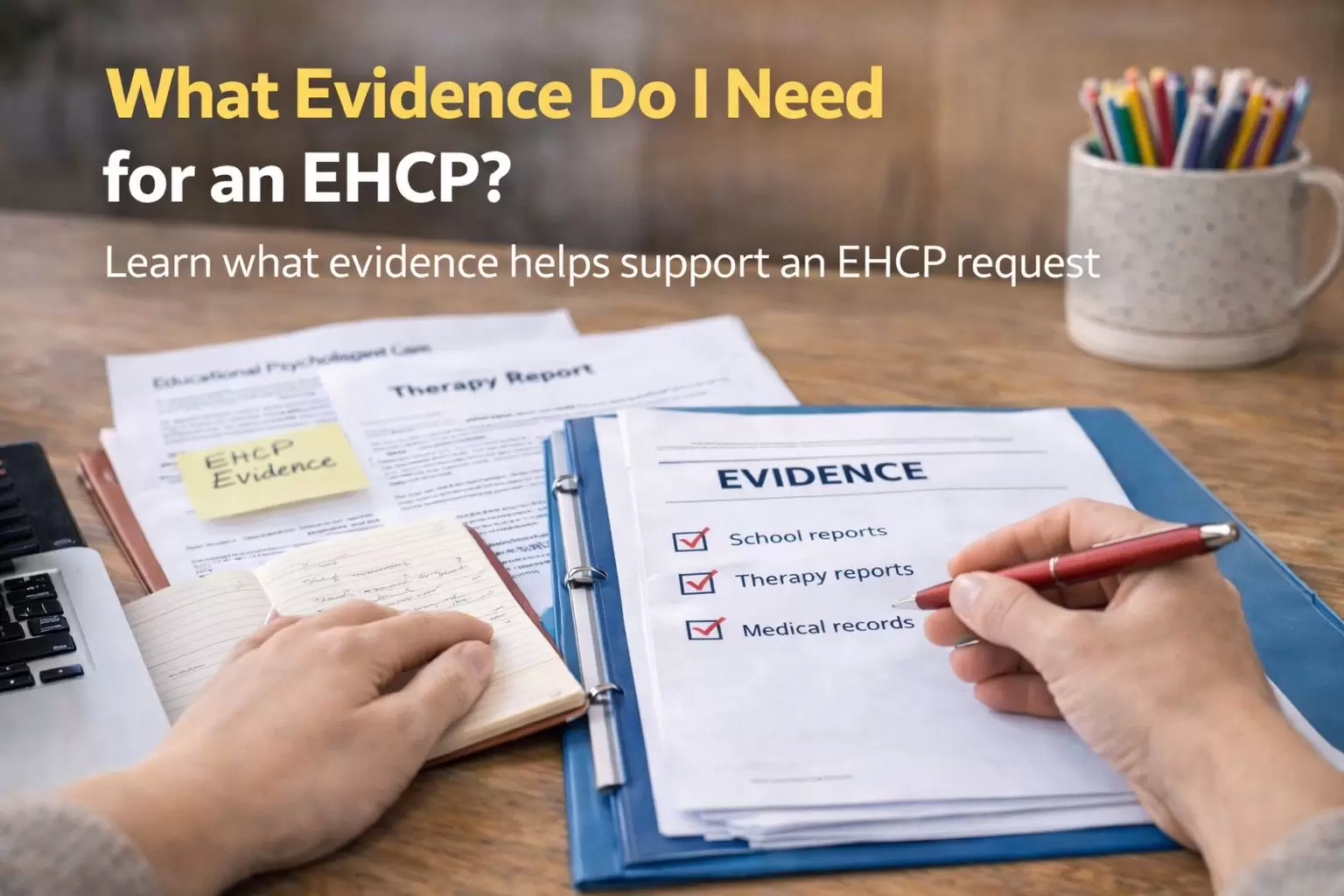
Evidence for an EHCP request should show how a child’s special educational needs affect their learning and access to education. This can include school reports, professional assessments, parent observations, and records showing that SEN support has not been enough to meet the child’s needs. The evidence helps the local authority decide whether an EHC needs assessment should take place.
Key Takeaways
Evidence for an EHCP request should show how a child’s special educational needs affect their learning and access to education.
Useful evidence may include school reports, Individual Education Plans (IEPs), progress data, and records of SEN support.
Professional reports from specialists such as educational psychologists, speech and language therapists, or health professionals can strengthen a request.
Parents’ observations about their child’s needs and difficulties are also important evidence.
Evidence helps the local authority decide whether an EHC needs assessment should take place.
One of the most stressful parts of applying for an EHCP is knowing what evidence is needed — and worrying that you don’t have the “right” kind.
The good news is that EHCP evidence does not have to be perfect, medical, or professional-heavy. This guide explains what evidence matters, what is helpful but optional, and what parents often misunderstand about the process.
What is EHCP evidence?
EHCP evidence is any information that helps show:
Your child’s needs
How those needs affect access to education
Why SEN support may not be enough
Evidence is used by the local authority to decide whether an EHC needs assessment is necessary and, later, whether an EHCP should be issued.
What evidence do I need for an EHCP?
There is no fixed list of required evidence. However, strong applications usually include evidence that shows:
Ongoing or long-term needs
Impact on learning or wellbeing
Support already tried
Why existing support is not sufficient
Evidence should focus on function and impact, not labels.
Parent evidence for an EHCP (this matters more than you think)
Parent evidence is valid and important.
You can include:
Your observations of daily struggles
How school affects your child emotionally
Fatigue, anxiety, meltdowns, or shutdowns
What happens at home after school
Patterns over time
Parent views are a required part of the EHCP process and should not be dismissed.
School evidence for an EHCP
School evidence can include:
SEN support plans
Individual education plans
Progress data
Behaviour logs
Meeting notes
Emails discussing concerns
This evidence helps show:
What support has been tried
Whether progress has been made
Any ongoing difficulties
If school evidence is limited, this does not mean you cannot apply.
Do I need medical evidence for an EHCP?
No.
Medical evidence is not required to apply for or receive an EHCP.
Medical or diagnostic reports can be helpful, but EHCP decisions are based on:
Educational need
Impact on access to learning
Many children receive EHCPs without diagnoses.
Professional reports: helpful but optional
Reports from professionals such as:
Educational psychologists
Speech and language therapists
Occupational therapists
can strengthen an application, but they are not mandatory at the application stage.
If the local authority agrees to assess, they are responsible for seeking advice from relevant professionals.
Evidence showing SEN support is not enough
One of the most important types of evidence shows that SEN support alone is not meeting your child’s needs.
This can include:
Lack of progress over time
Support being reduced due to resources
Adjustments not being implemented consistently
Ongoing distress despite interventions
This links directly to the graduated approach EHCP threshold.
What if I don’t have much evidence yet?
You can still apply.
Many parents worry they need a large bundle of reports before applying. This is not true.
You can:
Apply with what you have
Add evidence later
Use parent observations
Ask school for copies of records
The application itself can trigger the gathering of further evidence.
What evidence strengthens an EHCP application?
Evidence is strongest when it:
Is specific rather than general
Shows patterns over time
Describes impact, not just behaviour
Explains why support is needed
For example, explaining how anxiety affects attendance or concentration is more helpful than simply stating “anxiety”.
Common myths about EHCP evidence
“I need a diagnosis first”
You don’t.
“School has to provide the evidence”
They don’t — parents can submit their own.
“If I don’t have reports, I shouldn’t apply”
Not true.
“More evidence always means success”
Quality and relevance matter more than volume.
What evidence is used later in the process?
If an EHC needs assessment goes ahead, the local authority must seek advice from:
Parents
School
An educational psychologist
Health or care professionals (where relevant)
Your evidence continues to matter throughout the process, including draft EHCP stages and appeals.
You are allowed to ask for help
Understanding EHCP evidence can feel overwhelming, especially when you are already supporting a struggling child.
At School of Diversity, we provide clear, parent-focused guidance to help families understand what matters, what doesn’t, and how to move forward with confidence.
EHCP Evidence: Parent FAQs
What evidence do I need for an EHCP?
There is no fixed list. Evidence should show your child’s needs, how those needs affect access to education, and why SEN support may not be enough.
Does parent evidence count for an EHCP?
Yes. Parent observations and experiences are valid evidence and must be considered as part of the EHCP process.
Do I need medical evidence or a diagnosis?
No. Medical evidence and diagnoses are not required. EHCP decisions are based on educational need and impact.
What school evidence is useful?
School reports, SEN plans, progress data, behaviour logs, meeting notes, and emails discussing concerns can all be helpful.
What if I don’t have much evidence yet?
You can still apply. Many parents apply with what they have and submit additional evidence later.
What evidence shows SEN support isn’t enough?
Evidence showing lack of progress, ongoing distress, inconsistent support, or needs that exceed school resources is particularly important.
Can I add evidence later in the process?
Yes. Evidence can be added during assessment, draft EHCP stages, and appeals if needed.
Explore more EHCP guidance
Gathering clear information about your child’s needs can make the EHCP process much easier to navigate. If you would like a broader overview of the process, you can explore our complete EHCP guide for parents, where all of our EHCP resources are brought together in one place. If you are preparing to request an assessment, our guide on how to apply for an EHCP explains the steps involved in asking the local authority to carry out an EHC needs assessment. You may also find it helpful to use our EHCP request letter template for parents, which shows how to write a simple request for an assessment. Once a plan has been issued, our Section F wording examples can help you understand how the support described in an EHCP should be written clearly and specifically.