
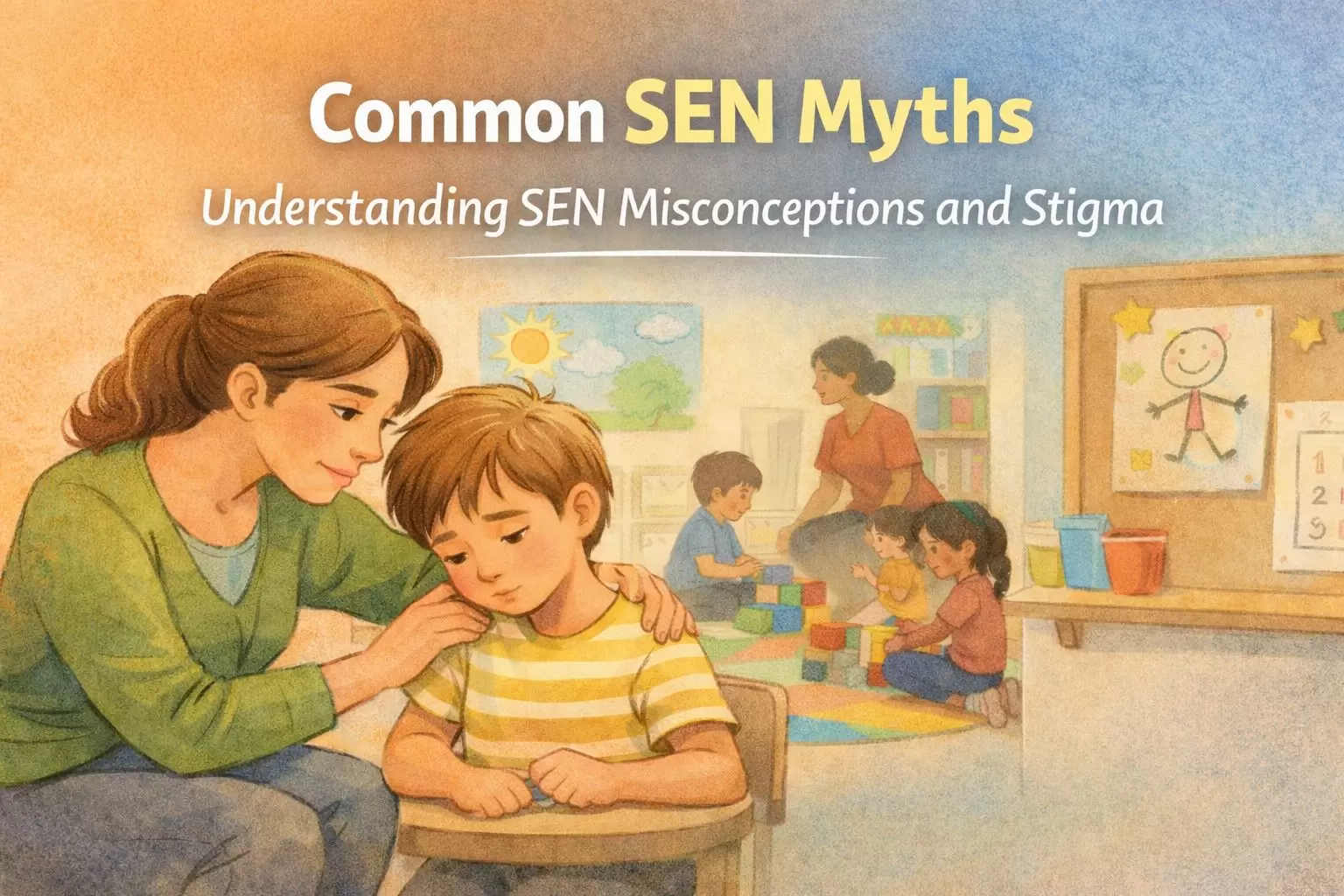
Common SEN Myths That Harm Families
Common Sen Myths – A compassionate guide for parents navigating misinformation, fear, and stigma
When a child has Special Educational Needs (SEN), families often find themselves not only navigating support systems but also battling misinformation. Well-meaning comments, outdated beliefs, and online myths can quietly undermine confidence, delay support, and increase anxiety for parents who are already doing their very best.
This article gently unpacks some of the most common SEN myths, explains why they are harmful, and replaces them with understanding, evidence, and reassurance. By addressing SEN misconceptions and the very real impact of SEN stigma, we hope to empower families with clarity and confidence.
Why SEN Myths Are So Harmful
Myths around SEN don’t just spread confusion—they can affect real decisions about a child’s education, wellbeing, and future. Many parents delay seeking help because they fear judgement, labels, or being told they are “overreacting.”
In reality, early understanding and support help children thrive. Misinformation does the opposite.
Myth 1: “Children Grow Out of SEN”
One of the most common SEN misconceptions is the belief that children will simply “catch up” if given time.
The truth
While all children develop at different rates, SEN is not something a child grows out of. Needs may change over time, and children often develop effective strategies with support—but ignoring difficulties rarely makes them disappear.
Waiting can mean:
Increased frustration for the child
Lower confidence and self-esteem
Missed opportunities for early support
Early help doesn’t rush children—it supports them.
Myth 2: “SEN Is Caused by Bad Parenting”
This belief is both painful and damaging. Parents may internalise blame or feel judged by others.
The truth
SEN is not caused by parenting style. It can relate to neurodevelopmental differences, learning profiles, sensory processing, or physical needs. Loving, attentive parenting does not prevent SEN—and poor parenting does not cause it.
This myth fuels SEN stigma and prevents parents from asking for help when they need it most.
Myth 3: “Only Children With Diagnoses Have SEN”
Many families believe support is only available once a formal diagnosis is in place.
The truth
In the UK, support is needs-led, not diagnosis-led. Many children receive SEN support without any formal diagnosis at all. Schools and early years settings can put strategies in place based on observed needs.
Believing otherwise is a major SEN misconception that can delay valuable support.
Myth 4: “SEN Means Low Ability or Intelligence”
This myth is particularly harmful and deeply rooted in stigma.
The truth
SEN has nothing to do with intelligence. Many children with SEN are bright, creative, and highly capable. They may simply learn differently or need adjustments to access learning in the same way as others.
Some children may struggle in one area while excelling in another. SEN is about difference, not deficit.
Myth 5: “Labels Limit Children”
Some parents fear that identifying SEN will define their child forever.
The truth
A label does not limit a child—lack of understanding does. When used appropriately, SEN identification helps adults:
Understand a child’s needs
Adapt teaching approaches
Reduce blame and frustration
Build self-awareness and self-advocacy
For many children, understanding their needs is a relief, not a restriction.
Myth 6: “If the School Isn’t Worried, There’s No Problem”
Parents often doubt themselves if professionals seem unconcerned.
The truth
Parents know their children best. Schools may not always see the full picture—especially if a child masks difficulties or copes quietly. Many families first notice challenges at home long before they appear in the classroom.
Dismissing parental concerns is one of the ways SEN stigma quietly persists.
Myth 7: “SEN Support Gives Children an Unfair Advantage”
This belief often appears in conversations around adjustments or extra help.
The truth
SEN support does not give an advantage—it levels the playing field. Adjustments exist so children can access learning in a fair and meaningful way, not to make things easier or inflate outcomes.
Equity is not the same as advantage.
How SEN Stigma Affects Families
SEN stigma can be subtle or overt, but its impact is real. It can lead to:
Parents feeling isolated or judged
Children feeling “different” or misunderstood
Delays in seeking support
Reduced confidence in decision-making
Challenging stigma starts with honest conversations, accurate information, and compassion—for children and their families.
Replacing Myths With Confidence
Letting go of SEN misconceptions allows families to:
Advocate effectively for their child
Build positive relationships with schools
Focus on strengths, not just challenges
Make informed decisions without fear
The more we talk openly about SEN, the less power stigma holds.
A Reassuring Message for Parents
If you’ve ever questioned yourself because of something you’ve heard—“Maybe I’m worrying too much”, “What if I’m labelling them unfairly?”—you’re not alone.
Seeking understanding is not harmful. Ignoring concerns out of fear or stigma is.
Your child does not need to fit a mould to be worthy of support.
Frequently Asked Questions (FAQs): Common SEN Myths
What are the most common SEN misconceptions?
Common SEN misconceptions include beliefs that children will “grow out of SEN,” that SEN is caused by poor parenting, or that only children with diagnoses need support. These myths often delay help and increase anxiety for families.
Why does SEN stigma still exist?
SEN stigma often comes from outdated views about disability, intelligence, and difference. Lack of understanding, fear of labels, and misinformation all contribute to stigma that affects both children and parents.
Can SEN affect confident or high-achieving children?
Yes. SEN can affect children of all ability levels. Some children mask their difficulties well or perform strongly academically while struggling emotionally, socially, or with sensory processing.
Is it harmful to talk openly about SEN with children?
No. Age-appropriate, positive conversations about SEN often help children understand themselves better, build self-esteem, and feel supported rather than different or ashamed.
Do SEN labels limit a child’s future?
A label does not limit a child—lack of understanding does. When used appropriately, SEN identification helps adults provide the right support and helps children advocate for themselves.
What should I do if family or friends dismiss my concerns?
This is unfortunately common due to SEN stigma. Trust your instincts, seek professional advice if needed, and remember that you know your child best.
How can parents help reduce SEN stigma?
By sharing accurate information, challenging myths when they arise, and speaking openly and compassionately about difference, parents play a powerful role in reducing stigma for future generations.
Final Thoughts
Challenging common SEN myths is not about proving anyone wrong—it’s about protecting children and families from unnecessary harm. By addressing SEN misconceptions and reducing SEN stigma, we create space for earlier support, healthier conversations, and more confident parenting.
If something doesn’t feel right for your child, you are allowed to ask questions. You are allowed to seek help. And you are allowed to trust yourself.