
ADHD Symptoms: Comprehensive Expert Guide for Adults, Children & Teens
Attention-Deficit/Hyperactivity Disorder (ADHD) is a neurodevelopmental condition characterised by persistent difficulties with attention, emotional regulation, executive functioning, impulsivity, and, in some individuals, motor hyperactivity. Although commonly associated with classroom behaviour in young boys, ADHD is lifelong, heterogeneous, and often misunderstood. Many adults and young people present with predominantly internal symptoms that are easily overlooked.
ADHD affects approximately 2–5% of children and 3–4% of adults, although prevalence is believed to be higher due to under-recognition and under-diagnosis, particularly in women, girls, and high-achieving individuals.
What Counts as an ADHD Symptom?
ADHD symptoms are not occasional behaviours or personality quirks. They must be:
developmentally inappropriate for age
persistent for six months or more
present across multiple settings (e.g., home, school, work, social environments)
associated with functional impairment
have originated in childhood, even if they were not recognised or formally diagnosed at the time
Functional impairment is a critical component. Many individuals experience genuine difficulty despite motivation, intelligence, or effort.
Executive Functioning: The Core Feature of ADHD
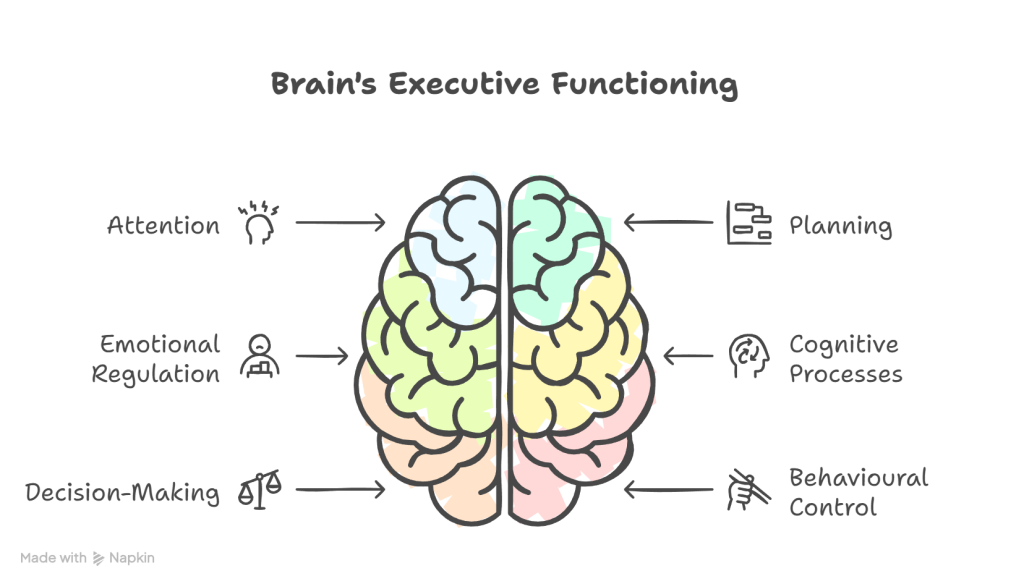
Executive functioning refers to a set of cognitive processes that govern:
planning and prioritisation
working memory
initiation and follow-through
organisation
emotional regulation
time awareness
behavioural inhibition
sustained attention
In ADHD, this system is less efficient, which may lead to:
procrastination followed by sudden “last-minute” bursts of activity
difficulty structuring tasks
inconsistent performance
heightened overwhelm during everyday responsibilities
reliance on urgency, interest or novelty to activate the brain
Core Symptom Domains of ADHD
Symptoms fall broadly into three areas:
Inattention
Hyperactivity
Impulsivity
However, adults and many girls frequently experience internal hyperactivity or cognitive restlessness rather than visible fidgeting.
Inattention Symptoms
Inattention reflects difficulty with:
sustaining mental effort
retaining and retrieving information
sequencing multi-step instructions
resisting distractions
managing routine or repetitive tasks
Examples include:
misplacing objects (keys, phone, glasses, bank cards)
forgetting appointments or deadlines
walking into a room and forgetting why
difficulty listening to conversations without zoning in and out
errors made through inattention to detail
disrupted academic or work performance despite strong ability
avoiding tasks requiring prolonged concentration
losing track of time or underestimating task duration
In children, this may appear as:
incomplete schoolwork
difficulty following instructions
messy desks or backpacks
daydreaming or staring out of windows
appearing “not present” or “in their own world”
In adults, inattention often manifests as:
clutter accumulation
household disorganisation
overlooked bills or administrative tasks
difficulty initiating tasks without external pressure
inconsistent productivity
Hyperactivity Symptoms
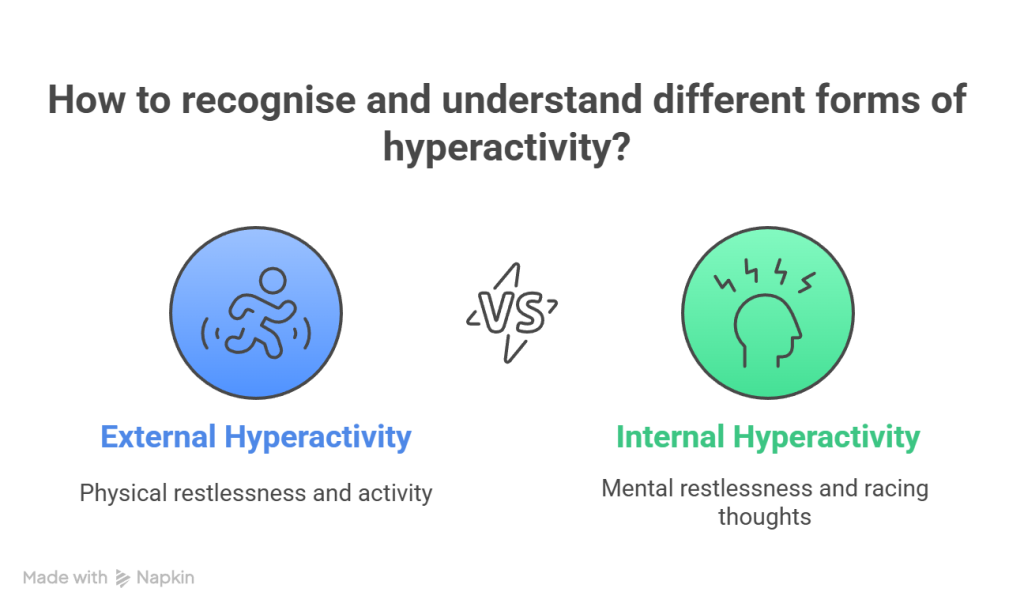
Hyperactivity is highly misunderstood. It may be:
motor-based (movement and fidgeting)
cognitive (rapid thought, internal restlessness)
Common examples:
tapping or fidgeting with objects
difficulty sitting still for meetings, lessons or long meals
pacing while talking or thinking
excessive talking or interrupting
discomfort during inactivity or waiting
In adults and girls, hyperactivity may become internal:
racing thoughts
inability to relax
constant mental “noise”
switching between ideas rapidly
need for stimulation (music, sensory input, background noise)
Impulsivity Symptoms
Impulsivity reflects difficulty delaying responses or actions.
Examples include:
interrupting conversations
blurting out answers before questions are completed
impulsive spending
difficulty waiting for turns
rapid decision-making without considering consequences
emotional outbursts before processing information fully
Socially this may be experienced as:
speaking without intending to offend
reacting quickly during conflict
difficulty tolerating ambiguity or delayed gratification
Emotional and Mood-Related Symptoms
Research consistently shows that emotional regulation is a central feature of ADHD, although it is not listed as a standalone diagnostic requirement in the DSM.
Many individuals experience:
intense frustration or irritability
difficulty calming down once upset
emotional “flooding”
greater sensitivity to perceived rejection (Rejection Sensitivity Dysphoria)
internal shame or self-criticism
uneven tolerance for stress or sensory input
proneness to emotional exhaustion or burnout
In children and teens, emotional regulation difficulties may appear as:
tantrums or emotional outbursts
difficulty with transitions
frustration when overwhelmed or misunderstood
sudden mood changes
In adults, emotional challenges may centre on:
relationship strain
difficulty expressing emotions appropriately
feeling easily overwhelmed by responsibility
tension around household systems and communication
These are not personality flaws. They are part of the executive functioning system that supports emotional modulation.
Working Memory Difficulties
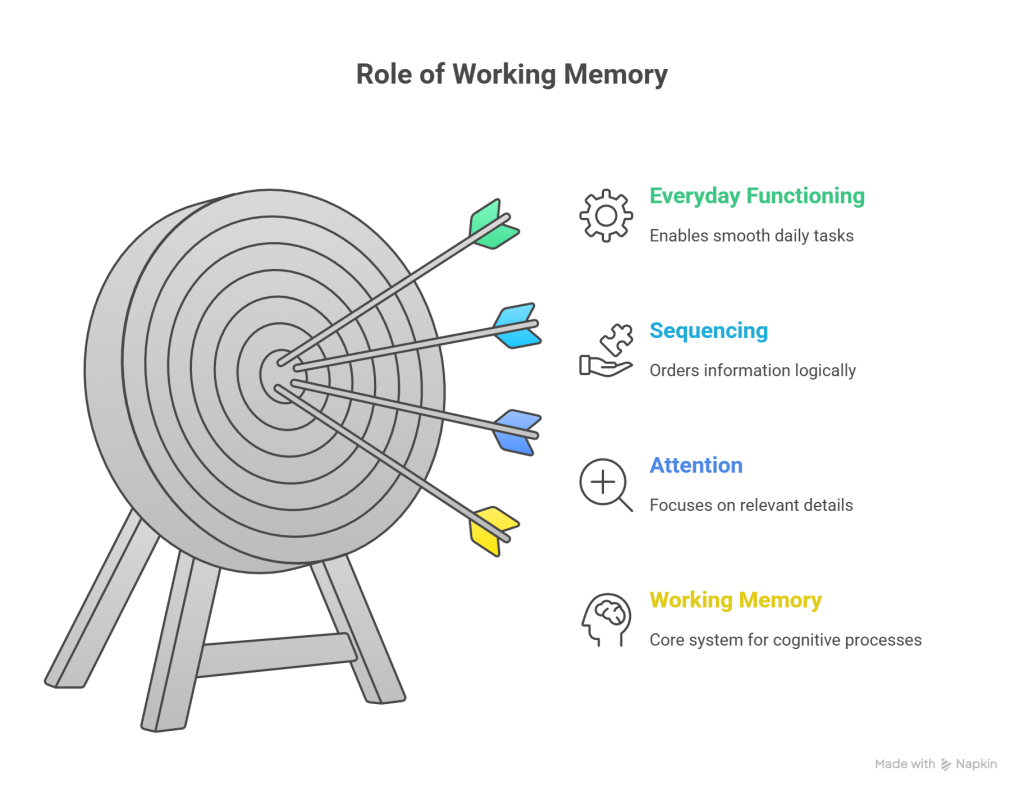
Working memory enables us to retain and manipulate information. When impaired, individuals may:
forget multi-step instructions immediately
recall part of a task but not the sequence
struggle to remember verbal information
repeatedly “lose” thoughts mid-sentence
need visual prompts, reminders or alarms to retain information
This is especially noticeable in:
school settings
household responsibilities
workplace project management
daily self-care tasks
Hyperfocus in ADHD
Hyperfocus is not intentional concentration. It is a reward-driven neural state in which the brain locks onto a highly stimulating or meaningful activity.
Examples include:
creative work
video games
hobby research
entrepreneurial ideas
coding or design
complex systems and troubleshooting
Hyperfocus can be beneficial for:
innovation
creativity
skill development
rapid learning
However, it may create challenges:
neglecting meals, sleep or time-sensitive responsibilities
losing track of appointments
difficulty transitioning away from an absorbing activity
feeling irritated when interrupted
Hyperfocus is both a strength and a risk, depending on context, structure and support.
How ADHD Symptoms Change with Age
Children
Often show outward hyperactivity or impulsivity:
climbing, running, fidgeting
difficulty waiting or sharing
emotional outbursts
inconsistent academic performance
Teenagers
Symptoms may shift to:
internal restlessness
sleeping pattern disruption
inconsistent homework or study habits
increasing difficulty with organisation and self-management
social navigation challenges
heightened emotional volatility
Adults
Adult difficulties are frequently internal and functional:
clutter, domestic overwhelm
inconsistent career performance despite capability
impulsive spending or decision-making
emotional burnout and stress
miscommunication in relationships
difficulty juggling work, family and household systems
Adults often report:
“I can do big things easily, but small everyday tasks feel overwhelming.”
This reflects interest-driven neuroactivation rather than laziness or a lack of willpower.
ADHD Symptoms in Women and Girls
Women and girls are chronically under-recognised because symptoms are:
quieter
internalised
masked to meet social expectations
misinterpreted as anxiety, depression or perfectionism
They often present as:
academically capable but overwhelmed
people-pleasing or perfectionistic
internal emotional stress
difficulty switching off mentally
inconsistent performance despite motivation
chronic tiredness from masking or over-compensating
Hormonal shifts (puberty, menstrual cycles, pregnancy, perimenopause) may amplify emotional regulation and executive function challenges.
ADHD Symptoms vs Typical Behaviour
Many behaviours exist on a continuum.
ADHD symptoms are distinct when they are:
persistent, not situational
present before age 12, even if unnoticed
affect daily functioning, not occasional performance
occur across environments
resistant to conventional effort or discipline
ADHD is not caused by:
laziness
poor intelligence
a lack of effort
inadequate parenting
weak motivation
It reflects a difference in neural activation and regulation rather than character or competence.
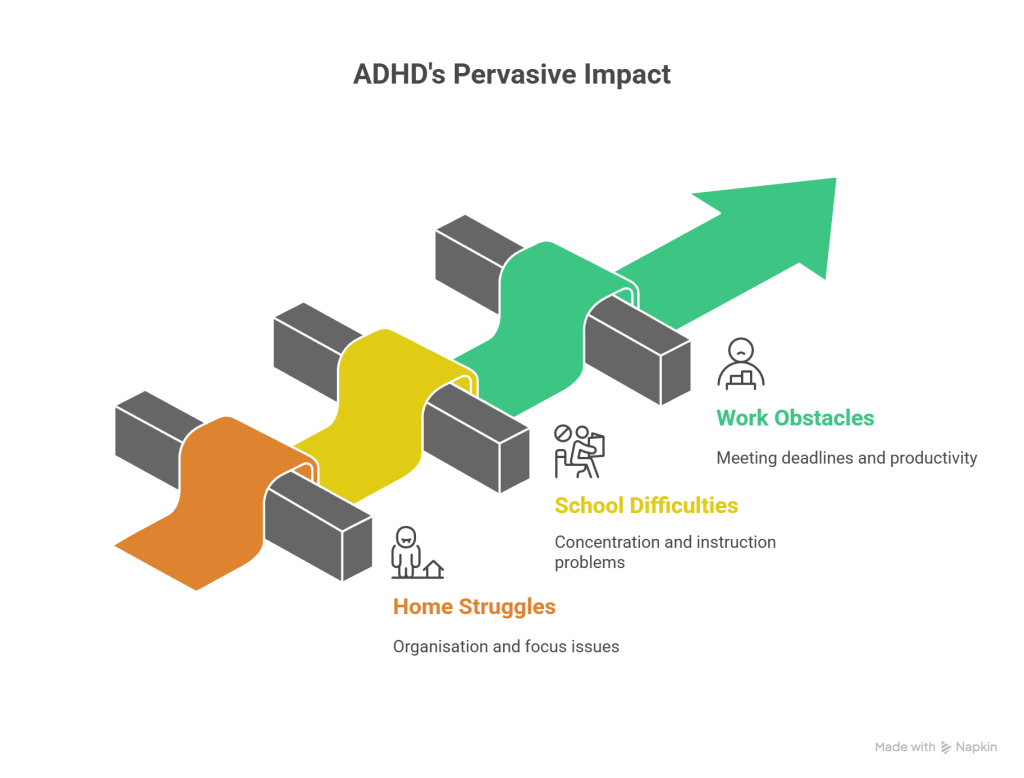
Functional Impacts of ADHD
ADHD may influence:
Work or academic performance
unfinished tasks
missed deadlines
inconsistent output
difficulty prioritising or switching tasks
Home life
clutter and disorganisation
difficulty maintaining routines
forgotten administrative or domestic responsibilities
Relationships
misunderstood emotional responses
difficulty listening with sustained attention
impulsive communication during conflict
internal shame when misunderstood
Mental health
chronic stress
emotional exhaustion
low self-esteem from years of misreading symptoms as personal failure
Functional impact is a key diagnostic concern — symptoms must interfere with daily life.
Strengths Associated with ADHD
Although ADHD involves real challenges, many individuals also show meaningful strengths, including:
creative and divergent thinking
high energy in areas of interest
rapid problem-solving under pressure
humour and spontaneity
strong empathy and emotional insight
deep curiosity and specialised knowledge
innovation and entrepreneurialism
resilience from lifelong adaptation
With appropriate self-awareness and support, ADHD can be associated with distinct cognitive advantages.
When to Seek Assessment
Consider professional evaluation if:
symptoms interfere with daily functioning
academic or work demands feel unmanageable despite effort
routines break down easily
emotional or cognitive exhaustion is persistent
tasks requiring organisation feel extremely stressful
impulsivity or forgetfulness affects wellbeing
relationships are strained due to misunderstandings
symptoms have existed since childhood, even if unnoticed or masked
Evaluation in the UK may include:
clinical interview
developmental and educational history
validated symptom questionnaires
collateral information from school or family where appropriate
exclusion of alternative explanations
Important Disclaimer
This article is informational and educational. It should not be used to diagnose or rule out ADHD or to replace individual medical assessment.