
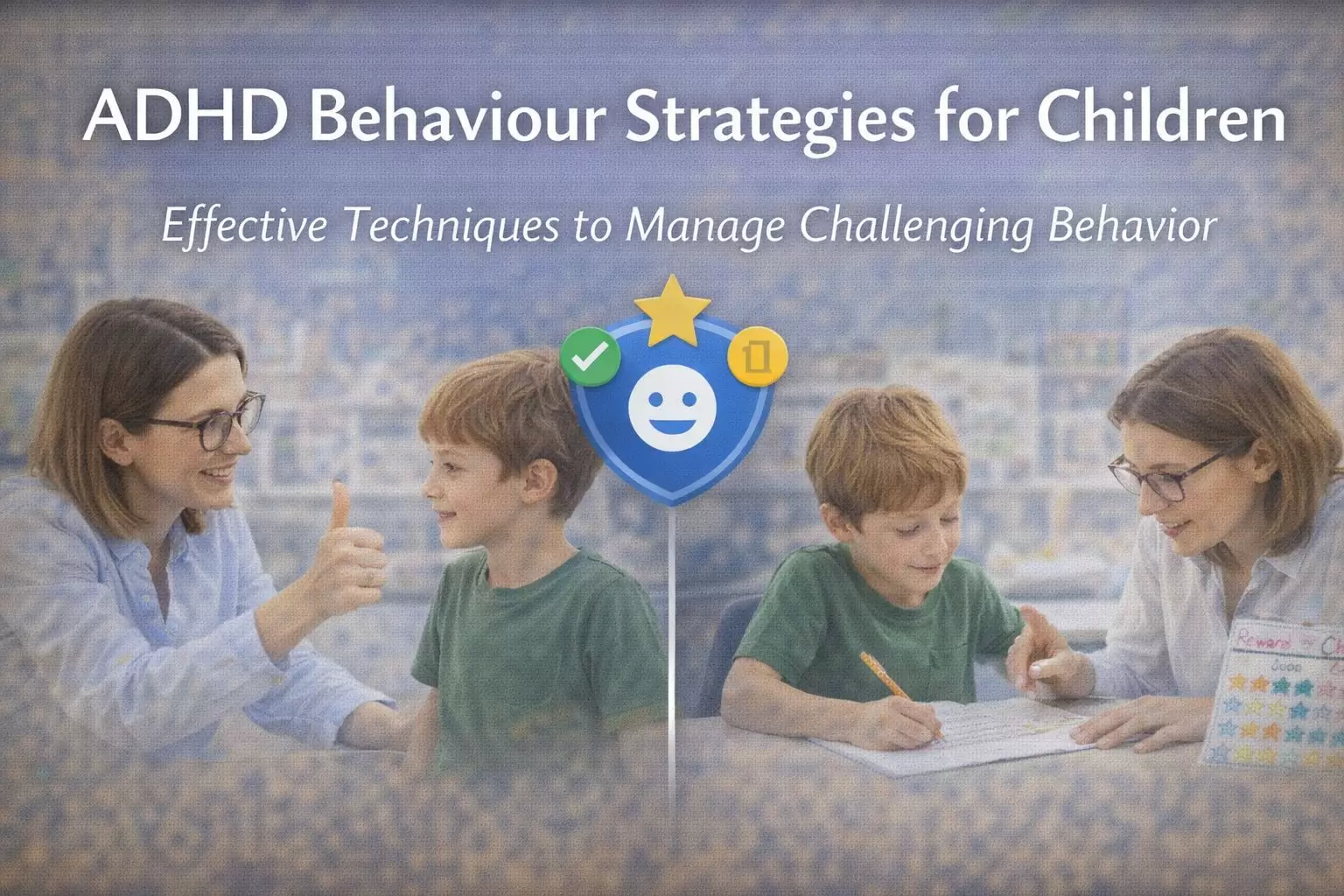
ADHD Behaviour Strategies for Children
Last reviewed: March 2026
Written by: School of Diversity SEND Support Team
Topic: ADHD and Behaviour Support
This guide explains practical behaviour strategies for children with ADHD, including approaches to support focus, emotional regulation and positive behaviour.
Behaviour strategies for children with ADHD focus on structure, consistency and positive reinforcement. These approaches help children manage attention, impulsivity and emotional responses.
Key Takeaways
- Consistent routines help children feel secure and focused.
- Positive reinforcement encourages desired behaviour.
- Clear expectations help children understand boundaries.
- Strategies should be tailored to each child.
- Supporting emotional regulation is important.
Children with ADHD may experience challenges with attention, impulsivity and emotional regulation. These challenges can affect behaviour at home and in school.
Using practical and consistent behaviour strategies can help children develop skills, build confidence and feel more in control.
Why Behaviour Strategies Matter
Direct answer:
Behaviour strategies help children understand expectations and develop skills to manage behaviour.
These strategies:
- provide structure and predictability
- support emotional regulation
- help children build positive habits
- reduce frustration and conflict
Consistent support helps children feel more confident.
Using Clear Routines
Direct answer:
Routines help children understand what to expect and reduce uncertainty.
This may include:
- consistent daily schedules
- clear transitions between activities
- structured morning and bedtime routines
- predictable expectations
Routines help improve focus and reduce anxiety.
Positive Reinforcement
Positive reinforcement encourages children to repeat helpful behaviours.
This may include:
- praise for effort and behaviour
- reward systems
- recognising small achievements
- focusing on strengths
Positive reinforcement helps build motivation.
Setting Clear Expectations
Direct answer:
Clear expectations help children understand what is expected of them.
This may involve:
- simple and direct instructions
- breaking tasks into steps
- using visual reminders
- repeating instructions when needed
Clarity reduces confusion and frustration.
Managing Impulsivity
Direct answer:
Children with ADHD may need support to pause and think before acting.
Strategies may include:
- teaching pause techniques
- using visual or verbal reminders
- modelling appropriate behaviour
- providing structured choices
These approaches help children develop self-control.
Supporting Emotional Regulation
Direct answer:
Children with ADHD may need support managing emotions.
This may include:
- teaching calming strategies
- providing quiet spaces
- recognising emotional triggers
- supporting self-awareness
Emotional support helps children manage challenges.
Using Reward Systems
Reward systems can help reinforce positive behaviour.
This may include:
- sticker charts
- points systems
- short-term goals
- consistent rewards
Rewards should be clear and achievable
Reducing Overwhelm
Direct answer:
Reducing overwhelm helps children stay regulated and engaged.
This may include:
- breaking tasks into smaller steps
- providing breaks
- reducing distractions
- creating calm environments
These strategies help children stay focused.
Consistency Between Home and School
Consistency helps children understand expectations across environments.
Parents and schools may:
- use similar strategies
- share approaches
- communicate regularly
When Behaviour Strategies May Not Be Enough
Some children may need additional support.
This may include:
- SEN support
- targeted interventions
- specialist advice
- consideration of an EHCP
FAQ
Do behaviour strategies work for all children with ADHD?
Strategies should be adapted to each child’s needs.
How long does it take to see progress?
Progress can take time and consistency.
Should behaviour strategies be used at school as well?
Yes. Consistency across environments is important.
What if behaviour does not improve?
Additional support may be needed.
Explore More ADHD Guidance
You may find these guides helpful:
- Signs Your Child May Have ADHD
- ADHD Assessment for Children
- ADHD Diagnosis and School Support
- Supporting Children with ADHD in School
- EHCP for ADHD
You can also explore our ADHD Support for Parents hub, which explains signs, assessments and school support in more detail.