
Free EHCP Request Letter Template
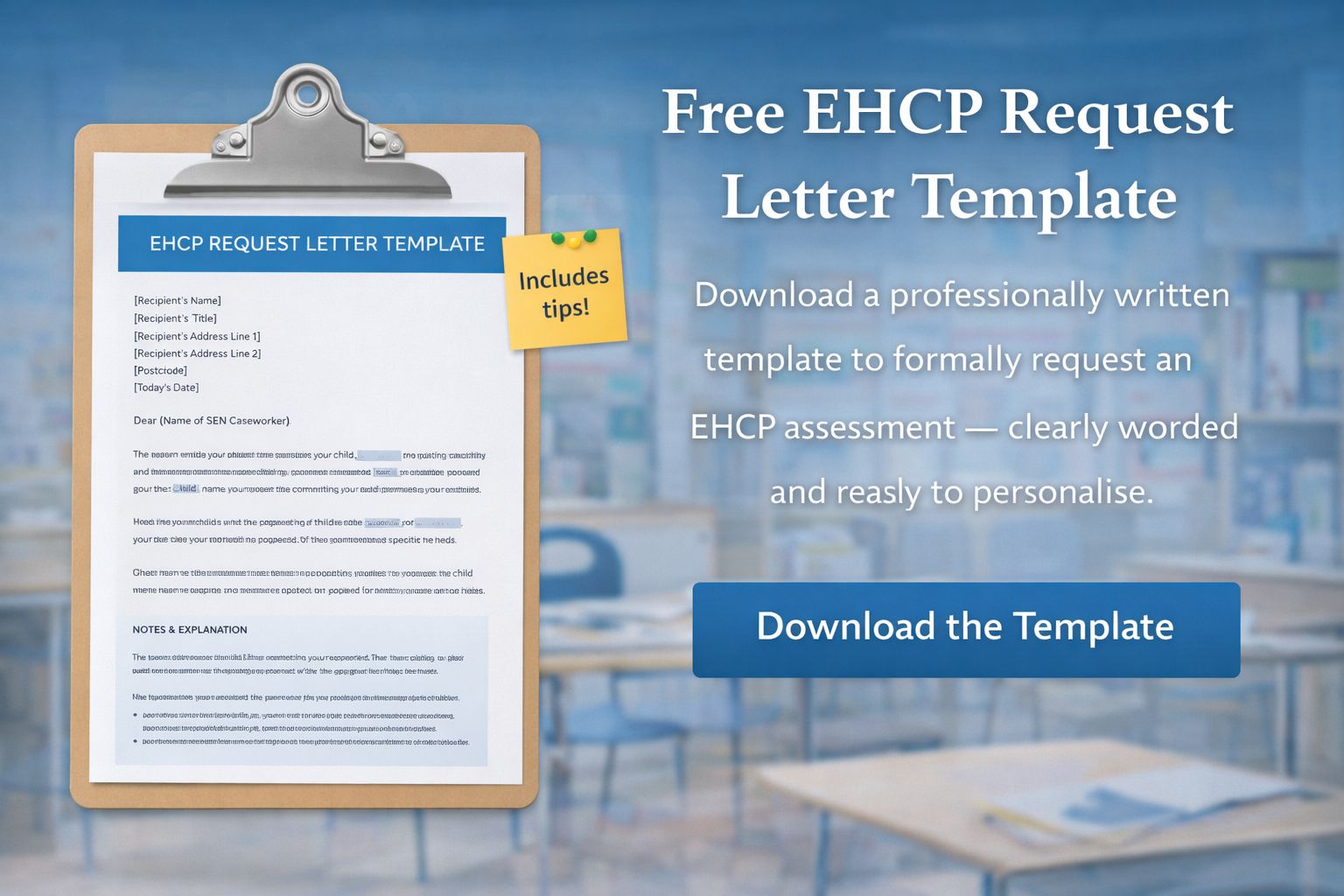
Download a professionally written template to formally request an EHCP assessment — clearly worded and ready to personalise. Includes: formal letter template notes explaining each section guidance on what to attach
An Education, Health and Care Plan (EHCP) is designed to ensure that children with significant needs receive the right support in school — and, where necessary, beyond school.
A good EHCP should:
describe your child’s needs clearly
specify the right provision, in detail
identify outcomes that actually matter
hold the Local Authority accountable
However, many parents discover the process is confusing, bureaucratic, and emotionally draining.
That is where advocacy helps.
Most parents contact an advocate at one of these stages:
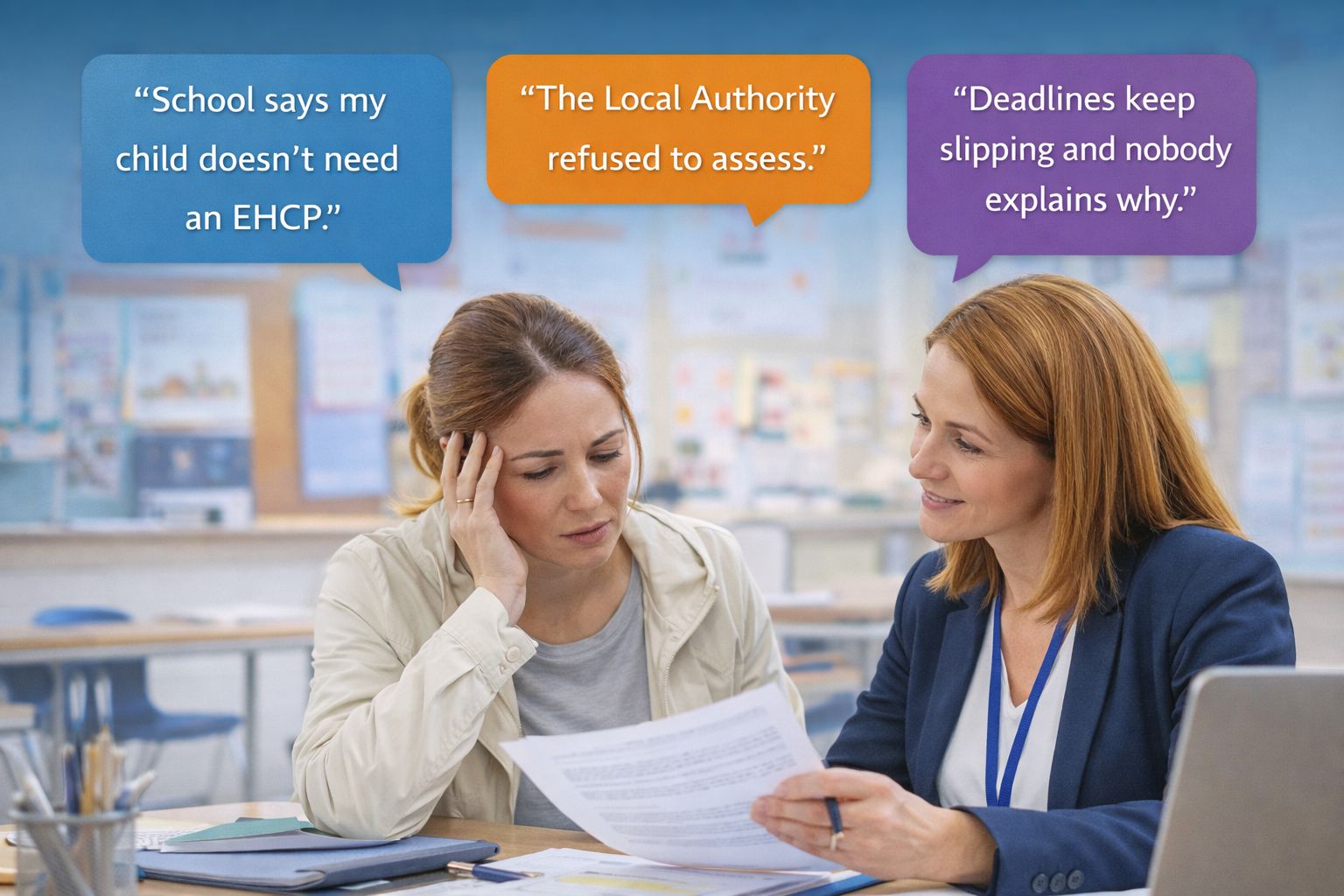
You may have been told to “wait and see” — often repeatedly.
A refusal does not mean there is no need. It means evidence must be presented differently.
Statements such as “access to support” or “as required” are weak and difficult to enforce.
Timeframes exist — but parents are rarely guided through them.
Advocacy helps you move through the process with clarity rather than uncertainty.
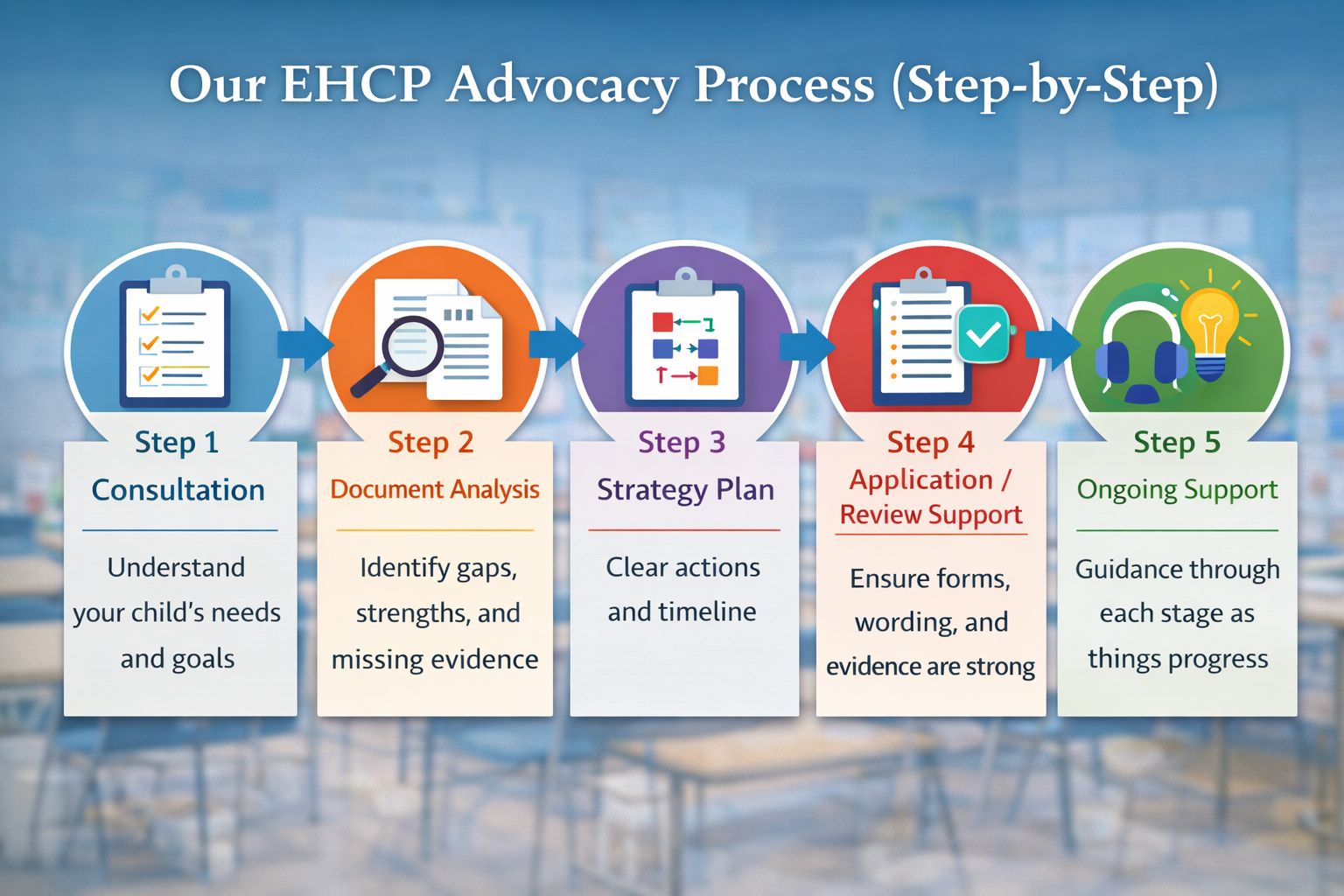
We discuss your child’s situation and confirm whether an EHCP request is appropriate.
We help you gather and structure documents such as:
school records
medical reports
behaviour logs
assessments
academic data
Strong evidence changes outcomes.
We help ensure:
requests are clear
wording is strong
needs are presented correctly
We check:
Section B — Needs
Section F — Provision
Section E — Outcomes
and highlight what must be improved.
When required, we help you understand your options and pathway forward.
We do not provide legal representation — but we ensure you are informed, confident, and strategic.
Understand your child’s needs and goals.
Identify gaps, strengths, and missing evidence.
Clear actions and timeline.
Ensure forms, wording, and evidence are strong.
Guidance through each stage as things progress.
A strong EHCP is:
specific
measurable
enforceable
Weak EHCP examples include:
“access to additional support where possible”
“support may be provided if required”
Strong EHCP examples include:
“one-to-one literacy intervention, four times weekly, 30 minutes per session, delivered by a trained specialist teacher”
Specific wording protects your child’s entitlement.
Parents often unknowingly:
rely entirely on verbal discussions
assume school has already requested assessment
accept vague wording in drafts
miss important deadlines
avoid challenging decisions because they fear conflict
Advocacy exists to reduce those risks.
Download a professionally written template to formally request an EHCP assessment — clearly worded and ready to personalise. Includes: formal letter template notes explaining each section guidance on what to attach
We will work calmly through your situation and identify:
what is happening
what should be happening
what needs to happen next
Support is structured, practical, and compassionate.