
EHCP for ADHD: The Complete Guide to Securing Education Support
An Education, Health and Care Plan (EHCP) can transform the educational experience of a child or young person with ADHD. It provides legally enforceable support designed to meet their specific needs across education, health and social care. This comprehensive guide explains the EHCP process, how ADHD fits into eligibility, what strong ADHD-focused provisions look like, and how to navigate common obstacles.
What Is an EHCP?
An Education, Health and Care Plan is a statutory document in England for children and young people whose special educational needs (SEN) require more support than a school or college can normally provide. EHCPs outline:
Identified needs
Required provision
Desired outcomes
Placement (school or setting)
Health and social care involvement
EHCPs can remain in place from birth up to age 25 if the young person stays in education or training.
How ADHD Relates to EHCP Eligibility
ADHD impacts attention, executive functioning, emotional regulation, organisation, working memory and behaviour. For some children, this significantly affects learning, progress and social development.
A diagnosis alone does not secure an EHCP, but the law requires an assessment where:
The child may have SEN, and
They may need provision beyond what school normally offers.
In other words, if ADHD substantially affects learning and existing support is insufficient, the child may qualify for an EHCP.
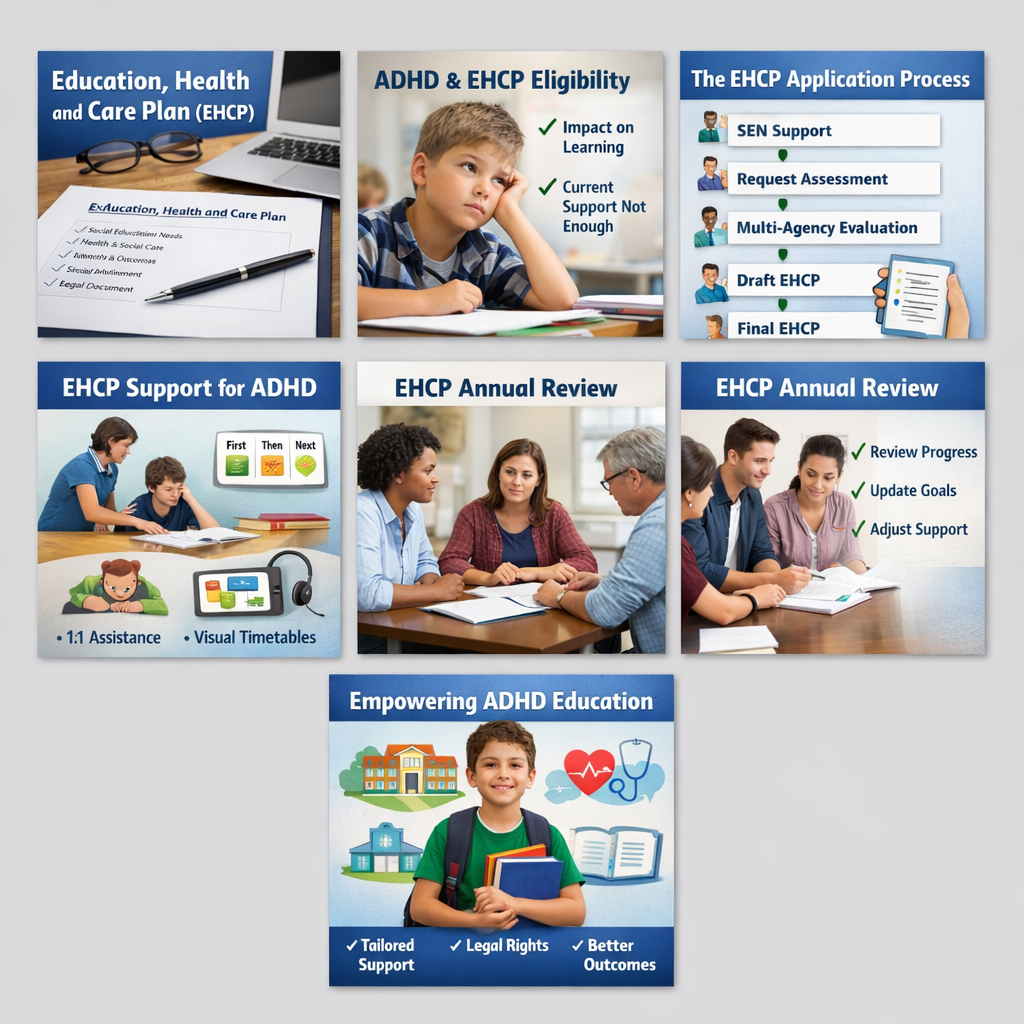
The EHCP Application Process
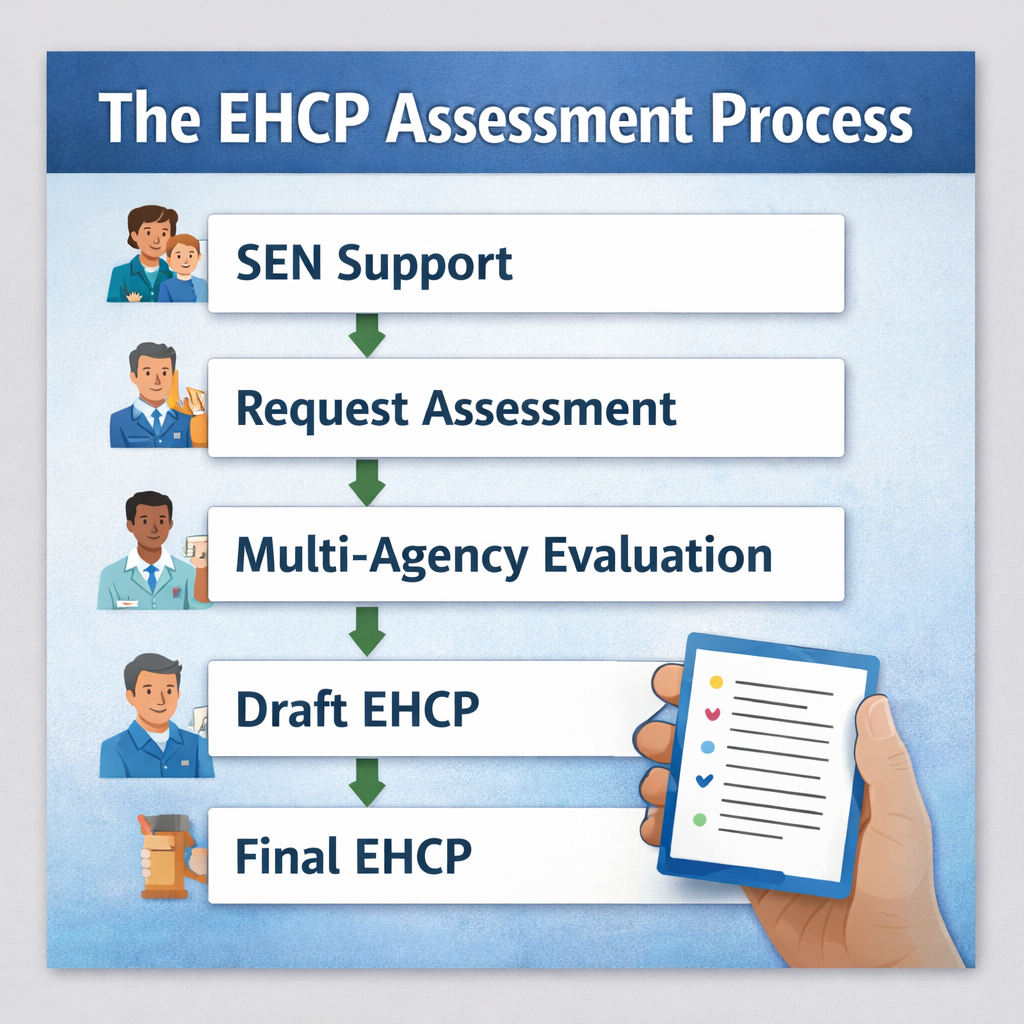
1. SEN Support Comes First
Most children begin with school-based SEN Support involving interventions such as small-group learning, visual routines, behaviour strategies or differentiated tasks.
If progress remains limited, an EHC needs assessment may be appropriate.
2. Requesting an EHC Needs Assessment
A request can be made by:
Parents or carers
Young person aged 16+
School or college
The local authority has six weeks to decide whether to assess.
What to include in your request:
ADHD diagnosis or clinical evidence
School reports showing struggles and interventions tried
Behaviour logs, observations and work samples
Evidence that SEN Support is insufficient
3. The Assessment
If approved, assessments typically involve the SENCO, teachers, Educational Psychologist, clinicians and parents.
4. The Draft EHCP
When assessments are complete, the local authority issues a draft plan. You have 15 days to comment, request changes or name a preferred school.
5. Issuing the Final EHCP
By week 20 of the process, the local authority must issue the final plan unless an exception applies.
What a Strong EHCP for ADHD Should Include
A high-quality plan is specific, detailed and measurable. Vague statements like “access to support” should be avoided.
Documented Needs Might Include:
Inattention impacting task completion
Hyperactivity affecting classroom participation
Working memory difficulties limiting progress
Impulse control challenges causing disruption
Anxiety resulting from academic pressure
Emotional dysregulation during transitions
ADHD-Focused Provisions (Examples)
1:1 or key-worker support during core subjects
Daily check-ins for emotional regulation
Clear, consistent visual timetables
Chunking instructions and tasks
Movement and sensory breaks every 20–30 minutes
Assistive technology for organisation and writing
Small-group interventions to develop executive functioning
Social skills and emotional coaching sessions
Extra time in exams and assessments
ADHD-Specific Strategies That Schools Can Include in an EHCP
Seating away from distractions
Positive behaviour reinforcement plans
Reduced-stimulus learning environments
Structured lesson formats (e.g., first–next–then boards)
Use of timers to build task focus
Calm-down or sensory regulation spaces
Support with homework planning and organisation
These strategies must be recorded in Section F as provision—not simply suggestions.

Annual Reviews: Keeping EHCPs Relevant
EHCPs must be reviewed every 12 months (or every six months for early years).
At each review the school or college should evaluate:
Whether outcomes were met
Whether ADHD needs have changed
Whether new support is required
Whether a different placement might be appropriate
Parents should submit updated evidence ahead of the review meeting.
Common EHCP Challenges for Children With ADHD
1. Delays in the Assessment Process
Due to national demand, delays are common. Parents can escalate via SENDIASS or formal complaints procedures.
2. Misunderstanding ADHD as Behaviour, Not SEN
Some schools misinterpret ADHD traits as discipline issues. EHCP evidence must connect ADHD characteristics to learning impact.
3. Insufficient Detail in the EHCP
Plans must specify provision: frequency, duration, delivery method and responsible professional.
4. Inequality in Access
Some families experience barriers due to cultural, socioeconomic or language differences. Advocacy support can help.
Appealing EHCP Decisions
You can appeal if:
The authority refuses to assess
The authority refuses to issue a plan
You disagree with Sections B, F or I
The plan is ceased
The SEND Tribunal is independent and often overturns inadequate decisions when strong evidence is provided.
Transitions: Primary, Secondary and Post-16
Children with ADHD may struggle with transitions due to routine disruption, new expectations and increased independence demands.
EHCPs should include:
Transition meetings
Visits to new settings
Early sharing of support strategies
Post-16 outcomes planning (employment, independent living, community participation)

EHCP Templates, Checklists and Evidence Packs
Parents benefit from structured templates, including:
Parent contribution statement
Evidence log (interventions, behaviours, progress)
Questions for annual reviews
Provision checklists
Outcome-writing frameworks
These tools strengthen EHCP clarity and ensure nothing is missed.
Useful Resources for Families and Professionals
SENDIASS – Local advice and support services
IPSEA – Free legal advice on SEN
ADHD charities with school support guidance
Local Offer pages for area-specific services
SEND Code of Practice for statutory expectations
Conclusion
An EHCP for a child or young person with ADHD ensures that support is clear, measurable and legally enforceable. By understanding the process, gathering robust evidence and advocating for detailed provision, families can secure the assistance their child needs to succeed academically, socially and emotionally.