Navigating the complexities of autism and ADHD can feel like steering a ship through a stormy sea. Each condition presents its own unique challenges, but for many individuals, these two diagnoses can coexist, creating a layered and often misunderstood experience. Understanding the interplay between autism and ADHD is crucial not only for those living with these conditions but also for families, educators, and healthcare professionals striving to provide effective support.
This article delves into the nuances and commonalities of dual diagnosis, revealing how symptoms can overlap and impact daily life. By shedding light on effective strategies and interventions, we aim to empower individuals and their networks, promoting a more informed approach to these conditions. Join us as we explore the fascinating world of autism and ADHD together, equipping yourself with knowledge that can make a difference in navigating this dual diagnosis.
Autism Spectrum Disorder (ASD) is a complex neurodevelopmental condition characterised by challenges with social interaction, communication, and restricted or repetitive patterns of behaviour, interests, or activities. The term “spectrum” highlights the wide range of symptoms and levels of severity, making each person’s experience of autism unique. Some people may have exceptional abilities in certain areas, while others may struggle significantly with daily tasks.
Recognising the early signs of autism is crucial for timely intervention. Symptoms typically become apparent in early childhood, often before the age of three. Common indicators include difficulty maintaining eye contact, delayed speech development, and a preference for solitary play. Children with autism may also show repetitive movements, such as hand-flapping or rocking, and may develop intense interests in specific topics.
Diagnosis involves a comprehensive evaluation by a team of professionals, including paediatricians, psychologists, and speech and language therapists. Standardised tools and behavioural assessments are used to observe development and behaviour. Early diagnosis and intervention can significantly improve outcomes, helping individuals develop essential skills and navigate social environments more effectively.
Attention-Deficit/Hyperactivity Disorder (ADHD) is another neurodevelopmental condition that primarily affects attention, impulsivity, and hyperactivity. ADHD is commonly identified in childhood, but its symptoms can persist into adolescence and adulthood, impacting academic performance, work, and relationships.
ADHD is categorised into three main types: predominantly inattentive presentation, predominantly hyperactive-impulsive presentation, and combined presentation. Individuals with the inattentive type often struggle to sustain attention, follow through on tasks, and organise activities. Those with the hyperactive-impulsive type may fidget excessively, find it difficult to remain seated, and make impulsive decisions. The combined type includes symptoms of both inattentiveness and hyperactivity-impulsivity.
The exact cause of ADHD is not fully understood, but it is thought to involve a combination of genetic, environmental, and neurological factors. Diagnosis usually requires a thorough evaluation of behaviour and developmental history, alongside input from parents, teachers, and other caregivers. Treatment often combines medication, behavioural therapy, and lifestyle adjustments to manage symptoms and improve daily functioning.
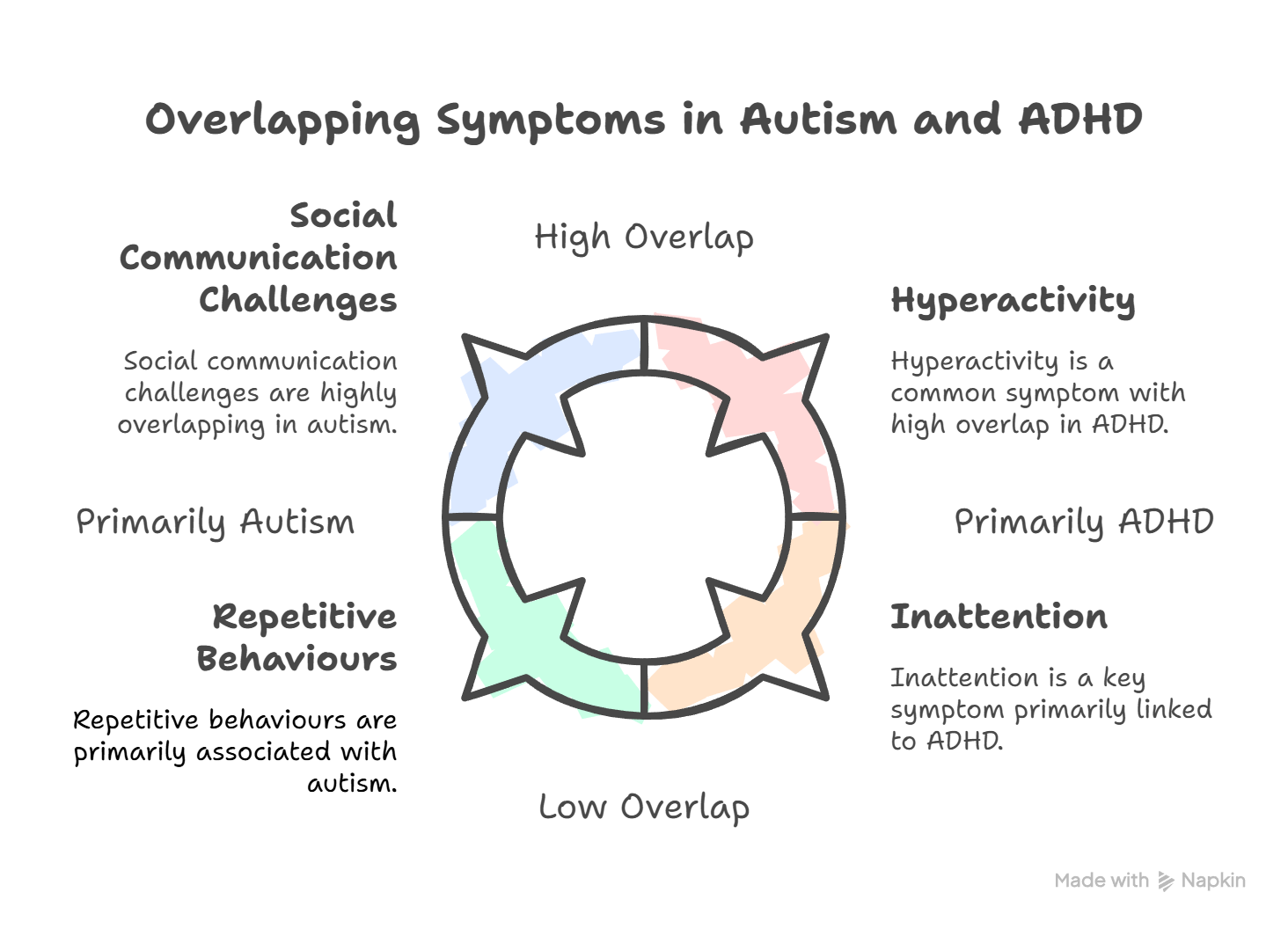
The coexistence of autism and ADHD presents unique challenges, as symptoms can overlap and interact in complex ways. Understanding this overlap is essential for accurate diagnosis and effective support. Both conditions can involve difficulties with attention, impulsivity, and social interactions, making it hard to distinguish one from the other.
For example, children with autism may display hyperactive behaviours similar to ADHD, such as constant movement or difficulty sitting still. Both groups may also struggle to maintain focus on tasks that don’t interest them, leading to difficulties in school and social settings. These overlapping symptoms can complicate diagnosis, often requiring careful observation and multiple assessments.
Another shared feature is sensory processing issues. People with either condition may be hypersensitive to certain sounds, textures, or lights, causing discomfort and distraction. Recognising these shared sensory challenges can help caregivers and educators create environments that better support individuals with dual diagnoses.
Accurate diagnosis is essential for individuals with both autism and ADHD, as it guides the development of tailored interventions. Misdiagnosis or delayed diagnosis can result in inappropriate treatments and missed opportunities for early support, potentially worsening symptoms and reducing quality of life.
Differentiating between autism and ADHD requires evaluation by experienced professionals who can recognise the nuances of each condition. This process often involves comprehensive behavioural assessments, developmental history reviews, and input from multiple sources, including parents, teachers, and healthcare providers. A correct diagnosis enables more effective treatment plans that meet the individual’s specific needs.
Understanding dual diagnosis also helps reduce stigma and misconceptions. Educating families, educators, and the wider community about the complexities of autism and ADHD can foster greater inclusivity. Recognising the unique challenges and strengths of people with dual diagnoses allows society to better accommodate their needs and promote well-being.
Managing autism and ADHD together presents several challenges, as the symptoms can interact and complicate treatment. A key difficulty lies in balancing interventions for each condition, since strategies effective for one may not work for the other. For instance, stimulant medications commonly prescribed for ADHD may not suit people with autism due to potential side effects or differences in how medication is processed.
Behavioural therapies, such as Applied Behaviour Analysis (ABA) and Cognitive Behavioural Therapy (CBT), can help with specific symptoms of both conditions, but must be tailored to the individual’s needs. For example, ABA can support social skill development and reduce repetitive behaviours in autism, while CBT can help address impulsivity and attention difficulties linked to ADHD.
Coordinating care is another challenge. Effective management often requires a multidisciplinary approach involving paediatricians, psychologists, occupational therapists, speech and language therapists, and educators. Consistent communication and collaboration across professionals are vital to ensure cohesive care.
Supporting people with both autism and ADHD requires a multifaceted approach that addresses their unique needs while building on their strengths.
Structured routines and clear expectations can help with time and task management. Visual schedules, timers, and checklists provide structure and support for attention and organisation.
Sensory-friendly environments are important, as sensory processing issues are common in both conditions. Adjustments might include reducing background noise, offering sensory breaks, or providing noise-cancelling headphones or fidget toys.
Social skills training is often beneficial. Structured groups, peer mentoring, role-play, social stories, and visual aids can help individuals learn and practise key social interactions in supportive settings.
Families and caregivers play a central role in supporting people with dual diagnoses. Their patience, understanding, and advocacy are essential for ensuring that individuals receive the right care. Educating family members about both conditions can enhance their ability to provide effective support and create nurturing environments.
Collaboration with healthcare professionals, educators, and therapists is vital. Families can advocate by staying informed about available resources, attending Education, Health and Care Plan (EHCP) meetings, and ensuring interventions are tailored appropriately.
Equally important is self-care for caregivers, as the demands can be emotionally and physically draining. Accessing respite care, support groups, and counselling can help families manage stress and maintain resilience. Building connections with others in similar situations can also provide encouragement and valuable insight.
A wide range of resources and networks exist to support individuals with dual diagnoses and their families. UK and international organisations, such as the National Autistic Society, ADHD Foundation, and Mind, offer information, advocacy, and services.
Online communities and forums allow families to connect, share experiences, and seek advice. Social media groups, discussion boards, and blogs can provide community and practical strategies, particularly for those without local support.
Educational resources, including books, articles, and webinars, can expand knowledge and provide guidance. Many organisations also run training and workshops for parents, teachers, and professionals to strengthen their ability to support people with autism and ADHD.
Navigating a dual diagnosis of autism and ADHD requires a comprehensive, informed approach that respects the unique challenges and strengths of each person. By deepening our understanding of how these conditions interact, families, educators, and healthcare professionals can deliver more effective interventions and support. Early diagnosis, tailored strategies, and collaboration are key to improving outcomes and enhancing quality of life.
Education and advocacy are also crucial for reducing stigma and promoting inclusivity. Raising awareness about the specific needs of individuals with dual diagnoses helps to foster a more supportive society.
Ultimately, the journey of living with autism and ADHD together is one of continuous learning, adaptation, and growth. With the right understanding and support, individuals with dual diagnoses can reach their full potential and lead fulfilling lives. By working collectively, we can create a more inclusive and compassionate world for everyone affected.