
EHCP Application Support for Parents
Clear, practical help to review your child's needs and evidence and prepare a structured request for an EHC needs assessment.
Whether you have already written your request or are unsure where to begin, choose the level of support that fits your family.
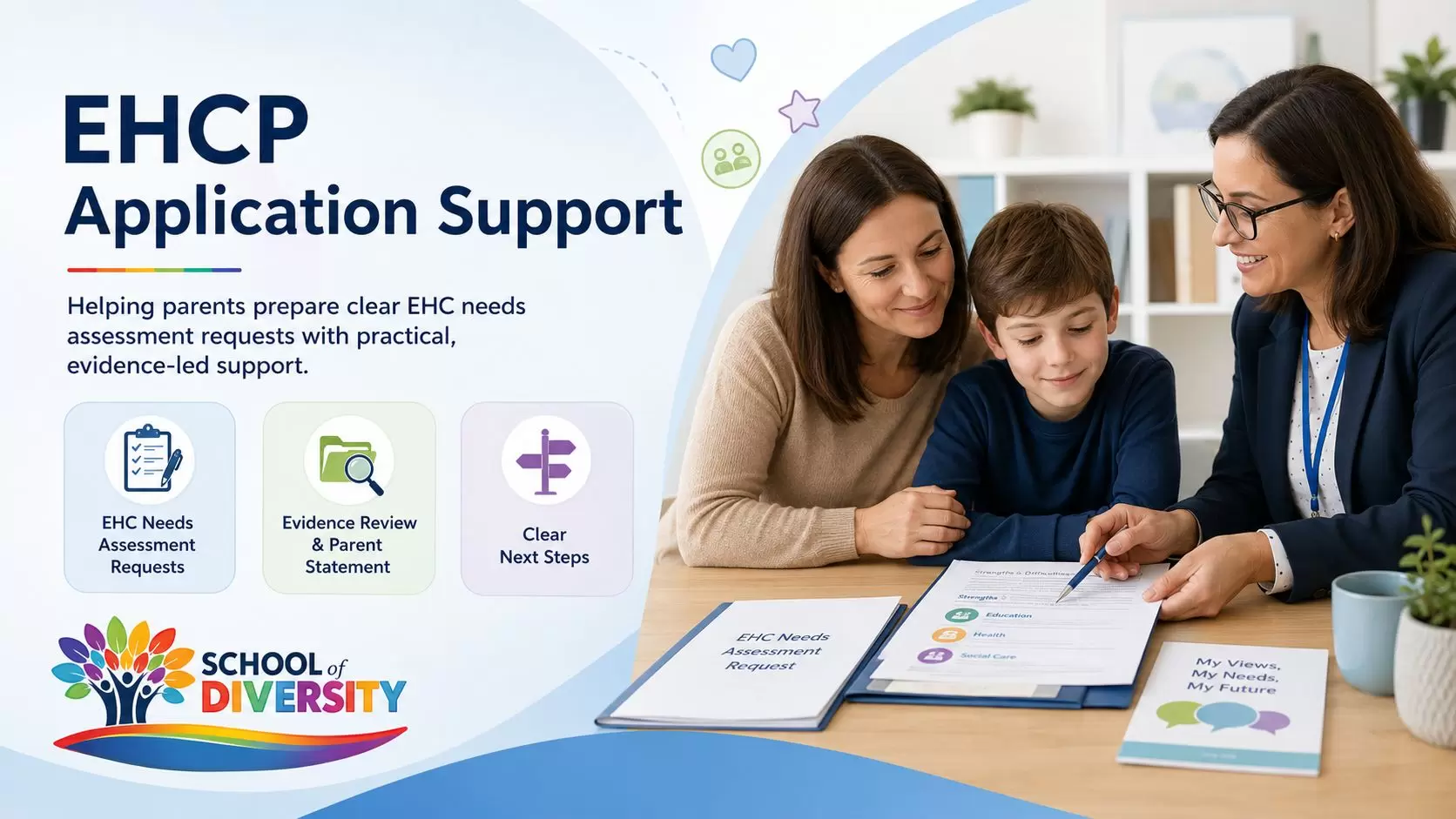
When Your Child Needs More Support, the Paperwork Can Feel Overwhelming
You may have school records, professional reports and your own observations, yet still be unsure how to explain why an assessment may be necessary. We help bring the relevant information together and make the educational impact clear.
EHCP Application & Evidence Package
For parents who want School of Diversity to review the available evidence and prepare a structured EHC needs assessment request.
We consider your child's circumstances, educational situation and why assessment may now be required.
Detailed information about strengths, needs, history, difficulties and educational impact.
Relevant plans, APDR records, provision, interventions and progress.
Relevant agreed psychological, therapy, assessment and medical reports.
We identify areas where further information may help.
Connecting needs to learning, attendance, regulation and participation.
We prepare the parental request using the available evidence.
Organised documents and guidance on submission and key dates.
EHCP Application Support Packages
You do not have to purchase a full application service if you have already completed some of the work yourself.
Application Review
Already written your request? Let us review it before submission.
- Draft application and agreed evidence review
- Identification of obvious gaps
- Educational impact and SEN Support presentation
- Written recommendations and suggested amendments
- One agreed final review
Evidence Readiness Review
Unsure whether your evidence is ready or what should happen next?
- Current, SEN Support and educational impact evidence
- Professional and parent evidence review
- Identification of evidence gaps
- Recommended next actions
- EHCP Evidence Readiness Report
Application & Evidence
Our main service to prepare a request with you from the available evidence.
- Initial case review and parent questionnaire
- SEN Support and professional evidence review
- Evidence gap and educational impact analysis
- Request preparation and parent views
- Evidence index and submission checklist
- Parent review and submission guidance
EHCP Complete
Application preparation and support through the local authority's initial decision.
- Everything in the £395 package
- Extended and agreed additional evidence review
- Guidance requesting key school information
- Submission-ready evidence organisation
- Initial LA correspondence support
- One post-submission consultation
- Initial decision review and next-step guidance if refused
Which EHCP Service Is Right for Me?
“I've already written the application.”
Application Review — £149
“I don't know whether our evidence is strong enough.”
Evidence Readiness Review — £225
“I want you to review everything and prepare the request.”
Application & Evidence — £395
“I also want support while the LA considers the request.”
EHCP Complete — £595
How Our EHCP Application Service Works
Tell Us About Your Child
Share their age, setting, concerns and current situation.
Parent Questionnaire
Describe strengths, needs, history and support.
Send Your Evidence
We agree which school records and reports are relevant.
Evidence Analysis
We review needs, impact, provision and gaps.
Application Preparation
For full packages, we prepare the structured request.
You Review It
Check that it accurately reflects your child.
Finalise & Submit
Receive documents and submission guidance.
Know What Happens Next
We explain the next stage and LA response.
What Makes a Strong EHCP Application?
Hundreds of pages alone do not make a stronger request. Evidence should explain your child's needs, educational impact and why assessment may be necessary.
Your Child's Needs
Communication, learning, emotional wellbeing, sensory and physical needs, attention and independence.
Educational Impact
Progress, attendance, regulation, transitions, relationships and participation.
What Has Been Tried
SEN Support, interventions, adjustments and specialist advice.
What Happened
Whether progress was achieved, sustained or dependent on unusually high support.
Professional Evidence
Assessment findings, barriers and recommended provision.
Parent Evidence
Masking, recovery, distress, independence and support outside school.
What Evidence Can We Review?
You do not need every possible professional report before asking for an EHC needs assessment. We review available information and identify relevant gaps.
- SEN Support plans and APDR records
- Provision maps and school reports
- Progress, attainment and attendance records
- Behaviour or incident records
- SENCO correspondence
- Educational Psychology reports
- Speech and Language Therapy and Occupational Therapy reports
- Autism and ADHD assessment reports
- Paediatric and CAMHS evidence
- Specialist teacher reports
- Parent observations and relevant LA correspondence
When Might an EHC Needs Assessment Be Appropriate?
Every child must be considered individually. An assessment may need to be considered where a child or young person:
- makes limited progress despite support;
- may need support beyond ordinarily available SEN Support;
- has complex or interacting needs;
- needs input from several professionals;
- has substantial communication or sensory needs;
- experiences SEND-related school avoidance;
- needs substantial individualised support;
- faces exclusion or placement breakdown;
- may need specialist provision;
- is approaching a major educational transition.
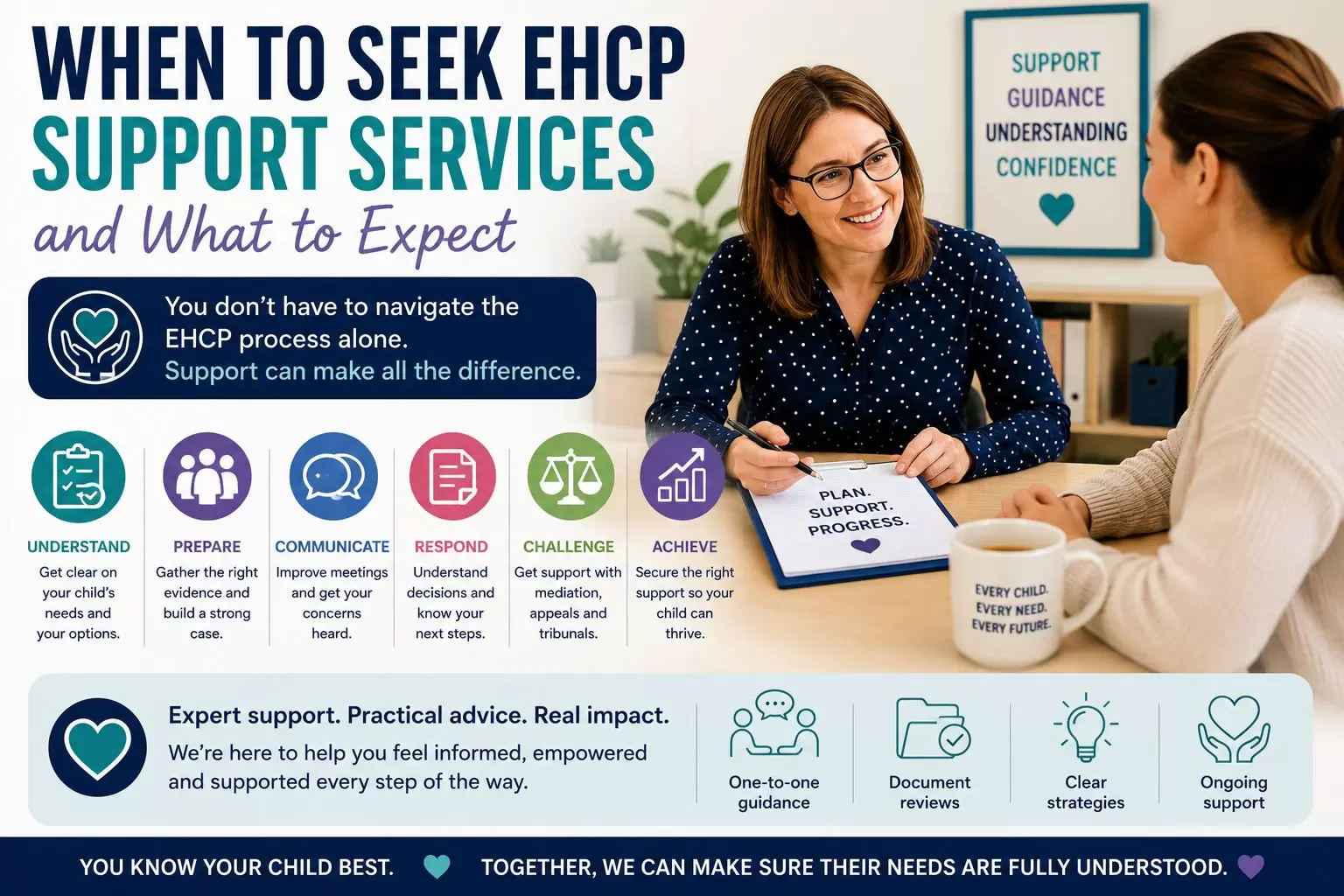
Does My Child Need a Diagnosis?
No. A diagnosis may help but does not decide whether assessment is needed.
EHCP Without a Diagnosis →Does the School Have to Agree?
No. Parents can request assessment directly from the local authority. School evidence remains useful.
What If My Child Is Not Attending?
Reduced attendance does not prevent a request. Explain any SEND-related barriers clearly.
School Avoidance Guide →The Legal Test for an EHC Needs Assessment
Under section 36 of the Children and Families Act 2014, the local authority considers whether the child or young person has or may have special educational needs and whether it may be necessary for special educational provision to be made through an EHC plan.
At this stage parents request an assessment; they do not need to write the final plan before assessment takes place.
The key question
Does the available information indicate that an EHC needs assessment may be necessary?
We present the available evidence around needs, educational impact, existing support and continuing difficulties.
Read the EHCP Parent Guide →After Your EHC Needs Assessment Request Is Submitted
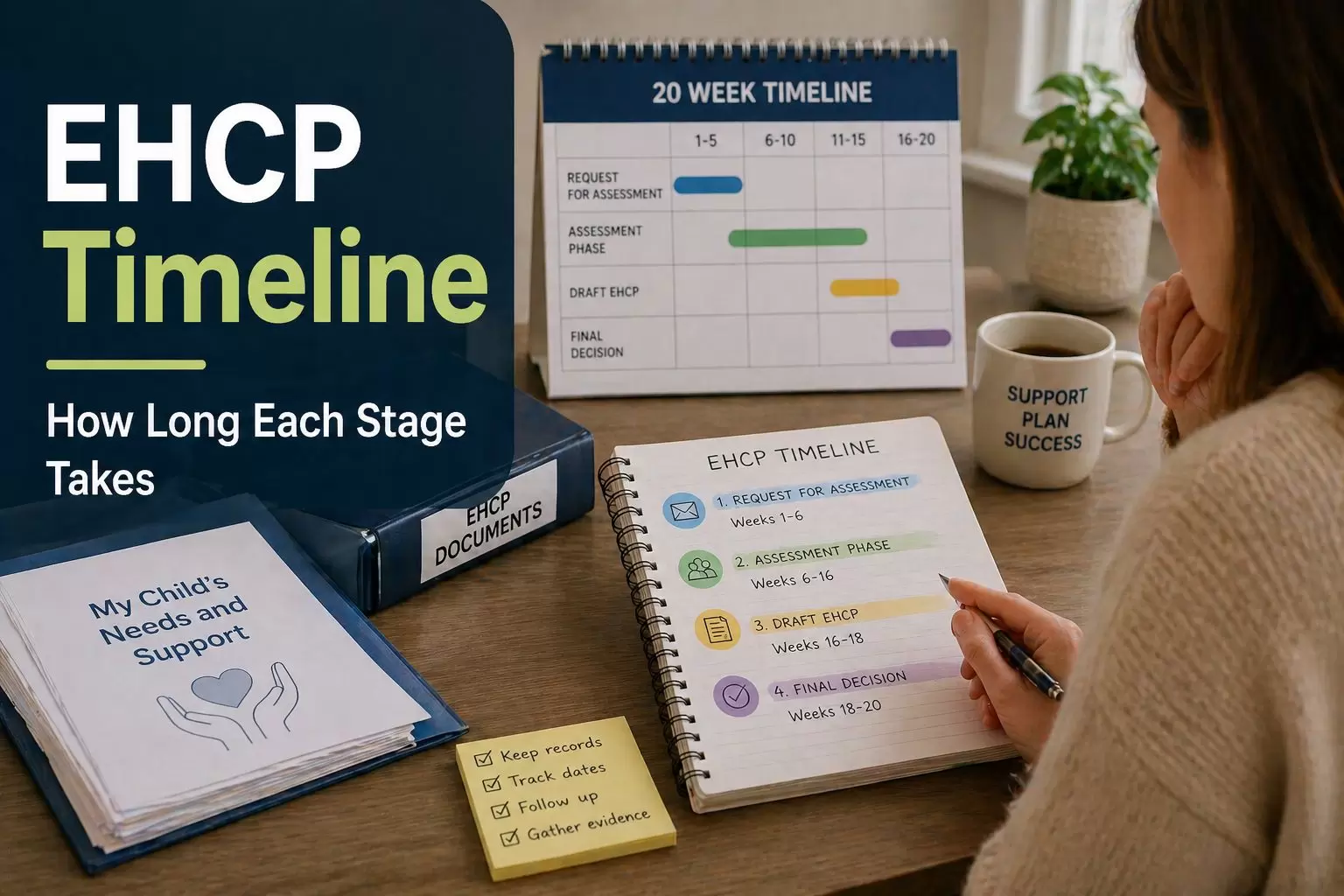
Initial Decision
The local authority should normally notify the parent or young person whether it will assess within six weeks of receiving the request.
If Assessment Is Agreed
The authority seeks relevant advice before deciding whether a plan is necessary.
Overall Timescale
If a final plan is issued, the statutory process should normally finish within 20 weeks of the original request, subject to statutory exceptions.
What If the Local Authority Refuses to Assess?
A refusal does not necessarily mean the process is over. The decision can be reviewed to understand whether evidence or issues were overlooked.
- Was the correct statutory test considered?
- Was important evidence overlooked?
- Were educational difficulties recognised?
- Was SEN Support accurately understood?
- What is needed for the next stage?
Already received a refusal?
Our dedicated service helps parents review the decision and prepare next steps.
Practical, Evidence-Led EHCP Support
We help you understand what the evidence says, what may be missing and how to present your child's situation clearly.
Individual Applications
Built around your child's actual circumstances.
Beyond Diagnosis
Focus on needs, impact and provision.
Detailed Review
School, professional and parent evidence considered together.
Gaps Identified
Relevant missing information clearly identified.
SEND Understanding
Practical SEND support alongside wider psychologist-led assessment expertise.
Across England
Remote document services for families throughout England.
Psychological assessment or clinical opinion is included only when separately agreed.
EHCP Support for Young People Aged 16 to 25
EHCPs do not automatically end at 16. An EHC plan may continue while a young person remains in qualifying education or training and still needs special educational provision.
Planning should consider preparation for adulthood, independence, further education or training, employment aspirations and community participation.
Young people over compulsory school age may make their own assessment request, with parents continuing to support them where appropriate.

EHCP Application FAQs
Can I apply for an EHCP myself?
Yes. Parents can request an EHC needs assessment directly. There is no requirement to use a paid service.
Does the school have to apply?
No. A parent can make a direct request to the local authority.
Does my child need a diagnosis?
No. The question concerns special educational needs and whether provision through a plan may be necessary.
Do we need several Assess, Plan, Do, Review cycles first?
There is no universal requirement for a fixed number of cycles before requesting an assessment. Evidence of existing support can help.
Can an academically able child need an EHCP?
Yes. Academic attainment is one part of the educational picture; other needs can still be significant.
Can we apply if my child is not attending school?
Yes. Explain any SEND-related attendance difficulties in the evidence.
Can an assessment be requested before school age?
Yes, where a younger child's special educational needs may call for provision through an EHC plan.
What about young people aged 16 to 25?
Young people over compulsory school age may make their own request. Preparation for adulthood is relevant.
How long does the local authority have to decide whether to assess?
Normally a maximum of six weeks after receiving the request.
How long can the full process take?
If a final plan is issued, normally no more than 20 weeks from the original request, subject to statutory exceptions.
Can you guarantee that the local authority will agree?
No. We help present the circumstances and evidence clearly; outcomes cannot be guaranteed.
Is the service available throughout the UK?
This service concerns the EHC plan system in England. Other UK nations operate different systems.

EHCP Help at Every Stage of the Journey
Families may need different support depending on what happens after the application.
- Evidence and preparation
- Refusal to assess
- Draft EHCP and annual reviews
- Mediation preparation
- Placement and EOTAS issues
- SEND Tribunal support
You Don't Need to Navigate the EHCP Application Alone
We can help you make sense of the evidence and prepare the next stage in a clear, structured way.
More EHCP Guidance and Support
Important Information
School of Diversity provides SEND advocacy, evidence review, document preparation and practical EHCP support. Local authority or Tribunal outcomes cannot be guaranteed. Unless agreed in writing, this service does not constitute representation by a solicitor or barrister. Parents and young people should check LA correspondence and relevant deadlines. Exact document limits, revisions, correspondence support, responsibilities and exclusions are confirmed in the service agreement.