
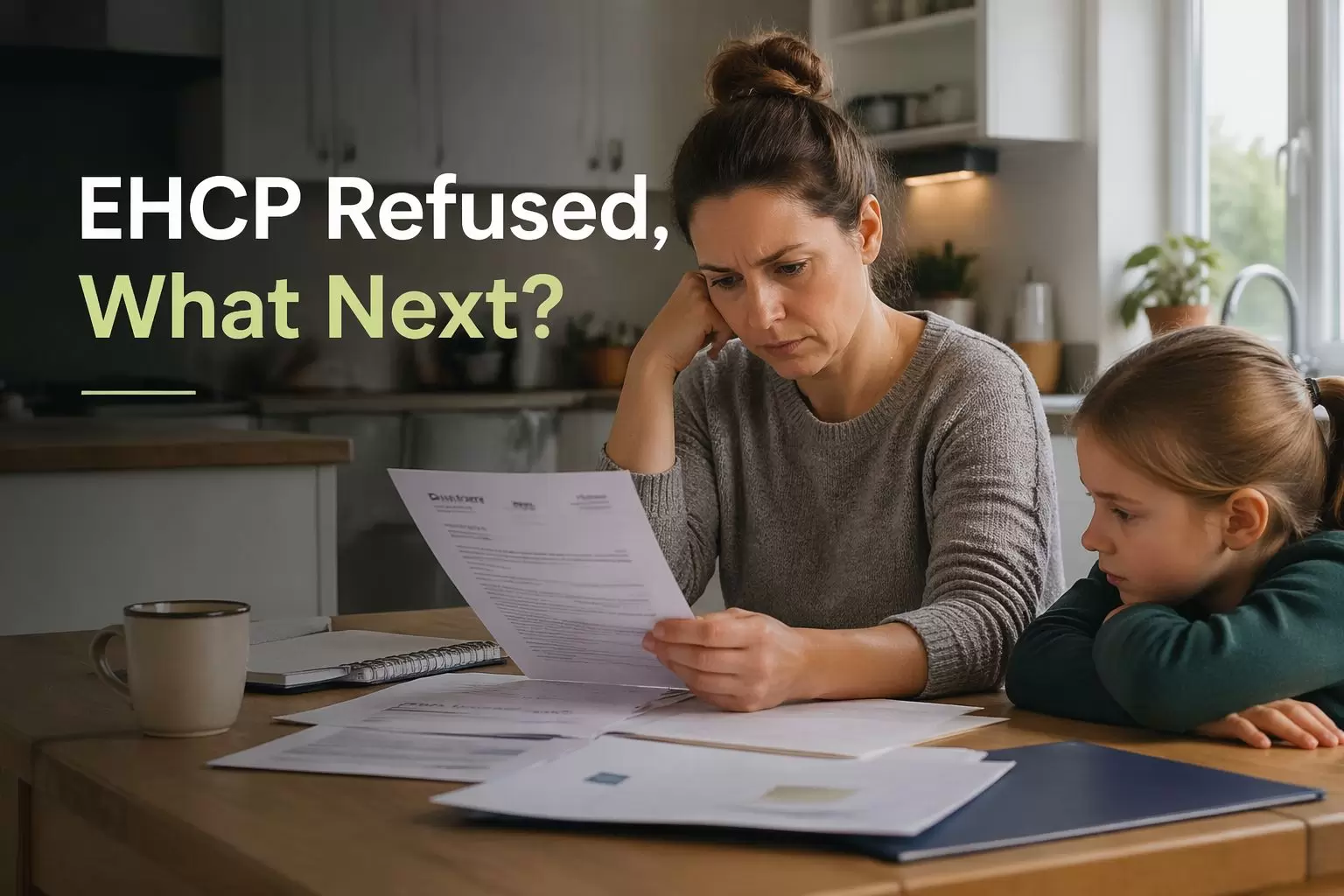
EHCP Refused, What Next? A Clear Guide for Parents
If your child has been refused an EHCP, it can feel frustrating and confusing. Many parents are left wondering what went wrong and what they should do next.
The key thing to understand is this. A refusal is not the end of the process. In many cases, it is simply the point where you begin building a stronger, clearer case for your child.
Why EHCP Applications Are Refused
Local authorities often refuse EHCP applications for reasons such as:
- Evidence is not detailed enough
- Needs are not clearly described
- The school is expected to meet needs through SEN support
This does not mean your child does not need support. It usually means the evidence has not yet demonstrated that need clearly enough.
What You Can Do Next
After a refusal, you have two main options:
- Contact a mediation service
- Appeal the decision to a SEND tribunal
You are required to contact mediation before appealing, even if you choose not to proceed with it.
For a full breakdown, read how to appeal an EHCP decision.
How to Strengthen Your Case
This is where many successful appeals are built.
Focus on:
- Professional assessments such as educational psychology reports
- School records that show lack of progress
- Clear examples of daily challenges
Strong evidence is the difference between a refusal and a successful outcome. You can explore this further in what evidence wins an EHCP appeal.
Frequently Asked Questions: EHCP Refused
What should I do if my child’s EHCP is refused?
If your child’s EHCP is refused, you can challenge the decision. Start by contacting a mediation service, then consider appealing to the SEND Tribunal if needed. Gathering clear evidence about your child’s needs is an important next step.
Can I appeal an EHCP refusal?
Yes, you have the right to appeal if an EHCP assessment or plan is refused. You will need to contact a mediation service first, but you do not have to go through mediation to proceed with an appeal.
How long do I have to appeal an EHCP refusal?
You usually have two months from the date of the decision letter or one month from receiving your mediation certificate, whichever is later.
Why was my child’s EHCP refused?
Common reasons include not enough detailed evidence, unclear description of needs, or the belief that the school can provide sufficient support without an EHCP.
What evidence do I need after an EHCP refusal?
Useful evidence includes educational psychologist reports, school records, and examples showing how your child is struggling. Clear and specific information strengthens your case.
Do I have to go to mediation before appealing?
You must contact a mediation service, but you do not have to take part in mediation. You will receive a certificate that allows you to proceed with an appeal.
How successful are EHCP appeals?
Many EHCP appeals are successful, especially when parents present strong, detailed evidence. Decisions are often improved or overturned during the process.
Final Thoughts
A refusal can feel like a setback, but it often leads to better outcomes when parents take the next step.
If you are unsure how to move forward, you can explore support through our Contact page.
Navigating EHCP decisions can feel complex, but having the right information helps. Our detailed EHCP guide explains everything in a clear, practical way.
6 Responses