
ADHD • Turning understanding into action
ADHD diagnosis and school support
A diagnosis can help explain your child’s experiences. The next step is agreeing practical support that works for them in school.
Explore classroom strategies, SEN support and ways to work with school, including what to do if your child needs more help.
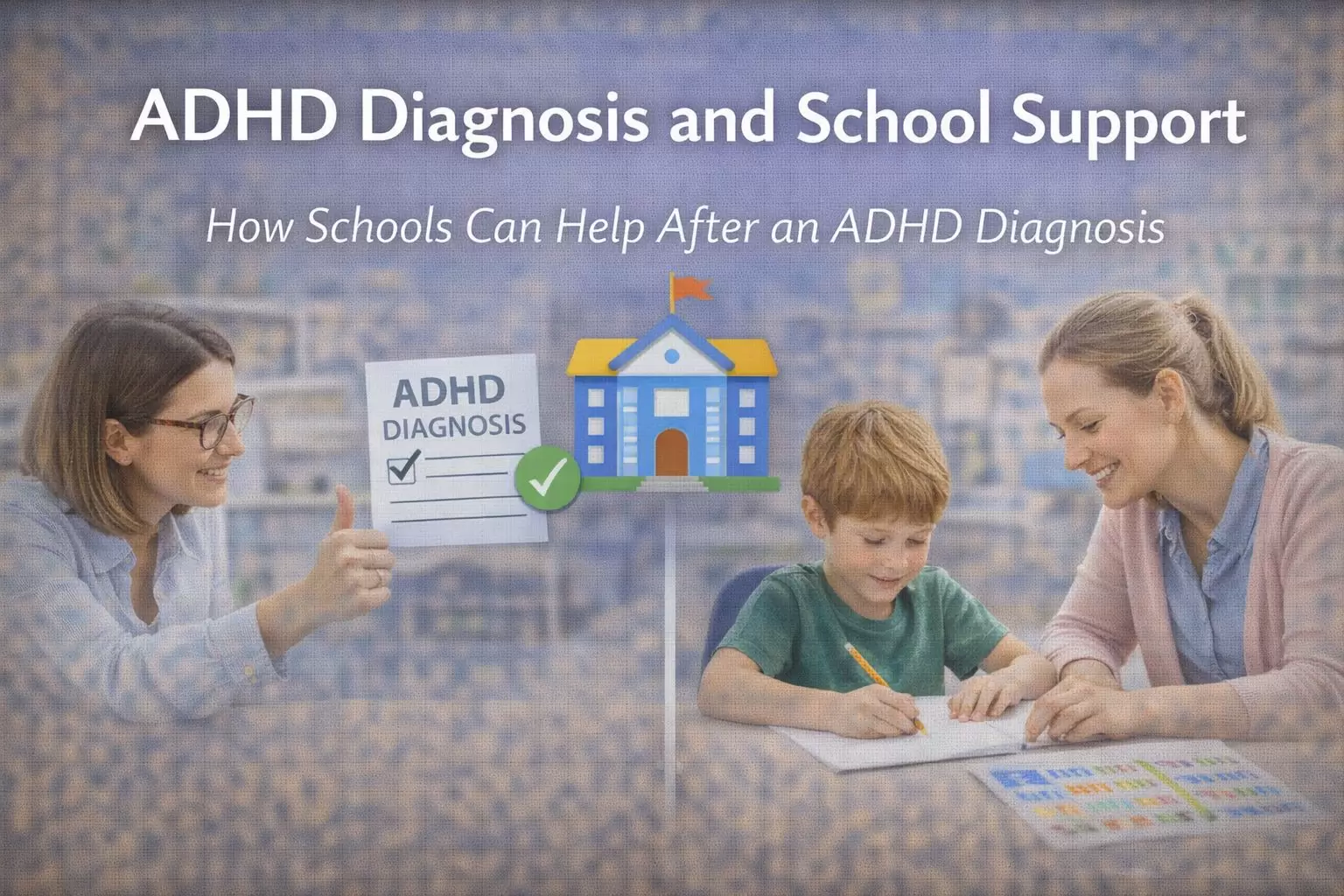
Start with a conversation
What should happen after a diagnosis?
Discuss the findings with your child’s teacher or special educational needs co-ordinator (SENCO). Focus on the needs and recommendations that affect everyday school life.
Share the useful information
Provide relevant assessment findings, examples from home and your child’s own views. Include their strengths and what already helps.
Agree practical changes
Identify the main barriers to learning, participation and wellbeing. Ask what support will address each one.
Set a review date
Agree who will provide support, how staff will know about it and how you will check whether it is helping.
The SEN support and EHCP framework described here applies to England. Education systems and terminology differ elsewhere in the UK.
Practical classroom support
Match the strategy to the difficulty
Children with ADHD have different needs. Agree a small number of relevant strategies, then review their effect.
Clear instructions
Give one manageable step at a time, support spoken instructions with a visual reminder and check understanding discreetly.
Manageable tasks
Break longer activities into smaller parts, make the starting point clear and provide check-ins where needed.
Movement and breaks
Plan opportunities to move and agree how your child can request a break without drawing unwanted attention.
Attention and environment
Explore seating, noise and visual distractions with your child. Review whether a quieter working space helps for particular activities.
Organisation and routines
Use visual timetables, equipment checklists and reminders. Prepare for changes rather than relying on your child to remember everything.
Time and transitions
Give advance notice of transitions and consider additional processing or task time where appropriate.
A plan everyone understands
How SEN support can help
SEN support may include targeted teaching, additional help, adjustments and regular reviews. Ask school to explain how it is identifying and meeting your child’s special educational needs.
Assess, plan, do, review
Build a shared picture of needs, agree support, put it into practice and review what has changed. Adapt the plan where it is not helping.
Include learning, participation, friendships and wellbeing, rather than looking only at grades or incidents.
Make the agreement clear
- What difficulty is the support addressing?
- What exactly will staff do?
- When and how often will it happen?
- Who is responsible?
- How will progress be reviewed?
A practical example
Instead of “help with organisation”, discuss a specific arrangement such as a brief equipment check with a named adult at the start and end of the school day. Agree how your child feels about it and review whether it helps.
Understand SEN support plans →Learning and wellbeing together
Support confidence, relationships and emotional needs
Frustration, repeated corrections or difficulties with friendships can affect how a child feels about school.
Understand what happens before difficulties
Look for patterns around tasks, transitions, noise, waiting or unclear expectations. Consider whether the demand, environment or support needs changing.
Use calm guidance, clear expectations and encouragement matched to your child’s abilities and needs.
Make support feel safe
Agree a trusted adult, a discreet way to ask for help and what will happen when your child feels overwhelmed.
Ask your child what helps them feel included. Praise effort and progress without making essential support something they have to earn.
Working in partnership
Keep communication useful and manageable
Agree how home and school will share information, including positive developments. Bring specific examples to reviews and ask whether the planned support is happening consistently.
When accounts differ, explore the demands and support in each setting. Include your child’s perspective and record agreed next steps.
When progress is limited
What if the support is not enough?
Request a review of your child’s needs, the support actually being delivered and its impact. Ask whether further professional advice or a different approach is needed.
Some children may need an EHC needs assessment and an EHCP. A diagnosis does not automatically lead to a plan, and there is no fixed number of SEN support cycles that every child must complete before an assessment can be considered.
ADHD and EHCPs
Explore how your child’s needs and required provision relate to an EHCP.
Read the ADHD and EHCP guide →Requesting an assessment
Understand how to explain needs and the help your child requires.
How to apply for an EHCP →Common questions
Understanding your child’s support
Does school need to wait for a diagnosis?
No. Raise your child’s current difficulties with their teacher or SENCO and ask what support can be put in place and reviewed.
Does an ADHD diagnosis mean automatic one-to-one support?
No. The type and amount of support should reflect individual needs. Ask how proposed support will address the difficulties your child experiences.
Can support change over time?
Yes. Needs and school demands can change. Review support when your child moves classes, changes school or experiences new difficulties.
What if my child is doing well academically?
Share difficulties with participation, organisation, relationships or wellbeing too. Ask school to look at the full picture and the support needed to sustain progress.
Does every child with ADHD need an EHCP?
No. Many children receive support without one. If needs are not being met, seek a review and advice about whether an EHC needs assessment should be requested.
Further information: GOV.UK SEN support guidance and the SEND Code of Practice for England.
Related ADHD guidance
Explore the wider picture
School of Diversity
Need help preparing the next school conversation?
Tell us what is happening for your child and the support you are looking for. We can discuss your enquiry and explain relevant service options.